Loading...
Emperor Nintoku vs Licinius
Emperor Nintoku leads by 12.6 pts · 2 figures compared
…
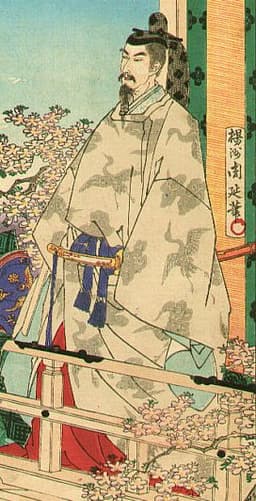
Emperor Nintoku
Emperor · Ancient
52.1Total

Licinius
Emperor · Ancient
39.5Total
Basic Information
Born
290
263
Died
399
325
Era
Ancient
Ancient
Nationality
Japan
Roman Empire
Occupation
Emperor
Emperor
Civilization
Eastern
Western
Score Comparison
Military (10%)
11.0
20.0
Political (20%)
43.7
35.1
Influence (20%)
54.9
44.8
Legacy (20%)
52.0
35.8
Leadership (15%)
78.0
51.9
Strategy (15%)
60.0
43.3
TOTAL
52.1
39.5
Emperor Nintoku — Complete Timeline
313 AD
Reign of Emperor NintokuPolitical Action
Emperor Nintoku's reign is traditionally dated from 313 to 399 AD and is considered a period of stability and prosperity for the Yamato state. He is credited with expanding agricultural infrastructure and consolidating the imperial line's authority.
StabilityYamato PeriodProsperity
Impact: nationalconstructive
330 AD
Promoted Agricultural DevelopmentReform
Emperor Nintoku is said to have ordered the construction of irrigation canals and rice paddies to boost agricultural output. These projects are recorded in the Nihon Shoki as having alleviated famine and strengthened the economic base of the Yamato court.
AgricultureInfrastructureEconomic Development
Impact: nationalconstructive
350 AD
Construction of Daisen KofunCultural◆ Major
Emperor Nintoku commissioned the construction of the Daisen Kofun in Sakai, Osaka, the largest keyhole-shaped burial mound in the world. The tomb measures 486 meters in length and is surrounded by three moats, reflecting the immense power and resources of the Yamato state.
ArchitectureKofun PeriodBurial Mound
Impact: globalconstructive
Licinius — Complete Timeline
313 AD
Edict of MilanPolitical Action◆ Major
Licinius met Constantine in Milan and agreed to a policy of religious toleration for Christians. The agreement, known as the Edict of Milan, granted freedom of worship throughout the Roman Empire.
ChristianityReligious PolicyTetrarchy
Impact: globalprogressive
316 AD
Battle of CibalaeWar◆ Major
Licinius was defeated by Constantine at the Battle of Cibalae in Pannonia. The loss forced Licinius to cede most of the Balkan provinces to Constantine, significantly weakening his position as co-emperor.
Civil WarConstantineTetrarchy
Impact: regional
324 AD
Battle of ChrysopolisWar
Constantine decisively defeated Licinius at the Battle of Chrysopolis near Chalcedon. Licinius surrendered and was initially spared, but was later executed on charges of plotting rebellion, ending the Tetrarchy.
Civil WarConstantineEnd of Tetrarchy
Impact: global
Expert Analysis
Origins
Emperor Nintoku, traditionally dated to reign from 313 to 399 AD, was the 16th emperor of Japan according to the Nihon Shoki. His early life is shrouded in myth, but he is believed to have been the son of Emperor Ōjin. Nintoku's background is rooted in the Yamato court, where leadership was hereditary and tied to Shinto rituals. His formative experiences likely involved learning governance and military command, though specific details are scarce.
Licinius was born around 265 AD in Moesia Superior (modern-day Serbia) to a peasant family. He rose through the Roman military ranks, serving under Emperor Galerius. His early life was marked by the chaos of the Tetrarchy, a system of four co-emperors established by Diocletian. Licinius's background gave him practical military and administrative skills, but he lacked the dynastic legitimacy of Constantine.
Rise to Power
Nintoku's rise to power followed the death of his father, Emperor Ōjin. According to the Kojiki, he was chosen as crown prince and ascended the throne peacefully. His reign is associated with the construction of the Daisen Kofun, a massive keyhole-shaped tomb that required enormous labor and resources. This project solidified his authority and demonstrated his ability to mobilize the state.
Licinius rose to prominence as a trusted general of Galerius. In 308 AD, Galerius appointed him Augustus of the West, but he was unable to assert control. After Galerius's death in 311, Licinius allied with Constantine, co-authoring the Edict of Milan in 313 AD, which granted religious toleration to Christians. He then defeated his rival Maximinus Daia, becoming sole ruler of the East. His power peaked in 313 AD, but he soon clashed with Constantine over territory and influence.
Leadership & Governance
Nintoku's leadership focused on internal development. He is credited with ordering irrigation canals and rice paddies to boost agriculture, which enhanced the Yamato state's economic base. His governance style was paternalistic, emphasizing stability and prosperity. The Daisen Kofun, measuring 486 meters long, was a symbol of his centralized authority and the mobilization of labor. Nintoku scored 78.0 in leadership, reflecting his effective management of resources and people.
Licinius governed as a Roman autocrat, maintaining the tetrarchic system. He issued edicts to stabilize the economy and continued the persecution of Christians in the East, despite the Edict of Milan. His leadership score of 51.9 indicates a less effective style, as he struggled to balance ambition with diplomacy. His reliance on military force and purges of rivals alienated potential allies.
Triumph & Tragedy
Nintoku's triumph was the construction of the Daisen Kofun, the largest keyhole tomb in the world, and the promotion of agricultural infrastructure. These projects brought prosperity and left a lasting physical legacy. However, his reign's lack of military expansion (military score 11.0) may have left the Yamato state vulnerable. The absence of external threats in historical records suggests a period of peace, but also stagnation.
Licinius's greatest success was the Edict of Milan, which shaped the future of Christianity. He also defeated Maximinus Daia, securing the Eastern Empire. However, his tragedy was his defeat by Constantine at the Battle of Chrysopolis in 324 AD. He surrendered, was exiled, and later executed on charges of conspiracy. His legacy is overshadowed by Constantine, and his military score of 20.0 reflects his inability to prevail in the final conflict.
Character & Destiny
Nintoku is portrayed in Japanese chronicles as a wise and benevolent ruler, focused on the welfare of his people. His character is associated with the concept of 'wa' (harmony), which shaped his destiny as a peaceful builder. Historical assessments view him as a consolidator of the Yamato state, though his mythical status complicates factual analysis.
Licinius was pragmatic and ambitious, but his character showed distrust and ruthlessness. He executed his co-emperor Maximinus Daia and later purged Constantine's supporters. This behavior alienated him from potential allies and contributed to his downfall. His destiny was sealed by his inability to match Constantine's political and military acumen.
Legacy
Nintoku's legacy is embodied in the Daisen Kofun, now a UNESCO World Heritage site. His agricultural projects laid the foundation for Japan's rice-based economy. He is remembered as a model emperor in Japanese tradition, scoring 52.1 overall. However, his historical impact is limited by the lack of written records from his era.
Licinius's legacy is mixed. He is remembered as the co-author of the Edict of Milan, which enabled Christianity's rise, but also as a persecutor of Christians. His defeat marked the end of the Tetrarchy and the beginning of Constantine's sole rule. His overall score of 39.5 reflects a lesser impact, as his achievements were largely overshadowed by Constantine's.
Conclusion
Emperor Nintoku had a greater overall impact than Licinius, as reflected in his higher total score of 52.1 compared to Licinius's 39.5. Nintoku's leadership score of 78.0 significantly outpaced Licinius's 51.9, and his legacy in Japanese culture and architecture endures. While Licinius contributed to religious toleration, his political and military failures limited his influence. Nintoku's peaceful development and monumental construction left a more lasting mark on history.
Rankings
🥇
Emperor NintokuLeader
Mil: 11.0Pol: 43.7Inf: 54.9
52.1
🥈
Licinius
Mil: 20.0Pol: 35.1Inf: 44.8
39.5
+12.6 behind
How This Comparison Works
Algorithm
Each figure is scored on 6 dimensions (0—100 scale) based on structured historical data: Military (10%), Political (20%), Influence (20%), Legacy (20%), Leadership (15%), Strategy (15%). The weighted total produces the final ranking.
Data Sources
Scores are computed from structured sub-indicators in the database. Scale factors adjust for era (Ancient ×0.85, Modern ×1.0) and civilization size (Eastern ×1.05, Other ×0.80) to account for differences in population and military scale.
Maximum 3 Figures
Comparisons are limited to 2—3 figures to ensure readability and statistical meaningfulness.
Error Margins
±5 points per dimension — Sub-scores are derived from historical records with inherent uncertainty. Two figures within 5 points on a dimension should be considered roughly equivalent in that area.
Total Score Accuracy
±3 points overall — The weighted combination of 6 dimensions produces a total score with approximately ±3 points of uncertainty. Differences of less than 3 points are not statistically significant— the figures are effectively tied.
Known Limitations
- Historical records are incomplete and uneven across civilizations
- Figures from oral-tradition societies may be underrepresented
- Occupation labels can misclassify multi-role figures
- Scores measure capability and impact, not moral character
- Quantitative scoring is a comparison tool, not absolute truth
Capability Radar
Military (10%) — Battles & Warfare
Battles
34
45
Win Rate
37
40
Expansion
39
30
Political (20%) — Governance & Reform
Reform
40
25
Diplomacy
30
35
Economy
50
30
Influence (20%) — Cultural & Global Reach
Cultural
60
15
Global
30
10
Legacy (20%) — Historical Impact
Historical
70
20
Longevity
80
15
Leadership (15%) — Power & Stability
Tenure
87
40
Stability
70
25
Strategy (15%) — Tactics & Innovation
Strategy
41
45
Tactics
45
40
Reform
45
20
Similar Comparisons
Comments & Discussion
No comments yet. Be the first to share your thoughts!