Loading...
This comparison has not been analyzed yet.
One-time AI generation (~1 minute). Scores and timeline are already available below.
Bindusara vs Huvishka
Huvishka leads by 6.7 pts · 2 figures compared
…
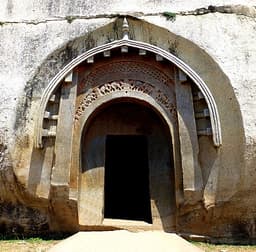
Bindusara
Emperor · Ancient
44.7Total
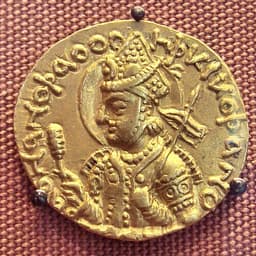
Huvishka
Emperor · Ancient
51.4Total
Basic Information
Born
-320
150
Died
-272
190
Era
Ancient
Ancient
Nationality
India
Kushan Empire
Occupation
Emperor
Emperor
Civilization
Indian
Indian
Score Comparison
Military (10%)
30.0
30.0
Political (20%)
40.8
68.0
Influence (20%)
47.1
57.2
Legacy (20%)
38.3
47.5
Leadership (15%)
65.0
40.0
Strategy (15%)
45.0
60.0
TOTAL
44.7
51.4
Bindusara — Complete Timeline
295 BC
Extended Mauryan Empire SouthwardWar◆ Major
Bindusara, son of Chandragupta Maurya, launched military campaigns into the Deccan plateau, conquering territories as far south as Mysore. He added the region of Kalinga (though not fully subdued) and parts of the Deccan to the Mauryan Empire.
ExpansionDeccanConquest
Impact: regional
290 BC
Maintained Diplomatic Relations with SeleucidsPolitical Action
Bindusara maintained friendly relations with the Seleucid Empire, exchanging ambassadors. He received Deimachus as an envoy from Antiochus I Soter, continuing the diplomatic ties established by his father.
DiplomacySeleucidsForeign Relations
Impact: regionalconstructive
285 BC
Patronized Ajivika SectCultural
Bindusara was a patron of the Ajivika sect, a non-Buddhist ascetic tradition. He supported their monasteries and teachings, reflecting the religious diversity of the Mauryan court before Ashoka's conversion to Buddhism.
ReligionAjivikaPatronage
Impact: regional
280 BC
Suppressed Taxila RebellionWar◆ Major
Bindusara sent his son Ashoka to quell a rebellion in the northwestern city of Taxila. The rebellion was suppressed without major bloodshed, demonstrating Ashoka's military capability and administrative skill.
RebellionTaxilaAshoka
Impact: regional
Huvishka — Complete Timeline
155 AD
Continuation of Kushan ExpansionWar
Huvishka maintained the Kushan Empire's territorial holdings in the Indus Valley, Ganges Basin, and Central Asia. He defended the empire against incursions from the Sassanians and other groups.
DefenseKushan EmpireTerritory
Impact: regional
160 AD
Patronage of Multiple ReligionsCultural◆ Major
Huvishka patronized Buddhism, Hinduism, Zoroastrianism, and Greek cults, as evidenced by his coins depicting Buddha, Shiva, Mithra, and Serapis. This policy promoted religious tolerance and cultural exchange.
ReligionToleranceSyncretism
Impact: regionalconstructive
Issuance of Gold Coins with Diverse DeitiesCultural
Huvishka issued a wide variety of gold coins featuring deities from multiple pantheons, including Greek, Persian, Indian, and Buddhist. These coins are a key source for understanding the religious landscape of the Kushan Empire.
CoinageReligionNumismatics
Impact: regionalconstructive
170 AD
Construction of the Mathura MonasteryCultural
Huvishka funded the construction of a Buddhist monastery at Mathura, which became a center for Buddhist art and learning. The monastery produced sculptures and inscriptions that reflect the Kushan period.
ArchitectureBuddhismMonastery
constructive
This comparison has not been analyzed yet.
One-time AI generation (~1 minute). Scores and timeline are already available below.
Rankings
🥇
HuvishkaLeader
Mil: 30.0Pol: 68.0Inf: 57.2
51.4
🥈
Bindusara
Mil: 30.0Pol: 40.8Inf: 47.1
44.7
+6.7 behind
How This Comparison Works
Algorithm
Each figure is scored on 6 dimensions (0—100 scale) based on structured historical data: Military (10%), Political (20%), Influence (20%), Legacy (20%), Leadership (15%), Strategy (15%). The weighted total produces the final ranking.
Data Sources
Scores are computed from structured sub-indicators in the database. Scale factors adjust for era (Ancient ×0.85, Modern ×1.0) and civilization size (Eastern ×1.05, Other ×0.80) to account for differences in population and military scale.
Maximum 3 Figures
Comparisons are limited to 2—3 figures to ensure readability and statistical meaningfulness.
Error Margins
±5 points per dimension — Sub-scores are derived from historical records with inherent uncertainty. Two figures within 5 points on a dimension should be considered roughly equivalent in that area.
Total Score Accuracy
±3 points overall — The weighted combination of 6 dimensions produces a total score with approximately ±3 points of uncertainty. Differences of less than 3 points are not statistically significant— the figures are effectively tied.
Known Limitations
- Historical records are incomplete and uneven across civilizations
- Figures from oral-tradition societies may be underrepresented
- Occupation labels can misclassify multi-role figures
- Scores measure capability and impact, not moral character
- Quantitative scoring is a comparison tool, not absolute truth
Capability Radar
Military (10%) — Battles & Warfare
Battles
30
40
Win Rate
30
45
Expansion
60
35
Political (20%) — Governance & Reform
Reform
30
50
Diplomacy
40
65
Economy
40
60
Influence (20%) — Cultural & Global Reach
Cultural
20
60
Global
20
45
Legacy (20%) — Historical Impact
Historical
30
55
Longevity
20
50
Leadership (15%) — Power & Stability
Tenure
50
60
Stability
50
55
Strategy (15%) — Tactics & Innovation
Strategy
40
45
Tactics
30
40
Reform
20
30
Similar Comparisons
Comments & Discussion
No comments yet. Be the first to share your thoughts!