Loading...
Bleda vs Julius Caesar
Julius Caesar leads by 44.5 pts · 2 figures compared
…
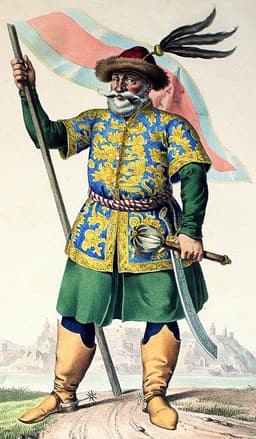
Bleda
Emperor · Ancient
38.3Total

Julius Caesar
General · Ancient
82.8Total
Basic Information
Born
400
-100
Died
445
-44
Era
Ancient
Ancient
Nationality
Hunnic Empire
Roman Republic
Occupation
Emperor
General
Civilization
Western
Western
Score Comparison
Military (10%)
45.0
88.0
Political (20%)
26.4
78.0
Influence (20%)
44.0
85.0
Legacy (20%)
34.2
82.0
Leadership (15%)
41.5
80.0
Strategy (15%)
41.0
85.0
TOTAL
38.3
82.8
Bleda — Complete Timeline
434 AD
Co-rulership with AttilaPolitical Action◆ Major
Upon the death of their uncle Rugila, Bleda and his brother Attila became joint rulers of the Hunnic Empire. This co-rulership marked the beginning of a period of aggressive expansion and diplomatic pressure on the Roman Empire.
HunsSuccessionCo-rulership
Impact: regional
435 AD
Treaty of MargusPolitical Action◆ Major
Bleda and Attila negotiated the Treaty of Margus with the Eastern Roman Empire, securing a tribute of 700 pounds of gold per year and the return of Hun refugees. This treaty demonstrated Hun military leverage and established a pattern of Roman payments.
HunsEastern Roman EmpireTreatyTribute
Impact: regional
441 AD
Campaign against the Eastern Roman EmpireWar◆ Major
Bleda and Attila launched a major campaign against the Eastern Roman Empire, sacking cities along the Danube frontier. This aggression forced the Romans to increase their tribute payments and cede territory, expanding Hun control in the Balkans.
HunsEastern Roman EmpireCampaignSack
Impact: regionaldestructive
445 AD
Assassination by AttilaPolitical Action
Bleda was killed, likely on the orders of his brother Attila, during a hunting expedition. This assassination ended the co-rulership and left Attila as the sole ruler of the Huns, enabling his later campaigns against the Roman Empire.
HunsAssassinationPower Struggle
Impact: regionaldestructive
Julius Caesar — Complete Timeline
58 BC
Gallic WarsWar◆ Major
Caesar, as proconsul of Gaul, launched a series of campaigns that conquered all of Gaul (modern France, Belgium, and parts of Switzerland). He fought numerous battles, including against the Helvetii, the Belgae, and the Gallic chieftain Vercingetorix. The wars brought immense wealth and a loyal army to Caesar.
Gallic WarsConquestRoman Expansion
Impact: regional
49 BC
Crossing the RubiconPolitical Action◆ Major
Caesar led Legio XIII across the Rubicon River into Italy, defying the Roman Senate's order to disband his army. This act triggered a civil war against Pompey and the Optimates, ultimately leading to Caesar's dictatorship and the end of the Roman Republic.
Roman Civil WarEnd of RepublicPower Struggle
Impact: global
48 BC
Battle of PharsalusWar◆ Major
Caesar's outnumbered army defeated the larger forces of Pompey the Great at Pharsalus in Greece. Caesar's tactical use of a reserve line to counter Pompey's cavalry charge proved decisive. Pompey fled to Egypt, where he was assassinated, leaving Caesar as the undisputed master of the Roman world.
Roman Civil WarBattleDecisive Victory
Impact: regional
44 BC
Appointment as Dictator for LifePolitical Action◆ Major
The Roman Senate appointed Caesar dictator perpetuo (dictator for life), granting him unprecedented personal power. This move concentrated military, legislative, and judicial authority in one person, effectively ending the Roman Republic's traditional system of checks and balances and alarming many senators.
DictatorshipEnd of RepublicPower Consolidation
Impact: regionaldestructive
Assassination on the Ides of MarchPolitical Action◆ Major
A group of Roman senators, led by Marcus Junius Brutus and Gaius Cassius Longinus, stabbed Caesar to death at a meeting of the Senate in the Theatre of Pompey. The assassination was intended to restore the Republic, but instead triggered another civil war that led to the rise of the Roman Empire.
AssassinationRoman PoliticsEnd of Republic
Impact: globaldestructive
Expert Analysis
bleda-vs-julius-caesar
# The Co-Ruler and the Conqueror: Why Bleda Vanished While Caesar Changed the World
On a spring morning in 445 CE, along the banks of the Danube, a hunting party returned without one of its leaders. Bleda, co-king of the Huns, had died—officially in an accident, though few believed it. His brother Attila now stood alone, and within a generation, the Hunnic Empire would shake Rome to its foundations. Yet today, schoolchildren know Caesar’s crossing of the Rubicon as a defining moment of ancient history, while Bleda’s name appears only in footnotes. The contrast between these two figures, both rulers of vast domains in the same era, raises a haunting question: why does one man become legend while the other fades into obscurity?
Origins
Julius Caesar was born into the chaos of the late Roman Republic, a world of civil wars, senatorial intrigue, and relentless ambition. His patrician family, the Julii, claimed descent from the goddess Venus, but their political influence had waned. From childhood, Caesar absorbed the values of Roman aristocracy: glory, honor, and the relentless pursuit of power through military command. The Republic of his youth was a brutal meritocracy where a man could rise from debt-ridden exile to the heights of command—if he dared enough.
Bleda emerged from an entirely different world: the steppes of Central Asia, where Hunnic society revolved around horse archery, tribal loyalty, and the constant pressure of migration. He was the nephew of Rugila, a king who had united the Huns and extracted tribute from the Eastern Roman Empire. Bleda’s upbringing taught him the skills of a warrior chieftain—riding, raiding, and negotiating from strength. But unlike Caesar, he never knew a world of written laws, senatorial debates, or civic institutions. His power was personal, tribal, and fragile.
Rise to Power
Caesar’s ascent was a masterclass in calculated risk. He climbed the Roman political ladder—quaestor, aedile, praetor—borrowing fortunes to finance games and bribes. His real breakthrough came in 58 BCE, when he secured command of Gaul. Over eight years, he conquered a territory larger than Italy, amassing wealth, a loyal army, and a reputation that made him the most powerful man in Rome. When the Senate ordered him to disband his forces, he chose war: crossing the Rubicon River in 49 BCE with a single legion, he plunged the Republic into civil war.
Bleda’s rise was simpler and more constrained. In 434 CE, upon Rugila’s death, he and Attila inherited a unified Hunnic Empire. There was no election, no campaign of persuasion—just the accident of blood. Their first major act, the Treaty of Margus in 435 CE, secured 700 pounds of gold annually from the Eastern Romans. But from the start, Bleda was co-ruler, not sole king. His brother Attila, younger and more ruthless, already cast a long shadow.
Leadership & Governance
Caesar governed as a revolutionary reformer. As dictator, he overhauled the calendar, granted citizenship to provincials, initiated public works, and centralized power in his own hands. His military genius lay in speed and adaptability—at Alesia, he built siege works around a Gallic army while simultaneously defending against a relief force, a feat of logistics and nerve. Yet his political wisdom was flawed: he pardoned his enemies, only to be stabbed by them on the Ides of March.
Bleda’s rule, by contrast, was that of a traditional steppe king. The Hunnic Empire lacked bureaucracy, law codes, or urban centers; it was a tribute machine, extracting gold from Rome while raiding when payments slowed. Bleda’s military campaigns, such as the 441 campaign along the Danube, were devastating but short-term—sacking cities, taking plunder, then withdrawing. There was no vision of empire, no reform of institutions. He ruled by personal authority, and that authority was shared.
Triumph & Tragedy
Caesar’s greatest triumph was his conquest of Gaul, which doubled Rome’s territory and made him a legend in his own lifetime. His tragedy was his assassination: on March 15, 44 BCE, sixty senators stabbed him to death in the Pompeian Theater, believing they were saving the Republic. Instead, they unleashed another civil war that ended with the rise of Augustus and the birth of the Roman Empire.
Bleda’s triumphs were modest by comparison: the Treaty of Margus and the Danube campaign brought gold and glory, but they were always joint achievements. His tragedy came in 445 CE, when he was killed—almost certainly on Attila’s orders—during a hunting expedition. His name was erased from Hunnic history, his memory subsumed by his brother’s. Where Caesar’s death became a turning point in world history, Bleda’s was a footnote to his brother’s rise.
Character & Destiny
Caesar was driven by an insatiable hunger for glory. He wrote his own commentaries, cultivated his image, and understood that history was a story to be shaped. His clemency toward enemies was strategic, not kind; his reforms were aimed at consolidating power. His character—ambitious, calculating, charismatic—fit the Roman Republic’s final crisis like a key in a lock. He was the right man for a world that needed a dictator.
Bleda’s character is harder to discern. He appears in records only as Attila’s co-ruler, and his death suggests he lacked his brother’s ruthlessness. Perhaps he was cautious, perhaps he trusted family too much. In the Hunnic world, where power was won by the sword and held by fear, such qualities were fatal. His destiny was to be eclipsed—not by fate, but by a brother who understood that in the steppes, there is room for only one king.
Legacy
Caesar’s legacy is monumental. His name became a title—Kaiser, Tsar—and his reforms shaped Western governance for centuries. His military tactics are still studied, his writings still read. He transformed the Roman Republic into an empire, for better and worse, and his assassination became a symbol of the dangers of unchecked power.
Bleda’s legacy is almost invisible. He appears in a handful of ancient sources, usually as a prelude to Attila. His co-rule was a brief experiment in shared power that ended in murder. Yet his story offers a cautionary lesson: in empires built on personal loyalty, the second-in-command is always vulnerable. The Huns’ greatest victories came after his death, but their empire collapsed within a generation of Attila’s own demise—proving that without institutions, even the mightiest conqueror leaves nothing permanent.
Conclusion
Standing on the banks of the Danube in 445 CE, Bleda must have looked at his brother and seen a partner. He was wrong. Caesar, crossing the Rubicon four centuries earlier, knew exactly what he was doing: seizing history by the throat. The difference between them is not merely one of talent or luck, but of the worlds they inhabited. Caesar’s Rome had a written history, a public record, a concept of legacy. Bleda’s Hunnic Empire had only the memory of warriors and the gold of tribute. One man shaped the story of the West; the other was erased by his own brother. In the end, history remembers not just what you do, but who writes the tale—and whether you survive to tell it.
Rankings
🥇
Julius CaesarLeader
Mil: 88.0Pol: 78.0Inf: 85.0
82.8
🥈
Bleda
Mil: 45.0Pol: 26.4Inf: 44.0
38.3
+44.5 behind
How This Comparison Works
Algorithm
Each figure is scored on 6 dimensions (0—100 scale) based on structured historical data: Military (10%), Political (20%), Influence (20%), Legacy (20%), Leadership (15%), Strategy (15%). The weighted total produces the final ranking.
Data Sources
Scores are computed from structured sub-indicators in the database. Scale factors adjust for era (Ancient ×0.85, Modern ×1.0) and civilization size (Eastern ×1.05, Other ×0.80) to account for differences in population and military scale.
Maximum 3 Figures
Comparisons are limited to 2—3 figures to ensure readability and statistical meaningfulness.
Error Margins
±5 points per dimension — Sub-scores are derived from historical records with inherent uncertainty. Two figures within 5 points on a dimension should be considered roughly equivalent in that area.
Total Score Accuracy
±3 points overall — The weighted combination of 6 dimensions produces a total score with approximately ±3 points of uncertainty. Differences of less than 3 points are not statistically significant— the figures are effectively tied.
Known Limitations
- Historical records are incomplete and uneven across civilizations
- Figures from oral-tradition societies may be underrepresented
- Occupation labels can misclassify multi-role figures
- Scores measure capability and impact, not moral character
- Quantitative scoring is a comparison tool, not absolute truth
Capability Radar
Military (10%) — Battles & Warfare
Battles
20
95
Win Rate
20
92
Expansion
25
97
Political (20%) — Governance & Reform
Reform
10
90
Diplomacy
25
85
Economy
15
82
Influence (20%) — Cultural & Global Reach
Cultural
10
88
Global
10
94
Legacy (20%) — Historical Impact
Historical
15
95
Longevity
10
96
Leadership (15%) — Power & Stability
Tenure
30
75
Stability
20
60
Strategy (15%) — Tactics & Innovation
Strategy
20
94
Tactics
20
96
Reform
10
88
Similar Comparisons
Comments & Discussion
STEADY_THE_BOOK6/17/2026
Let’s cut the romanticism: Caesar wasn’t a “legend” because he was special; he was lucky in his enemies. Pompey and the optimates were inept, and Rome’s civil war machine amplified any competent general. Bleda? He ruled a tribal confederation that left no written records—of course he’s obscure. History’s not fair, it’s archival. If Attila hadn’t been so brutal, Bleda might’ve been the footnote instead. Fame’s a lottery, and Bleda drew the short straw.
战马踏雪6/17/2026
说什么“阴影中的王”,纯属瞎扯。Bleda压根不是被低估,而是被历史规律淘汰了。匈人帝国靠游牧劫掠维生,不搞基建、不留文字,死了就死了。凯撒有高卢战记自吹自擂,有元老院当舞台,Bleda连块碑都没留。这不是悲剧,是活该。历史只记住有书写系统的人,你连个账本都懒得刻,凭什么要人家记你名字?
LEGION_OR_BUST6/17/2026
The comparison’s flawed from the start. Caesar campaigned for decades, crossed the Rubicon at 50, reformed Roman governance, and died at 55 after a lifetime of self-promotion. Bleda was co-king for maybe 10 years before his murder—hardly a fair contest. This isn’t about “forgotten greatness”; it’s about longevity and output. Caesar wrote books, minted coins, built monuments. Bleda rode horses and collected tributes. One’s a cultural force, the other’s a tribal boss. Apples and horse archers.
铁骑无声6/17/2026
别拿“体制差异”糊弄人。匈人草原联盟看似原始,但奥克塔和Bleda能收罗马贡金、打劫东帝国,说明组织力不差。关键在凯撒死了还洗脑两千年的宣传机器——普鲁塔克写他,莎士比亚演他,拿破仑学他。Bleda呢?连个像样的墓都没有,他弟弟阿提拉还把他名声踩碎了。这根本不是实力问题,是人家有笔杆子,你只有马蹄子。