Loading...
This comparison has not been analyzed yet.
One-time AI generation (~1 minute). Scores and timeline are already available below.
Bleda vs Smenkhkare
Smenkhkare leads by 6.0 pts · 2 figures compared
…
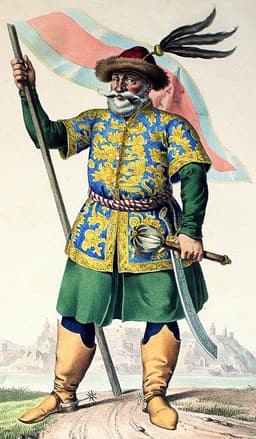
Bleda
Emperor · Ancient
38.3Total

Smenkhkare
Emperor · Ancient
44.3Total
Basic Information
Born
400
-1333
Died
445
-1332
Era
Ancient
Ancient
Nationality
Hunnic Empire
New Kingdom Egypt
Occupation
Emperor
Emperor
Civilization
Western
Middle Eastern
Score Comparison
Military (10%)
45.0
33.6
Political (20%)
26.4
68.0
Influence (20%)
44.0
42.4
Legacy (20%)
34.2
32.5
Leadership (15%)
41.5
42.2
Strategy (15%)
41.0
56.4
TOTAL
38.3
44.3
Bleda — Complete Timeline
434 AD
Co-rulership with AttilaPolitical Action◆ Major
Upon the death of their uncle Rugila, Bleda and his brother Attila became joint rulers of the Hunnic Empire. This co-rulership marked the beginning of a period of aggressive expansion and diplomatic pressure on the Roman Empire.
HunsSuccessionCo-rulership
Impact: regional
435 AD
Treaty of MargusPolitical Action◆ Major
Bleda and Attila negotiated the Treaty of Margus with the Eastern Roman Empire, securing a tribute of 700 pounds of gold per year and the return of Hun refugees. This treaty demonstrated Hun military leverage and established a pattern of Roman payments.
HunsEastern Roman EmpireTreatyTribute
Impact: regional
441 AD
Campaign against the Eastern Roman EmpireWar◆ Major
Bleda and Attila launched a major campaign against the Eastern Roman Empire, sacking cities along the Danube frontier. This aggression forced the Romans to increase their tribute payments and cede territory, expanding Hun control in the Balkans.
HunsEastern Roman EmpireCampaignSack
Impact: regionaldestructive
445 AD
Assassination by AttilaPolitical Action
Bleda was killed, likely on the orders of his brother Attila, during a hunting expedition. This assassination ended the co-rulership and left Attila as the sole ruler of the Huns, enabling his later campaigns against the Roman Empire.
HunsAssassinationPower Struggle
Impact: regionaldestructive
Smenkhkare — Complete Timeline
1334 BC
Possible Co-regency with AkhenatenPolitical Action
Evidence suggests Smenkhkare may have served as co-regent with Akhenaten in the final years of the latter's reign. Inscriptions from Amarna show them ruling together, possibly to manage the transition of power. This co-regency, if it occurred, was brief and ended with Akhenaten's death.
Co-regencyAmarnaSuccession
Impact: national
1333 BC
Brief Reign as Amarna Period PharaohPolitical Action◆ Major
Smenkhkare ruled for a very short period, likely less than a year, during the turbulent Amarna period. He succeeded Akhenaten and may have been a co-regent before becoming sole ruler. His reign is poorly documented, and his identity remains debated, with theories suggesting he was a brother or son of Akhenaten.
Amarna PeriodSuccessionMystery
Impact: national
1332 BC
Burial in Tomb KV55Cultural
Smenkhkare is believed to have been buried in Tomb KV55 in the Valley of the Kings. The tomb contained a mummy, a gilded coffin, and canopic jars, but the identity of the occupant is disputed. The burial was disturbed in antiquity, and the remains have been linked to both Smenkhkare and Akhenaten.
BurialKV55Amarna
Impact: national
This comparison has not been analyzed yet.
One-time AI generation (~1 minute). Scores and timeline are already available below.
Rankings
🥇
SmenkhkareLeader
Mil: 33.6Pol: 68.0Inf: 42.4
44.3
🥈
Bleda
Mil: 45.0Pol: 26.4Inf: 44.0
38.3
+6.0 behind
How This Comparison Works
Algorithm
Each figure is scored on 6 dimensions (0—100 scale) based on structured historical data: Military (10%), Political (20%), Influence (20%), Legacy (20%), Leadership (15%), Strategy (15%). The weighted total produces the final ranking.
Data Sources
Scores are computed from structured sub-indicators in the database. Scale factors adjust for era (Ancient ×0.85, Modern ×1.0) and civilization size (Eastern ×1.05, Other ×0.80) to account for differences in population and military scale.
Maximum 3 Figures
Comparisons are limited to 2—3 figures to ensure readability and statistical meaningfulness.
Error Margins
±5 points per dimension — Sub-scores are derived from historical records with inherent uncertainty. Two figures within 5 points on a dimension should be considered roughly equivalent in that area.
Total Score Accuracy
±3 points overall — The weighted combination of 6 dimensions produces a total score with approximately ±3 points of uncertainty. Differences of less than 3 points are not statistically significant— the figures are effectively tied.
Known Limitations
- Historical records are incomplete and uneven across civilizations
- Figures from oral-tradition societies may be underrepresented
- Occupation labels can misclassify multi-role figures
- Scores measure capability and impact, not moral character
- Quantitative scoring is a comparison tool, not absolute truth
Capability Radar
Military (10%) — Battles & Warfare
Battles
20
36
Win Rate
20
43
Expansion
25
43
Political (20%) — Governance & Reform
Reform
10
0
Diplomacy
25
0
Economy
15
0
Influence (20%) — Cultural & Global Reach
Cultural
10
5
Global
10
5
Legacy (20%) — Historical Impact
Historical
15
10
Longevity
10
5
Leadership (15%) — Power & Stability
Tenure
30
1
Stability
20
0
Strategy (15%) — Tactics & Innovation
Strategy
20
44
Tactics
20
50
Reform
10
53
Similar Comparisons
Comments & Discussion
No comments yet. Be the first to share your thoughts!