Loading...
This comparison has not been analyzed yet.
One-time AI generation (~1 minute). Scores and timeline are already available below.
Bob Hawke vs David Marshall
Bob Hawke leads by 20.0 pts · 2 figures compared
…

Bob Hawke
Politician · Modern
59.7Total
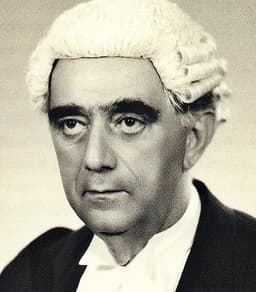
David Marshall
Politician · Modern
39.7Total
Basic Information
Born
1929
1908
Died
—
1995
Era
Modern
Modern
Nationality
Australia
Singapore
Occupation
Politician
Politician
Civilization
Western
Eastern
Score Comparison
Military (10%)
50.0
14.4
Political (20%)
72.0
39.4
Influence (20%)
58.3
50.2
Legacy (20%)
52.0
41.7
Leadership (15%)
80.0
45.0
Strategy (15%)
43.4
26.7
TOTAL
59.7
39.7
Bob Hawke — Complete Timeline
1983 AD
Floated the Australian DollarReform◆ Major
Hawke's government floated the Australian dollar, allowing its value to be determined by market forces rather than fixed by the central bank. This deregulation was a key part of broader financial reforms that modernized the Australian economy.
Economic ReformCurrencyDeregulation
Impact: nationalconstructive
Elected Prime Minister of AustraliaPolitical Action◆ Major
Hawke led the Australian Labor Party to a landslide victory in the 1983 federal election, defeating Malcolm Fraser. His campaign focused on consensus and economic reform, promising to bring the nation together after years of political division.
ElectionLabor PartyConsensus
Impact: nationalprogressive
Signed the Accord with UnionsPolitical Action◆ Major
Hawke's government negotiated the Prices and Incomes Accord with the Australian Council of Trade Unions. This agreement traded wage restraint for social wage improvements, reducing industrial disputes and helping control inflation during economic reform.
Industrial RelationsUnionsEconomic Policy
Impact: nationalconstructive
1984 AD
Introduced MedicareReform◆ Major
Hawke's government introduced Medicare, a universal public health insurance system replacing the earlier Medibank. Funded by a 1% levy on income, Medicare provided free hospital treatment and subsidized medical services to all Australians.
HealthcareMedicareSocial Reform
Impact: nationalprogressive
1990 AD
Won Four Consecutive ElectionsPolitical Action◆ Major
Hawke led Labor to victory in the 1990 federal election, becoming the first Labor leader to win four consecutive elections. His popularity and ability to maintain party unity were key factors in this electoral success.
ElectionLabor PartyPopularity
Impact: nationalconstructive
1991 AD
Deposed as Labor LeaderPolitical Action◆ Major
Paul Keating challenged Hawke for the Labor leadership and won, forcing Hawke to resign as prime minister. The leadership spill ended Hawke's eight-year tenure and marked a shift to more aggressive economic reform under Keating.
Leadership SpillKeatingLabor Party
Impact: nationaltragic
David Marshall — Complete Timeline
1955 AD
Appointed First Chief Minister of SingaporePolitical Action◆ Major
David Marshall became the first Chief Minister of Singapore following the 1955 general election. He led a minority government and negotiated with the British for self-governance, but resigned in 1956 after failing to secure full internal self-rule.
Singapore self-governmentConstitutional negotiations
Impact: national
1956 AD
Led the Merdeka Talks in LondonPolitical Action◆ Major
Marshall led a delegation to London to negotiate full internal self-government for Singapore. The talks collapsed when the British refused to grant control over internal security and defense, leading to Marshall's resignation as Chief Minister.
Merdeka talksSelf-government failure
Impact: national
Resigned as Chief MinisterPolitical Action◆ Major
After the failure of the London talks, Marshall resigned as Chief Minister on June 7, 1956. He was succeeded by Lim Yew Hock. Marshall's resignation marked a turning point in Singapore's path to self-government.
ResignationPolitical transition
Impact: national
1957 AD
Founded the Workers' Party of SingaporePolitical Action◆ Major
After leaving office, Marshall founded the Workers' Party, a political party that became a key opposition force in Singapore. He served as its first secretary-general, advocating for social democracy and workers' rights.
Political party foundingOpposition
Impact: nationalconstructive
1978 AD
Appointed Singapore's First Ambassador to FrancePolitical Action
Marshall served as Singapore's first ambassador to France from 1978 to 1980. He also held concurrent accreditation to Spain and Portugal, representing Singapore's diplomatic interests in Europe.
DiplomacyAmbassador
Impact: national
This comparison has not been analyzed yet.
One-time AI generation (~1 minute). Scores and timeline are already available below.
Rankings
🥇
Bob HawkeLeader
Mil: 50.0Pol: 72.0Inf: 58.3
59.7
🥈
David Marshall
Mil: 14.4Pol: 39.4Inf: 50.2
39.7
+20.0 behind
How This Comparison Works
Algorithm
Each figure is scored on 6 dimensions (0—100 scale) based on structured historical data: Military (10%), Political (20%), Influence (20%), Legacy (20%), Leadership (15%), Strategy (15%). The weighted total produces the final ranking.
Data Sources
Scores are computed from structured sub-indicators in the database. Scale factors adjust for era (Ancient ×0.85, Modern ×1.0) and civilization size (Eastern ×1.05, Other ×0.80) to account for differences in population and military scale.
Maximum 3 Figures
Comparisons are limited to 2—3 figures to ensure readability and statistical meaningfulness.
Error Margins
±5 points per dimension — Sub-scores are derived from historical records with inherent uncertainty. Two figures within 5 points on a dimension should be considered roughly equivalent in that area.
Total Score Accuracy
±3 points overall — The weighted combination of 6 dimensions produces a total score with approximately ±3 points of uncertainty. Differences of less than 3 points are not statistically significant— the figures are effectively tied.
Known Limitations
- Historical records are incomplete and uneven across civilizations
- Figures from oral-tradition societies may be underrepresented
- Occupation labels can misclassify multi-role figures
- Scores measure capability and impact, not moral character
- Quantitative scoring is a comparison tool, not absolute truth
Capability Radar
Military (10%) — Battles & Warfare
Battles
26
16
Win Rate
31
15
Expansion
32
20
Political (20%) — Governance & Reform
Reform
70
30
Diplomacy
80
40
Economy
75
20
Influence (20%) — Cultural & Global Reach
Cultural
55
20
Global
55
20
Legacy (20%) — Historical Impact
Historical
60
30
Longevity
50
20
Leadership (15%) — Power & Stability
Tenure
75
15
Stability
80
20
Strategy (15%) — Tactics & Innovation
Strategy
36
23
Tactics
43
28
Reform
47
30
Similar Comparisons
Comments & Discussion
No comments yet. Be the first to share your thoughts!