Loading...
This comparison has not been analyzed yet.
One-time AI generation (~1 minute). Scores and timeline are already available below.
Bocchus I of Mauretania vs Yajna Sri Satakarni
Yajna Sri Satakarni leads by 14.0 pts · 2 figures compared
…

Bocchus I of Mauretania
Emperor · Ancient
41.0Total
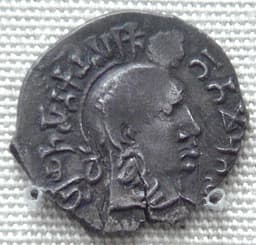
Yajna Sri Satakarni
Emperor · Ancient
55.0Total
Basic Information
Born
-110
152
Died
-80
181
Era
Ancient
Ancient
Nationality
Mauretania
India
Occupation
Emperor
Emperor
Civilization
Other
Indian
Score Comparison
Military (10%)
35.0
55.0
Political (20%)
35.1
48.0
Influence (20%)
44.0
54.1
Legacy (20%)
38.3
46.7
Leadership (15%)
51.9
74.0
Strategy (15%)
38.3
60.0
TOTAL
41.0
55.0
Bocchus I of Mauretania — Complete Timeline
105 BC
Betrayal of Jugurtha to SullaPolitical Action◆ Major
Bocchus I, king of Mauretania, initially allied with Jugurtha but later betrayed him. He lured Jugurtha into a trap and handed him over to the Roman quaestor Sulla, ending the Jugurthine War and earning Roman favor.
Jugurthine WarBetrayalRoman Alliance
Impact: regional
Yajna Sri Satakarni — Complete Timeline
165 AD
Patronized Literature and LearningCultural◆ Major
Yajna Sri Satakarni was a patron of Sanskrit and Prakrit literature. He supported scholars and poets, contributing to the cultural flourishing of the Satavahana court. His reign is associated with the composition of works like the Gatha Saptashati.
PatronageLiteratureCulture
Impact: regionalconstructive
170 AD
Defeated the Shaka KshatrapasWar◆ Major
Yajna Sri Satakarni led a successful military campaign against the Western Kshatrapas (Shaka rulers), reclaiming territories in Gujarat and Malwa. This victory restored Satavahana prestige and control over western trade routes.
ShakaReconquestTrade
Impact: regional
172 AD
Issued Coins with Ship MotifCultural
Yajna Sri Satakarni issued coins featuring a ship motif, symbolizing the importance of maritime trade to the Satavahana economy. These coins are among the earliest Indian depictions of ships on coinage.
CoinageMaritimeSymbolism
Impact: regionalconstructive
175 AD
Expanded Maritime TradeOther
Under Yajna Sri Satakarni, the Satavahana kingdom expanded maritime trade with the Roman Empire. Ports like Bharuch (Barygaza) saw increased traffic of goods such as spices, textiles, and precious stones.
TradeRoman EmpireMaritime
Impact: regionalconstructive
This comparison has not been analyzed yet.
One-time AI generation (~1 minute). Scores and timeline are already available below.
Rankings
🥇
Yajna Sri SatakarniLeader
Mil: 55.0Pol: 48.0Inf: 54.1
55.0
🥈
Bocchus I of Mauretania
Mil: 35.0Pol: 35.1Inf: 44.0
41.0
+14.0 behind
How This Comparison Works
Algorithm
Each figure is scored on 6 dimensions (0—100 scale) based on structured historical data: Military (10%), Political (20%), Influence (20%), Legacy (20%), Leadership (15%), Strategy (15%). The weighted total produces the final ranking.
Data Sources
Scores are computed from structured sub-indicators in the database. Scale factors adjust for era (Ancient ×0.85, Modern ×1.0) and civilization size (Eastern ×1.05, Other ×0.80) to account for differences in population and military scale.
Maximum 3 Figures
Comparisons are limited to 2—3 figures to ensure readability and statistical meaningfulness.
Error Margins
±5 points per dimension — Sub-scores are derived from historical records with inherent uncertainty. Two figures within 5 points on a dimension should be considered roughly equivalent in that area.
Total Score Accuracy
±3 points overall — The weighted combination of 6 dimensions produces a total score with approximately ±3 points of uncertainty. Differences of less than 3 points are not statistically significant— the figures are effectively tied.
Known Limitations
- Historical records are incomplete and uneven across civilizations
- Figures from oral-tradition societies may be underrepresented
- Occupation labels can misclassify multi-role figures
- Scores measure capability and impact, not moral character
- Quantitative scoring is a comparison tool, not absolute truth
Capability Radar
Military (10%) — Battles & Warfare
Battles
20
45
Win Rate
30
50
Expansion
20
40
Political (20%) — Governance & Reform
Reform
10
40
Diplomacy
60
45
Economy
20
50
Influence (20%) — Cultural & Global Reach
Cultural
10
55
Global
10
30
Legacy (20%) — Historical Impact
Historical
25
50
Longevity
15
40
Leadership (15%) — Power & Stability
Tenure
40
55
Stability
25
50
Strategy (15%) — Tactics & Innovation
Strategy
30
45
Tactics
25
40
Reform
10
30
Similar Comparisons
Comments & Discussion
No comments yet. Be the first to share your thoughts!