Loading...
Bogu Qaghan vs Julius Caesar
Julius Caesar leads by 30.2 pts · 2 figures compared
…
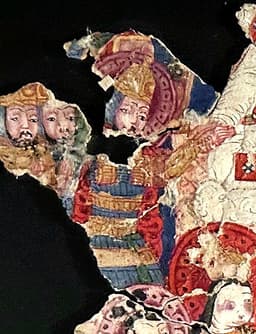
Bogu Qaghan
Emperor · Medieval
52.6Total

Julius Caesar
General · Ancient
82.8Total
Basic Information
Born
724
-100
Died
780
-44
Era
Medieval
Ancient
Nationality
Uyghur Khaganate
Roman Republic
Occupation
Emperor
General
Civilization
Eastern
Western
Score Comparison
Military (10%)
40.0
88.0
Political (20%)
61.3
78.0
Influence (20%)
56.4
85.0
Legacy (20%)
45.0
82.0
Leadership (15%)
64.0
80.0
Strategy (15%)
45.0
85.0
TOTAL
52.6
82.8
Bogu Qaghan — Complete Timeline
759 AD
Accession as Bogu QaghanPolitical Action◆ Major
Bogu Qaghan ascended to the throne of the Uyghur Khaganate after the death of his father. His reign saw the khaganate reach its peak in power and influence.
SuccessionKhaganateLeadership
Impact: regionalconstructive
762 AD
Suppression of the An Lushan RebellionWar◆ Major
Bogu Qaghan sent Uyghur cavalry to aid the Tang dynasty in suppressing the An Lushan Rebellion. The Uyghur forces helped recapture the Tang capital Chang'an, strengthening the alliance with Tang.
Military AidTang DynastyRebellion
Impact: regionalconstructive
763 AD
Conversion to ManichaeismCultural
Bogu Qaghan converted to Manichaeism after meeting Manichaean missionaries from Sogdiana. He declared Manichaeism the state religion of the Uyghur Khaganate, a unique development among steppe empires.
ReligionManichaeismConversion
Impact: regionalconstructive
779 AD
Assassination by Tun Bagha TarkhanPolitical Action
Bogu Qaghan was assassinated by his minister Tun Bagha Tarkhan, who opposed his pro-Sogdian policies and Manichaean conversion. This coup ended Bogu's reign and led to a shift in Uyghur policy.
AssassinationCoupPolicy Change
Impact: regionaltragic
Julius Caesar — Complete Timeline
58 BC
Gallic WarsWar◆ Major
Caesar, as proconsul of Gaul, launched a series of campaigns that conquered all of Gaul (modern France, Belgium, and parts of Switzerland). He fought numerous battles, including against the Helvetii, the Belgae, and the Gallic chieftain Vercingetorix. The wars brought immense wealth and a loyal army to Caesar.
Gallic WarsConquestRoman Expansion
Impact: regional
49 BC
Crossing the RubiconPolitical Action◆ Major
Caesar led Legio XIII across the Rubicon River into Italy, defying the Roman Senate's order to disband his army. This act triggered a civil war against Pompey and the Optimates, ultimately leading to Caesar's dictatorship and the end of the Roman Republic.
Roman Civil WarEnd of RepublicPower Struggle
Impact: global
48 BC
Battle of PharsalusWar◆ Major
Caesar's outnumbered army defeated the larger forces of Pompey the Great at Pharsalus in Greece. Caesar's tactical use of a reserve line to counter Pompey's cavalry charge proved decisive. Pompey fled to Egypt, where he was assassinated, leaving Caesar as the undisputed master of the Roman world.
Roman Civil WarBattleDecisive Victory
Impact: regional
44 BC
Appointment as Dictator for LifePolitical Action◆ Major
The Roman Senate appointed Caesar dictator perpetuo (dictator for life), granting him unprecedented personal power. This move concentrated military, legislative, and judicial authority in one person, effectively ending the Roman Republic's traditional system of checks and balances and alarming many senators.
DictatorshipEnd of RepublicPower Consolidation
Impact: regionaldestructive
Assassination on the Ides of MarchPolitical Action◆ Major
A group of Roman senators, led by Marcus Junius Brutus and Gaius Cassius Longinus, stabbed Caesar to death at a meeting of the Senate in the Theatre of Pompey. The assassination was intended to restore the Republic, but instead triggered another civil war that led to the rise of the Roman Empire.
AssassinationRoman PoliticsEnd of Republic
Impact: globaldestructive
Expert Analysis
bogu-qaghan-vs-julius-caesar
# The Crossing and the Conversion
On a winter day in 49 BCE, a Roman general stood at the banks of a small river in northern Italy, the Rubicon. He knew that crossing it with his army would mean civil war, the destruction of the Republic he served, and likely his own death. He crossed anyway. On a summer day in 763 CE, a steppe khagan received missionaries from a distant land called Sogdiana. He listened to their teachings about a prophet named Mani, who spoke of light and darkness, spirit and matter. He converted. Julius Caesar and Bogu Qaghan never met, never knew of each other's worlds. Yet both men faced a choice that would define them: to break with the past or to preserve it. One chose war and glory; the other chose faith and ruin. Why?
Origins
Caesar was born into the chaos of the late Roman Republic, a world where noble families competed for power through bribery, military command, and political alliances. His family, the Julii, claimed descent from the goddess Venus, but they were not among the richest or most powerful. His father died when Caesar was sixteen, leaving him to navigate a treacherous world of civil wars and proscriptions. He learned early that survival required audacity, charm, and a willingness to risk everything.
Bogu Qaghan was born in 724 into the Uyghur Khaganate, a steppe empire that had risen from the ruins of the Turkic Khaganate. The Uyghurs were nomads, herders and warriors who controlled the Silk Road trade routes. Bogu’s father, Bayanchur Khan, had expanded the khaganate and allied with the Tang dynasty. Bogu inherited a stable, prosperous realm, but one that was surrounded by powerful neighbors: the Tang to the south, the Tibetans to the west, and rival steppe tribes to the north. Unlike Caesar, who grew up in a world of constant political crisis, Bogu grew up in a world of relative order, where the challenge was not survival but maintenance.
Rise to Power
Caesar’s rise was a masterclass in calculated risk. He borrowed enormous sums to fund public games, winning the love of the Roman mob. He formed the First Triumvirate with Pompey and Crassus, two men far more powerful than himself. He then secured command of Gaul, where he spent eight years conquering a territory that made him fabulously wealthy and gave him a loyal army. When his political enemies tried to strip him of command, he made his choice at the Rubicon. He knew that to retreat meant political oblivion; to advance meant war. He advanced.
Bogu Qaghan’s rise was far smoother. He ascended the throne in 759 after his father’s death, inheriting a functioning state. His first major act was to send Uyghur cavalry to help the Tang dynasty suppress the An Lushan Rebellion in 762. This was a shrewd move: it earned the gratitude of the Tang emperor, secured trade privileges, and demonstrated Uyghur military power. Bogu did not need to seize power; it was given to him. The question was what he would do with it.
Leadership & Governance
Caesar governed as he fought: with speed, decisiveness, and a willingness to break rules. As dictator, he reformed the calendar, granted citizenship to provincials, launched public works projects, and planned campaigns against Parthia. He centralized power in his own hands, but he also tried to build a broad coalition of supporters, including former enemies. His military genius was undeniable: he wrote commentaries on his campaigns that are still studied today, and his tactics at battles like Alesia and Pharsalus are models of strategic brilliance. But his political wisdom was flawed. He pardoned his enemies, only to have them stab him.
Bogu Qaghan’s governance was defined by a single, radical decision: the conversion to Manichaeism. In 763, he declared this Persian religion the state faith of the Uyghur Khaganate. Manichaeism was a dualistic faith that taught the struggle between light and darkness, and it demanded strict asceticism from its clergy. For a steppe empire built on warfare, trade, and shamanistic traditions, this was a seismic shift. Bogu hoped that Manichaeism would unify his diverse subjects and strengthen ties with Sogdian merchants. Instead, it alienated his traditional Uyghur nobility, who saw it as a foreign imposition. His military strategy was competent but unremarkable; his political wisdom was innovative but disastrously timed.
Triumph & Tragedy
Caesar’s greatest moment was his triumph over Gaul, a conquest that brought immense wealth and prestige to Rome. His most devastating failure was his assassination on the Ides of March, 44 BCE, when sixty senators stabbed him to death in the Senate chamber. He had achieved everything a Roman could dream of, only to die at the hands of men he had pardoned. His tragedy was that he could not see that the Republic he sought to dominate would not tolerate a king.
Bogu Qaghan’s greatest moment was the suppression of the An Lushan Rebellion, which cemented Uyghur influence over the Tang dynasty. His most devastating failure was his assassination in 779, at the hands of his own uncle and minister, Tun Bagha Tarkhan. The coup was driven by opposition to Bogu’s pro-Sogdian policies and Manichaean conversion. His tragedy was that he tried to transform his people’s identity too quickly, and they rejected him.
Character & Destiny
Caesar was a man of immense ambition, charm, and intellectual curiosity. He wrote poetry, studied philosophy, and slept with the wives of his enemies. He believed in his own destiny, and he was right: his name became synonymous with imperial power. But his arrogance blinded him. He thought he could control the forces he unleashed, but the Republic was not ready for a monarch, and his murder plunged Rome into another civil war.
Bogu Qaghan was a man of vision and faith. He saw the Uyghur Khaganate as more than a nomadic war machine; he wanted it to be a civilized, religious state. But he misjudged the strength of tradition. His conversion to Manichaeism was a bold attempt to reshape his world, but it came at the cost of alienating the very people who held power. He was a reformer ahead of his time, but ahead of his time is a lonely place.
Legacy
Caesar’s legacy is written in stone and blood. His name became the title for rulers from the Kaiser to the Tsar. His conquests and reforms laid the foundation for the Roman Empire, which lasted for another five centuries in the West and a thousand years in the East. He is remembered as a military genius, a political visionary, and a cautionary tale about the dangers of unchecked power.
Bogu Qaghan’s legacy is more obscure. The Uyghur Khaganate collapsed within a few decades of his death, and his Manichaean faith faded into history. But the Uyghur people, who still exist today, carry traces of his vision: they are one of the few Turkic peoples with a literary tradition rooted in a non-Islamic religion. He is remembered, if at all, as a tragic figure who tried to change his world and failed.
Conclusion
Caesar and Bogu Qaghan stand at opposite ends of the spectrum of historical ambition. Caesar sought power and found it, only to be destroyed by its consequences. Bogu sought meaning and found it, only to be destroyed by its costs. One crossed a river, the other crossed a faith. Both made choices that defined not only their own lives but the lives of millions. Their stories remind us that history is not simply a record of success or failure, but a testament to the courage and folly of human decision. The Rubicon and the Manichaean prayer book: two paths, two fates, one eternal question. What would we have done?
Rankings
🥇
Julius CaesarLeader
Mil: 88.0Pol: 78.0Inf: 85.0
82.8
🥈
Bogu Qaghan
Mil: 40.0Pol: 61.3Inf: 56.4
52.6
+30.2 behind
How This Comparison Works
Algorithm
Each figure is scored on 6 dimensions (0—100 scale) based on structured historical data: Military (10%), Political (20%), Influence (20%), Legacy (20%), Leadership (15%), Strategy (15%). The weighted total produces the final ranking.
Data Sources
Scores are computed from structured sub-indicators in the database. Scale factors adjust for era (Ancient ×0.85, Modern ×1.0) and civilization size (Eastern ×1.05, Other ×0.80) to account for differences in population and military scale.
Maximum 3 Figures
Comparisons are limited to 2—3 figures to ensure readability and statistical meaningfulness.
Error Margins
±5 points per dimension — Sub-scores are derived from historical records with inherent uncertainty. Two figures within 5 points on a dimension should be considered roughly equivalent in that area.
Total Score Accuracy
±3 points overall — The weighted combination of 6 dimensions produces a total score with approximately ±3 points of uncertainty. Differences of less than 3 points are not statistically significant— the figures are effectively tied.
Known Limitations
- Historical records are incomplete and uneven across civilizations
- Figures from oral-tradition societies may be underrepresented
- Occupation labels can misclassify multi-role figures
- Scores measure capability and impact, not moral character
- Quantitative scoring is a comparison tool, not absolute truth
Capability Radar
Military (10%) — Battles & Warfare
Battles
45
95
Win Rate
40
92
Expansion
25
97
Political (20%) — Governance & Reform
Reform
55
90
Diplomacy
50
85
Economy
40
82
Influence (20%) — Cultural & Global Reach
Cultural
45
88
Global
25
94
Legacy (20%) — Historical Impact
Historical
40
95
Longevity
30
96
Leadership (15%) — Power & Stability
Tenure
60
75
Stability
35
60
Strategy (15%) — Tactics & Innovation
Strategy
30
94
Tactics
35
96
Reform
20
88
Similar Comparisons
Comments & Discussion
Silver-Tongued Centurion6/17/2026
Caesar didn’t just cross a river; he crossed a line that defined Rome for centuries. Bogu Qaghan’s conversion to Manichaeism is historically fascinating, but let’s be real: Caesar’s gamble at the Rubicon reshaped the entire Western world. Bogu chose a religion that ultimately fractured his khaganate; Caesar chose civil war and founded an empire. One was a tactical genius, the other a spiritual gambler. I’ll take the man who built roads and wrote commentaries over the one who listened to Sogdian
数据碎颅者6/17/2026
你们全在吹捧“伟大领袖”,但看数据:凯撒渡过卢比孔河时只有第十三军团(约5000人),而博古可汗的帝国控制着从蒙古到新疆的商路。凯撒的“荣耀”建立在对高卢百万人的屠杀上,博古改信摩尼教至少促进了跨文化贸易。别拿个人魅力掩盖本质——凯撒是为私人权力,博古是战略布局。历史是由胜利者书写的,但数据不会说谎:摩尼教在回鹘的传播持续了三个世纪,而凯撒的继承人只用了14年就把他刺杀了。
Eagle-Eye Classics6/17/2026
You’re all missing the core philosophical divide. Caesar’s crossing was an act of *hybris* in the purest Greek sense—defying fate and the gods for personal glory. Bogu’s conversion was a *metanoia*, a radical shift in worldview. Caesar broke the Republic’s political laws; Bogu broke the steppe’s unwritten code. I’d argue Caesar’s choice is more profound because it was entirely secular, a conscious rejection of everything his culture held sacred. Bogu at least had divine justification. Caesar sta
游牧批判者6/17/2026
别跟我提“信仰与毁灭”——博古改信摩尼教不是“崩溃”,而是Uyghur精英阶级的理性选择。9世纪维京人也改信基督教,难道那是“末日”?实际是摩尼教帮Uyghur整合粟特商人网络,促进税收和行政效率。凯撒是自恋狂,博古是战略家。回鹘汗国衰落是因为气候和汉地扩张,不是宗教。西方人总把“大规模转型”浪漫化。
Tacticus Ultor6/17/2026
The comparison is flawed at a fundamental level. Caesar faced a **personal** decision about his own fate and the fate of