Loading...
Bohemond I of Antioch vs Kul Tigin
Bohemond I of Antioch leads by 4.8 pts · 2 figures compared
…
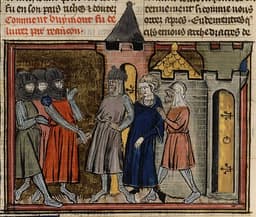
Bohemond I of Antioch
General · Medieval
55.2Total

Kul Tigin
General · Medieval
50.4Total
Basic Information
Born
1054
684
Died
1111
731
Era
Medieval
Medieval
Nationality
Italy
Gokturk Khaganate
Occupation
General
General
Civilization
Western
Eastern
Score Comparison
Military (10%)
76.0
65.0
Political (20%)
45.1
36.5
Influence (20%)
53.3
51.8
Legacy (20%)
46.7
43.3
Leadership (15%)
61.1
61.1
Strategy (15%)
66.3
55.0
TOTAL
55.2
50.4
Bohemond I of Antioch — Complete Timeline
1098 AD
Capture of AntiochWar
Bohemond led the capture of Antioch during the First Crusade. He negotiated with a traitor inside the city to open a gate, allowing the crusaders to enter. He then claimed the city for himself, becoming Prince of Antioch.
CrusadeSiegeCrusader States
Impact: regional
1104 AD
Battle of HarranWar◆ Major
Bohemond and Baldwin of Edessa were defeated by a combined Seljuk force at the Battle of Harran. Bohemond was captured and held for ransom, weakening the Principality of Antioch.
Crusader StatesBattleDefeat
Impact: regionaltragic
1107 AD
Campaign against the Byzantine EmpireWar◆ Major
After his release, Bohemond launched a campaign against the Byzantine Empire, besieging Dyrrhachium. He was forced to surrender in 1108 and sign the Treaty of Devol, which made Antioch a vassal of Byzantium.
Byzantine EmpireWarTreaty
Impact: regional
1108 AD
Treaty of DevolPolitical Action◆ Major
Bohemond signed the Treaty of Devol with Byzantine Emperor Alexios I Komnenos. The treaty recognized Bohemond as Prince of Antioch but made him a vassal of the Byzantine Empire, a humiliation that ended his ambitions.
TreatyByzantine EmpireCrusader States
Impact: regional
Kul Tigin — Complete Timeline
717 AD
Battle of the Irtysh River (with Bilge Qaghan)War◆ Major
Kul Tigin commanded the Turkic army alongside his brother Bilge Qaghan at the Battle of the Irtysh River. He led a decisive cavalry charge that broke the Tang and allied forces, securing a major victory for the revived Eastern Turkic Khaganate.
BattleTang-Turkic War
Impact: regionaldestructive
720 AD
Suppression of the Tiele revoltWar
Kul Tigin led a campaign against the Tiele tribes, who had rebelled against Turkic rule. He defeated them in a series of battles, reasserting Turkic authority over the steppe and preventing the fragmentation of the khaganate.
Revolt SuppressionTiele
Impact: regionaldestructive
731 AD
Death of Kul TiginOther◆ Major
Kul Tigin died of illness at the age of 47. His death was a major blow to the Eastern Turkic Khaganate, as he was a key military leader and supporter of Bilge Qaghan. His funeral was attended by envoys from the Tang and other states.
DeathLoss
Impact: regionaltragic
732 AD
Construction of the Kul Tigin inscriptionCultural◆ Major
After Kul Tigin's death, Bilge Qaghan commissioned a memorial stele in his honor, the Kul Tigin inscription. This Orkhon inscription, written in runic Turkic, eulogizes Kul Tigin's military achievements and provides historical details about the Turkic Khaganate.
InscriptionCultural Heritage
Impact: regionalconstructive
Expert Analysis
Origins
Bohemond I of Antioch, born c. 1054 in southern Italy, was the eldest son of Robert Guiscard, the Norman Duke of Apulia and Calabria. His mother was Alberada of Buonalbergo. Raised in the Norman martial tradition, Bohemond inherited his father's ambition and military skill but not his lands, due to his parents' marriage being annulled. His early years were spent fighting in Italy and against the Byzantine Empire, gaining experience in siege warfare and cavalry tactics.
Kul Tigin, born 684 in the Gokturk Khaganate (modern-day Mongolia), was a prince of the Ashina clan, the ruling dynasty of the Eastern Turkic Khaganate. His father was Ilterish Qaghan, the founder of the Second Turkic Khaganate, and his mother was a noblewoman. Kul Tigin was raised in the steppe tradition of horse archery and nomadic warfare. He was the younger brother of Bilge Qaghan, the future ruler. His early life involved learning combat and leadership under the tutelage of his father and brother.
Rise to Power
Bohemond rose to prominence during the First Crusade (1096-1099). After his father's death, he struggled to secure his inheritance in Italy and joined the Crusade as a means to gain territory in the East. His military reputation preceded him, and he became a key leader among the crusaders. The turning point was the Siege of Antioch (1097-1098), where he orchestrated the city's capture through a secret agreement with a traitor inside the gates. This victory made him Prince of Antioch, establishing his power base in the Levant.
Kul Tigin rose to power alongside his brother Bilge Qaghan. After their father's death, the khaganate fell into turmoil, and both brothers were exiled. In 716, Kul Tigin led a coup that placed Bilge on the throne, eliminating rivals. He then served as the supreme military commander (shad) of the Eastern Turkic Khaganate. His decisive actions at the Battle of the Irtysh River (c. 711) against the Turgesh and later campaigns against the Tiele and other tribes solidified his reputation as a formidable general.
Leadership & Governance
Bohemond's leadership was characterized by aggressive ambition and a focus on personal gain. As Prince of Antioch, he ruled with a heavy hand, often clashing with fellow crusaders and the Byzantine Empire. He was a skilled siege commander and tactician, but his political acumen was lacking. He alienated potential allies and overreached in his campaign against the Byzantines, leading to his defeat at Dyrrhachium (1108). His governance was centered on military expansion and securing his principality, but he failed to establish stable institutions.
Kul Tigin's leadership was more collective, serving as the military arm of his brother's rule. He was a loyal supporter of Bilge Qaghan, and together they restored the khaganate's power. Kul Tigin's governance was focused on maintaining steppe traditions and suppressing rebellions. He led campaigns that reasserted Turkic authority over the Tiele and other tribes. His leadership style was direct and decisive, emphasizing cavalry tactics and swift strikes. He did not engage in political intrigue, leaving governance to his brother.
Triumph & Tragedy
Bohemond's greatest triumph was the capture of Antioch in 1098, which made him a major figure in the Crusader states. His military score of 76.0 reflects his skill in siege warfare. However, his greatest failure was the campaign against the Byzantine Empire. After his release from captivity (following the Battle of Harran in 1104), he attacked Byzantine territory but was forced to surrender at Dyrrhachium. The Treaty of Devol (1108) made him a vassal of the Byzantine Empire, a humiliating end to his ambitions. His political score of 45.1 highlights his poor diplomacy.
Kul Tigin's triumph was his role in securing the Eastern Turkic Khaganate's revival. His victory at the Irtysh River and suppression of the Tiele revolt demonstrated his military prowess (score 65.0). His tragedy was his early death from illness at age 47, which deprived the khaganate of its most capable commander. After his death, the khaganate declined, and the Orkhon inscriptions that commemorate him became a lasting monument. His political score of 36.5 reflects his limited role in governance.
Character & Destiny
Bohemond was ambitious, cunning, and relentless. He was willing to betray allies (as at Antioch) and take risks. However, his pride and overconfidence led to his downfall. He underestimated the Byzantine Empire's resilience and overextended his forces. His character shaped his destiny: a brilliant conqueror who could not consolidate his gains. Historical assessments note his charisma and military talent but criticize his lack of strategic patience.
Kul Tigin was loyal, brave, and disciplined. He subordinated his ambitions to his brother's rule, a rare quality among steppe princes. His character was shaped by the nomadic code of honor and duty. His destiny was to be a supporting figure, not a ruler. The Kul Tigin inscription describes him as a wise and valiant commander. His early death cut short his influence, but his legacy endures through the inscriptions that bear his name.
Legacy
Bohemond's legacy is mixed. He established the Principality of Antioch, which lasted until 1268. However, his Treaty of Devol set a precedent for Byzantine suzerainty over crusader states. He is remembered as a symbol of Norman ambition in the Crusades. His influence score of 53.3 and legacy score of 46.7 reflect his limited long-term impact. The principality survived but did not expand significantly after his death.
Kul Tigin's legacy is more enduring in cultural terms. The Kul Tigin inscription, part of the Orkhon inscriptions, is a key source for the history and language of the Turkic peoples. It demonstrates the literary and political sophistication of the Gokturks. His influence score of 51.8 and legacy score of 43.3 are close to Bohemond's. While his military achievements were critical for the khaganate, his lasting impact is through the inscription, which influenced later Turkic states.
Conclusion
Bohemond I of Antioch, with a total score of 55.2, edges out Kul Tigin (50.4) by 4.8 points. Bohemond's higher military score (76.0 vs 65.0) and his role in a major historical event (the First Crusade) give him a slight edge. However, Kul Tigin's cultural legacy through the Orkhon inscriptions is arguably more significant for the Turkic world. In terms of immediate impact, Bohemond's capture of Antioch had greater consequences for medieval geopolitics. Yet, Kul Tigin's contributions to Turkic identity have endured for centuries. Overall, Bohemond had a greater impact on the course of history due to the Crusades' global significance, but the margin is narrow. The comparison highlights different types of leadership: one a ambitious conqueror, the other a loyal general. Neither was a perfect leader, but both left marks on their respective civilizations.
Rankings
🥇
Bohemond I of AntiochLeader
Mil: 76.0Pol: 45.1Inf: 53.3
55.2
🥈
Kul Tigin
Mil: 65.0Pol: 36.5Inf: 51.8
50.4
+4.8 behind
How This Comparison Works
Algorithm
Each figure is scored on 6 dimensions (0—100 scale) based on structured historical data: Military (10%), Political (20%), Influence (20%), Legacy (20%), Leadership (15%), Strategy (15%). The weighted total produces the final ranking.
Data Sources
Scores are computed from structured sub-indicators in the database. Scale factors adjust for era (Ancient ×0.85, Modern ×1.0) and civilization size (Eastern ×1.05, Other ×0.80) to account for differences in population and military scale.
Maximum 3 Figures
Comparisons are limited to 2—3 figures to ensure readability and statistical meaningfulness.
Error Margins
±5 points per dimension — Sub-scores are derived from historical records with inherent uncertainty. Two figures within 5 points on a dimension should be considered roughly equivalent in that area.
Total Score Accuracy
±3 points overall — The weighted combination of 6 dimensions produces a total score with approximately ±3 points of uncertainty. Differences of less than 3 points are not statistically significant— the figures are effectively tied.
Known Limitations
- Historical records are incomplete and uneven across civilizations
- Figures from oral-tradition societies may be underrepresented
- Occupation labels can misclassify multi-role figures
- Scores measure capability and impact, not moral character
- Quantitative scoring is a comparison tool, not absolute truth
Capability Radar
Military (10%) — Battles & Warfare
Battles
75
55
Win Rate
70
60
Expansion
65
50
Political (20%) — Governance & Reform
Reform
40
30
Diplomacy
65
50
Economy
35
30
Influence (20%) — Cultural & Global Reach
Cultural
45
45
Global
45
35
Legacy (20%) — Historical Impact
Historical
60
50
Longevity
50
40
Leadership (15%) — Power & Stability
Tenure
55
40
Stability
30
45
Strategy (15%) — Tactics & Innovation
Strategy
75
60
Tactics
80
65
Reform
30
30
Similar Comparisons
Comments & Discussion
No comments yet. Be the first to share your thoughts!