Loading...
Bohemond I of Antioch vs Li Chengliang
Bohemond I of Antioch leads by 3.7 pts · 2 figures compared
…
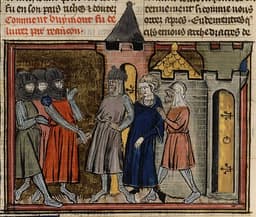
Bohemond I of Antioch
General · Medieval
55.2Total

Li Chengliang
General · Medieval
51.5Total
Basic Information
Born
1054
1526
Died
1111
1615
Era
Medieval
Medieval
Nationality
Italy
China
Occupation
General
General
Civilization
Western
Eastern
Score Comparison
Military (10%)
76.0
67.5
Political (20%)
45.1
35.1
Influence (20%)
53.3
47.1
Legacy (20%)
46.7
40.8
Leadership (15%)
61.1
80.0
Strategy (15%)
66.3
55.0
TOTAL
55.2
51.5
Bohemond I of Antioch — Complete Timeline
1098 AD
Capture of AntiochWar
Bohemond led the capture of Antioch during the First Crusade. He negotiated with a traitor inside the city to open a gate, allowing the crusaders to enter. He then claimed the city for himself, becoming Prince of Antioch.
CrusadeSiegeCrusader States
Impact: regional
1104 AD
Battle of HarranWar◆ Major
Bohemond and Baldwin of Edessa were defeated by a combined Seljuk force at the Battle of Harran. Bohemond was captured and held for ransom, weakening the Principality of Antioch.
Crusader StatesBattleDefeat
Impact: regionaltragic
1107 AD
Campaign against the Byzantine EmpireWar◆ Major
After his release, Bohemond launched a campaign against the Byzantine Empire, besieging Dyrrhachium. He was forced to surrender in 1108 and sign the Treaty of Devol, which made Antioch a vassal of Byzantium.
Byzantine EmpireWarTreaty
Impact: regional
1108 AD
Treaty of DevolPolitical Action◆ Major
Bohemond signed the Treaty of Devol with Byzantine Emperor Alexios I Komnenos. The treaty recognized Bohemond as Prince of Antioch but made him a vassal of the Byzantine Empire, a humiliation that ended his ambitions.
TreatyByzantine EmpireCrusader States
Impact: regional
Li Chengliang — Complete Timeline
1570 AD
Appointment as Commander of LiaodongPolitical Action◆ Major
Li Chengliang was appointed as the commander of the Liaodong military region, responsible for defending the Ming frontier against the Jurchen tribes. He held this post for decades, becoming the dominant military figure in the northeast.
Military CommandLiaodongMing Dynasty
Impact: regionalconstructive
1574 AD
Campaigns Against the Jianzhou JurchensWar◆ Major
Li Chengliang led a series of punitive expeditions against the Jianzhou Jurchens under Wang Gao, destroying their strongholds and killing thousands. These campaigns temporarily subdued the Jurchen threat but also fostered resentment.
Jurchen CampaignsFrontier WarfareMing Dynasty
Impact: regionaldestructive
1583 AD
Support for Nurhaci's RisePolitical Action
Li Chengliang supported the young Jurchen leader Nurhaci, providing him with military backing and resources. This patronage inadvertently helped Nurhaci unify the Jurchen tribes, creating the future threat of the Later Jin dynasty.
NurhaciJurchen UnificationMing Policy
Impact: globaldestructive
1590 AD
Corruption and Accumulation of WealthPolitical Action
Li Chengliang was accused of corruption, including embezzling military funds and accepting bribes from Jurchen leaders. His wealth and power grew unchecked, and he was criticized for prioritizing personal gain over frontier defense.
CorruptionMing MilitaryScandal
Impact: regionaldestructive
1615 AD
Retirement and DeathOther◆ Major
Li Chengliang retired from military service in his late 80s and died shortly after. His long tenure in Liaodong left a mixed legacy: he stabilized the frontier but also enabled the rise of Nurhaci, who would later overthrow the Ming.
RetirementDeathLegacy
Impact: regional
Expert Analysis
Origins
Bohemond I of Antioch was born around 1054 in San Marco Argentano, Calabria, as the eldest son of Robert Guiscard, the Norman Duke of Apulia and Calabria. His family background was one of conquest and ambition; the Normans had carved out territories in southern Italy through military prowess. Bohemond was originally named Mark, but his father renamed him after a legendary giant, reflecting expectations of greatness. He received a knightly education, focusing on warfare and leadership, with little formal schooling.
Li Chengliang was born in 1526 in Tieling, Liaodong, into a military family serving the Ming dynasty. His father, Li Ying, was a minor official. Li Chengliang rose through the ranks due to his martial skills and bravery, initially serving as a low-ranking officer. He had no formal education but learned military strategy through experience. His early career involved fighting bandits and Jurchen raiders on the northeastern frontier.
Rise to Power
Bohemond joined the First Crusade in 1096 after the Council of Clermont. He was a skilled commander and used his reputation from earlier campaigns in Italy. His key turning point came in 1098 during the Siege of Antioch. Bohemond negotiated with a tower guard named Firouz to open the city gates, leading to the crusaders' capture of Antioch. This victory elevated him to prominence, and he claimed the city for himself, establishing the Principality of Antioch in 1099.
Li Chengliang's rise began in the 1550s when he was appointed as a regional commander in Liaodong. He gained recognition for suppressing Jurchen raids. In 1570, he was appointed commander-in-chief of the Liaodong military region, a position he held for decades. His turning point was his support for the young Jurchen leader Nurhaci in the 1580s, providing him with military backing and resources. This patronage allowed Nurhaci to consolidate power, though it later backfired on the Ming.
Leadership & Governance
Bohemond's leadership style was aggressive and opportunistic. He governed Antioch as a feudal prince, relying on Norman knights and crusader allies. He implemented a system of vassalage, granting lands to his followers. His governance was militaristic, with constant warfare against Byzantines and Muslims. For example, he launched a campaign against the Byzantine Empire in 1107, besieging Dyrrhachium, but was forced to surrender in 1108. The Treaty of Devol made him a vassal of Byzantium, limiting his autonomy.
Li Chengliang's leadership was pragmatic but corrupt. He maintained stability in Liaodong through a combination of military force and bribery. He often bought off Jurchen leaders with gifts and titles, preventing large-scale invasions. However, he embezzled military funds and accepted bribes, accumulating vast wealth. His corruption weakened the Ming army's effectiveness. For instance, he received tribute from Nurhaci while reporting false victories to the Ming court.
Triumph & Tragedy
Bohemond's greatest success was capturing Antioch in 1098, which established a crusader state that lasted until 1268. He also successfully defended the city against Muslim counterattacks. His greatest failure was the Treaty of Devol in 1108, which reduced him to a Byzantine vassal and ended his ambitions. He died in 1111 in Apulia, having lost his principality's independence.
Li Chengliang's triumphs include decades of frontier stability and suppressing Jurchen rebellions. He led expeditions against the Jianzhou Jurchens under Wang Gao in 1573-1574, destroying their strongholds and killing thousands. However, his patronage of Nurhaci proved disastrous. Nurhaci unified the Jurchen tribes and later rebelled against the Ming, founding the Qing dynasty. Li's corruption also contributed to the decline of Ming military readiness.
Character & Destiny
Bohemond was ambitious, cunning, and ruthless. He used betrayal to capture Antioch and was willing to fight against fellow Christians (Byzantines) for power. His character drove him to seek an independent kingdom, but overreach led to his downfall. Historians note his military skill but lack of political foresight; he scored 66.3 in strategy but only 45.1 in politics.
Li Chengliang was brave but corrupt. He maintained personal power through patronage and bribes, but his short-term thinking allowed a future enemy to rise. His leadership score of 80.0 reflects his ability to command loyalty, but his political score of 35.1 indicates poor statecraft. He died in 1598 at age 72, leaving a weakened frontier.
Legacy
Bohemond's legacy is the Principality of Antioch, which lasted 170 years. He is remembered as a key figure of the First Crusade, though his treaty with Byzantium diminished his reputation. His actions influenced crusader-Byzantine relations for centuries.
Li Chengliang's legacy is mixed. He stabilized Liaodong for decades but inadvertently enabled the rise of the Qing dynasty. The Ming collapse in 1644 is partly attributed to the Jurchen threat he failed to contain. He is often criticized for corruption and short-sightedness.
Conclusion
Bohemond I of Antioch had greater impact than Li Chengliang. Despite a higher total score (55.2 vs 51.5), Bohemond's capture of Antioch created a lasting crusader state that shaped medieval geopolitics. Li Chengliang's actions, while significant, led to the Ming dynasty's downfall, but his legacy is more negative. Bohemond's military achievements (76.0 vs 67.5) and strategic impact (66.3 vs 55.0) outweigh Li's leadership (80.0 vs 61.1). Thus, Bohemond is the more consequential figure.
Rankings
🥇
Bohemond I of AntiochLeader
Mil: 76.0Pol: 45.1Inf: 53.3
55.2
🥈
Li Chengliang
Mil: 67.5Pol: 35.1Inf: 47.1
51.5
+3.7 behind
How This Comparison Works
Algorithm
Each figure is scored on 6 dimensions (0—100 scale) based on structured historical data: Military (10%), Political (20%), Influence (20%), Legacy (20%), Leadership (15%), Strategy (15%). The weighted total produces the final ranking.
Data Sources
Scores are computed from structured sub-indicators in the database. Scale factors adjust for era (Ancient ×0.85, Modern ×1.0) and civilization size (Eastern ×1.05, Other ×0.80) to account for differences in population and military scale.
Maximum 3 Figures
Comparisons are limited to 2—3 figures to ensure readability and statistical meaningfulness.
Error Margins
±5 points per dimension — Sub-scores are derived from historical records with inherent uncertainty. Two figures within 5 points on a dimension should be considered roughly equivalent in that area.
Total Score Accuracy
±3 points overall — The weighted combination of 6 dimensions produces a total score with approximately ±3 points of uncertainty. Differences of less than 3 points are not statistically significant— the figures are effectively tied.
Known Limitations
- Historical records are incomplete and uneven across civilizations
- Figures from oral-tradition societies may be underrepresented
- Occupation labels can misclassify multi-role figures
- Scores measure capability and impact, not moral character
- Quantitative scoring is a comparison tool, not absolute truth
Capability Radar
Military (10%) — Battles & Warfare
Battles
75
65
Win Rate
70
60
Expansion
65
35
Political (20%) — Governance & Reform
Reform
40
30
Diplomacy
65
50
Economy
35
25
Influence (20%) — Cultural & Global Reach
Cultural
45
30
Global
45
20
Legacy (20%) — Historical Impact
Historical
60
40
Longevity
50
35
Leadership (15%) — Power & Stability
Tenure
55
70
Stability
30
45
Strategy (15%) — Tactics & Innovation
Strategy
75
60
Tactics
80
55
Reform
30
40
Similar Comparisons
Comments & Discussion
No comments yet. Be the first to share your thoughts!