Loading...
This comparison has not been analyzed yet.
One-time AI generation (~1 minute). Scores and timeline are already available below.
Brian Mulroney vs Sergio Osmena
Brian Mulroney leads by 10.4 pts · 2 figures compared
…
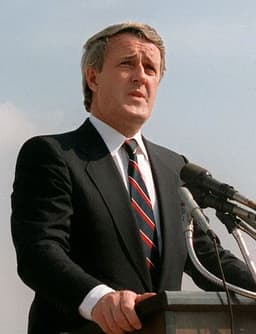
Brian Mulroney
Politician · Modern
60.8Total

Sergio Osmena
Politician · Modern
50.4Total
Basic Information
Born
1939
1878
Died
—
1961
Era
Modern
Modern
Nationality
Canada
Philippines
Occupation
Politician
Politician
Civilization
Western
Eastern
Score Comparison
Military (10%)
48.4
14.6
Political (20%)
78.0
62.7
Influence (20%)
61.0
54.1
Legacy (20%)
56.0
48.3
Leadership (15%)
72.0
68.0
Strategy (15%)
42.5
37.7
TOTAL
60.8
50.4
Brian Mulroney — Complete Timeline
1988 AD
Negotiation of the Canada-US Free Trade AgreementPolitical Action◆ Major
Mulroney's government negotiated the Canada-US Free Trade Agreement (CUSFTA), which eliminated tariffs and trade barriers between the two countries. The deal was controversial in Canada but passed after a federal election fought largely on the issue.
Free TradeUS-Canada RelationsEconomic Policy
Impact: regionalconstructive
1991 AD
Introduction of the Goods and Services TaxReform◆ Major
Mulroney's government implemented a 7% federal Goods and Services Tax (GST) to replace the hidden Manufacturers' Sales Tax. The GST was deeply unpopular and contributed to the Progressive Conservative Party's electoral collapse in 1993.
Tax ReformGSTFiscal Policy
Impact: nationaldestructive
1992 AD
Signing of the North American Free Trade AgreementPolitical Action◆ Major
Mulroney signed NAFTA alongside US President George H.W. Bush and Mexican President Carlos Salinas de Gortari. The agreement expanded CUSFTA to include Mexico, creating a trilateral trade bloc that reshaped North American commerce.
NAFTATrade BlocNorth America
Impact: regionalconstructive
Sergio Osmena — Complete Timeline
1907 AD
Speaker of the Philippine House of RepresentativesPolitical Action◆ Major
Osmeña was elected as the first Speaker of the Philippine Assembly (the lower house of the Philippine Legislature) in 1907. He served in this position until 1922, establishing the legislative framework under American colonial rule and becoming a leading nationalist figure.
Legislative LeadershipAmerican Colonial EraPhilippine Assembly
Impact: nationalconstructive
1935 AD
Vice Presidency under QuezonPolitical Action
Osmeña was elected Vice President of the Philippines under Manuel L. Quezon in the 1935 elections, the first under the Commonwealth. He served as Vice President and also as Secretary of Public Instruction, playing a key role in the early Commonwealth government.
Vice PresidencyCommonwealthQuezon
Impact: national
1944 AD
Assumption of the Philippine Commonwealth PresidencyPolitical Action◆ Major
Upon the death of President Manuel L. Quezon on August 1, 1944, Vice President Sergio Osme
Presidential SuccessionGovernment-in-ExileWorld War II
Impact: national
1945 AD
Return to the Philippines with MacArthurWar◆ Major
Osmeña returned to the Philippines alongside General Douglas MacArthur during the Leyte Gulf landings on October 20, 1944. He re-established the Commonwealth government on Philippine soil, overseeing the liberation of the country from Japanese occupation.
LiberationWorld War IIMacArthur
Impact: nationalconstructive
1946 AD
Defeat in 1946 Presidential ElectionPolitical Action◆ Major
Osmeña lost the first post-war Philippine presidential election to Manuel Roxas, who had the support of the United States. The election was marked by the split of the Nacionalista Party and the formation of the Liberal Party, leading to Osmeña's defeat and the end of his presidency.
Election DefeatPolitical TransitionNacionalista Party Split
Impact: nationaltragic
This comparison has not been analyzed yet.
One-time AI generation (~1 minute). Scores and timeline are already available below.
Rankings
🥇
Brian MulroneyLeader
Mil: 48.4Pol: 78.0Inf: 61.0
60.8
🥈
Sergio Osmena
Mil: 14.6Pol: 62.7Inf: 54.1
50.4
+10.4 behind
How This Comparison Works
Algorithm
Each figure is scored on 6 dimensions (0—100 scale) based on structured historical data: Military (10%), Political (20%), Influence (20%), Legacy (20%), Leadership (15%), Strategy (15%). The weighted total produces the final ranking.
Data Sources
Scores are computed from structured sub-indicators in the database. Scale factors adjust for era (Ancient ×0.85, Modern ×1.0) and civilization size (Eastern ×1.05, Other ×0.80) to account for differences in population and military scale.
Maximum 3 Figures
Comparisons are limited to 2—3 figures to ensure readability and statistical meaningfulness.
Error Margins
±5 points per dimension — Sub-scores are derived from historical records with inherent uncertainty. Two figures within 5 points on a dimension should be considered roughly equivalent in that area.
Total Score Accuracy
±3 points overall — The weighted combination of 6 dimensions produces a total score with approximately ±3 points of uncertainty. Differences of less than 3 points are not statistically significant— the figures are effectively tied.
Known Limitations
- Historical records are incomplete and uneven across civilizations
- Figures from oral-tradition societies may be underrepresented
- Occupation labels can misclassify multi-role figures
- Scores measure capability and impact, not moral character
- Quantitative scoring is a comparison tool, not absolute truth
Capability Radar
Military (10%) — Battles & Warfare
Battles
31
13
Win Rate
32
19
Expansion
36
19
Political (20%) — Governance & Reform
Reform
75
55
Diplomacy
80
65
Economy
75
50
Influence (20%) — Cultural & Global Reach
Cultural
40
30
Global
65
35
Legacy (20%) — Historical Impact
Historical
65
50
Longevity
55
40
Leadership (15%) — Power & Stability
Tenure
65
60
Stability
60
45
Strategy (15%) — Tactics & Innovation
Strategy
38
22
Tactics
39
25
Reform
46
27
Similar Comparisons
Comments & Discussion
No comments yet. Be the first to share your thoughts!