Loading...
This comparison has not been analyzed yet.
One-time AI generation (~1 minute). Scores and timeline are already available below.
Buddhadeb Bhattacharjee vs Sixto Duran Ballen
Sixto Duran Ballen leads by 7.7 pts · 2 figures compared
…

Buddhadeb Bhattacharjee
Politician · Modern
43.6Total
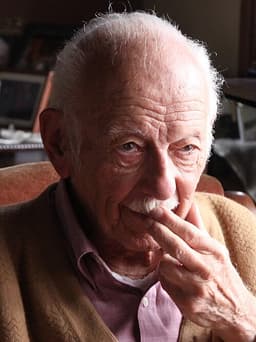
Sixto Duran Ballen
Politician · Modern
51.3Total
Basic Information
Born
1944
1921
Died
—
—
Era
Modern
Modern
Nationality
India
Ecuador
Occupation
Politician
Politician
Civilization
Indian
Western
Score Comparison
Military (10%)
15.3
49.1
Political (20%)
43.7
68.0
Influence (20%)
49.4
49.4
Legacy (20%)
40.0
40.0
Leadership (15%)
58.8
64.0
Strategy (15%)
43.0
42.8
TOTAL
43.6
51.3
Buddhadeb Bhattacharjee — Complete Timeline
2000 AD
Became Chief Minister of West BengalPolitical Action◆ Major
Buddhadeb Bhattacharjee was sworn in as the Chief Minister of West Bengal, succeeding Jyoti Basu. He led the Communist Party of India (Marxist) government and focused on industrialization and economic reforms.
Chief MinisterWest BengalCPI(M)
Impact: regionalconstructive
2006 AD
Singur and Nandigram land acquisition controversiesPolitical Action
Bhattacharjee's government attempted to acquire agricultural land for industrial projects in Singur and Nandigram, leading to violent protests. The controversies resulted in deaths, political backlash, and the eventual withdrawal of the Tata Nano project from Singur.
Land AcquisitionIndustrializationProtests
Impact: regionaldestructive
2011 AD
Defeat in the 2011 West Bengal electionsPolitical Action
Bhattacharjee's CPI(M) suffered a historic defeat in the 2011 West Bengal assembly elections, ending 34 years of Left Front rule. The Trinamool Congress under Mamata Banerjee won a landslide victory, marking a major political shift.
Election DefeatWest BengalLeft Front
Impact: regionaltragic
2014 AD
Retirement from active politicsPolitical Action
After the 2014 general elections, Bhattacharjee retired from active politics, citing health reasons. He remained a respected figure within the CPI(M) but did not hold any further public office.
RetirementCPI(M)Politics
Impact: regional
Sixto Duran Ballen — Complete Timeline
1992 AD
Implemented Economic ReformsReform◆ Major
Duran Ballen implemented a series of neoliberal economic reforms, including trade liberalization, privatization of state-owned enterprises, and deregulation. These reforms aimed to modernize the economy but faced opposition from labor unions.
Economic ReformNeoliberalismPrivatization
Impact: national
Elected President of EcuadorPolitical Action◆ Major
Sixto Duran Ballen was elected President of Ecuador as the candidate of the Republican Unity Party. He campaigned on a platform of economic modernization and anti-corruption.
ElectionPresidencyEcuador
Impact: national
1995 AD
Cenepa War with PeruWar◆ Major
During Duran Ballen's presidency, a brief armed conflict erupted with Peru over a disputed border area in the Cenepa region. The conflict resulted in casualties on both sides before a ceasefire was negotiated.
WarPeruBorder Conflict
Impact: regionaldestructive
1996 AD
Completed Presidential TermPolitical Action◆ Major
Duran Ballen completed his full four-year presidential term and peacefully transferred power to his elected successor, Abdal Bucaram. This was a rare instance of democratic continuity in Ecuador.
PresidencyDemocracyPeaceful Transition
Impact: nationalconstructive
This comparison has not been analyzed yet.
One-time AI generation (~1 minute). Scores and timeline are already available below.
Rankings
🥇
Sixto Duran BallenLeader
Mil: 49.1Pol: 68.0Inf: 49.4
51.3
🥈
Buddhadeb Bhattacharjee
Mil: 15.3Pol: 43.7Inf: 49.4
43.6
+7.7 behind
How This Comparison Works
Algorithm
Each figure is scored on 6 dimensions (0—100 scale) based on structured historical data: Military (10%), Political (20%), Influence (20%), Legacy (20%), Leadership (15%), Strategy (15%). The weighted total produces the final ranking.
Data Sources
Scores are computed from structured sub-indicators in the database. Scale factors adjust for era (Ancient ×0.85, Modern ×1.0) and civilization size (Eastern ×1.05, Other ×0.80) to account for differences in population and military scale.
Maximum 3 Figures
Comparisons are limited to 2—3 figures to ensure readability and statistical meaningfulness.
Error Margins
±5 points per dimension — Sub-scores are derived from historical records with inherent uncertainty. Two figures within 5 points on a dimension should be considered roughly equivalent in that area.
Total Score Accuracy
±3 points overall — The weighted combination of 6 dimensions produces a total score with approximately ±3 points of uncertainty. Differences of less than 3 points are not statistically significant— the figures are effectively tied.
Known Limitations
- Historical records are incomplete and uneven across civilizations
- Figures from oral-tradition societies may be underrepresented
- Occupation labels can misclassify multi-role figures
- Scores measure capability and impact, not moral character
- Quantitative scoring is a comparison tool, not absolute truth
Capability Radar
Military (10%) — Battles & Warfare
Battles
24
31
Win Rate
27
31
Expansion
27
35
Political (20%) — Governance & Reform
Reform
40
55
Diplomacy
35
45
Economy
30
60
Influence (20%) — Cultural & Global Reach
Cultural
20
20
Global
15
15
Legacy (20%) — Historical Impact
Historical
25
25
Longevity
15
15
Leadership (15%) — Power & Stability
Tenure
30
40
Stability
25
35
Strategy (15%) — Tactics & Innovation
Strategy
35
37
Tactics
37
41
Reform
39
45
Similar Comparisons
Comments & Discussion
No comments yet. Be the first to share your thoughts!