Loading...
Cao Bin vs Qin Shi Huang
Qin Shi Huang leads by 27.1 pts · 2 figures compared
…

Cao Bin
General · Medieval
58.1Total
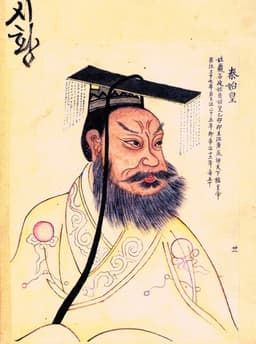
Qin Shi Huang
Emperor · Ancient
85.2Total
Basic Information
Born
931
-259
Died
999
-210
Era
Medieval
Ancient
Nationality
China
China
Occupation
General
Emperor
Civilization
Eastern
Eastern
Score Comparison
Military (10%)
82.0
80.0
Political (20%)
54.7
90.0
Influence (20%)
51.8
85.0
Legacy (20%)
45.0
90.0
Leadership (15%)
80.0
78.0
Strategy (15%)
55.0
82.0
TOTAL
58.1
85.2
Cao Bin — Complete Timeline
965 AD
Conquered the Later ShuWar◆ Major
Cao Bin led Song forces to conquer the Later Shu kingdom in Sichuan. He ordered his troops to refrain from looting and killing civilians, earning a reputation for humane treatment of conquered cities. This set a precedent for Song military conduct.
ConquestSong DynastyMilitary Campaign
Impact: regionalconstructive
975 AD
Conquered the Southern TangWar◆ Major
Cao Bin commanded the Song army that conquered the Southern Tang kingdom, capturing its capital Jinling (Nanjing). He again enforced strict discipline, preventing massacres and protecting cultural artifacts, which enhanced his reputation as a humane general.
ConquestSong DynastyMilitary Campaign
Impact: regionalconstructive
976 AD
Appointed Grand CouncilorPolitical Action
Cao Bin was appointed as grand councilor (zaixiang) by Emperor Taizu of Song. His promotion from general to high civil office reflected the Song dynasty's policy of civilian control over the military, though he remained influential in military affairs.
Civil OfficeSong DynastyGovernment
Impact: national
986 AD
Led Campaign Against the Liao DynastyWar◆ Major
Cao Bin commanded a Song army in a failed campaign against the Liao dynasty. His forces were defeated at the Battle of the Qigou River, leading to a retreat. This defeat contributed to the Song's shift toward a defensive strategy against the Liao.
DefeatSong-Liao WarMilitary Campaign
Impact: regionaltragic
Qin Shi Huang — Complete Timeline
246 BC
Construction of the Mausoleum and Terracotta ArmyOther◆ Major
Qin Shi Huang commissioned a vast mausoleum complex near Xi'an, guarded by thousands of life-sized terracotta soldiers, horses, and chariots. The project employed hundreds of thousands of workers and reflected his obsession with immortality and imperial power.
Impact: global
230 BC
Conquest of the Six Warring StatesWar
From 230 to 221 BCE, Ying Zheng led the Qin state in a series of campaigns that conquered the Han, Zhao, Wei, Chu, Yan, and Qi states. This unified China under a single ruler for the first time, ending the Warring States period.
Impact: global
221 BC
Standardization of Writing, Currency, and MeasurementsReform◆ Major
Qin Shi Huang ordered the standardization of Chinese script, currency, and weights and measures across the unified empire. This facilitated administration, trade, and cultural integration, laying a foundation for future dynasties.
Impact: globalconstructive
Proclamation of the Qin DynastyPolitical Action
After conquering the last independent state, Ying Zheng declared himself Shi Huangdi (First Emperor), founding the Qin Dynasty. He adopted a new title to signify his supreme authority and initiated centralized imperial rule.
Impact: global
214 BC
Initiation of the Great Wall ConstructionOther◆ Major
Qin Shi Huang ordered the connection and extension of existing northern fortifications to create a unified defensive wall against nomadic Xiongnu raids. This project involved massive conscripted labor and became the precursor to the later Great Wall.
Impact: regional
213 BC
Burning of Books and Burying of ScholarsPolitical Action◆ Major
On the advice of Li Si, Qin Shi Huang ordered the burning of historical records and philosophical texts not aligned with Legalist doctrine. He also had 460 Confucian scholars buried alive to suppress dissent and consolidate ideological control.
Impact: nationaldestructive
Expert Analysis
cao-bin-vs-qin-shi-huang
# The First Emperor and the Humane General
On a spring morning in 975, a victorious army stood before the gates of Jinling, the capital of the Southern Tang kingdom. The general who had led them there, Cao Bin, gave an order that would echo through Chinese history: no looting, no killing, no destruction. His soldiers would enter the city as liberators, not conquerors. Less than a millennium earlier, another conqueror had taken a different approach. When Ying Zheng completed his unification of China in 221 BC, he ordered the burning of books and the burying of scholars alive. Two men, two visions of power, two radically different outcomes. What drove them apart?
Origins
Qin Shi Huang was born into chaos. The year was 259 BC, and the Warring States period had torn China apart for two centuries. His father, King Zhuangxiang of Qin, ruled a state that had long cultivated a ruthless, legalist philosophy. Young Ying Zheng grew up surrounded by intrigue—his mother was a former concubine, his regent a eunuch who may have plotted to usurp the throne. By the time he seized power at twenty-two, he had learned one lesson above all: trust no one, and crush all opposition.
Cao Bin came from a different world. Born in 931, he entered a China that had been fractured for decades after the fall of the Tang dynasty. The Five Dynasties and Ten Kingdoms period was a time of warlords and shifting alliances, but also of cultural revival. Cao Bin's father served as a military governor, and young Cao was raised in the Confucian tradition that emphasized virtue, restraint, and the moral duty of the ruler. Where Qin Shi Huang learned that power was absolute, Cao Bin learned that power was a trust.
Rise to Power
Ying Zheng's ascent was swift and brutal. Between 230 and 221 BC, he unleashed the Qin war machine against the six remaining states. His generals employed siege warfare, bribery, and psychological terror. When the state of Zhao fell, Qin forces massacred the surrendered soldiers. When the state of Chu resisted, they burned the countryside. By 221 BC, all of China lay at Ying Zheng's feet. He renamed himself Shi Huangdi—the First Emperor—and declared that his dynasty would last ten thousand generations.
Cao Bin's path was gentler but no less determined. He served under Emperor Taizu of Song, a ruler who understood that military conquest alone could not hold an empire together. In 965, Cao Bin conquered the Later Shu kingdom in Sichuan. His troops found the capital's treasury overflowing, but he ordered them to leave it untouched. When his soldiers complained, he replied, "What I have taken is far greater than gold—I have taken the hearts of the people."
Leadership & Governance
Here the two men diverged completely. Qin Shi Huang ruled through terror and standardization. He imposed a single script, a single currency, and a single system of weights and measures across his empire. He built roads, canals, and the first version of the Great Wall. But he also enforced a brutal legal code, with punishments ranging from mutilation to execution for minor offenses. His advisor Li Si convinced him that history and philosophy were dangerous—so he ordered the burning of all books not related to medicine, agriculture, or divination, and had hundreds of scholars buried alive.
Cao Bin governed through restraint and moral example. After conquering the Southern Tang in 975, he again forbade looting. When his soldiers captured the enemy palace, they found the king's concubines and treasures intact. Cao Bin personally sealed the royal treasury and handed it over to the Song emperor. He understood that a conquered people who were treated with dignity would become loyal subjects, not rebels. Emperor Taizu promoted him to grand councilor, an extraordinary honor for a general.
Triumph & Tragedy
Qin Shi Huang's greatest triumph was also the seed of his tragedy. He unified China, but at a terrible cost. His obsession with immortality drove him to consume mercury pills prescribed by alchemists, poisoning himself slowly. When he died in 210 BC during an inspection tour, his empire collapsed within three years. The Qin Dynasty lasted only fifteen years—a brief, brilliant, and terrible flash.
Cao Bin's tragedy was different. In 986, he led a campaign against the Liao dynasty, the powerful northern rival of the Song. His army was defeated at the Battle of the Qigou River, a humiliating loss that tarnished his reputation. Yet even in defeat, he demonstrated his character: he personally protected the retreat of his soldiers, refusing to abandon them. He died in 999, mourned by the people he had spared.
Character & Destiny
Qin Shi Huang's personality was forged in paranoia. He saw enemies everywhere—in the scholars who criticized him, in the generals who might betray him, in the very people he ruled. His obsession with control led him to build a massive mausoleum guarded by the Terracotta Army, a silent legion meant to protect him in the afterlife. He could not imagine a world without him.
Cao Bin was shaped by Confucian humility. He saw himself as a servant, not a master. When asked why he spared conquered cities, he replied, "A general's duty is to win, but a man's duty is to be human." His restraint was not weakness—it was a different kind of strength, one that built loyalty rather than fear.
Legacy
Qin Shi Huang's legacy is monumental. He gave China its name, its script, and its first unified administration. The Great Wall, the Terracotta Army, and the very idea of a unified Chinese empire all trace back to him. But he is remembered as a tyrant—a brilliant, merciless architect of a world he could not control.
Cao Bin's legacy is quieter but perhaps deeper. He is remembered as the "Humane General," a model of military virtue in Chinese history. His approach to conquest—winning hearts rather than crushing bodies—influenced generations of Chinese commanders. In a world of war and violence, he proved that mercy could be a weapon.
Conclusion
Two men, two Chinas. Qin Shi Huang built an empire with iron and fire, and it crumbled when he died. Cao Bin built loyalty with restraint and justice, and his name lives on as a symbol of what power could be. The First Emperor believed that fear was the foundation of order. The Humane General believed that trust was stronger than terror. History has judged both, but perhaps the real lesson is this: power is not measured by what you destroy, but by what you leave standing.
Rankings
🥇
Qin Shi HuangLeader
Mil: 80.0Pol: 90.0Inf: 85.0
85.2
🥈
Cao Bin
Mil: 82.0Pol: 54.7Inf: 51.8
58.1
+27.1 behind
How This Comparison Works
Algorithm
Each figure is scored on 6 dimensions (0—100 scale) based on structured historical data: Military (10%), Political (20%), Influence (20%), Legacy (20%), Leadership (15%), Strategy (15%). The weighted total produces the final ranking.
Data Sources
Scores are computed from structured sub-indicators in the database. Scale factors adjust for era (Ancient ×0.85, Modern ×1.0) and civilization size (Eastern ×1.05, Other ×0.80) to account for differences in population and military scale.
Maximum 3 Figures
Comparisons are limited to 2—3 figures to ensure readability and statistical meaningfulness.
Error Margins
±5 points per dimension — Sub-scores are derived from historical records with inherent uncertainty. Two figures within 5 points on a dimension should be considered roughly equivalent in that area.
Total Score Accuracy
±3 points overall — The weighted combination of 6 dimensions produces a total score with approximately ±3 points of uncertainty. Differences of less than 3 points are not statistically significant— the figures are effectively tied.
Known Limitations
- Historical records are incomplete and uneven across civilizations
- Figures from oral-tradition societies may be underrepresented
- Occupation labels can misclassify multi-role figures
- Scores measure capability and impact, not moral character
- Quantitative scoring is a comparison tool, not absolute truth
Capability Radar
Military (10%) — Battles & Warfare
Battles
65
85
Win Rate
70
90
Expansion
60
90
Political (20%) — Governance & Reform
Reform
40
95
Diplomacy
70
75
Economy
45
90
Influence (20%) — Cultural & Global Reach
Cultural
50
95
Global
30
85
Legacy (20%) — Historical Impact
Historical
55
95
Longevity
45
95
Leadership (15%) — Power & Stability
Tenure
55
70
Stability
60
65
Strategy (15%) — Tactics & Innovation
Strategy
65
85
Tactics
60
80
Reform
30
95
Similar Comparisons
Comments & Discussion
The Millennial Judge6/17/2026
Calling Cao Bin "humane" over Qin Shi Huang’s "brutality" is ahistorical nonsense. Qin unified six warring states through total war—mass graves at Changping prove his methods worked. Cao Bin’s mercy in 975 was strategic: Emperor Song needed Southern Tang’s treasury intact to fund a new dynasty. If Qin had spared conquered kings like Cao did, his empire wouldn’t have collapsed in four years. Mercy is a luxury of the secure, not a moral high ground.
铁血秦吏6/17/2026
拿焚书坑儒说事?秦朝那些“被埋”的多是方士骗子,真学者都进了博士官署。反观赵匡胤杯酒释兵权后,曹彬这种降将连兵卒都不敢动,养出个文弱宋朝。秦始皇派蒙恬北击匈奴时,曹彬还在给南唐后主递手帕呢。千古一帝扫六合靠的是铁腕,不是慈母心。