Loading...
Changa vs Qin Shi Huang
Qin Shi Huang leads by 33.6 pts · 2 figures compared
…

Changa
General · Medieval
51.6Total
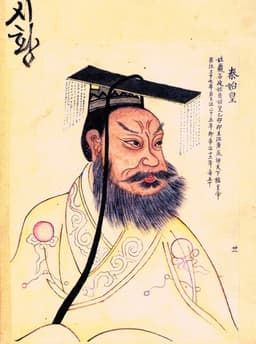
Qin Shi Huang
Emperor · Ancient
85.2Total
Basic Information
Born
1470
-259
Died
1494
-210
Era
Medieval
Ancient
Nationality
Mutapa Empire
China
Occupation
General
Emperor
Civilization
Other
Eastern
Score Comparison
Military (10%)
61.7
80.0
Political (20%)
39.4
90.0
Influence (20%)
51.0
85.0
Legacy (20%)
44.2
90.0
Leadership (15%)
64.5
78.0
Strategy (15%)
60.7
82.0
TOTAL
51.6
85.2
Changa — Complete Timeline
1485 AD
Rebellion Against MutapaWar
Changa, a Mutapa general, led a rebellion against Mwenemutapa Nyahuma. He defeated the imperial army and established an independent kingdom, breaking away from Mutapa control.
RebellionSecessionCivil War
Impact: regional
1490 AD
Foundation of the Rozvi EmpirePolitical Action
Changa founded the Rozvi Empire, establishing a new capital at Danangombe. He adopted the title Changamire and created a rival state that would challenge Mutapa dominance.
FoundationRozviNew State
Impact: regionalconstructive
1492 AD
Conquest of Mutapa TerritoriesWar◆ Major
Changa led Rozvi forces to conquer large parts of the Mutapa Empire, including the gold-rich Manyika region. This expansion established Rozvi as the dominant power in the Zambezi valley.
ConquestExpansionGold
Impact: regional
1494 AD
Establishment of the Changamire DynastyPolitical Action◆ Major
Changa formalized the Changamire dynasty, which would rule the Rozvi Empire for centuries. He established succession rules and a military aristocracy that maintained Rozvi power.
DynastySuccessionAristocracy
Impact: regionalconstructive
Qin Shi Huang — Complete Timeline
246 BC
Construction of the Mausoleum and Terracotta ArmyOther◆ Major
Qin Shi Huang commissioned a vast mausoleum complex near Xi'an, guarded by thousands of life-sized terracotta soldiers, horses, and chariots. The project employed hundreds of thousands of workers and reflected his obsession with immortality and imperial power.
Impact: global
230 BC
Conquest of the Six Warring StatesWar
From 230 to 221 BCE, Ying Zheng led the Qin state in a series of campaigns that conquered the Han, Zhao, Wei, Chu, Yan, and Qi states. This unified China under a single ruler for the first time, ending the Warring States period.
Impact: global
221 BC
Standardization of Writing, Currency, and MeasurementsReform◆ Major
Qin Shi Huang ordered the standardization of Chinese script, currency, and weights and measures across the unified empire. This facilitated administration, trade, and cultural integration, laying a foundation for future dynasties.
Impact: globalconstructive
Proclamation of the Qin DynastyPolitical Action
After conquering the last independent state, Ying Zheng declared himself Shi Huangdi (First Emperor), founding the Qin Dynasty. He adopted a new title to signify his supreme authority and initiated centralized imperial rule.
Impact: global
214 BC
Initiation of the Great Wall ConstructionOther◆ Major
Qin Shi Huang ordered the connection and extension of existing northern fortifications to create a unified defensive wall against nomadic Xiongnu raids. This project involved massive conscripted labor and became the precursor to the later Great Wall.
Impact: regional
213 BC
Burning of Books and Burying of ScholarsPolitical Action◆ Major
On the advice of Li Si, Qin Shi Huang ordered the burning of historical records and philosophical texts not aligned with Legalist doctrine. He also had 460 Confucian scholars buried alive to suppress dissent and consolidate ideological control.
Impact: nationaldestructive
Expert Analysis
changa-vs-qin-shi-huang
### The Emperor and the General: Two Paths to Power in Ancient Worlds
In the year 221 BC, a king named Ying Zheng stood before his assembled court in the city of Xianyang, proclaiming himself *Shi Huangdi*—the First Emperor—of a unified China. He had crushed six rival states, abolished centuries of feudal warfare, and declared a new cosmic order. Just over seventeen centuries later and half a world away, in the highlands of southern Africa, a Mutapa general named Changa raised his spear against his own emperor, defeated the imperial army, and carved out a realm of his own: the Rozvi Empire. One man built a system that would define China for two millennia; the other built a dynasty that would endure for centuries but remain largely unknown beyond its borders. Why did their paths diverge so dramatically, and what drove their different outcomes?
### Origins
Qin Shi Huang was born into the crucible of the Warring States period, a brutal era of constant conflict among seven Chinese kingdoms. His father, King Zhuangxiang of Qin, ruled a state that had already embraced Legalist philosophy—a ruthless doctrine that prioritized state power over individual rights, military strength over intellectual debate. The young prince was shaped by this environment: he saw the world as a chessboard of competing powers, where victory belonged to the most disciplined and the most merciless. His upbringing was not one of reflection but of strategy; he learned to trust no one, to calculate every move.
Changa, by contrast, emerged from a different tradition—the Mutapa Empire, a wealthy state built on gold trade with the Swahili coast and, indirectly, with Portuguese merchants. He was a general in an empire that had grown complacent, its rulers more concerned with courtly intrigue than military expansion. Changa’s world was one of shifting loyalties and personal ambition, where a talented commander could rise through merit but also face suspicion from a jealous court. His origins did not demand the total transformation of a civilization—only the seizure of its reins.
### Rise to Power
Qin Shi Huang’s ascent was methodical and absolute. At the age of thirteen, he inherited the Qin throne, but real power lay with his regent, Lü Buwei. For years, the young king bided his time, studying the art of war and the mechanics of administration. In 238 BC, he staged a coup, exiling Lü Buwei and taking full control. From 230 to 221 BC, he unleashed a series of campaigns that devoured the Han, Zhao, Wei, Chu, Yan, and Qi states one by one. Each conquest was a masterpiece of logistics and terror: he used spies, bribery, and overwhelming force, never hesitating to massacre those who resisted. By 221 BC, he stood alone.
Changa’s rise was swifter and more personal. In 1485, he was a trusted general in the Mutapa army, but when Mwenemutapa Nyahuma (the emperor) tried to curb his power, Changa did not negotiate—he rebelled. He defeated the imperial forces in a single decisive battle and declared himself *Changamire*, a title that meant “master of the land.” Within five years, he had founded the Rozvi Empire, with a new capital at Danangombe, and launched campaigns that seized the gold-rich Manyika region. His path was not one of state-building but of warlord ambition, a coup that succeeded through speed and audacity.
### Leadership & Governance
As emperor, Qin Shi Huang was a revolutionary administrator. He abolished the old feudal system, dividing China into 36 commanderies governed by appointed officials. He standardized writing, currency, and weights and measures, creating a unified economic and cultural space. He ordered the connection of northern fortifications into what would become the Great Wall, and he built a network of roads and canals to bind his empire together. Yet his rule was also terrifying: in 213 BC, on the advice of his chancellor Li Si, he ordered the burning of all books not related to medicine, agriculture, or divination, and the burying alive of scholars who criticized him. He believed that unity required the erasure of dissent.
Changa’s governance was more traditional. He established the Changamire dynasty at Danangombe, building a stone palace that echoed the architectural style of Great Zimbabwe. He created a system of succession rules, ensuring that his descendants would inherit the throne. But unlike Qin Shi Huang, he did not attempt to standardize language or economy across his realm. The Rozvi Empire was a conquest state, held together by military force and the personal loyalty of subordinate chiefs. Changa was a general who became a king, not a philosopher who reimagined civilization.
### Triumph & Tragedy
Qin Shi Huang’s greatest triumph was the creation of a unified China—a project so audacious that it still defines the nation today. His greatest tragedy was his obsession with immortality. He sent expeditions to find the elixir of life, consumed mercury pills prescribed by alchemists, and built a colossal mausoleum guarded by thousands of life-sized terracotta soldiers. In 210 BC, at the age of 49, he died—likely from mercury poisoning—leaving an empire that would collapse within three years due to his own harsh policies.
Changa’s triumph was the foundation of the Rozvi Empire, which would last for centuries. His tragedy was that he died young, around 1494, just four years after founding his dynasty. The exact cause is unknown, but his early death meant that his empire’s institutions were still fragile. Yet the Changamire dynasty survived, ruling the Rozvi state until the 19th century—a testament to the stability he had created, even if it never achieved the scale of Qin’s vision.
### Character & Destiny
Qin Shi Huang was paranoid, brilliant, and utterly convinced of his own cosmic importance. He believed that history began with him—hence the burning of books that recorded earlier dynasties. His personality drove him to centralize power absolutely, but also to alienate the very elites and scholars who could have sustained his empire. Changa, by contrast, was pragmatic and ambitious. He saw an opportunity and seized it, but he did not try to remake the world. His destiny was to be a founder, not a reformer.
### Legacy
Qin Shi Huang’s legacy is monumental. The administrative framework he created—the commandery system, the standardized script, the unified currency—survived the fall of his dynasty and became the bedrock of imperial China. The Great Wall, though rebuilt many times, still bears his imprint. The Terracotta Army, discovered in 1974, has made him a global icon. Yet he is also remembered as a tyrant, a burner of books, a builder of tombs.
Changa’s legacy is more obscure. The Rozvi Empire is known primarily to specialists in African history, and his name does not echo in world capitals. Yet his dynasty endured for over three centuries, and the stone ruins of Danangombe stand as a reminder that Africa, too, produced ambitious empire-builders who shaped their regions.
### Conclusion
Standing before the Terracotta Warriors in Xi’an, one feels the weight of Qin Shi Huang’s ambition—a man who tried to conquer death itself. Walking among the ruins of Danangombe, one senses a different kind of ambition: a general who knew he could not conquer eternity, only a piece of his own world. Both men built empires; both died young. But one sought to remake humanity in his image, while the other simply sought to rule it. The difference lies not in their achievements, but in the scale of their dreams—and the price they were willing to pay.
Rankings
🥇
Qin Shi HuangLeader
Mil: 80.0Pol: 90.0Inf: 85.0
85.2
🥈
Changa
Mil: 61.7Pol: 39.4Inf: 51.0
51.6
+33.6 behind
How This Comparison Works
Algorithm
Each figure is scored on 6 dimensions (0—100 scale) based on structured historical data: Military (10%), Political (20%), Influence (20%), Legacy (20%), Leadership (15%), Strategy (15%). The weighted total produces the final ranking.
Data Sources
Scores are computed from structured sub-indicators in the database. Scale factors adjust for era (Ancient ×0.85, Modern ×1.0) and civilization size (Eastern ×1.05, Other ×0.80) to account for differences in population and military scale.
Maximum 3 Figures
Comparisons are limited to 2—3 figures to ensure readability and statistical meaningfulness.
Error Margins
±5 points per dimension — Sub-scores are derived from historical records with inherent uncertainty. Two figures within 5 points on a dimension should be considered roughly equivalent in that area.
Total Score Accuracy
±3 points overall — The weighted combination of 6 dimensions produces a total score with approximately ±3 points of uncertainty. Differences of less than 3 points are not statistically significant— the figures are effectively tied.
Known Limitations
- Historical records are incomplete and uneven across civilizations
- Figures from oral-tradition societies may be underrepresented
- Occupation labels can misclassify multi-role figures
- Scores measure capability and impact, not moral character
- Quantitative scoring is a comparison tool, not absolute truth
Capability Radar
Military (10%) — Battles & Warfare
Battles
55
85
Win Rate
60
90
Expansion
60
90
Political (20%) — Governance & Reform
Reform
45
95
Diplomacy
40
75
Economy
35
90
Influence (20%) — Cultural & Global Reach
Cultural
45
95
Global
30
85
Legacy (20%) — Historical Impact
Historical
50
95
Longevity
45
95
Leadership (15%) — Power & Stability
Tenure
50
70
Stability
40
65
Strategy (15%) — Tactics & Innovation
Strategy
55
85
Tactics
50
80
Reform
45
95
Similar Comparisons
Comments & Discussion
Old Spear-Shaker6/17/2026
Qin’s real edge wasn’t just Legalism—it was iron. By 230 BC, Qin workshops were mass-producing standardized bronze halberds and crossbows with trigger mechanisms that didn’t jam. Changa’s Rozvi warriors wielded iron spears, sure, but their decentralized forges couldn’t match Qin’s state-run arms factories. One built a military machine; the other built a rebellion. That’s why Qin’s empire lasted as a blueprint, while Changa’s was a footnote.
铁血小吏6/17/2026
别被“千古一帝”骗了。秦始皇焚书坑儒是事实,但他更狠的是用秦篆统一文字——这招断绝了六国复辟的文化根基。查加呢?他建立罗兹维帝国后,连套成文法都没留下。没文字支撑的政权,只能靠领袖个人威望硬撑。结果一代过后,帝国就碎成部落联盟。不是对手差距,是制度代差。
Mountain Hermit6/17/2026
你们都在谈政治军事,却忽略了地理的暴政。秦据关中,四面险塞,函谷关一闭就能安心搞集权。查加呢?他在津巴布韦高原建都,四周是开阔草原和零散矿脉,防御全靠骑兵机动。这种地形天生适合打游击,不适合建帝国。所以查加再勇猛,也只能当个区域强人,成不了始皇帝那样的天下共主。
Cyclops-Tamer6/17/2026
Actually, calling them comparable is a stretch. Qin Shi Huang inherited a state already primed for conquest—centuries of Qin reforms under Shang Yang gave him a bureaucracy that could count every bushel of grain. Changa had to build his state from scratch after a coup. One was the culmination of a long Legalist experiment; the other was a one-man insurgency. Apples and bronze apples.
铁幕书生6/17/2026
你们的比较忽略了一个核心变量:时间窗口。秦灭六国时,中国正好处在铁器普及的临界点,加上周朝崩溃留下的权力真空,这种“天时”百年一遇。查加崛起时,东非沿海早被葡萄牙人渗透,新式火器已经流入内陆。他打的是落后一个时代的战争,却用了古代战术。换句话说,不是查加不够强,是历史留给他的窗口太小了。