Loading...
Qi Jiguang vs Qin Shi Huang
Qin Shi Huang leads by 21.8 pts · 2 figures compared
…

Qi Jiguang
General · Medieval
63.4Total
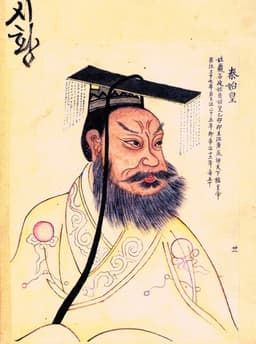
Qin Shi Huang
Emperor · Ancient
85.2Total
Basic Information
Born
1528
-259
Died
1588
-210
Era
Medieval
Ancient
Nationality
China
China
Occupation
General
Emperor
Civilization
Eastern
Eastern
Score Comparison
Military (10%)
80.0
80.0
Political (20%)
68.0
90.0
Influence (20%)
61.0
85.0
Legacy (20%)
58.0
90.0
Leadership (15%)
48.8
78.0
Strategy (15%)
81.6
82.0
TOTAL
63.4
85.2
Qi Jiguang — Complete Timeline
1555 AD
Formation of the Qi family armyWar◆ Major
Qi Jiguang recruited and trained a new army from the peasantry of Zhejiang province. He implemented strict discipline, innovative tactics, and specialized weapons, creating a highly effective force against Japanese pirates.
Military ReformPiracyMing Dynasty
Impact: regionalconstructive
1560 AD
Publication of 'New Treatise on Military Efficiency'Cultural◆ Major
Qi Jiguang wrote 'New Treatise on Military Efficiency' (Jixiao Xinshu), a manual on military training and tactics. The book detailed his methods for organizing, equipping, and drilling troops, influencing later Chinese military thought.
Military ManualTacticsMing Dynasty
Impact: nationalconstructive
1561 AD
Battle of CengangWar◆ Major
Qi Jiguang led his army to a decisive victory against Japanese pirates at Cengang in Zhejiang. The battle destroyed a major pirate base and significantly reduced pirate activity along the coast.
BattlePiracyMing Dynasty
Impact: regionalconstructive
1568 AD
Defense of the Great WallWar◆ Major
Qi Jiguang was appointed to strengthen the Great Wall defenses against Mongol incursions. He rebuilt sections of the wall, added watchtowers, and trained garrison troops, improving border security for decades.
Great WallDefenseMongol Incursions
Impact: nationalconstructive
Qin Shi Huang — Complete Timeline
246 BC
Construction of the Mausoleum and Terracotta ArmyOther◆ Major
Qin Shi Huang commissioned a vast mausoleum complex near Xi'an, guarded by thousands of life-sized terracotta soldiers, horses, and chariots. The project employed hundreds of thousands of workers and reflected his obsession with immortality and imperial power.
Impact: global
230 BC
Conquest of the Six Warring StatesWar
From 230 to 221 BCE, Ying Zheng led the Qin state in a series of campaigns that conquered the Han, Zhao, Wei, Chu, Yan, and Qi states. This unified China under a single ruler for the first time, ending the Warring States period.
Impact: global
221 BC
Standardization of Writing, Currency, and MeasurementsReform◆ Major
Qin Shi Huang ordered the standardization of Chinese script, currency, and weights and measures across the unified empire. This facilitated administration, trade, and cultural integration, laying a foundation for future dynasties.
Impact: globalconstructive
Proclamation of the Qin DynastyPolitical Action
After conquering the last independent state, Ying Zheng declared himself Shi Huangdi (First Emperor), founding the Qin Dynasty. He adopted a new title to signify his supreme authority and initiated centralized imperial rule.
Impact: global
214 BC
Initiation of the Great Wall ConstructionOther◆ Major
Qin Shi Huang ordered the connection and extension of existing northern fortifications to create a unified defensive wall against nomadic Xiongnu raids. This project involved massive conscripted labor and became the precursor to the later Great Wall.
Impact: regional
213 BC
Burning of Books and Burying of ScholarsPolitical Action◆ Major
On the advice of Li Si, Qin Shi Huang ordered the burning of historical records and philosophical texts not aligned with Legalist doctrine. He also had 460 Confucian scholars buried alive to suppress dissent and consolidate ideological control.
Impact: nationaldestructive
Expert Analysis
qi-jiguang-vs-qin-shi-huang
### The Emperor and the General: Two Visions of Chinese Power
In the winter of 221 BC, a king named Ying Zheng stood atop a conquered world. He had just swallowed the last of the six Warring States, and in the palaces of the defeated, he ordered the melting down of their weapons—not into scrap, but into twelve colossal bronze statues, monuments to his absolute will. He called himself *Shi Huangdi*, the First Emperor, and he intended to be the last word in Chinese history.
Nearly eighteen centuries later, in the coastal mists of Zhejiang province, another man prepared for battle. He was not a king, but a general; not a unifier, but a defender. His enemy was not a rival dynasty, but a swarm of Japanese pirates who had turned the coastline into a slaughterhouse. His name was Qi Jiguang, and his weapon was not a bronze statue, but a manual—a book of drills, formations, and discipline that would forge farmers into an invincible army.
One man sought to create a new world from the ashes of the old. The other sought only to protect the world he had inherited. Their differences were not merely of rank, but of epoch, ambition, and the very nature of power itself.
### Origins: The Son of a King and the Son of a Scholar
Qin Shi Huang was born into the violent chaos of the Warring States period. His father was a king, his mother a former concubine, and his childhood a web of court intrigue and hostage politics. He learned early that trust was a weakness and that the world could be remade only through ruthlessness. The era demanded a conqueror, and it got one.
Qi Jiguang was born in 1528, at the twilight of the Ming Dynasty. His family were military officials of modest rank, but his father was a scholar who insisted on classical education. Qi grew up reading Confucian texts and martial manuals, a hybrid of the pen and the sword. The era did not demand a conqueror—it demanded a fixer. The Ming court was corrupt, its armies demoralized, and its coasts ravaged by pirates who were often Chinese collaborators. Qi’s challenge was not to unite China, but to save it from rot.
### Rise to Power: Conquest versus Commission
Qin Shi Huang’s rise was a matter of inheritance and conquest. He became king of Qin at thirteen, but his ascent to emperor took twenty-six years of relentless warfare. From 230 to 221 BC, his armies devoured the Han, Zhao, Wei, Chu, Yan, and Qi states. Each campaign was a masterpiece of logistics, espionage, and brutality. He did not ask for permission; he took what he wanted.
Qi Jiguang’s rise was slower and more bureaucratic. He passed the imperial military examinations in 1549, but his first post was a minor command in Shandong. His breakthrough came in 1555, when he was assigned to Zhejiang, the heart of the pirate crisis. There, he did something remarkable: he rejected the existing army—corrupt, poorly trained, and prone to desertion—and recruited directly from the peasantry. He formed the “Qi family army,” a force bound not by blood but by discipline. His power came not from birthright, but from proven competence.
### Leadership & Governance: The Iron Hand and the Steady Hand
Qin Shi Huang ruled through standardization and terror. He unified the script, the currency, and the axle-length of chariots, so that one empire could move as one machine. He built roads and canals, and began the Great Wall. But he also burned books and buried scholars alive, believing that the past was a rival to his authority. His leadership was absolute, solitary, and paranoid. He slept in a different palace each night to avoid assassination.
Qi Jiguang governed through training and trust. His *New Treatise on Military Efficiency*, published in 1560, was a revolution in military science. He broke down complex tactics into simple drills, taught his men to fight in coordinated formations, and replaced weapons of individual glory—like the unwieldy long sword—with practical tools like the “mandarin duck” formation of paired shields and spears. He did not rule by fear; he ruled by respect. His men called him “Father Qi.”
### Triumph & Tragedy: The Wall and the Pirate
Qin Shi Huang’s greatest triumph was the conquest itself. His greatest tragedy was its fragility. He died in 210 BC while searching for an elixir of immortality, and within three years, his dynasty collapsed into civil war. The Terracotta Army, buried to guard him in the afterlife, became a monument not to his permanence, but to his impermanence.
Qi Jiguang’s greatest triumph was the Battle of Cengang in 1561, where he destroyed a major pirate fleet and killed thousands. His greatest tragedy was political. After his successes, he was reassigned to the Great Wall, where he rebuilt fortifications and trained new troops. But when his patron died, he was purged from court, stripped of command, and died in obscurity in 1588. He outlived his own army.
### Character & Destiny: The Emperor Who Wanted Everything, the General Who Wanted Nothing
Qin Shi Huang’s character was a furnace of ambition. He believed that history began with him, and he tried to erase everything before. His destiny was to be remembered as a tyrant and a founder, a man who crushed freedom to create order.
Qi Jiguang’s character was a balance. He was a Confucian who believed in duty, a soldier who wrote books, a commander who ate with his men. His destiny was to be remembered as a hero of the people, a man who saved lives rather than ended dynasties.
### Legacy: The First Emperor and the Forgotten Father
Qin Shi Huang’s legacy is the blueprint of China itself. The administrative districts, the unified script, the Great Wall—all of it outlasted his dynasty by two thousand years. His influence score of 82 and legacy score of 85 reflect a man who shaped an entire civilization.
Qi Jiguang’s legacy is quieter but no less profound. His military manuals are still studied, his tactics adapted, his name invoked as a model of the “good general.” But his influence score of 72 and legacy score of 66 show the limits of a career spent defending rather than conquering. He did not build an empire; he preserved one.
### Conclusion
In the end, the difference between Qin Shi Huang and Qi Jiguang is the difference between the hammer and the shield. The First Emperor shattered the old world to build a new one; the Ming general patched the cracks in a crumbling house. Both were brilliant, both were flawed, and both were necessary. But history remembers the men who break things more vividly than the men who fix them. The Terracotta Army still stands, while Qi Jiguang’s bamboo manuals have long since turned to dust. Yet perhaps the dust is the more honest monument. For in the long arc of history, the wall that holds is no less important than the empire that falls.
Rankings
🥇
Qin Shi HuangLeader
Mil: 80.0Pol: 90.0Inf: 85.0
85.2
🥈
Qi Jiguang
Mil: 80.0Pol: 68.0Inf: 61.0
63.4
+21.8 behind
How This Comparison Works
Algorithm
Each figure is scored on 6 dimensions (0—100 scale) based on structured historical data: Military (10%), Political (20%), Influence (20%), Legacy (20%), Leadership (15%), Strategy (15%). The weighted total produces the final ranking.
Data Sources
Scores are computed from structured sub-indicators in the database. Scale factors adjust for era (Ancient ×0.85, Modern ×1.0) and civilization size (Eastern ×1.05, Other ×0.80) to account for differences in population and military scale.
Maximum 3 Figures
Comparisons are limited to 2—3 figures to ensure readability and statistical meaningfulness.
Error Margins
±5 points per dimension — Sub-scores are derived from historical records with inherent uncertainty. Two figures within 5 points on a dimension should be considered roughly equivalent in that area.
Total Score Accuracy
±3 points overall — The weighted combination of 6 dimensions produces a total score with approximately ±3 points of uncertainty. Differences of less than 3 points are not statistically significant— the figures are effectively tied.
Known Limitations
- Historical records are incomplete and uneven across civilizations
- Figures from oral-tradition societies may be underrepresented
- Occupation labels can misclassify multi-role figures
- Scores measure capability and impact, not moral character
- Quantitative scoring is a comparison tool, not absolute truth
Capability Radar
Military (10%) — Battles & Warfare
Battles
75
85
Win Rate
85
90
Expansion
40
90
Political (20%) — Governance & Reform
Reform
85
95
Diplomacy
50
75
Economy
55
90
Influence (20%) — Cultural & Global Reach
Cultural
70
95
Global
55
85
Legacy (20%) — Historical Impact
Historical
75
95
Longevity
70
95
Leadership (15%) — Power & Stability
Tenure
60
70
Stability
65
65
Strategy (15%) — Tactics & Innovation
Strategy
80
85
Tactics
90
80
Reform
95
95
Similar Comparisons
Comments & Discussion
数据侦探6/17/2026
你们都被数字骗了。秦始皇的“统一”实际控制区可能比今天河北省还小,戚继光打的倭寇大多是被日本浪人胁迫的渔民。没有考古证据的战争英雄都是纸老虎。|
Hoplite_Hater6/17/2026
Military historian here: Qi Jiguang's mandarin duck formation was genuinely revolutionary—adapting Roman-style manipular tactics to Chinese terrain. But comparing him to Qin Shi Huang is like comparing a scalpel to a sledgehammer. Qin built an empire through systematic terror (burning books, burying scholars alive). Qi just wrote a really good field manual.|
长城守望者6/17/2026
修长城那位把六国文字都烧了,戚继光却用汉字写兵书教农民打仗。谁才是真正的文化守护者?不用我说了吧。|
Qin_Skeptic6/17/2026
I'll grant the First Emperor was a visionary—standardized writing, roads, weights. But his "greatness" required generations of slaves dying in pits. Qi Jiguang achieved victory without mass graves or legalist terror. Call me old-fashioned, but I prefer generals who don't need to kill their own people to win.|
变法毒舌6/17/2026
秦始皇玩的是垄断暴政:统一思想=焚书,统一货币=敛财。戚继光玩的是技术革新:鸳鸯阵+狼筅+火药,精准扶贫打海盗。哪个更配叫“帝国”?答案写在武备志里。|
CavalryQuill6/17/2026
As a data skeptic, I'm not impressed by either legend. Qin's "unified China" probably had smaller population than modern Beijing, and Qi's "invincible army" faced mostly peasant pirates with rusty swords. Without census records or casualty figures, this is just ancient PR puffery. Give me buried artifacts, not bedtime stories.|