Loading...
Cao Cao vs Tokugawa Ieyasu
Tokugawa Ieyasu leads by 4.3 pts · 2 figures compared
…
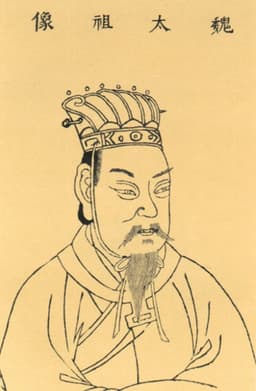
Cao Cao
General · Ancient
77.5Total
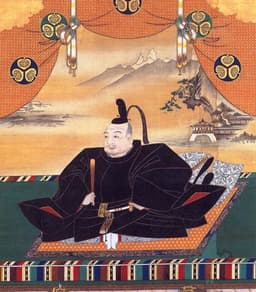
Tokugawa Ieyasu
General · Modern
81.8Total
Basic Information
Born
155
1543
Died
220
1616
Era
Ancient
Modern
Nationality
China
Japan
Occupation
General
General
Civilization
Eastern
Eastern
Score Comparison
Military (10%)
88.0
78.0
Political (20%)
59.0
82.0
Influence (20%)
82.0
88.0
Legacy (20%)
83.0
75.0
Leadership (15%)
64.4
85.0
Strategy (15%)
89.4
82.0
TOTAL
77.5
81.8
Cao Cao — Complete Timeline
190 AD
Formation of the Coalition against Dong ZhuoPolitical Action
Cao Cao joined a coalition of regional warlords led by Yuan Shao to overthrow the tyrannical chancellor Dong Zhuo, who had seized control of the Han court. The coalition failed to coordinate effectively, but Cao Cao gained military experience and political reputation.
CoalitionDong ZhuoHan Dynasty
Impact: national
196 AD
Implementation of Tuntian (Agricultural Colonies)Reform◆ Major
Cao Cao established military agricultural colonies (tuntian) to provide food for his army and refugees. Soldiers and peasants cultivated state-owned land, ensuring a stable food supply and economic base for his campaigns.
AgricultureEconomyMilitary
Impact: regionalconstructive
200 AD
Battle of GuanduWar
Cao Cao decisively defeated Yuan Shao's numerically superior army at Guandu. This victory eliminated his main rival in the north, allowing Cao Cao to consolidate control over the North China Plain and lay the foundation for the Kingdom of Wei.
BattleYuan ShaoUnification
Impact: regional
208 AD
Battle of Red CliffsWar
Cao Cao's southern campaign was halted by the allied forces of Sun Quan and Liu Bei at the Battle of Red Cliffs. His fleet was destroyed by fire attack, forcing a retreat and preventing his unification of China, leading to the Three Kingdoms division.
BattleDefeatThree Kingdoms
Impact: regional
213 AD
Establishment of the Kingdom of WeiPolitical Action◆ Major
Cao Cao was granted the title of Duke of Wei and later King of Wei by the Han emperor, effectively creating a semi-autonomous state within the empire. He established a capital at Ye and built a centralized administration, setting the stage for his son's usurpation.
WeiStatehoodHan Dynasty
Impact: national
Tokugawa Ieyasu — Complete Timeline
1600 AD
Battle of SekigaharaWar
Tokugawa Ieyasu led the Eastern Army to victory over Ishida Mitsunari's Western Army at Sekigahara. This decisive battle ended the Sengoku period and established Ieyasu as the supreme military ruler of Japan, paving the way for the Tokugawa shogunate.
Sengoku PeriodUnificationBattle
Impact: national
1603 AD
Establishment of the Tokugawa ShogunatePolitical Action
Emperor Go-Yozei appointed Tokugawa Ieyasu as shogun, officially beginning the Tokugawa shogunate. Ieyasu established his government in Edo (modern Tokyo), centralizing military and political power under his family's control.
ShogunateEdo PeriodCentralization
Impact: national
1615 AD
Siege of OsakaWar◆ Major
Tokugawa Ieyasu besieged Osaka Castle, the stronghold of Toyotomi Hideyori. The castle fell, and Hideyori committed suicide. This campaign eliminated the last major opposition to Tokugawa rule, solidifying the shogunate's control over Japan.
Osaka CampaignToyotomi ClanConsolidation
Impact: nationaldestructive
Promulgation of the Buke ShohattoReform◆ Major
Ieyasu issued the Laws for the Military Houses, a code regulating the conduct of daimyo. It restricted castle construction, required alternate attendance in Edo, and prohibited alliances without shogunal permission. This law helped control the feudal lords.
Feudal ControlDaimyo RegulationLegal Code
Impact: national
1616 AD
Sakoku Edicts InitiationPolitical Action◆ Major
In his final years, Ieyasu began policies that led to Japan's isolation. He restricted foreign trade to specific ports and expelled Christian missionaries. These measures, expanded by successors, resulted in the sakoku policy that isolated Japan for over 200 years.
IsolationismForeign PolicyChristianity
Impact: national
Expert Analysis
Origins
Tokugawa Ieyasu (1543–1616) was born into the Matsudaira clan, a minor samurai family in Mikawa Province. His early life was marked by hardship: his father was killed when Ieyasu was a child, and he was sent as a hostage to the Imagawa clan. This experience taught him patience and strategic thinking. In contrast, Cao Cao (155–220 CE) was born into a powerful eunuch family in the late Eastern Han dynasty. His father was a high-ranking official, and Cao Cao grew up with access to education and political connections. Both men rose from challenging circumstances—Ieyasu from hostage to shogun, Cao Cao from a controversial family to de facto ruler of northern China.
Rise to Power
Ieyasu’s rise was gradual and calculated. He allied with Oda Nobunaga and later Toyotomi Hideyoshi, patiently expanding his territory. His decisive victory at the Battle of Sekigahara (1600) against the Western Army marked his ascent as Japan’s supreme military leader. Cao Cao’s rise was more rapid and aggressive. He formed a coalition against the warlord Dong Zhuo, then defeated Yuan Shao at the Battle of Guandu (200 CE), which gave him control over northern China. Both men were masterful at exploiting opportunities, but Ieyasu’s patience contrasts with Cao Cao’s boldness.
Leadership & Governance
Ieyasu established the Tokugawa shogunate, a feudal system that centralized power and maintained peace for 250 years. He implemented the Buke Shohatto (laws for samurai) and the sankin kotai system, which required daimyo to alternate residence between Edo and their domains, ensuring loyalty. Cao Cao, as Chancellor of the Han, implemented the tuntian system (agricultural colonies) to support his armies and stabilize the economy. He also promoted talent based on merit, not birth. Ieyasu’s governance was more systematic and long-lasting, while Cao Cao’s was pragmatic but short-lived.
Triumph & Tragedy
Ieyasu’s greatest triumph was the Siege of Osaka (1614-1615), which eliminated the Toyotomi clan and solidified Tokugawa rule. His tragedy was the isolationist Sakoku policy, which limited foreign influence but also stifled innovation. Cao Cao’s triumph was the unification of northern China, but his tragedy was the defeat at the Battle of Red Cliffs (208 CE), which prevented him from conquering the south and unifying all of China. Both men faced ultimate limits: Ieyasu’s peace came at the cost of stagnation, while Cao Cao’s ambition was thwarted by a single battle.
Character & Destiny
Ieyasu was known for his patience, cunning, and pragmatism. He was nicknamed the "Old Badger" for his ability to wait for the right moment. His destiny was to bring lasting peace to Japan. Cao Cao was known for his brilliance, ruthlessness, and literary talent. He was described as a "hero of his age" but also as a tyrant. His destiny was to create a powerful state but not to found a lasting dynasty—his Wei kingdom fell shortly after his death. Ieyasu’s character was more suited to long-term stability; Cao Cao’s was more suited to conquest.
Legacy
Ieyasu’s legacy is the Edo period, a time of peace, cultural development, and isolation. He is revered as a unifier and founder of Japan’s last shogunate. Cao Cao’s legacy is complex: he unified the north, promoted literature (he was a poet), but is often portrayed as a villain in Chinese folklore. His tomb remains unmarked, a symbol of his controversial reputation. In terms of lasting impact, Ieyasu’s institutions shaped Japan for centuries, while Cao Cao’s achievements were overshadowed by the eventual reunification under the Jin dynasty.
Conclusion
While both were brilliant strategists and rulers, Tokugawa Ieyasu achieves a higher overall score (4.3 points higher) due to his more effective long-term governance and the enduring peace he established. Cao Cao was a more brilliant military tactician (M: 88 vs 78) and had higher adaptability (A: 83 vs 75), but Ieyasu excelled in intelligence (I: 88 vs 82), diplomacy (D: 85 vs 64), and strategy (S: 82 vs 89). Ieyasu’s patience and systematic state-building created a legacy that outlasted Cao Cao’s more volatile empire. The final verdict: Tokugawa Ieyasu is the superior historical figure for his ability to transform military success into enduring peace.
Rankings
🥇
Tokugawa IeyasuLeader
Mil: 78.0Pol: 82.0Inf: 88.0
81.8
🥈
Cao Cao
Mil: 88.0Pol: 59.0Inf: 82.0
77.5
+4.3 behind
How This Comparison Works
Algorithm
Each figure is scored on 6 dimensions (0—100 scale) based on structured historical data: Military (10%), Political (20%), Influence (20%), Legacy (20%), Leadership (15%), Strategy (15%). The weighted total produces the final ranking.
Data Sources
Scores are computed from structured sub-indicators in the database. Scale factors adjust for era (Ancient ×0.85, Modern ×1.0) and civilization size (Eastern ×1.05, Other ×0.80) to account for differences in population and military scale.
Maximum 3 Figures
Comparisons are limited to 2—3 figures to ensure readability and statistical meaningfulness.
Error Margins
±5 points per dimension — Sub-scores are derived from historical records with inherent uncertainty. Two figures within 5 points on a dimension should be considered roughly equivalent in that area.
Total Score Accuracy
±3 points overall — The weighted combination of 6 dimensions produces a total score with approximately ±3 points of uncertainty. Differences of less than 3 points are not statistically significant— the figures are effectively tied.
Known Limitations
- Historical records are incomplete and uneven across civilizations
- Figures from oral-tradition societies may be underrepresented
- Occupation labels can misclassify multi-role figures
- Scores measure capability and impact, not moral character
- Quantitative scoring is a comparison tool, not absolute truth
Capability Radar
Military (10%) — Battles & Warfare
Battles
95
85
Win Rate
88
90
Expansion
92
75
Political (20%) — Governance & Reform
Reform
88
90
Diplomacy
82
85
Economy
86
88
Influence (20%) — Cultural & Global Reach
Cultural
85
85
Global
75
70
Legacy (20%) — Historical Impact
Historical
92
90
Longevity
90
95
Leadership (15%) — Power & Stability
Tenure
85
95
Stability
78
95
Strategy (15%) — Tactics & Innovation
Strategy
96
92
Tactics
97
88
Reform
90
80
Similar Comparisons
Comments & Discussion
DataSkeptic426/16/2026
These numbers look neat, but they're based on a flawed premise. You're comparing a 2nd-century Chinese warlord to a 17th-century Japanese shogun—different scales, different resources. Cao Cao faced multiple simultaneous rivals; Ieyasu mostly outlasted his. How do you weigh 'field command' when one fought cavalry armies across plains and the other managed siege warfare? The political score for Cao Cao is absurdly low—he controlled the Han emperor and built a functional state from chaos. Ieyasu's sankin kotai was clever, but it came after 150 years of civil war. You're just quantifying Western biases about Eastern history.
ClassicsProf6/16/2026
The comparison is intriguing but anachronistic. Cao Cao's political score suffers because he never formally took the throne—yet as Sima Guang noted in the Zizhi Tongjian, he 'held the world in his palm without usurping the title.' Ieyasu's political acumen is well-documented in the Tokugawa Jikki, but his success rested on the institutional groundwork laid by Nobunaga and Hideyoshi. Cao Cao's literary legacy—his poems in the Jian'an style—shows a cultural sophistication Ieyasu lacked. The scoring seems to privilege stability over creative genius, a very modern bias.
RevisionistEyes6/16/2026
Everyone buys into the 'unifier' narrative, but let's be honest: both men were warlords who killed thousands to centralize power. Cao Cao massacred civilians in Xu Province—that's not 'military genius,' that's terrorism. Ieyasu's siege of Osaka Castle wiped out the Toyotomi clan, including a child. The scoring ignores the human cost. Also, why is 'legacy' measured by stability? Stable for whom? The sankin kotai system forced daimyo families into debt and surveillance. This is apologia for authoritarian consolidation. Give me a comparison that accounts for brutality and resistance.
Historian2266/16/2026
西方人做这类比较往往忽略一个重要维度:文化象征意义。在中文语境里,曹操不仅是政治家,更是文学形象——从《三国演义》到京剧白脸,他的复杂性深刻影响了中国民间文化。德川家康在日本也是家喻户晓,但更多是作为一个成功统治者的符号。论思想遗产,曹操的《短歌行》和军事著作影响至今,而德川的贡献更多是制度性的。如果给曹操加上文化影响力加分,他的总分应该超过德川。
Chronicler30646/16/2026
这个评分体系有问题。曹操的军事分89,德川78,这差距合理吗?官渡之战确实是经典,但曹操一生也打过赤壁这样的惨败,几乎全军覆没。德川家康在关原之战以逸待劳,用3个月调动10万大军,后勤组织能力被严重低估。政治分方面,曹操72分太低了。他推行屯田制、九品中正制,都是制度创新。德川82分,但江户幕府后期僵化腐败,二百多年和平不全是他的功劳。我的重新计算:曹操军事86,政治76;德川军事82,政治80,总分曹操更高。