Loading...
Carlos Lacerda vs Qin Shi Huang
Qin Shi Huang leads by 36.0 pts · 2 figures compared
…

Carlos Lacerda
Politician · Modern
49.2Total
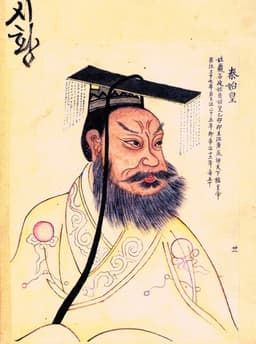
Qin Shi Huang
Emperor · Ancient
85.2Total
Basic Information
Born
1914
-259
Died
1977
-210
Era
Modern
Ancient
Nationality
Brazil
China
Occupation
Politician
Emperor
Civilization
Western
Eastern
Score Comparison
Military (10%)
10.4
80.0
Political (20%)
68.0
90.0
Influence (20%)
55.7
85.0
Legacy (20%)
46.7
90.0
Leadership (15%)
64.0
78.0
Strategy (15%)
27.1
82.0
TOTAL
49.2
85.2
Carlos Lacerda — Complete Timeline
1954 AD
Led the Campaign Against Getúlio VargasPolitical Action◆ Major
As a journalist and politician, Lacerda led a fierce campaign against President Vargas, accusing his government of corruption and links to crime. His attacks culminated in the attempted assassination of Lacerda, which led to Vargas' suicide.
Political CrisisVargasJournalism
Impact: nationaldestructive
1960 AD
Elected Governor of Guanabara StatePolitical Action◆ Major
Lacerda was elected governor of the newly created state of Guanabara (Rio de Janeiro) as a candidate of the National Democratic Union (UDN). His administration focused on urban development, education, and anti-corruption measures.
GovernorshipUrban DevelopmentAnti-Corruption
Impact: regionalconstructive
1964 AD
Supported the 1964 Military CoupPolitical Action◆ Major
Lacerda was a key civilian supporter of the military coup that overthrew President Jo
Coup d'ÉtatMilitary DictatorshipPolitical Alliance
Impact: nationaldestructive
1968 AD
Broke with the Military Regime and Had Political Rights SuspendedPolitical Action◆ Major
Lacerda turned against the military dictatorship, criticizing its authoritarianism. In response, the regime stripped him of his political rights for 10 years under Institutional Act Number Five (AI-5), forcing him into exile.
Political RepressionExileOpposition
Impact: nationaltragic
Qin Shi Huang — Complete Timeline
246 BC
Construction of the Mausoleum and Terracotta ArmyOther◆ Major
Qin Shi Huang commissioned a vast mausoleum complex near Xi'an, guarded by thousands of life-sized terracotta soldiers, horses, and chariots. The project employed hundreds of thousands of workers and reflected his obsession with immortality and imperial power.
Impact: global
230 BC
Conquest of the Six Warring StatesWar
From 230 to 221 BCE, Ying Zheng led the Qin state in a series of campaigns that conquered the Han, Zhao, Wei, Chu, Yan, and Qi states. This unified China under a single ruler for the first time, ending the Warring States period.
Impact: global
221 BC
Standardization of Writing, Currency, and MeasurementsReform◆ Major
Qin Shi Huang ordered the standardization of Chinese script, currency, and weights and measures across the unified empire. This facilitated administration, trade, and cultural integration, laying a foundation for future dynasties.
Impact: globalconstructive
Proclamation of the Qin DynastyPolitical Action
After conquering the last independent state, Ying Zheng declared himself Shi Huangdi (First Emperor), founding the Qin Dynasty. He adopted a new title to signify his supreme authority and initiated centralized imperial rule.
Impact: global
214 BC
Initiation of the Great Wall ConstructionOther◆ Major
Qin Shi Huang ordered the connection and extension of existing northern fortifications to create a unified defensive wall against nomadic Xiongnu raids. This project involved massive conscripted labor and became the precursor to the later Great Wall.
Impact: regional
213 BC
Burning of Books and Burying of ScholarsPolitical Action◆ Major
On the advice of Li Si, Qin Shi Huang ordered the burning of historical records and philosophical texts not aligned with Legalist doctrine. He also had 460 Confucian scholars buried alive to suppress dissent and consolidate ideological control.
Impact: nationaldestructive
Expert Analysis
carlos-lacerda-vs-qin-shi-huang
### The Emperor and the Journalist: Two Titans Who Shaped Their Nations
On a winter morning in 221 BC, a 38-year-old king stood before the ruins of his final enemy and declared himself the First Emperor, the ruler of "All Under Heaven." Two thousand years later, on a hot Rio de Janeiro night in 1954, a crusading journalist stood outside his home, his body riddled with bullets from an assassin’s gun, yet surviving to launch a political revolution. Qin Shi Huang and Carlos Lacerda—separated by two millennia, by continent, by the very meaning of power—share a strange kinship. Both were driven by a messianic vision of order, both destroyed enemies with ruthless clarity, and both ultimately saw their grandest dreams shattered by forces they could not control. Their lives ask a haunting question: does ambition create a nation, or consume its architect?
### Origins
Ying Zheng was born in 259 BC into a world of chaos. The Warring States period had torn China apart for centuries; seven kingdoms bled each other dry in endless conflict. His father was a prince, his mother a concubine, and his childhood was a cage of court intrigue. By thirteen, he was king of Qin, a state that prized law and warfare above all else. His world was one of iron, blood, and the terrifying belief that order could only be imposed from above.
Carlos Lacerda was born in 1914 in Rio de Janeiro, into a Brazil that was a sleeping giant—vast, rich, but politically fragile. His father was a politician, his family part of the elite, and he grew up in a world of newspapers and coffeehouses. But Brazil was also a nation of stark inequality, where the masses were poor and the powerful were corrupt. Unlike the king of Qin, Lacerda learned early that words could be sharper than swords. He became a journalist, a profession that in Brazil meant being a moral crusader—or a political weapon.
### Rise to Power
Qin Shi Huang’s rise was a military conquest. From 230 to 221 BC, he unleashed the armies of Qin in a series of campaigns that swallowed the Han, Zhao, Wei, Chu, Yan, and Qi states. He did not negotiate; he annihilated. His generals were brilliant, his strategies brutal, and his will absolute. When the last king surrendered, Ying Zheng did not simply become another ruler—he invented a new title: *Shi Huangdi*, the First Emperor. He believed his dynasty would last ten thousand generations.
Lacerda’s rise was slower, more treacherous. He entered politics not as a general but as a voice. In the 1950s, Brazil was ruled by Getúlio Vargas, a populist strongman who had built a cult of personality. Lacerda, a conservative who hated Vargas’s statist policies, used his newspaper, *Tribuna da Imprensa*, to attack the president relentlessly. He exposed corruption, mocked Vargas’s vanity, and turned himself into the face of opposition. The turning point came in 1954: an assassin tried to kill Lacerda, but the bullet only wounded him. The gunman was linked to Vargas’s inner circle. The scandal broke Vargas. On August 24, 1954, the old president put a bullet through his own heart. Lacerda had not fired a shot—but he had killed a giant.
### Leadership & Governance
As emperor, Qin Shi Huang ruled with a vision of total unity. He standardized writing, currency, and measurements across his empire—a revolutionary act that made China a single civilization instead of a collection of warring states. He ordered the construction of roads, canals, and the first Great Wall, linking existing fortifications into a single barrier against northern nomads. His government was efficient, centralized, and terrifying. He crushed local aristocracies, forced the nobility to live in his capital, and imposed a uniform legal code. He was not a builder of consensus; he was a sculptor of clay, shaping a nation with an iron hand.
Lacerda, as governor of Guanabara State from 1960, governed differently but with a similar obsession for order. Rio de Janeiro was a chaotic, beautiful mess of slums and skyscrapers. Lacerda launched massive public works: tunnels, highways, schools, and sanitation projects. He fought corruption with a crusader’s zeal, firing thousands of civil servants and arresting crooked officials. He was a modernizer, a man who believed that Brazil could be dragged into the twentieth century by sheer will. But his style was abrasive, his temper volcanic. He made enemies as easily as he made policies.
### Triumph & Tragedy
Qin Shi Huang’s greatest triumph was the unification itself—a feat no Chinese ruler had achieved before. But his tragedy was the cost. In 213 BC, on the advice of his chancellor Li Si, he ordered the burning of all books not approved by the state—philosophical texts, historical records, poetry. Scholars who protested were buried alive. The emperor sought to control not just the present, but the past itself. His mausoleum, guarded by the Terracotta Army, was a monument to his obsession with immortality. Yet when he died in 210 BC, his dynasty collapsed within three years. His son was weak, his generals fought, and the empire he built crumbled into civil war.
Lacerda’s triumph came in 1964, when he supported the military coup that overthrew the leftist President João Goulart. He believed the generals would restore order, then return power to civilians. It was a catastrophic miscalculation. The military regime became a dictatorship, and Lacerda, who had helped bring it to power, found himself its enemy. In 1968, he broke with the regime, denouncing its authoritarianism. The generals stripped him of his political rights. He was silenced, isolated, a man who had destroyed one tyrant only to help create another. He died in 1977, bitter and largely forgotten by the nation he had tried to reshape.
### Character & Destiny
Qin Shi Huang was a man of terrifying certainty. He believed that history began with him, that the past was dangerous, and that only absolute control could secure the future. His paranoia was legendary—he slept in different rooms each night, built secret tunnels, and sought the elixir of life. His character was his destiny: the same iron will that unified China also doomed his dynasty. He could not delegate, could not trust, could not imagine a world that did not bow to his will.
Lacerda was a man of passionate contradiction. He was a democrat who helped a dictatorship rise, a liberal who governed like a strongman, a journalist who loved power more than truth. His tragedy was not that he lacked vision, but that he could not see the consequences of his own actions. He believed that order could be imposed without tyranny, that the ends justified the means—until the means consumed the ends.
### Legacy
Qin Shi Huang’s legacy is monumental. He gave China its name, its written script, its administrative bones. The Great Wall, the Terracotta Army, the very idea of a unified China—all flow from his reign. He is remembered as both a unifier and a tyrant, a man who built an empire but crushed a civilization of thought. In China today, he is a symbol of strength and a warning.
Lacerda’s legacy is more fragile. He is remembered in Brazil as a brilliant journalist, a flawed governor, and a cautionary tale about the seduction of power. He helped bring down Vargas, but he also helped open the door to twenty-one years of military rule. His name appears in history books, but not with the reverence of a founder. He was a builder, but the building collapsed around him.
### Conclusion
Standing at the edge of Qin Shi Huang’s mausoleum, looking at the silent army of terracotta soldiers, one feels the weight of absolute power—its grandeur, its loneliness, its terrible cost. Standing in Rio de Janeiro, in the tunnels and highways Lacerda built, one sees the ambition of a man who wanted to remake a nation, but could not remake himself. Both men were architects of order, but order without freedom is a prison, and freedom without order is chaos. Their lives remind us that the greatest leaders are not those who conquer or command, but those who understand that power is a tool, not a god. And that the most enduring empires are built not with iron and decrees, but with the fragile, stubborn faith of free people.
Rankings
🥇
Qin Shi HuangLeader
Mil: 80.0Pol: 90.0Inf: 85.0
85.2
🥈
Carlos Lacerda
Mil: 10.4Pol: 68.0Inf: 55.7
49.2
+36.0 behind
How This Comparison Works
Algorithm
Each figure is scored on 6 dimensions (0—100 scale) based on structured historical data: Military (10%), Political (20%), Influence (20%), Legacy (20%), Leadership (15%), Strategy (15%). The weighted total produces the final ranking.
Data Sources
Scores are computed from structured sub-indicators in the database. Scale factors adjust for era (Ancient ×0.85, Modern ×1.0) and civilization size (Eastern ×1.05, Other ×0.80) to account for differences in population and military scale.
Maximum 3 Figures
Comparisons are limited to 2—3 figures to ensure readability and statistical meaningfulness.
Error Margins
±5 points per dimension — Sub-scores are derived from historical records with inherent uncertainty. Two figures within 5 points on a dimension should be considered roughly equivalent in that area.
Total Score Accuracy
±3 points overall — The weighted combination of 6 dimensions produces a total score with approximately ±3 points of uncertainty. Differences of less than 3 points are not statistically significant— the figures are effectively tied.
Known Limitations
- Historical records are incomplete and uneven across civilizations
- Figures from oral-tradition societies may be underrepresented
- Occupation labels can misclassify multi-role figures
- Scores measure capability and impact, not moral character
- Quantitative scoring is a comparison tool, not absolute truth
Capability Radar
Military (10%) — Battles & Warfare
Battles
12
85
Win Rate
16
90
Expansion
17
90
Political (20%) — Governance & Reform
Reform
60
95
Diplomacy
55
75
Economy
50
90
Influence (20%) — Cultural & Global Reach
Cultural
40
95
Global
25
85
Legacy (20%) — Historical Impact
Historical
50
95
Longevity
30
95
Leadership (15%) — Power & Stability
Tenure
45
70
Stability
30
65
Strategy (15%) — Tactics & Innovation
Strategy
19
85
Tactics
23
80
Reform
26
95
Similar Comparisons
Comments & Discussion
Qin-shi-slayer6/17/2026
Calling Lacerda a titan next to Qin Shi Huang is like comparing a firecracker to a nuclear bomb. The First Emperor literally standardized writing, weights, and axle lengths across a continent. Lacerda wrote some fiery newspaper columns and survived an assassination attempt—impressive for a journalist, but he didn’t unify a warring civilization. Historical scale matters, people.
青铜剑客6/17/2026
用两千年的帝王标准去套一个记者?太可笑了。秦始皇焚书坑儒是为了统一思想控制历史,而拉塞达只是个写社论的,连总统都没当过。两人的权力本质完全不同——一个是握着生杀大权的帝国建筑师,另一个是靠着打字机发声的政治评论员。别拿苹果比月亮了。