Loading...
This comparison has not been analyzed yet.
One-time AI generation (~1 minute). Scores and timeline are already available below.
Carol II of Romania vs Msiri
Msiri leads by 3.4 pts · 2 figures compared
…
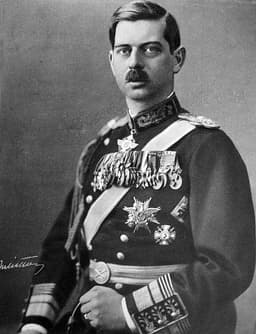
Carol II of Romania
Emperor · Modern
46.3Total
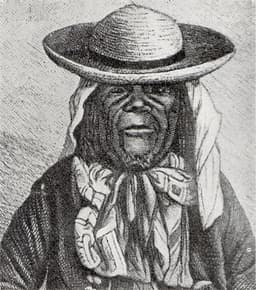
Msiri
Emperor · Modern
49.7Total
Basic Information
Born
1893
1830
Died
1953
1891
Era
Modern
Modern
Nationality
Romania
Katanga
Occupation
Emperor
Emperor
Civilization
Western
Other
Score Comparison
Military (10%)
43.3
55.0
Political (20%)
40.8
46.6
Influence (20%)
46.3
52.5
Legacy (20%)
40.0
40.8
Leadership (15%)
65.0
64.0
Strategy (15%)
45.0
43.3
TOTAL
46.3
49.7
Carol II of Romania — Complete Timeline
1930 AD
Ascended to the Throne of RomaniaPolitical Action◆ Major
Carol II became King of Romania on June 8, 1930, after returning from exile. He had renounced his rights to the throne in 1925, but his son Michael's regency was overthrown, and Carol was invited back by a political faction.
AccessionExileMonarchy
Impact: national
1938 AD
Established the Royal DictatorshipPolitical Action
Carol II abolished the constitution and established a royal dictatorship on February 10, 1938. He banned all political parties, created the National Renaissance Front as the sole legal party, and concentrated power in his own hands, aiming to counter the rise of the Iron Guard.
DictatorshipAuthoritarianismIron Guard
Impact: nationaldestructive
1940 AD
Lost Northern Transylvania to Hungary via the Second Vienna AwardPolitical Action
Under pressure from Nazi Germany and Fascist Italy, Carol II accepted the Second Vienna Award on August 30, 1940, ceding Northern Transylvania to Hungary. This territorial loss caused widespread outrage and severely weakened his regime.
Territorial LossVienna AwardWorld War II
Impact: regionaltragic
Forced to Abdicate and ExiledPolitical Action◆ Major
On September 6, 1940, Carol II was forced to abdicate by General Ion Antonescu, who took power with support from the Iron Guard. Carol fled Romania, spending the rest of his life in exile in Portugal, Mexico, and Brazil.
AbdicationExileAntonescu
Impact: nationaltragic
Msiri — Complete Timeline
1856 AD
Founding of the Yeke KingdomPolitical Action
Msiri, a Nyamwezi trader from Tanzania, established the Yeke Kingdom in Katanga after conquering local Luba and Lunda chieftaincies. He built a centralized state with a capital at Bunkeya, controlling copper and ivory trade routes.
Kingdom FoundingKatangaNyamwezi
Impact: regionalconstructive
1860 AD
Monopoly on copper tradePolitical Action◆ Major
Msiri established a monopoly over copper mining and trade in Katanga, controlling access to the region's rich copper deposits. He used this economic power to arm his forces and expand his influence over neighboring groups.
Copper TradeEconomic ControlYeke Kingdom
Impact: regional
1891 AD
Resistance against Belgian colonizationWar◆ Major
Msiri refused to accept Belgian Congo Free State authority, leading to a military confrontation with Belgian-led forces. He was killed in a skirmish at Bunkeya, and his kingdom was subsequently annexed by the Congo Free State, ending Yeke independence.
Belgian ColonizationResistanceCongo Free State
Impact: regionaltragic
This comparison has not been analyzed yet.
One-time AI generation (~1 minute). Scores and timeline are already available below.
Rankings
🥇
MsiriLeader
Mil: 55.0Pol: 46.6Inf: 52.5
49.7
🥈
Carol II of Romania
Mil: 43.3Pol: 40.8Inf: 46.3
46.3
+3.4 behind
How This Comparison Works
Algorithm
Each figure is scored on 6 dimensions (0—100 scale) based on structured historical data: Military (10%), Political (20%), Influence (20%), Legacy (20%), Leadership (15%), Strategy (15%). The weighted total produces the final ranking.
Data Sources
Scores are computed from structured sub-indicators in the database. Scale factors adjust for era (Ancient ×0.85, Modern ×1.0) and civilization size (Eastern ×1.05, Other ×0.80) to account for differences in population and military scale.
Maximum 3 Figures
Comparisons are limited to 2—3 figures to ensure readability and statistical meaningfulness.
Error Margins
±5 points per dimension — Sub-scores are derived from historical records with inherent uncertainty. Two figures within 5 points on a dimension should be considered roughly equivalent in that area.
Total Score Accuracy
±3 points overall — The weighted combination of 6 dimensions produces a total score with approximately ±3 points of uncertainty. Differences of less than 3 points are not statistically significant— the figures are effectively tied.
Known Limitations
- Historical records are incomplete and uneven across civilizations
- Figures from oral-tradition societies may be underrepresented
- Occupation labels can misclassify multi-role figures
- Scores measure capability and impact, not moral character
- Quantitative scoring is a comparison tool, not absolute truth
Capability Radar
Military (10%) — Battles & Warfare
Battles
5
45
Win Rate
5
50
Expansion
5
50
Political (20%) — Governance & Reform
Reform
40
30
Diplomacy
30
45
Economy
25
40
Influence (20%) — Cultural & Global Reach
Cultural
20
30
Global
15
25
Legacy (20%) — Historical Impact
Historical
30
35
Longevity
20
20
Leadership (15%) — Power & Stability
Tenure
60
40
Stability
20
35
Strategy (15%) — Tactics & Innovation
Strategy
5
45
Tactics
5
40
Reform
20
35
Similar Comparisons
Comments & Discussion
No comments yet. Be the first to share your thoughts!