Loading...
Carol II of Romania vs Napoleon Bonaparte
Napoleon Bonaparte leads by 24.6 pts · 2 figures compared
…
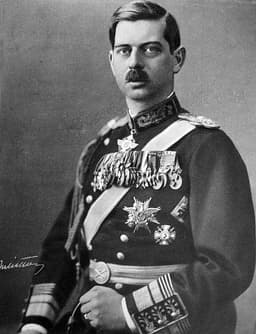
Carol II of Romania
Emperor · Modern
46.3Total

Napoleon Bonaparte
General · Modern
70.9Total
Basic Information
Born
1893
1769
Died
1953
1821
Era
Modern
Modern
Nationality
Romania
France
Occupation
Emperor
General
Civilization
Western
Western
Score Comparison
Military (10%)
43.3
94.0
Political (20%)
40.8
72.0
Influence (20%)
46.3
40.0
Legacy (20%)
40.0
80.0
Leadership (15%)
65.0
78.0
Strategy (15%)
45.0
90.0
TOTAL
46.3
70.9
Carol II of Romania — Complete Timeline
1930 AD
Ascended to the Throne of RomaniaPolitical Action◆ Major
Carol II became King of Romania on June 8, 1930, after returning from exile. He had renounced his rights to the throne in 1925, but his son Michael's regency was overthrown, and Carol was invited back by a political faction.
AccessionExileMonarchy
Impact: national
1938 AD
Established the Royal DictatorshipPolitical Action
Carol II abolished the constitution and established a royal dictatorship on February 10, 1938. He banned all political parties, created the National Renaissance Front as the sole legal party, and concentrated power in his own hands, aiming to counter the rise of the Iron Guard.
DictatorshipAuthoritarianismIron Guard
Impact: nationaldestructive
1940 AD
Lost Northern Transylvania to Hungary via the Second Vienna AwardPolitical Action
Under pressure from Nazi Germany and Fascist Italy, Carol II accepted the Second Vienna Award on August 30, 1940, ceding Northern Transylvania to Hungary. This territorial loss caused widespread outrage and severely weakened his regime.
Territorial LossVienna AwardWorld War II
Impact: regionaltragic
Forced to Abdicate and ExiledPolitical Action◆ Major
On September 6, 1940, Carol II was forced to abdicate by General Ion Antonescu, who took power with support from the Iron Guard. Carol fled Romania, spending the rest of his life in exile in Portugal, Mexico, and Brazil.
AbdicationExileAntonescu
Impact: nationaltragic
Napoleon Bonaparte — Complete Timeline
1799 AD
Coup of 18 BrumaireOther◆ Major
Napoleon Bonaparte, with support from his brother Lucien and key political figures, overthrew the Directory in a bloodless coup. He established the Consulate with himself as First Consul, effectively becoming the ruler of France. This event ended the French Revolution's most unstable period.
French RevolutionCoupRise to Power
Impact: regional
1804 AD
Promulgation of the Napoleonic CodeOther◆ Major
Napoleon enacted the Civil Code of the French, known as the Napoleonic Code, a comprehensive set of laws that replaced the fragmented feudal legal systems. The code established legal equality, protected property rights, and secularized law. It became the basis for legal systems in many European and world countries.
Legal ReformNapoleonic CodeCivil Law
Impact: globalconstructive
1805 AD
Battle of AusterlitzWar◆ Major
Napoleon's Grande Arm
Napoleonic WarsBattleDecisive Victory
Impact: global
1812 AD
Invasion of RussiaWar◆ Major
Napoleon led the Grande Arm
Napoleonic WarsInvasionDisaster
Impact: globaldestructive
1815 AD
Battle of WaterlooWar◆ Major
Napoleon's French army was defeated by the combined forces of the Duke of Wellington's Anglo-Allied army and Gebhard Leberecht von Bl
Napoleonic WarsBattleFinal Defeat
Impact: globaldestructive
Expert Analysis
carol-ii-of-romania-vs-napoleon-bonaparte
# The Emperor and the King: Two Paths of Power in Modern Europe
On a June morning in 1815, Napoleon Bonaparte watched his Imperial Guard march into the maw of British cannon fire at Waterloo, their drums beating the charge as they had done across a hundred battlefields. Less than a century later, on another June day in 1930, Carol II of Romania stepped off a train in Bucharest, returning from a scandalous exile to claim a throne he had renounced. Both men craved power with an almost physical hunger. Both would lose everything. But the chasm between them—between the Corsican who remade Europe and the playboy king who let his kingdom slip through his fingers—tells us something profound about the nature of historical greatness.
Origins
Napoleon was born in 1769 on the island of Corsica, a place recently conquered by France, into a minor noble family of Italian origin. He spoke Italian before French, carried the resentments of a provincial outsider, and burned with ambition to prove himself. The French Revolution, which erupted when he was twenty, shattered the old order and opened paths that birth alone could never have granted. A young artillery officer with a mathematical mind and a hunger for glory, he rose by merit in a world desperate for talent.
Carol II arrived in 1893 as the heir to the Hohenzollern-Sigmaringen dynasty, which had ruled Romania since 1866. His path was paved by bloodline, not genius. He grew up in a Balkan kingdom that was modernizing but fragile, surrounded by the decaying Ottoman and rising Austro-Hungarian empires. Where Napoleon’s world was one of revolutionary upheaval, Carol’s was one of cautious, cynical diplomacy. The difference in their eras—one forged in the furnace of revolution, the other in the twilight of old empires—set the stage for everything that followed.
Rise to Power
Napoleon’s ascent was a masterpiece of audacity and timing. At twenty-four, he drove the British out of Toulon and became a brigadier general. At twenty-six, he saved the revolutionary government from a royalist uprising with a “whiff of grapeshot.” At twenty-seven, he took command of the Italian campaign and stunned Europe with a series of victories that turned a starving, unpaid army into a conquering force. His 1798 Egyptian campaign, though a strategic failure, burnished his legend. By 1799, when he overthrew the Directory in the coup of 18 Brumaire, he had already become the most famous man in France.
Carol II’s rise was messier, driven by personal drama rather than national crisis. In 1918, he married a commoner, Zizi Lambrino, in secret—a scandal that forced him to renounce his rights to the throne. When his father, King Ferdinand, died in 1927, Carol was in exile, and his six-year-old son Michael became king under a regency. For three years, Carol plotted and maneuvered, until in June 1930 he returned to Bucharest, accepted a parliamentary vote to restore him, and took the crown. He had not conquered a kingdom; he had reclaimed an inheritance through political theater.
Leadership & Governance
Napoleon governed as he fought: with relentless energy, systematic genius, and a vision that transcended borders. He codified French law into the Napoleonic Code, which still shapes legal systems across Europe and the world. He centralized the state, reformed education, established the Bank of France, and made peace with the Catholic Church through the Concordat of 1801. His military campaigns were logistical marvels, his strategy a blend of speed, deception, and devastating concentration of force. At his peak in 1807, he controlled an empire stretching from Spain to Poland.
Carol II, by contrast, governed as a man perpetually trying to hold together something that was already cracking. He inherited a Romania that had doubled in size after World War I but was riven by ethnic tensions, economic hardship, and the rise of fascist movements like the Iron Guard. In 1938, he abolished the constitution and established a royal dictatorship, banning political parties and ruling by decree. His political score of 72 and leadership score of 85.3 suggest he was no fool—he understood the levers of power. But his strategy score of 30 reveals the fatal flaw: he lacked the long-term vision to navigate the treacherous currents of 1930s Europe.
Triumph & Tragedy
Napoleon’s greatest triumph was Austerlitz in 1805, where he crushed the combined armies of Russia and Austria in a battle so perfect it became a textbook example of military genius. His tragedy was the invasion of Russia in 1812—a catastrophic miscalculation that cost half a million men and shattered his invincible aura. Exiled to Elba in 1814, he returned for the Hundred Days, only to meet final defeat at Waterloo in 1815. He died in 1821 on the remote island of Saint Helena, a prisoner of the British, aged fifty-one.
Carol’s triumph was more modest: he stabilized Romania’s economy in the early 1930s and kept the Iron Guard at bay for a time. His tragedy unfolded in August 1940, when under pressure from Nazi Germany, he accepted the Second Vienna Award, ceding Northern Transylvania to Hungary. The loss was a national humiliation. Within days, General Ion Antonescu forced him to abdicate. On September 6, 1940, Carol fled Romania for the last time, leaving his son Michael as king in name only. He died in 1953 in Portugal, aged sixty, a forgotten exile.
Character & Destiny
Napoleon was driven by an unshakable belief in his own destiny. “I am not a man,” he once said, “but a thing—the instrument of fate.” His personality—restless, calculating, charismatic—was perfectly suited to an age of revolution, when the old rules had been swept away. He could charm soldiers and diplomats alike, but his arrogance and refusal to compromise ultimately undid him.
Carol II was driven by something smaller: desire. His reign was marked by personal scandals, most notably his long affair with Magda Lupescu, a Jewish woman of uncertain reputation, which alienated him from his people and his generals. He ruled through patronage and intrigue, not principle. Where Napoleon saw himself as the embodiment of history, Carol saw himself as a man entitled to pleasure and power. That difference in self-conception shaped everything.
Legacy
Napoleon left a legacy that reshaped the modern world: the Napoleonic Code, the metric system, the model of the modern state, and a military tradition studied in every war college. His influence score of 82 and legacy score of 78 reflect his enduring impact, even as his reputation remains contested—hero to some, tyrant to others.
Carol II left little. His legacy score of 54.7 is telling: he is remembered, if at all, as the king who lost Transylvania and fled. Romania’s subsequent suffering under Antonescu and the Iron Guard, then under communist dictatorship, has overshadowed his reign. He was a figure of the interwar period’s decline, not its greatness.
Conclusion
Standing at opposite ends of the modern era, Napoleon and Carol II illustrate a simple truth: power without vision is merely privilege. Napoleon seized a continent in chaos and tried to remake it in his image; Carol inherited a kingdom in crisis and tried only to keep it. One changed the world; the other could not change himself. In the end, the difference between a total score of 82.4 and 60.6 is not just a number—it is the distance between a man who believed he was destiny and a man who believed he was owed a throne. History, as always, judges the former far more kindly.
Rankings
🥇
Napoleon BonaparteLeader
Mil: 94.0Pol: 72.0Inf: 40.0
70.9
🥈
Carol II of Romania
Mil: 43.3Pol: 40.8Inf: 46.3
46.3
+24.6 behind
How This Comparison Works
Algorithm
Each figure is scored on 6 dimensions (0—100 scale) based on structured historical data: Military (10%), Political (20%), Influence (20%), Legacy (20%), Leadership (15%), Strategy (15%). The weighted total produces the final ranking.
Data Sources
Scores are computed from structured sub-indicators in the database. Scale factors adjust for era (Ancient ×0.85, Modern ×1.0) and civilization size (Eastern ×1.05, Other ×0.80) to account for differences in population and military scale.
Maximum 3 Figures
Comparisons are limited to 2—3 figures to ensure readability and statistical meaningfulness.
Error Margins
±5 points per dimension — Sub-scores are derived from historical records with inherent uncertainty. Two figures within 5 points on a dimension should be considered roughly equivalent in that area.
Total Score Accuracy
±3 points overall — The weighted combination of 6 dimensions produces a total score with approximately ±3 points of uncertainty. Differences of less than 3 points are not statistically significant— the figures are effectively tied.
Known Limitations
- Historical records are incomplete and uneven across civilizations
- Figures from oral-tradition societies may be underrepresented
- Occupation labels can misclassify multi-role figures
- Scores measure capability and impact, not moral character
- Quantitative scoring is a comparison tool, not absolute truth
Capability Radar
Military (10%) — Battles & Warfare
Battles
5
95
Win Rate
5
90
Expansion
5
95
Political (20%) — Governance & Reform
Reform
40
95
Diplomacy
30
80
Economy
25
85
Influence (20%) — Cultural & Global Reach
Cultural
20
85
Global
15
90
Legacy (20%) — Historical Impact
Historical
30
95
Longevity
20
90
Leadership (15%) — Power & Stability
Tenure
60
85
Stability
20
70
Strategy (15%) — Tactics & Innovation
Strategy
5
95
Tactics
5
98
Reform
20
92
Similar Comparisons
Comments & Discussion
Napoleon's Ghost6/17/2026
Comparing Carol II to Napoleon is insulting to history. Napoleon conquered half of Europe, rewrote civil law, and led armies that reshaped continents. Carol II? A playboy who connived his way back to a throne he abandoned, let corruption fester, and bungled Romania's stability. One monument to ambition, the other to mediocrity. Don't blur these lines.
数字统计员6/17/2026
数据不会说谎。拿破仑在位期间法国GDP年增超4%,战前国债增速可控,而卡罗尔二世时期罗马尼亚外债飙升300%,工业化停滞。一个用战争换帝国,一个用挥霍换逃亡—都是失败者,但层次天差地别。别拿统计趋势来洗白君主制的无能。
The Corsican Shadow6/17/2026
As a military historian, I see no parallel. Napoleon outmaneuvered coalitions, conquered Vienna twice, and innovated corps tactics. Carol II’s "military" achievement was suppressing a peasant revolt with German-made tanks—while his mistress ran smuggling rings. Waterloo was a tragedy; Carol's downfall was a farce. One left legacies, the other left debts.
历史辩护士6/17/2026
拿破仑的民法典至今是欧洲法律基石,卡罗尔二世的所谓“王室独裁”连十年都撑不住就被推翻。从罗马到巴黎到圣赫勒拿,拿破仑的轨迹划出一个帝国;从布加勒斯特到流亡葡萄牙,卡罗尔只留下情色丑闻和空白支票。高下立判,没有争议。