Loading...
King Abdullah II vs Msiri
King Abdullah II leads by 4.0 pts · 2 figures compared
…
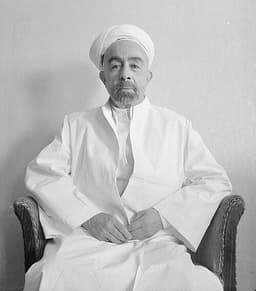
King Abdullah II
Emperor · Modern
53.7Total
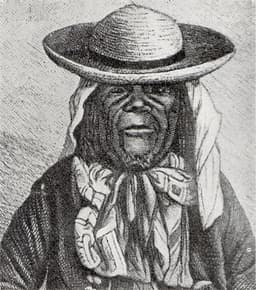
Msiri
Emperor · Modern
49.7Total
Basic Information
Born
1962
1830
Died
—
1891
Era
Modern
Modern
Nationality
Jordan
Katanga
Occupation
Emperor
Emperor
Civilization
Middle Eastern
Other
Score Comparison
Military (10%)
20.0
55.0
Political (20%)
72.0
46.6
Influence (20%)
59.0
52.5
Legacy (20%)
42.5
40.8
Leadership (15%)
80.0
64.0
Strategy (15%)
35.7
43.3
TOTAL
53.7
49.7
King Abdullah II — Complete Timeline
1999 AD
Ascension to the ThronePolitical Action◆ Major
Abdullah II became King of Jordan upon the death of his father King Hussein. He inherited a stable monarchy and continued his father's policies of moderation and economic reform.
SuccessionMonarchy
Impact: national
2000 AD
Launch of Economic Reform ProgramReform◆ Major
Abdullah II initiated a series of economic reforms including privatization, trade liberalization, and promotion of foreign investment. These policies aimed to modernize Jordan's economy and attract international capital.
Economic ReformPrivatizationDevelopment
Impact: nationalconstructive
2011 AD
Response to Arab Spring ProtestsPolitical Action◆ Major
Abdullah II responded to widespread protests by dismissing the government, enacting constitutional reforms, and promising political liberalization. He avoided the violent crackdowns seen in other Arab states.
Arab SpringPolitical ReformProtests
Impact: nationalconstructive
2014 AD
Role in Anti-ISIS CoalitionWar◆ Major
Jordan joined the US-led coalition against the Islamic State (ISIS) in Syria and Iraq. Jordanian airstrikes targeted ISIS positions, and the country hosted coalition forces and Syrian refugees.
CounterterrorismISISMilitary Coalition
Impact: regional
2021 AD
Failed Coup Attempt by Prince HamzahPolitical Action◆ Major
Abdullah II placed his half-brother Prince Hamzah under house arrest, accusing him of involvement in a foreign-backed plot to destabilize the monarchy. The incident highlighted internal royal family tensions.
Coup AttemptRoyal FamilyPolitical Crisis
Impact: nationaldestructive
Msiri — Complete Timeline
1856 AD
Founding of the Yeke KingdomPolitical Action
Msiri, a Nyamwezi trader from Tanzania, established the Yeke Kingdom in Katanga after conquering local Luba and Lunda chieftaincies. He built a centralized state with a capital at Bunkeya, controlling copper and ivory trade routes.
Kingdom FoundingKatangaNyamwezi
Impact: regionalconstructive
1860 AD
Monopoly on copper tradePolitical Action◆ Major
Msiri established a monopoly over copper mining and trade in Katanga, controlling access to the region's rich copper deposits. He used this economic power to arm his forces and expand his influence over neighboring groups.
Copper TradeEconomic ControlYeke Kingdom
Impact: regional
1891 AD
Resistance against Belgian colonizationWar◆ Major
Msiri refused to accept Belgian Congo Free State authority, leading to a military confrontation with Belgian-led forces. He was killed in a skirmish at Bunkeya, and his kingdom was subsequently annexed by the Congo Free State, ending Yeke independence.
Belgian ColonizationResistanceCongo Free State
Impact: regionaltragic
Expert Analysis
Origins
King Abdullah II was born on January 30, 1962, in Amman, Jordan, to King Hussein and Princess Muna. He was educated at Sandhurst Military Academy in the UK and later at Oxford and Georgetown. His early career was in the military, rising to commander of the Jordanian Special Forces. Msiri, born around 1830 in Tabora, Tanzania, was a Nyamwezi trader who ventured into Katanga in the 1850s. He married into local Lunda royalty and used his trading networks to gain influence, eventually founding the Yeke Kingdom around 1856. His upbringing in a commercial environment shaped his economic strategies.
Rise to Power
Abdullah II ascended to the throne on February 7, 1999, upon the death of his father. He was not the original heir—his uncle Hassan was crown prince—but King Hussein changed the succession shortly before his death. Abdullah quickly consolidated power by appointing loyalists and continuing his father's pragmatic policies. Msiri's rise was more violent: he conquered Luba and Lunda chieftaincies, establishing a centralised state with a capital at Bunkeya. By 1870, he controlled the copper and ivory trade, making him a regional power. His economic monopoly attracted European attention, especially from Belgian and British colonial interests.
Leadership & Governance
Abdullah II rules as a constitutional monarch with significant executive power. He has pursued economic liberalisation, including privatisation and free trade agreements, but political reforms have been slow. During the Arab Spring, he dismissed governments and promised reforms, but real power remains with the monarchy. His leadership style is cautious and diplomatic, maintaining Jordan's stability amid regional turmoil. Msiri governed as an absolute ruler, using a mix of force and trade alliances. He built a network of chiefs and controlled resource extraction, but his rule was exploitative, with forced labour and tribute. His governance was more direct and autocratic than Abdullah's, relying on personal authority.
Triumph & Tragedy
Abdullah II's triumphs include successfully navigating the Arab Spring without major upheaval, joining the anti-ISIS coalition, and maintaining Jordan's peace treaty with Israel. However, his economic reforms have not fully addressed unemployment and corruption. The failed coup attempt by Prince Hamzah in 2021 revealed internal dissent. Msiri's greatest success was building the Yeke Kingdom into a powerful entity that controlled Katanga's copper wealth for decades. His tragedy came in 1891 when he was killed by Belgian forces after refusing to submit to colonial rule. His kingdom quickly collapsed after his death, and the region was absorbed into the Congo Free State. Msiri scored 55.0 in military versus Abdullah's 20.0, reflecting his armed resistance, but his political score of 46.6 is lower than Abdullah's 72.0.
Character & Destiny
Abdullah II is known for his calm and calculated decision-making, often described as a pragmatist. His background in special forces influences his strategic thinking, but he prioritises stability over rapid change. His destiny has been to manage a fragile state in a volatile region, relying on foreign aid and diplomacy. Msiri was an ambitious and shrewd trader who used violence and negotiation to build an empire. His refusal to compromise with colonial powers led to his downfall. Historians view him as a symbol of African resistance, but his methods were often brutal. Both leaders' characters shaped their fates: Abdullah's caution preserved his throne, while Msiri's boldness ended his life and kingdom.
Legacy
Abdullah II's legacy is still unfolding, but he is likely to be remembered as a stabilising force in Jordan, continuing his father's legacy. His influence scores 59.0, reflecting his role in regional diplomacy. Msiri's legacy is more contested: he is celebrated as a pre-colonial African empire builder but also criticised for his oppressive rule. His kingdom's legacy is the foundation of Katanga's identity, which later fuelled secessionist movements. In terms of lasting impact, Abdullah's Jordan remains a key US ally, while Msiri's Yeke Kingdom vanished within years of his death. Abdullah's total score of 53.7 edges out Msiri's 49.7.
Conclusion
While both leaders operated in different contexts, King Abdullah II has had a greater impact due to his continued relevance and influence in a volatile region. His political acumen (72.0) and leadership (80.0) have allowed Jordan to survive challenges that would have destroyed many states. Msiri's achievements were impressive for a 19th-century African trader, but his kingdom was short-lived and his methods unsustainable. Abdullah's legacy will likely endure longer because of institutional continuity, whereas Msiri's empire depended entirely on his personal authority. Therefore, King Abdullah II is the more significant historical figure.
Rankings
🥇
King Abdullah IILeader
Mil: 20.0Pol: 72.0Inf: 59.0
53.7
🥈
Msiri
Mil: 55.0Pol: 46.6Inf: 52.5
49.7
+4.0 behind
How This Comparison Works
Algorithm
Each figure is scored on 6 dimensions (0—100 scale) based on structured historical data: Military (10%), Political (20%), Influence (20%), Legacy (20%), Leadership (15%), Strategy (15%). The weighted total produces the final ranking.
Data Sources
Scores are computed from structured sub-indicators in the database. Scale factors adjust for era (Ancient ×0.85, Modern ×1.0) and civilization size (Eastern ×1.05, Other ×0.80) to account for differences in population and military scale.
Maximum 3 Figures
Comparisons are limited to 2—3 figures to ensure readability and statistical meaningfulness.
Error Margins
±5 points per dimension — Sub-scores are derived from historical records with inherent uncertainty. Two figures within 5 points on a dimension should be considered roughly equivalent in that area.
Total Score Accuracy
±3 points overall — The weighted combination of 6 dimensions produces a total score with approximately ±3 points of uncertainty. Differences of less than 3 points are not statistically significant— the figures are effectively tied.
Known Limitations
- Historical records are incomplete and uneven across civilizations
- Figures from oral-tradition societies may be underrepresented
- Occupation labels can misclassify multi-role figures
- Scores measure capability and impact, not moral character
- Quantitative scoring is a comparison tool, not absolute truth
Capability Radar
Military (10%) — Battles & Warfare
Battles
5
45
Win Rate
5
50
Expansion
5
50
Political (20%) — Governance & Reform
Reform
60
30
Diplomacy
75
45
Economy
55
40
Influence (20%) — Cultural & Global Reach
Cultural
40
30
Global
55
25
Legacy (20%) — Historical Impact
Historical
35
35
Longevity
30
20
Leadership (15%) — Power & Stability
Tenure
70
40
Stability
65
35
Strategy (15%) — Tactics & Innovation
Strategy
15
45
Tactics
10
40
Reform
20
35
Similar Comparisons
Comments & Discussion
No comments yet. Be the first to share your thoughts!