Loading...
This comparison has not been analyzed yet.
One-time AI generation (~1 minute). Scores and timeline are already available below.
Cassander vs Samsu-iluna
Cassander leads by 7.2 pts · 2 figures compared
…
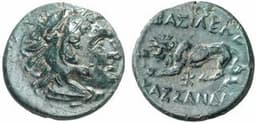
Cassander
Emperor · Ancient
49.7Total

Samsu-iluna
Emperor · Ancient
42.5Total
Basic Information
Born
-355
-1750
Died
-297
-1712
Era
Ancient
Ancient
Nationality
Macedon
Babylon
Occupation
Emperor
Emperor
Civilization
Western
Middle Eastern
Score Comparison
Military (10%)
47.5
45.0
Political (20%)
54.7
30.8
Influence (20%)
46.3
46.3
Legacy (20%)
38.3
37.5
Leadership (15%)
64.0
55.3
Strategy (15%)
60.0
41.0
TOTAL
49.7
42.5
Cassander — Complete Timeline
316 BC
Foundation of CassandreiaCultural
Cassander founded the city of Cassandreia on the site of the destroyed city of Potidaea in Chalcidice. The city became a major urban center in Macedonia and served as a symbol of his power and Hellenistic patronage.
MacedonCity FoundationHellenistic
constructive
Rebuilding of ThebesCultural
Cassander ordered the rebuilding of Thebes, which had been destroyed by Alexander the Great in 335 BC. This act was intended to gain favor with the Greek city-states and to counter the legacy of Alexander, but it also demonstrated Cassander's political ambitions.
MacedonGreeceReconstruction
Impact: regionalconstructive
309 BC
Execution of Alexander IV and RoxanaPolitical Action◆ Major
Cassander ordered the murder of Alexander IV, the son of Alexander the Great, and his mother Roxana. This act eliminated the last Argead heirs and allowed Cassander to claim the throne of Macedonia, though he faced opposition from other Diadochi.
DiadochiMacedonDynastic Murder
Impact: regionaldestructive
301 BC
Battle of IpsusWar◆ Major
Cassander participated in the coalition against Antigonus I at Ipsus. His forces contributed to the victory, but he did not gain significant territory. The battle secured his position in Macedonia and Greece, though he died a few years later.
DiadochiBattleMacedon
Impact: regional
Samsu-iluna — Complete Timeline
1745 BC
Construction of the city of Dur-SamsuilunaCultural
Samsu-iluna founded the fortress city of Dur-Samsuiluna (modern Tell al-Dhiba'i) as a defensive stronghold against external threats. The city served as a military and administrative center in the northern part of his kingdom.
City FoundationFortificationAdministration
constructive
1740 BC
Revolt of the southern cities against Babylonian ruleWar◆ Major
Samsu-iluna faced a major rebellion in the southern cities of the Babylonian Empire, including Ur, Uruk, and Larsa. The revolt, led by Rim-Sin II, resulted in the loss of these territories and weakened Babylonian control over Sumer.
RevoltTerritorial LossSumer
Impact: regionaldestructive
1730 BC
Invasion of the KassitesWar◆ Major
During Samsu-iluna's reign, the Kassite people from the Zagros Mountains invaded Babylonia. The incursions destabilized the region and contributed to the decline of the First Babylonian Dynasty, though the Kassites later established their own dynasty.
InvasionKassitesDecline
Impact: regionaldestructive
This comparison has not been analyzed yet.
One-time AI generation (~1 minute). Scores and timeline are already available below.
Rankings
🥇
CassanderLeader
Mil: 47.5Pol: 54.7Inf: 46.3
49.7
🥈
Samsu-iluna
Mil: 45.0Pol: 30.8Inf: 46.3
42.5
+7.2 behind
How This Comparison Works
Algorithm
Each figure is scored on 6 dimensions (0—100 scale) based on structured historical data: Military (10%), Political (20%), Influence (20%), Legacy (20%), Leadership (15%), Strategy (15%). The weighted total produces the final ranking.
Data Sources
Scores are computed from structured sub-indicators in the database. Scale factors adjust for era (Ancient ×0.85, Modern ×1.0) and civilization size (Eastern ×1.05, Other ×0.80) to account for differences in population and military scale.
Maximum 3 Figures
Comparisons are limited to 2—3 figures to ensure readability and statistical meaningfulness.
Error Margins
±5 points per dimension — Sub-scores are derived from historical records with inherent uncertainty. Two figures within 5 points on a dimension should be considered roughly equivalent in that area.
Total Score Accuracy
±3 points overall — The weighted combination of 6 dimensions produces a total score with approximately ±3 points of uncertainty. Differences of less than 3 points are not statistically significant— the figures are effectively tied.
Known Limitations
- Historical records are incomplete and uneven across civilizations
- Figures from oral-tradition societies may be underrepresented
- Occupation labels can misclassify multi-role figures
- Scores measure capability and impact, not moral character
- Quantitative scoring is a comparison tool, not absolute truth
Capability Radar
Military (10%) — Battles & Warfare
Battles
55
30
Win Rate
50
25
Expansion
40
10
Political (20%) — Governance & Reform
Reform
40
20
Diplomacy
55
25
Economy
45
30
Influence (20%) — Cultural & Global Reach
Cultural
20
20
Global
15
15
Legacy (20%) — Historical Impact
Historical
30
25
Longevity
20
20
Leadership (15%) — Power & Stability
Tenure
60
55
Stability
35
15
Strategy (15%) — Tactics & Innovation
Strategy
50
20
Tactics
45
20
Reform
30
10
Similar Comparisons
Comments & Discussion
No comments yet. Be the first to share your thoughts!