Loading...
Li Peng vs Sixto Duran Ballen
Li Peng leads by 0.7 pts · 2 figures compared
…
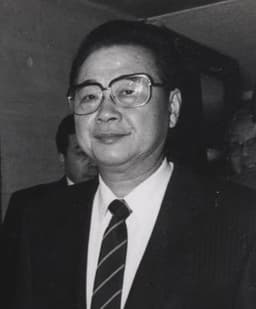
Li Peng
Politician · Modern
52.0Total

Sixto Duran Ballen
Politician · Modern
51.3Total
Basic Information
Born
1928
1921
Died
—
—
Era
Modern
Modern
Nationality
China
Ecuador
Occupation
Politician
Politician
Civilization
Eastern
Western
Score Comparison
Military (10%)
13.0
49.1
Political (20%)
68.0
68.0
Influence (20%)
58.0
49.4
Legacy (20%)
50.0
40.0
Leadership (15%)
72.0
64.0
Strategy (15%)
26.9
42.8
TOTAL
52.0
51.3
Li Peng — Complete Timeline
1987 AD
Became Premier of the People's Republic of ChinaPolitical Action◆ Major
Li Peng was appointed Premier, succeeding Zhao Ziyang. He was a conservative leader who emphasized economic stability and political control, opposing rapid political reforms.
PremierEconomic PolicyConservatism
Impact: national
1988 AD
Implemented austerity measures to control inflationReform◆ Major
Li Peng introduced austerity measures to curb double-digit inflation, including price controls and credit tightening. These measures slowed economic growth but stabilized prices, though they were unpopular.
Economic PolicyInflationAusterity
Impact: nationalconstructive
1989 AD
Ordered the Tiananmen Square crackdownPolitical Action
As Premier, Li Peng was a key figure in the decision to use military force against the Tiananmen Square protests. He signed the order declaring martial law and authorized the People's Liberation Army to clear the square.
Tiananmen SquareCrackdownMartial Law
Impact: globaldestructive
1992 AD
Oversaw the Three Gorges Dam project approvalPolitical Action◆ Major
Li Peng pushed through the National People's Congress approval for the Three Gorges Dam, the world's largest hydroelectric project. The project was controversial due to environmental and displacement concerns.
Three Gorges DamInfrastructureHydroelectric
Impact: nationalconstructive
1998 AD
Retired from active politicsPolitical Action
Li Peng stepped down as Premier and was succeeded by Zhu Rongji. He remained a member of the Politburo Standing Committee until 2002, but his influence waned.
RetirementPolitical TransitionElder Statesman
Impact: national
Sixto Duran Ballen — Complete Timeline
1992 AD
Implemented Economic ReformsReform◆ Major
Duran Ballen implemented a series of neoliberal economic reforms, including trade liberalization, privatization of state-owned enterprises, and deregulation. These reforms aimed to modernize the economy but faced opposition from labor unions.
Economic ReformNeoliberalismPrivatization
Impact: national
Elected President of EcuadorPolitical Action◆ Major
Sixto Duran Ballen was elected President of Ecuador as the candidate of the Republican Unity Party. He campaigned on a platform of economic modernization and anti-corruption.
ElectionPresidencyEcuador
Impact: national
1995 AD
Cenepa War with PeruWar◆ Major
During Duran Ballen's presidency, a brief armed conflict erupted with Peru over a disputed border area in the Cenepa region. The conflict resulted in casualties on both sides before a ceasefire was negotiated.
WarPeruBorder Conflict
Impact: regionaldestructive
1996 AD
Completed Presidential TermPolitical Action◆ Major
Duran Ballen completed his full four-year presidential term and peacefully transferred power to his elected successor, Abdal Bucaram. This was a rare instance of democratic continuity in Ecuador.
PresidencyDemocracyPeaceful Transition
Impact: nationalconstructive
Expert Analysis
Origins
Li Peng was born in October 1928 in Shanghai, China, into a revolutionary family. His father, Li Shuoxun, was a Communist martyr executed by the Kuomintang in 1931. Orphaned at a young age, Li Peng was taken in by Zhou Enlai and Deng Yingchao, becoming a protégé of the Communist elite. He studied at Yan'an University and later at the Moscow Power Engineering Institute in the Soviet Union (1948-1955), where he specialized in hydroelectric engineering. This technical background shaped his later focus on infrastructure projects.
Sixto Duran Ballen was born in July 1921 in Boston, Massachusetts, USA, to Ecuadorian parents. His father, Sixto Duran Ballen Sr., was a diplomat and later President of Ecuador (1956-1960). The younger Duran Ballen studied at the University of California, Berkeley, and later at the University of Pennsylvania, earning a degree in economics. He returned to Ecuador and worked as a journalist and businessman before entering politics. His aristocratic background and education in the United States influenced his pro-American and neoliberal policies.
Rise to Power
Li Peng rose through the ranks of China's Communist Party and state bureaucracy. After returning from the Soviet Union, he worked in the power industry, becoming a deputy minister for the power industry in 1979. He was elected to the Central Committee in 1982 and joined the Politburo in 1985. In 1987, he became Premier of the State Council, succeeding Zhao Ziyang. His rise was supported by Deng Xiaoping and other conservative elders, who valued his loyalty and technocratic skills.
Sixto Duran Ballen entered politics in the 1950s, serving as a deputy in the National Congress and later as mayor of Quito (1970-1971). He was elected Vice President in 1978 under President Jaime Roldos, but resigned in 1979 due to policy differences. He founded the Republican Unity Party and ran for president in 1992, winning the election with a platform of economic modernization. He took office on August 10, 1992, amid high inflation and a stagnant economy.
Leadership & Governance
Li Peng governed as a conservative Communist leader, prioritizing political stability and economic control. He ordered the Tiananmen Square crackdown in June 1989, signing the order to impose martial law and mobilize the People's Liberation Army. This action crushed the pro-democracy movement but ensured the Party's grip on power. In economic policy, he implemented austerity measures in 1988-1989 to curb double-digit inflation, including price controls and credit tightening, which slowed growth but stabilized prices. He also championed large infrastructure projects, notably the Three Gorges Dam, which he pushed through the National People's Congress in 1992. His leadership style was rigid and authoritarian, with a strong emphasis on central planning.
Sixto Duran Ballen governed as a neoliberal reformer, implementing market-oriented policies. He privatized state-owned enterprises, liberalized trade, and deregulated the economy. He also reduced tariffs and opened Ecuador to foreign investment. His administration faced the Cenepa War with Peru in 1995, a brief but intense border conflict that resulted in a military stalemate and eventual peace agreement. Duran Ballen's leadership was more democratic and consultative, but he struggled with opposition from Congress and labor unions. He completed his full term and peacefully transferred power, a rarity in Ecuador's history.
Triumph & Tragedy
Li Peng's greatest success was maintaining the Communist Party's authority during a period of crisis. The Tiananmen crackdown prevented a potential regime change, but at a terrible human cost, with hundreds killed and thousands arrested. His economic austerity measures successfully reduced inflation from 28% in 1988 to 3% in 1990, and the Three Gorges Dam became a symbol of China's engineering prowess. However, the dam caused massive displacement and environmental damage. His greatest failure was the suppression of dissent, which damaged China's international reputation and led to sanctions. He also failed to address political reforms, leaving China's governance system unchanged.
Sixto Duran Ballen's greatest success was stabilizing Ecuador's economy. Inflation fell from 60% in 1992 to under 30% by 1994, and GDP growth averaged 3.5% during his term. He also successfully concluded the Cenepa War with a ceasefire and eventual peace treaty. However, his neoliberal reforms widened inequality and led to social unrest. His greatest failure was the lack of sustainable development; his policies set the stage for a severe banking crisis in 1999-2000. He also failed to address corruption, with several ministers implicated in scandals.
Character & Destiny
Li Peng was a cautious, disciplined, and unyielding figure. His loyalty to the Party and willingness to use force reflected his belief in order over freedom. He was often seen as colorless and technocratic, lacking charisma but possessing a steely resolve. His character was shaped by his orphaned childhood and his patronage by Zhou Enlai, which instilled a sense of duty to the Communist cause. His destiny was to be a key enforcer of authoritarian rule during a turbulent era.
Sixto Duran Ballen was a pragmatic, moderate conservative. He was well-educated and well-connected, but his aloof demeanor limited his popular appeal. He was committed to democratic processes, as shown by his peaceful transfer of power. However, his technocratic approach and ties to the elite made him out of touch with the poor. His destiny was to be a transitional figure, modernizing the economy but not the political system.
Legacy
Li Peng's legacy is deeply controversial. He is reviled by democracy activists as the "Butcher of Beijing" but respected by Chinese conservatives for preserving stability. His policies set the stage for China's rapid economic growth in the 1990s, though at the cost of political freedom. The Three Gorges Dam remains a testament to his vision and ruthlessness. In comparative terms, Li Peng scored 68.0 in political skill and 72.0 in leadership, but only 13.0 in military and 26.9 in strategy, reflecting his narrow focus on control and infrastructure.
Sixto Duran Ballen is remembered as a reformer who modernized Ecuador's economy but failed to address inequality. His completion of a full term and peaceful handover set a precedent for democratic stability. He scored 68.0 in politics and 64.0 in leadership, but only 49.4 in influence and 40.0 in legacy, indicating a more modest impact. The Cenepa War victory boosted his military score to 49.1.
Conclusion
Li Peng had a greater impact on world history than Sixto Duran Ballen. His actions during the Tiananmen Square protests shaped China's trajectory, ensuring the Communist Party's survival and paving the way for its economic rise. While Duran Ballen's reforms were significant for Ecuador, they did not alter global power dynamics. Li Peng's total score of 52.0 slightly exceeds Duran Ballen's 51.3, but the gap in influence and legacy is wider: Li Peng's influence score of 58.0 versus 49.4, and legacy of 50.0 versus 40.0. Despite his moral failings, Li Peng's decisions had consequences for billions, whereas Duran Ballen's impact was limited to a nation of 12 million. Therefore, Li Peng is the more consequential figure.
Rankings
🥇
Li PengLeader
Mil: 13.0Pol: 68.0Inf: 58.0
52.0
🥈
Sixto Duran Ballen
Mil: 49.1Pol: 68.0Inf: 49.4
51.3
+0.7 behind
How This Comparison Works
Algorithm
Each figure is scored on 6 dimensions (0—100 scale) based on structured historical data: Military (10%), Political (20%), Influence (20%), Legacy (20%), Leadership (15%), Strategy (15%). The weighted total produces the final ranking.
Data Sources
Scores are computed from structured sub-indicators in the database. Scale factors adjust for era (Ancient ×0.85, Modern ×1.0) and civilization size (Eastern ×1.05, Other ×0.80) to account for differences in population and military scale.
Maximum 3 Figures
Comparisons are limited to 2—3 figures to ensure readability and statistical meaningfulness.
Error Margins
±5 points per dimension — Sub-scores are derived from historical records with inherent uncertainty. Two figures within 5 points on a dimension should be considered roughly equivalent in that area.
Total Score Accuracy
±3 points overall — The weighted combination of 6 dimensions produces a total score with approximately ±3 points of uncertainty. Differences of less than 3 points are not statistically significant— the figures are effectively tied.
Known Limitations
- Historical records are incomplete and uneven across civilizations
- Figures from oral-tradition societies may be underrepresented
- Occupation labels can misclassify multi-role figures
- Scores measure capability and impact, not moral character
- Quantitative scoring is a comparison tool, not absolute truth
Capability Radar
Military (10%) — Battles & Warfare
Battles
15
31
Win Rate
15
31
Expansion
22
35
Political (20%) — Governance & Reform
Reform
55
55
Diplomacy
50
45
Economy
60
60
Influence (20%) — Cultural & Global Reach
Cultural
30
20
Global
50
15
Legacy (20%) — Historical Impact
Historical
55
25
Longevity
40
15
Leadership (15%) — Power & Stability
Tenure
65
40
Stability
45
35
Strategy (15%) — Tactics & Innovation
Strategy
25
37
Tactics
28
41
Reform
26
45
Similar Comparisons
Comments & Discussion
No comments yet. Be the first to share your thoughts!