Loading...
Cetshwayo kaMpande vs Louis XIII
Cetshwayo kaMpande leads by 1.7 pts · 2 figures compared
…

Cetshwayo kaMpande
Emperor · Modern
62.0Total
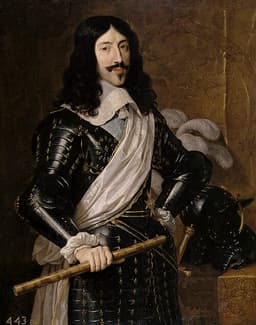
Louis XIII
Emperor · Modern
60.3Total
Basic Information
Born
1826
1601
Died
1884
1643
Era
Modern
Modern
Nationality
Zulu Kingdom
France
Occupation
Emperor
Emperor
Civilization
Other
Western
Score Comparison
Military (10%)
70.0
55.0
Political (20%)
68.0
55.0
Influence (20%)
56.7
61.0
Legacy (20%)
56.0
58.0
Leadership (15%)
74.0
72.0
Strategy (15%)
55.0
60.0
TOTAL
62.0
60.3
Cetshwayo kaMpande — Complete Timeline
1872 AD
Became Zulu King After Civil WarPolitical Action
Cetshwayo kaMpande became Zulu king in 1872 after defeating his brother Mbuyazi in the Battle of Ndondakusuka in 1856. He inherited a powerful Zulu kingdom with a strong military tradition, but faced increasing pressure from British colonial expansion in southern Africa.
SuccessionZulu KingdomBritish Threat
Impact: regional
1879 AD
Defeated British at Battle of IsandlwanaWar
Cetshwayo's Zulu army achieved a stunning victory over British forces at the Battle of Isandlwana on January 22, 1879, killing over 1,300 British and colonial troops. This was the worst defeat of the British by a native force in Africa, but the Zulus suffered heavy casualties.
Anglo-Zulu WarVictoryIsandlwana
Impact: global
Defeated at Battle of UlundiWar
Cetshwayo's Zulu army was decisively defeated by British forces at the Battle of Ulundi on July 4, 1879, ending the Anglo-Zulu War. The British used a square formation and Gatling guns to break the Zulu charge, leading to the capture of Cetshwayo and the annexation of Zululand.
Anglo-Zulu WarDefeatAnnexation
Impact: regionaltragic
Exiled and Later RestoredPolitical Action◆ Major
Cetshwayo was captured by the British in August 1879 and exiled to Cape Town, then later to London. He was allowed to return to Zululand in 1883 as a British-backed king, but his authority was limited, and he died in 1884 amid internal conflicts.
ExileRestorationBritish Control
Impact: regionaltragic
Louis XIII — Complete Timeline
1624 AD
Appointed Cardinal Richelieu as Chief MinisterPolitical Action
Louis XIII appointed Cardinal Richelieu as his chief minister, beginning a partnership that centralized royal power. Richelieu's policies strengthened the monarchy, suppressed noble rebellions, and expanded French influence in Europe.
AppointmentRichelieuCentralization
Impact: national
1627 AD
Siege of La RochelleWar◆ Major
Louis XIII and Richelieu besieged the Huguenot stronghold of La Rochelle for 14 months, forcing its surrender. This victory ended Huguenot political and military power in France, enforcing Catholic unity.
SiegeHuguenotsReligious Conflict
Impact: nationaldestructive
1630 AD
Day of the DupesPolitical Action◆ Major
Louis XIII faced a crisis when his mother Marie de' Medici and other nobles demanded Richelieu's dismissal. Louis chose to support Richelieu, exiling his mother and solidifying the cardinal's power, marking a turning point in French absolutism.
Political CrisisRichelieuRoyal Favor
Impact: national
1635 AD
Entry into the Thirty Years' WarWar◆ Major
Louis XIII declared war on Spain, entering the Thirty Years' War on the Protestant side. This intervention aimed to weaken Habsburg power and expand French influence, leading to significant military campaigns in Germany and the Low Countries.
Thirty Years' WarHabsburgFrench Intervention
Impact: regional
1638 AD
Birth of Louis XIVPolitical Action
The birth of Louis XIV, after 23 years of marriage, secured the Bourbon succession. This event was celebrated as a divine gift and ensured the continuity of the dynasty, later leading to the Sun King's long reign.
SuccessionBourbon DynastyHeir
Impact: nationalconstructive
Expert Analysis
Origins
Cetshwayo kaMpande was born around 1826 in the Zulu Kingdom, the son of King Mpande and a member of the royal Zulu house. He grew up during a period of internal strife, witnessing the consolidation of Zulu power under his uncle Shaka and later his father. His early life was marked by the brutal civil war against his brother Mbuyazi, culminating in the Battle of Ndondakusuka in 1856, where Cetshwayo emerged victorious. This conflict shaped his strategic thinking and his understanding of Zulu military traditions.
Louis XIII was born on September 27, 1601, at the Château de Fontainebleau, the first son of King Henry IV and Marie de' Medici. His childhood was dominated by his mother’s regency after Henry IV’s assassination in 1610. Raised in a court rife with intrigue, Louis developed a reserved and cautious personality. His education emphasized Catholic piety and the divine right of kings, but he lacked the charisma of his father. The early influence of Cardinal Richelieu, who became his chief minister in 1624, would define his reign.
Rise to Power
Cetshwayo’s path to power was forged through civil war. In 1856, he defeated his brother Mbuyazi at Ndondakusuka, killing thousands of rival supporters. This victory eliminated his main internal rival, and he effectively ruled alongside his father Mpande until Mpande’s death in 1872. Cetshwayo then became king, inheriting a powerful but fractured Zulu kingdom. He faced challenges from Boer settlers and encroaching British colonialism, but his military reforms and diplomacy initially kept the kingdom intact.
Louis XIII became king at age eight after his father’s assassination, but his mother Marie de' Medici ruled as regent until 1617. Louis asserted his authority by exiling his mother’s favorite, Concino Concini, in 1617. However, his reign was plagued by noble revolts and religious tensions. The turning point came in 1624 when he appointed Cardinal Richelieu as chief minister. Richelieu’s policies of centralization and anti-Habsburg strategy gave Louis the tools to strengthen royal power. The Day of the Dupes in 1630, where Louis chose Richelieu over his mother, solidified their partnership.
Leadership & Governance
Cetshwayo governed as an autocratic monarch within the Zulu tradition. He maintained the age-regiment system (amabutho) that ensured a standing army of up to 40,000 warriors. His leadership style was consultative but decisive; he relied on izinduna (chiefs) for advice but made final decisions. Cetshwayo sought to preserve Zulu independence through diplomacy, sending envoys to the British and even attempting to avoid war. However, his inability to control border skirmishes and the British ultimatum of 1878 led to conflict.
Louis XIII ruled through Richelieu, focusing on centralizing royal authority. They dismantled Huguenot political power by besieging La Rochelle in 1627–1628, ending Huguenot military autonomy. Louis also curbed the power of the nobility, executing or exiling rebellious nobles like the Duke of Montmorency. His governance score of 72.0 reflects his effectiveness in strengthening the monarchy, though his personal involvement was limited. He supported Richelieu’s policies that laid the groundwork for French absolutism.
Triumph & Tragedy
Cetshwayo’s greatest triumph was the Battle of Isandlwana on January 22, 1879, where his Zulu army killed over 1,300 British and colonial troops, achieving the most significant victory against a European power in Africa. This victory, however, was short-lived. His tragedy came at the Battle of Ulundi on July 4, 1879, where British forces, using a hollow square formation, decimated the Zulu army. Cetshwayo was captured, exiled to Cape Town, and later restored as a puppet king in 1883, but civil war and British partition destroyed his kingdom. His military score of 70.0 reflects his tactical acumen but also his strategic limitations against industrial weaponry.
Louis XIII’s greatest triumph was the successful siege of La Rochelle, which ended Huguenot political power and consolidated royal authority. His entry into the Thirty Years’ War on the Protestant side in 1635 expanded French influence and weakened the Habsburgs. However, his reign was also marked by personal tragedy: his long childless marriage until the birth of Louis XIV in 1638, and his death from tuberculosis at age 41 in 1643, leaving his son to rule under a regency. His political score of 55.0 reflects his reliance on Richelieu rather than independent action.
Character & Destiny
Cetshwayo was a cautious and pragmatic leader, but his adherence to Zulu tradition and his underestimation of British industrial power led to his downfall. He tried to avoid war but was pushed by border conflicts and British demands. His decision to attack at Isandlwana showed strategic boldness, but his failure to adapt after that victory proved fatal. Historians note his resilience but also his tragic inability to transition from a warrior kingdom to a modern state.
Louis XIII was reserved, melancholic, and deeply religious. He relied heavily on Richelieu, but his loyalty to him, despite pressure from his mother and nobles, showed his determination to centralize power. His character was shaped by a sense of duty and a belief in divine right. His early death prevented him from seeing the full fruits of his policies, but his son Louis XIV would epitomize the absolutist state he helped create.
Legacy
Cetshwayo is remembered as the Zulu king who defied the British Empire. His legacy is honored in Zulu culture and as a symbol of African resistance. The Battle of Isandlwana remains a landmark in military history. However, his kingdom was dismantled, and his influence score of 56.7 reflects limited long-term political impact. His military tactics are studied but ultimately failed against colonial superiority.
Louis XIII’s legacy is the strengthening of the French monarchy and the foundations of absolutism. His partnership with Richelieu established the administrative and military structures that Louis XIV would exploit. His entry into the Thirty Years’ War shifted the balance of power in Europe. His legacy score of 58.0 is modest because he is often overshadowed by his father Henry IV and his son Louis XIV. Nonetheless, his reign was crucial for French state-building.
Conclusion
Comparing Cetshwayo and Louis XIII reveals two leaders who faced existential threats: one from colonial invasion, the other from internal fragmentation. Cetshwayo scored higher overall (62.0 vs 60.3), driven by his military leadership. However, Louis XIII’s political and institutional impact was more enduring. While Cetshwayo’s victory at Isandlwana was spectacular, it did not prevent the destruction of his kingdom. Louis XIII’s policies created the absolutist state that dominated Europe for centuries. Therefore, Louis XIII had greater historical impact because his governance innovations shaped modern France and influenced European politics, whereas Cetshwayo’s legacy remains primarily symbolic. The score gap of 1.7 points aligns with this: Cetshwayo excels in military and leadership, but Louis XIII’s strategic legacy, though less dramatic, proved more transformative.
Rankings
🥇
Cetshwayo kaMpandeLeader
Mil: 70.0Pol: 68.0Inf: 56.7
62.0
🥈
Louis XIII
Mil: 55.0Pol: 55.0Inf: 61.0
60.3
+1.7 behind
How This Comparison Works
Algorithm
Each figure is scored on 6 dimensions (0—100 scale) based on structured historical data: Military (10%), Political (20%), Influence (20%), Legacy (20%), Leadership (15%), Strategy (15%). The weighted total produces the final ranking.
Data Sources
Scores are computed from structured sub-indicators in the database. Scale factors adjust for era (Ancient ×0.85, Modern ×1.0) and civilization size (Eastern ×1.05, Other ×0.80) to account for differences in population and military scale.
Maximum 3 Figures
Comparisons are limited to 2—3 figures to ensure readability and statistical meaningfulness.
Error Margins
±5 points per dimension — Sub-scores are derived from historical records with inherent uncertainty. Two figures within 5 points on a dimension should be considered roughly equivalent in that area.
Total Score Accuracy
±3 points overall — The weighted combination of 6 dimensions produces a total score with approximately ±3 points of uncertainty. Differences of less than 3 points are not statistically significant— the figures are effectively tied.
Known Limitations
- Historical records are incomplete and uneven across civilizations
- Figures from oral-tradition societies may be underrepresented
- Occupation labels can misclassify multi-role figures
- Scores measure capability and impact, not moral character
- Quantitative scoring is a comparison tool, not absolute truth
Capability Radar
Military (10%) — Battles & Warfare
Battles
65
45
Win Rate
60
55
Expansion
60
55
Political (20%) — Governance & Reform
Reform
50
65
Diplomacy
45
75
Economy
40
60
Influence (20%) — Cultural & Global Reach
Cultural
60
50
Global
55
55
Legacy (20%) — Historical Impact
Historical
65
65
Longevity
55
60
Leadership (15%) — Power & Stability
Tenure
55
70
Stability
35
55
Strategy (15%) — Tactics & Innovation
Strategy
70
50
Tactics
75
40
Reform
55
60
Similar Comparisons
Comments & Discussion
No comments yet. Be the first to share your thoughts!