Loading...
Louis XIII vs Peter I of Serbia
Louis XIII leads by 7.7 pts · 2 figures compared
…
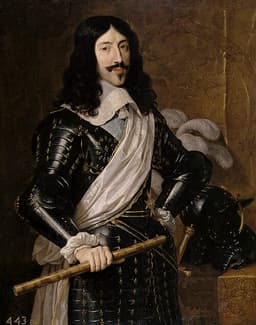
Louis XIII
Emperor · Modern
60.3Total
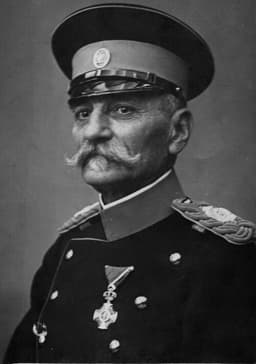
Peter I of Serbia
Emperor · Modern
52.6Total
Basic Information
Born
1601
1844
Died
1643
1921
Era
Modern
Modern
Nationality
France
Serbia
Occupation
Emperor
Emperor
Civilization
Western
Western
Score Comparison
Military (10%)
55.0
55.0
Political (20%)
55.0
60.0
Influence (20%)
61.0
58.0
Legacy (20%)
58.0
48.3
Leadership (15%)
72.0
53.2
Strategy (15%)
60.0
35.0
TOTAL
60.3
52.6
Louis XIII — Complete Timeline
1624 AD
Appointed Cardinal Richelieu as Chief MinisterPolitical Action
Louis XIII appointed Cardinal Richelieu as his chief minister, beginning a partnership that centralized royal power. Richelieu's policies strengthened the monarchy, suppressed noble rebellions, and expanded French influence in Europe.
AppointmentRichelieuCentralization
Impact: national
1627 AD
Siege of La RochelleWar◆ Major
Louis XIII and Richelieu besieged the Huguenot stronghold of La Rochelle for 14 months, forcing its surrender. This victory ended Huguenot political and military power in France, enforcing Catholic unity.
SiegeHuguenotsReligious Conflict
Impact: nationaldestructive
1630 AD
Day of the DupesPolitical Action◆ Major
Louis XIII faced a crisis when his mother Marie de' Medici and other nobles demanded Richelieu's dismissal. Louis chose to support Richelieu, exiling his mother and solidifying the cardinal's power, marking a turning point in French absolutism.
Political CrisisRichelieuRoyal Favor
Impact: national
1635 AD
Entry into the Thirty Years' WarWar◆ Major
Louis XIII declared war on Spain, entering the Thirty Years' War on the Protestant side. This intervention aimed to weaken Habsburg power and expand French influence, leading to significant military campaigns in Germany and the Low Countries.
Thirty Years' WarHabsburgFrench Intervention
Impact: regional
1638 AD
Birth of Louis XIVPolitical Action
The birth of Louis XIV, after 23 years of marriage, secured the Bourbon succession. This event was celebrated as a divine gift and ensured the continuity of the dynasty, later leading to the Sun King's long reign.
SuccessionBourbon DynastyHeir
Impact: nationalconstructive
Peter I of Serbia — Complete Timeline
1903 AD
Became King of SerbiaPolitical Action◆ Major
Peter I Kara
CoupDynasty ChangeKarađorđević
Impact: national
1912 AD
Led Serbia in the Balkan WarsWar◆ Major
King Peter I led Serbia during the First and Second Balkan Wars, which resulted in the expansion of Serbian territory and the expulsion of the Ottoman Empire from most of the Balkans. Serbia emerged as a regional power.
Balkan WarsTerritorial ExpansionOttoman Empire
Impact: regional
1915 AD
World War I and the Retreat through AlbaniaWar
After the Austro-Hungarian and German invasion of Serbia, King Peter I led the Serbian army and government on a retreat through the mountains of Albania to the Adriatic coast. The retreat was a humanitarian disaster but preserved the army for future campaigns.
World War IRetreatHumanitarian Crisis
Impact: regionaltragic
1918 AD
Proclaimed King of the Serbs, Croats, and SlovenesPolitical Action
Following the end of World War I, King Peter I was proclaimed King of the newly formed Kingdom of Serbs, Croats, and Slovenes (later Yugoslavia). This united South Slavic peoples under a single monarchy.
YugoslaviaUnificationMonarchy
Impact: regionalconstructive
Expert Analysis
Origins
Louis XIII was born on September 27, 1601, at the Palace of Fontainebleau, the first son of King Henry IV and Marie de' Medici. His father was assassinated in 1610, leaving the young king under the regency of his mother. Louis received a strict education focused on military arts and religion, but his early years were marked by political instability and his mother's favoritism toward Italian advisors.
Peter I of Serbia was born on June 29, 1844, in Belgrade, the son of Prince Alexander Karađorđević and Persida Nenadović. His family was expelled from Serbia in 1858, forcing him into exile. Peter was educated in Switzerland, France, and England, attending prestigious schools like the École Militaire in Paris. He gained military experience serving as a volunteer in the French army during the Franco-Prussian War.
Rise to Power
Louis XIII ascended the throne at age nine after his father's assassination. His mother Marie de' Medici ruled as regent until 1617. In 1617, Louis staged a coup, exiling his mother and having her favorite Concino Concini assassinated. He then appointed Cardinal Richelieu as his chief minister in 1624, a decision that defined his reign. The partnership with Richelieu faced a critical test in 1630 during the Day of the Dupes, when Louis chose Richelieu over his mother, solidifying his authority.
Peter I's path to power was longer. After the Karađorđević dynasty was deposed, he spent decades in exile. He became King of Serbia on June 15, 1903, following the May Coup that assassinated King Alexander Obrenović. The coup was organized by Serbian military officers who sought to restore the Karađorđević dynasty. Peter's accession was supported by Russia and marked a shift toward constitutional monarchy.
Leadership & Governance
Louis XIII governed through centralized absolutism. He relied heavily on Richelieu to enforce royal authority over nobles and Huguenots. The Siege of La Rochelle (1627-1628) ended Huguenot political privileges. Louis entered the Thirty Years' War in 1635 against Habsburg Spain, despite initial military setbacks. His leadership score of 72.0 reflects his ability to maintain control during turbulent times, though his political score of 55.0 indicates limited independent action.
Peter I governed as a constitutional monarch. He respected the Serbian parliament and promoted democratic institutions. During the Balkan Wars (1912-1913), he led Serbia to territorial gains, doubling its size. In World War I, after the Austro-Hungarian invasion, he led the Serbian army and government on a retreat through Albania in 1915-1916, a harrowing journey that preserved the state's continuity. His political score of 60.0 and military score of 55.0 reflect his balanced but not exceptional capacities.
Triumph & Tragedy
Louis XIII's greatest triumph was the centralization of royal power and the reduction of noble and Huguenot influence. The birth of Louis XIV in 1638 secured the dynasty. However, his reign was also marked by prolonged war with Spain and heavy taxation that burdened the peasantry. His failure to fully defeat the Habsburgs before his death left the war unfinished.
Peter I's greatest triumph was the creation of the Kingdom of Serbs, Croats, and Slovenes in 1918, uniting South Slavs under one crown. He also led Serbia to victory in the Balkan Wars. His tragedy was the immense suffering of the Serbian people during World War I, with over a quarter of the population killed. His legacy score of 48.3 reflects the short-lived nature of the unified state he founded.
Character & Destiny
Louis XIII was reserved, pious, and often melancholic. He was dominated by stronger personalities—first his mother, then Richelieu. His decision to support Richelieu over his mother showed a strategic sense but also a lack of personal ambition. He was a dutiful king who prioritized state stability over personal glory.
Peter I was courageous, resilient, and committed to Serbian independence. His long exile gave him a broader European perspective. He led by example during the Albanian retreat, sharing hardships with his troops. His character was shaped by a sense of destiny to restore the Karađorđević dynasty and unite the South Slavs.
Legacy
Louis XIII's legacy is intertwined with Richelieu's. The centralization of France laid the groundwork for Louis XIV's absolutism. His entry into the Thirty Years' War shifted the balance of power in Europe. He scored 58.0 in legacy, reflecting his role as a transitional figure between his father's reign and his son's grandeur.
Peter I's legacy is the creation of Yugoslavia, which lasted until 1991. He is revered as a national hero in Serbia for leading the country through war and unification. However, his legacy score of 48.3 is lower due to the eventual dissolution of Yugoslavia and the controversies surrounding the unification.
Conclusion
Louis XIII had a greater impact on European history. His centralization of French power and state-building efforts directly influenced the rise of absolutism in Europe. While Peter I's unification of South Slavs was significant, his creation was short-lived and ultimately fragmented. Louis XIII's leadership score of 72.0 versus Peter's 53.2 underscores his more effective governance. In terms of enduring legacy, Louis XIII's France remained a major power for centuries, while Peter I's Yugoslavia dissolved within 73 years. Thus, Louis XIII emerges as the more consequential figure.
Rankings
🥇
Louis XIIILeader
Mil: 55.0Pol: 55.0Inf: 61.0
60.3
🥈
Peter I of Serbia
Mil: 55.0Pol: 60.0Inf: 58.0
52.6
+7.7 behind
How This Comparison Works
Algorithm
Each figure is scored on 6 dimensions (0—100 scale) based on structured historical data: Military (10%), Political (20%), Influence (20%), Legacy (20%), Leadership (15%), Strategy (15%). The weighted total produces the final ranking.
Data Sources
Scores are computed from structured sub-indicators in the database. Scale factors adjust for era (Ancient ×0.85, Modern ×1.0) and civilization size (Eastern ×1.05, Other ×0.80) to account for differences in population and military scale.
Maximum 3 Figures
Comparisons are limited to 2—3 figures to ensure readability and statistical meaningfulness.
Error Margins
±5 points per dimension — Sub-scores are derived from historical records with inherent uncertainty. Two figures within 5 points on a dimension should be considered roughly equivalent in that area.
Total Score Accuracy
±3 points overall — The weighted combination of 6 dimensions produces a total score with approximately ±3 points of uncertainty. Differences of less than 3 points are not statistically significant— the figures are effectively tied.
Known Limitations
- Historical records are incomplete and uneven across civilizations
- Figures from oral-tradition societies may be underrepresented
- Occupation labels can misclassify multi-role figures
- Scores measure capability and impact, not moral character
- Quantitative scoring is a comparison tool, not absolute truth
Capability Radar
Military (10%) — Battles & Warfare
Battles
45
30
Win Rate
55
35
Expansion
55
25
Political (20%) — Governance & Reform
Reform
65
60
Diplomacy
75
70
Economy
60
50
Influence (20%) — Cultural & Global Reach
Cultural
50
50
Global
55
40
Legacy (20%) — Historical Impact
Historical
65
55
Longevity
60
45
Leadership (15%) — Power & Stability
Tenure
70
55
Stability
55
45
Strategy (15%) — Tactics & Innovation
Strategy
50
40
Tactics
40
30
Reform
60
45
Similar Comparisons
Comments & Discussion
No comments yet. Be the first to share your thoughts!