Loading...
Chai Rong vs Zara Yaqob
Chai Rong leads by 4.9 pts · 2 figures compared
…

Chai Rong
Emperor · Medieval
65.7Total
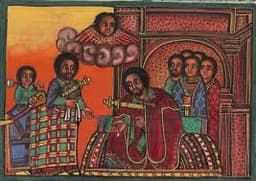
Zara Yaqob
Emperor · Medieval
60.8Total
Basic Information
Born
921
1399
Died
959
1468
Era
Medieval
Medieval
Nationality
China
Ethiopia
Occupation
Emperor
Emperor
Civilization
Eastern
Other
Score Comparison
Military (10%)
82.0
55.0
Political (20%)
71.2
72.0
Influence (20%)
60.0
61.0
Legacy (20%)
54.0
50.0
Leadership (15%)
72.0
72.0
Strategy (15%)
75.0
60.0
TOTAL
65.7
60.8
Chai Rong — Complete Timeline
954 AD
Battle of GaopingWar◆ Major
Chai Rong personally led Later Zhou forces to defeat a combined Northern Han and Liao army at Gaoping. This victory secured his throne and demonstrated his military capability.
Later ZhouNorthern HanBattle
Impact: regionalconstructive
Ascended as Emperor Shizong of Later ZhouPolitical Action◆ Major
Chai Rong succeeded his adoptive father Guo Wei as emperor of Later Zhou. He immediately began reforms to strengthen the state, including military reorganization and economic policies.
Later ZhouSuccessionReform
Impact: nationalconstructive
955 AD
Military campaigns against Later Shu and Southern TangWar◆ Major
Chai Rong launched successful campaigns against Later Shu and Southern Tang, capturing key territories in the southwest and south. These conquests significantly expanded Later Zhou's territory.
Later ZhouConquestExpansion
Impact: regionalconstructive
Reforms to centralize powerReform◆ Major
Chai Rong implemented administrative and military reforms, including reducing the power of regional military governors and strengthening the central bureaucracy. These reforms laid the groundwork for later Song unification.
Later ZhouReformCentralization
Impact: nationalconstructive
959 AD
Died during campaign against LiaoWar
Chai Rong died suddenly at age 38 while leading a campaign to recover the Sixteen Prefectures from the Liao dynasty. His death ended Later Zhou's momentum and allowed the Song dynasty to rise.
Later ZhouLiaoDeath
Impact: nationaltragic
Zara Yaqob — Complete Timeline
1445 AD
Campaign against the Sultanate of AdalWar◆ Major
Zara Yaqob led a successful military campaign against the Sultanate of Adal, capturing its ruler and temporarily halting Muslim incursions. The victory strengthened the empire's eastern frontier and boosted the emperor's prestige.
Military CampaignAdalVictory
Impact: regional
1450 AD
Promulgation of the 'Book of the Law' (Matshafa Berhan)Reform◆ Major
Zara Yaqob composed the 'Matshafa Berhan' (Book of Light), a religious and legal text that reformed the Ethiopian Orthodox Church. It standardized liturgy, condemned heresies, and reinforced the emperor's authority over religious matters.
Religious ReformLegal CodeChurch
Impact: nationalconstructive
Council of Debre MitmaqCultural◆ Major
Zara Yaqob convened a church council at Debre Mitmaq to address theological disputes and enforce religious uniformity. The council condemned the 'Stephanites' (followers of Abba Estifanos) and other dissident groups, leading to persecutions.
Church CouncilReligious PersecutionHeresy
Impact: nationaldestructive
1456 AD
Construction of Debre Berhan ChurchCultural
Zara Yaqob founded the church of Debre Berhan (Mount of Light) in Shewa, which became a major religious center. The church was built after a reported vision of a heavenly light, symbolizing the emperor's divine mandate.
Church ConstructionReligious CenterShewa
constructive
Expert Analysis
Origins
Chai Rong was born in 921 AD into a wealthy merchant family in Longgang, Hebei. His father, Chai Shouli, was a wealthy merchant, but Chai Rong was adopted by his uncle Guo Wei, a military commander who later founded the Later Zhou dynasty. This adoption placed Chai Rong in the imperial family, and he received a military education, learning strategy and governance from Guo Wei. His early life was marked by the chaos of the Five Dynasties and Ten Kingdoms period, where warlords constantly vied for power.
Zara Yaqob was born in 1399 AD in Tilq, Ethiopia, the son of Emperor Dawit I and Queen Igzi Kebra. He was educated in the Ethiopian Orthodox Church, studying theology, law, and Ge'ez literature. His early life was shaped by the religious and political turmoil of the Solomonic dynasty, including conflicts with the Sultanate of Adal and internal court intrigues. His mother's influence ensured his survival after his father's death, as he was hidden from rivals.
Rise to Power
Chai Rong rose to power after his adoptive father Guo Wei died in 954 AD. As the adopted son, he succeeded as Emperor Shizong of Later Zhou without significant opposition. His first major test was the Battle of Gaoping in 954 AD, where he personally led his army against a combined force of Northern Han and Liao dynasty troops. Despite initial setbacks, Chai Rong's decisive leadership turned the battle into a victory, securing his throne and demonstrating his military capability. This victory allowed him to consolidate power and begin reforms.
Zara Yaqob became emperor in 1434 AD after a period of succession disputes. He was the third son of Dawit I, but his two older brothers had died or been deposed. His rise was facilitated by his mother's political maneuvering and his own religious education. He immediately faced challenges from rival nobles and the Sultanate of Adal, which had been raiding Ethiopian territory. To secure his position, he married a princess from the influential Hadiya region and began centralizing religious authority.
Leadership & Governance
Chai Rong's leadership style was autocratic and pragmatic. He centralized military and administrative power by reducing the authority of regional military governors (jiedushi) and appointing civil officials to oversee provinces. He implemented land reforms to increase tax revenue and conscripted peasants into the army, creating a more disciplined force. His governance focused on efficiency: he standardized weights and measures, repaired canals, and promoted agriculture. In contrast, Zara Yaqob ruled through religious reform. He issued the 'Matshafa Berhan' (Book of Light) in 1450 AD, which standardized Ethiopian Orthodox liturgy and canon law. He convened the Council of Debre Mitmaq in 1450 AD to condemn the 'Step of the Righteous' movement and enforce uniformity. His governance was theocratic, with the church acting as an arm of the state. He also built churches, such as Debre Berhan, to symbolize his divine mandate.
Triumph & Tragedy
Chai Rong's greatest triumph was the Battle of Gaoping (954 AD), which secured his rule and allowed him to launch campaigns against Later Shu and Southern Tang. By 959 AD, he had captured key territories in the southwest and south, significantly expanding Later Zhou's territory. His reforms strengthened the state, setting the stage for eventual reunification. However, his greatest tragedy was his premature death in 959 AD at age 38 during a campaign against the Liao dynasty. This death ended the Later Zhou's momentum, and his successor, a child, was overthrown by Zhao Kuangyin, who founded the Song dynasty. Chai Rong's failure to recover the Sixteen Prefectures left a lasting problem for future dynasties.
Zara Yaqob's triumph was his campaign against the Sultanate of Adal in 1445 AD, where he captured its ruler and halted Muslim incursions for decades. His religious reforms united the Ethiopian Orthodox Church and strengthened royal authority. However, his tragedy was the brutal persecution of dissenters. He executed thousands suspected of heresy or witchcraft, creating a climate of fear. His later years were marked by paranoia and isolation, and his death in 1468 AD led to succession crises that weakened the empire.
Character & Destiny
Chai Rong was decisive, energetic, and pragmatic. He personally led armies and supervised reforms, earning the respect of soldiers and officials. His character drove him to pursue rapid conquest, but his early death cut short his ambitions. Historians note that his military score of 82.0 reflects his battlefield success, while his political score of 71.2 shows his administrative skill. Zara Yaqob was learned, devout, but authoritarian. He used religion to legitimize his rule but alienated many through persecution. His political score of 72.0 matches Chai Rong's, but his military score of 55.0 is lower, indicating less direct combat involvement. His strategic score of 60.0 reflects a focus on religious consolidation over territorial expansion.
Legacy
Chai Rong's legacy is that of a unifier who laid the foundations for the Song dynasty. His military reforms and centralization policies were adopted by the Song, and his campaigns reduced the power of regional warlords. However, his early death prevented him from achieving full reunification. In contrast, Zara Yaqob's legacy is religious and cultural. His 'Matshafa Berhan' remained a key text in Ethiopian Orthodoxy, and his church-building program left architectural monuments. However, his persecution tarnished his reputation, and his empire declined after his death. In terms of overall impact, Chai Rong's military and political reforms had a more lasting effect on China's trajectory towards reunification, while Zara Yaqob's influence was more limited to religious institutions.
Conclusion
Chai Rong had greater impact than Zara Yaqob. His military score of 82.0 versus Zara Yaqob's 55.0, and his total score of 65.7 versus 60.8, reflect his more consequential actions. Chai Rong's campaigns and reforms directly enabled the Song dynasty's unification of China, a transformation that shaped East Asian history for centuries. Zara Yaqob's religious reforms, while significant for Ethiopia, did not fundamentally alter the region's power dynamics or prevent later decline. Therefore, Chai Rong stands as the more influential figure.
Rankings
🥇
Chai RongLeader
Mil: 82.0Pol: 71.2Inf: 60.0
65.7
🥈
Zara Yaqob
Mil: 55.0Pol: 72.0Inf: 61.0
60.8
+4.9 behind
How This Comparison Works
Algorithm
Each figure is scored on 6 dimensions (0—100 scale) based on structured historical data: Military (10%), Political (20%), Influence (20%), Legacy (20%), Leadership (15%), Strategy (15%). The weighted total produces the final ranking.
Data Sources
Scores are computed from structured sub-indicators in the database. Scale factors adjust for era (Ancient ×0.85, Modern ×1.0) and civilization size (Eastern ×1.05, Other ×0.80) to account for differences in population and military scale.
Maximum 3 Figures
Comparisons are limited to 2—3 figures to ensure readability and statistical meaningfulness.
Error Margins
±5 points per dimension — Sub-scores are derived from historical records with inherent uncertainty. Two figures within 5 points on a dimension should be considered roughly equivalent in that area.
Total Score Accuracy
±3 points overall — The weighted combination of 6 dimensions produces a total score with approximately ±3 points of uncertainty. Differences of less than 3 points are not statistically significant— the figures are effectively tied.
Known Limitations
- Historical records are incomplete and uneven across civilizations
- Figures from oral-tradition societies may be underrepresented
- Occupation labels can misclassify multi-role figures
- Scores measure capability and impact, not moral character
- Quantitative scoring is a comparison tool, not absolute truth
Capability Radar
Military (10%) — Battles & Warfare
Battles
75
45
Win Rate
80
50
Expansion
70
50
Political (20%) — Governance & Reform
Reform
88
80
Diplomacy
70
60
Economy
80
65
Influence (20%) — Cultural & Global Reach
Cultural
50
60
Global
30
35
Legacy (20%) — Historical Impact
Historical
65
55
Longevity
40
50
Leadership (15%) — Power & Stability
Tenure
55
70
Stability
75
70
Strategy (15%) — Tactics & Innovation
Strategy
82
45
Tactics
78
40
Reform
85
55
Similar Comparisons
Comments & Discussion
No comments yet. Be the first to share your thoughts!