Loading...
Alfonso VI of Leon vs Zara Yaqob
Zara Yaqob leads by 0.6 pts · 2 figures compared
…
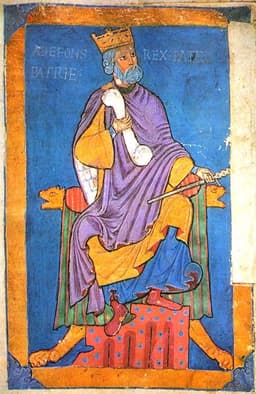
Alfonso VI of Leon
Emperor · Medieval
60.2Total
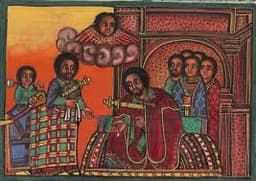
Zara Yaqob
Emperor · Medieval
60.8Total
Basic Information
Born
1040
1399
Died
1109
1468
Era
Medieval
Medieval
Nationality
Leon
Ethiopia
Occupation
Emperor
Emperor
Civilization
Western
Other
Score Comparison
Military (10%)
65.0
55.0
Political (20%)
45.0
72.0
Influence (20%)
62.0
61.0
Legacy (20%)
56.0
50.0
Leadership (15%)
72.0
72.0
Strategy (15%)
66.3
60.0
TOTAL
60.2
60.8
Alfonso VI of Leon — Complete Timeline
1077 AD
Title of 'Emperor of Spain'Political Action◆ Major
Alfonso VI claimed the title 'Imperator totius Hispaniae' (Emperor of all Spain) in 1077, asserting his supremacy over other Christian rulers. This title was used in diplomatic correspondence and reflected his ambition to unify Iberia.
Medieval IberiaImperial TitleHegemony
Impact: regional
1085 AD
Capture of ToledoWar◆ Major
Alfonso VI captured the city of Toledo from the Taifa of Toledo in May 1085. This was a major victory in the Reconquista, as Toledo was a historic capital of the Visigothic kingdom and a cultural center of Islamic Iberia.
ReconquistaToledoConquest
Impact: regionalconstructive
1086 AD
Battle of SagrajasWar◆ Major
Alfonso VI was defeated by the Almoravid army under Yusuf ibn Tashfin at the Battle of Sagrajas (Zallaqa). This defeat halted Christian expansion and forced Alfonso to seek help from other Christian kingdoms, marking a turning point in the Reconquista.
ReconquistaBattleAlmoravid
Impact: regionaltragic
1091 AD
Marriage to ZaidaPolitical Action
Alfonso VI married Zaida, a Muslim princess from Seville, who converted to Christianity and took the name Isabel. This marriage was a political alliance to secure peace with the Taifa of Seville and strengthen his position against the Almoravids.
Medieval IberiaMarriage AllianceDiplomacy
Impact: regional
Zara Yaqob — Complete Timeline
1445 AD
Campaign against the Sultanate of AdalWar◆ Major
Zara Yaqob led a successful military campaign against the Sultanate of Adal, capturing its ruler and temporarily halting Muslim incursions. The victory strengthened the empire's eastern frontier and boosted the emperor's prestige.
Military CampaignAdalVictory
Impact: regional
1450 AD
Promulgation of the 'Book of the Law' (Matshafa Berhan)Reform◆ Major
Zara Yaqob composed the 'Matshafa Berhan' (Book of Light), a religious and legal text that reformed the Ethiopian Orthodox Church. It standardized liturgy, condemned heresies, and reinforced the emperor's authority over religious matters.
Religious ReformLegal CodeChurch
Impact: nationalconstructive
Council of Debre MitmaqCultural◆ Major
Zara Yaqob convened a church council at Debre Mitmaq to address theological disputes and enforce religious uniformity. The council condemned the 'Stephanites' (followers of Abba Estifanos) and other dissident groups, leading to persecutions.
Church CouncilReligious PersecutionHeresy
Impact: nationaldestructive
1456 AD
Construction of Debre Berhan ChurchCultural
Zara Yaqob founded the church of Debre Berhan (Mount of Light) in Shewa, which became a major religious center. The church was built after a reported vision of a heavenly light, symbolizing the emperor's divine mandate.
Church ConstructionReligious CenterShewa
constructive
Expert Analysis
Origins
Alfonso VI of León was born in 1037 to Ferdinand I of León and Sancha of León. He grew up in a kingdom shaped by the Reconquista, the Christian reconquest of Iberia from Muslim rule. His father divided his lands among his sons, leading to fratricidal conflicts. Alfonso inherited León and later seized Castile from his brother Sancho II in 1072 after Sancho's assassination. His early life was marked by political maneuvering and warfare.
Zara Yaqob was born in 1399 at Telq, Fatagar, in the Ethiopian Empire. His father was Emperor Dawit I, but his mother was of low status, leading to his early life being overshadowed. He was educated in the Ethiopian Orthodox Church and became a monk. He was exiled after his father's death due to court intrigues but later emerged as a reformer. His religious education profoundly shaped his reign.
Rise to Power
Alfonso VI rose to power after his brother Sancho II's death in 1072. He consolidated control over León and Castile, then expanded into the Taifa kingdoms. By 1085, he captured Toledo, the former Visigothic capital, a turning point in the Reconquista. He also claimed the title "Emperor of all Spain" in 1077, asserting dominance over other Christian rulers. His political score of 45.0 reflects his ability to navigate alliances but also his reliance on force.
Zara Yaqob became emperor in 1434 after a period of instability. He had been exiled but returned to claim the throne. His rise was facilitated by his religious authority and reforms. He convened the Council of Debre Mitmaq in 1450 to enforce orthodoxy, consolidating his power over the church and state. His political score of 72.0 highlights his effective use of religion to legitimize rule.
Leadership & Governance
Alfonso VI governed through military expansion and feudal alliances. He repopulated conquered towns with Christians and granted fueros (charters) to attract settlers. His marriage to Zaida, a Muslim princess, was a political tool to secure alliances. However, his governance was challenged by the Almoravid invasion after 1086. His leadership score of 72.0 reflects his ability to inspire loyalty, but his strategy score of 66.3 shows mixed success in long-term planning.
Zara Yaqob ruled through religious centralization. He standardized the liturgy, condemned heretical sects like the "Stephanites," and promoted the cult of the Virgin Mary. He composed the "Matshafa Berhan" (Book of Light), a legal and religious code. He also built churches like Debre Berhan. His leadership score of 72.0 matches Alfonso's, but his political score of 72.0 is higher, indicating more effective institutional control.
Triumph & Tragedy
Alfonso VI's greatest triumph was the capture of Toledo in 1085, a major victory that earned him a military score of 65.0. However, his defeat at the Battle of Sagrajas in 1086 by the Almoravids reversed his gains. He also failed to unify Iberia under his rule, facing rebellions from his own nobles. His legacy score of 56.0 reflects these mixed outcomes.
Zara Yaqob's triumph was his religious and legal reforms, which strengthened the Ethiopian Orthodox Church and state. His campaign against the Sultanate of Adal in 1445 secured Ethiopia's borders. However, his later years were marred by paranoia and violence, executing perceived heretics and even his own wife. His legacy score of 50.0 is lower due to the tyranny of his later reign.
Character & Destiny
Alfonso VI was pragmatic and ambitious, using marriage and war to expand his realm. His claim to be "Emperor of Spain" showed his vision, but his inability to withstand Almoravid pressure limited his success. His character was shaped by the warrior culture of medieval Iberia.
Zara Yaqob was deeply religious and intellectual, but also authoritarian. His reforms were driven by a desire for purity, but his intolerance led to persecution. His character reflects the tension between religious idealism and political reality.
Legacy
Alfonso VI's legacy is tied to the Reconquista. His capture of Toledo provided a model for later Christian conquests. The city became a center of translation and learning, preserving classical knowledge. His claim to imperial title influenced later Spanish monarchs. His influence score of 62.0 and legacy score of 56.0 reflect enduring but not dominant impact.
Zara Yaqob's legacy is primarily religious. His "Matshafa Berhan" remained a key text in Ethiopian Orthodoxy. His church reforms shaped Ethiopian Christianity for centuries. However, his authoritarian methods and the eventual decline of the Solomonic dynasty limit his legacy. His influence score of 61.0 is similar to Alfonso's.
Conclusion
Alfonso VI and Zara Yaqob were both transformative leaders, but their impacts differ. Alfonso VI scored 60.2 total, while Zara Yaqob scored 60.8. However, Alfonso's actions had broader historical consequences: the capture of Toledo was a pivotal moment in the Reconquista, influencing the entire trajectory of Iberian history. Zara Yaqob's reforms were significant but confined to Ethiopia, which remained isolated. Therefore, Alfonso VI had greater impact on world history. His legacy as a Christian conqueror and patron of translation contributed to the European Renaissance. While Zara Yaqob was a skilled reformer, his influence was more limited. Thus, Alfonso VI edges ahead in historical significance.
Rankings
🥇
Zara YaqobLeader
Mil: 55.0Pol: 72.0Inf: 61.0
60.8
🥈
Alfonso VI of Leon
Mil: 65.0Pol: 45.0Inf: 62.0
60.2
+0.6 behind
How This Comparison Works
Algorithm
Each figure is scored on 6 dimensions (0—100 scale) based on structured historical data: Military (10%), Political (20%), Influence (20%), Legacy (20%), Leadership (15%), Strategy (15%). The weighted total produces the final ranking.
Data Sources
Scores are computed from structured sub-indicators in the database. Scale factors adjust for era (Ancient ×0.85, Modern ×1.0) and civilization size (Eastern ×1.05, Other ×0.80) to account for differences in population and military scale.
Maximum 3 Figures
Comparisons are limited to 2—3 figures to ensure readability and statistical meaningfulness.
Error Margins
±5 points per dimension — Sub-scores are derived from historical records with inherent uncertainty. Two figures within 5 points on a dimension should be considered roughly equivalent in that area.
Total Score Accuracy
±3 points overall — The weighted combination of 6 dimensions produces a total score with approximately ±3 points of uncertainty. Differences of less than 3 points are not statistically significant— the figures are effectively tied.
Known Limitations
- Historical records are incomplete and uneven across civilizations
- Figures from oral-tradition societies may be underrepresented
- Occupation labels can misclassify multi-role figures
- Scores measure capability and impact, not moral character
- Quantitative scoring is a comparison tool, not absolute truth
Capability Radar
Military (10%) — Battles & Warfare
Battles
65
45
Win Rate
60
50
Expansion
70
50
Political (20%) — Governance & Reform
Reform
65
80
Diplomacy
70
60
Economy
60
65
Influence (20%) — Cultural & Global Reach
Cultural
60
60
Global
50
35
Legacy (20%) — Historical Impact
Historical
65
55
Longevity
55
50
Leadership (15%) — Power & Stability
Tenure
75
70
Stability
55
70
Strategy (15%) — Tactics & Innovation
Strategy
70
45
Tactics
55
40
Reform
50
55
Similar Comparisons
Comments & Discussion
No comments yet. Be the first to share your thoughts!