Loading...
Ivan Alexander vs Zara Yaqob
Zara Yaqob leads by 6.1 pts · 2 figures compared
…
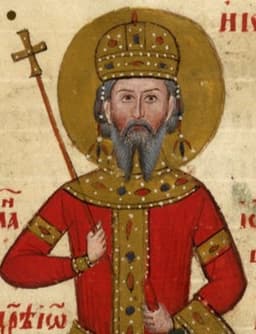
Ivan Alexander
Emperor · Medieval
54.7Total
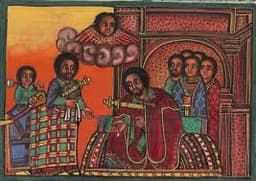
Zara Yaqob
Emperor · Medieval
60.8Total
Basic Information
Born
1300
1399
Died
1371
1468
Era
Medieval
Medieval
Nationality
Bulgaria
Ethiopia
Occupation
Emperor
Emperor
Civilization
Western
Other
Score Comparison
Military (10%)
10.0
55.0
Political (20%)
68.0
72.0
Influence (20%)
56.7
61.0
Legacy (20%)
50.0
50.0
Leadership (15%)
74.0
72.0
Strategy (15%)
57.5
60.0
TOTAL
54.7
60.8
Ivan Alexander — Complete Timeline
1331 AD
Coronation as TsarPolitical Action◆ Major
Ivan Alexander was crowned Tsar of Bulgaria after overthrowing his predecessor. His reign marked the last period of cultural and political flourishing before the Ottoman conquest.
CoronationReignBulgarian Empire
Impact: nationalconstructive
1340 AD
Compilation of the Law CodeReform◆ Major
Ivan Alexander oversaw the compilation of a comprehensive law code, the 'Zakonik' (Law of the Tsar). This codified Byzantine and Bulgarian legal traditions, strengthening central authority.
Law CodeReformLegal System
Impact: nationalconstructive
1350 AD
Patronage of the Tarnovo Literary SchoolCultural◆ Major
Ivan Alexander patronized the Tarnovo Literary School, which produced illuminated manuscripts like the 'Manasses Chronicle' and the 'Gospels of Tsar Ivan Alexander'. This was the peak of medieval Bulgarian culture.
CulturalManuscriptsTarnovo School
Impact: regionalconstructive
1355 AD
Division of the EmpirePolitical Action◆ Major
Ivan Alexander divided Bulgaria between his two sons, Ivan Shishman and Ivan Sratsimir, weakening the state. This fragmentation facilitated the later Ottoman conquest.
DivisionSuccessionWeakening
Impact: nationaldestructive
Zara Yaqob — Complete Timeline
1445 AD
Campaign against the Sultanate of AdalWar◆ Major
Zara Yaqob led a successful military campaign against the Sultanate of Adal, capturing its ruler and temporarily halting Muslim incursions. The victory strengthened the empire's eastern frontier and boosted the emperor's prestige.
Military CampaignAdalVictory
Impact: regional
1450 AD
Promulgation of the 'Book of the Law' (Matshafa Berhan)Reform◆ Major
Zara Yaqob composed the 'Matshafa Berhan' (Book of Light), a religious and legal text that reformed the Ethiopian Orthodox Church. It standardized liturgy, condemned heresies, and reinforced the emperor's authority over religious matters.
Religious ReformLegal CodeChurch
Impact: nationalconstructive
Council of Debre MitmaqCultural◆ Major
Zara Yaqob convened a church council at Debre Mitmaq to address theological disputes and enforce religious uniformity. The council condemned the 'Stephanites' (followers of Abba Estifanos) and other dissident groups, leading to persecutions.
Church CouncilReligious PersecutionHeresy
Impact: nationaldestructive
1456 AD
Construction of Debre Berhan ChurchCultural
Zara Yaqob founded the church of Debre Berhan (Mount of Light) in Shewa, which became a major religious center. The church was built after a reported vision of a heavenly light, symbolizing the emperor's divine mandate.
Church ConstructionReligious CenterShewa
constructive
Expert Analysis
Origins
Ivan Alexander (born c. 1300) was a descendant of the Asen dynasty, which had restored Bulgarian independence in the 12th century. He rose from the ranks of the nobility, possibly as a despot in Lovech, and seized the throne in 1331 after overthrowing the incompetent Tsar Ivan Stephen. His family background was mixed: his mother was a Bulgarian noblewoman, and his father was the despot Sratsimir of Kran. Ivan Alexander was educated in the Byzantine tradition, which shaped his later legal and cultural reforms.
Zara Yaqob (born 1399) was the youngest son of Emperor Dawit I of Ethiopia. His mother, Igzi Kebra, was a concubine, which initially made his succession uncertain. He was exiled to a remote monastery during the reign of his brother Tewodros I, where he received a rigorous religious education. This exile shaped his deep piety and later zeal for church reform. Zara Yaqob's early life was marked by political intrigue and the constant threat of assassination, which influenced his authoritarian governance.
Rise to Power
Ivan Alexander's coup in 1331 was swift and relatively bloodless. He deposed Ivan Stephen, who had ruled for only a year, and was crowned Tsar in Tarnovo. His legitimacy was bolstered by his marriage to Theodora, a Wallachian princess, and later to Sarah, a Jewish convert. He consolidated power by neutralizing rivals, including his brother Michael, whom he made co-emperor briefly. By 1340, Ivan Alexander had secured his position and began a period of internal reform.
Zara Yaqob's path to power was more circuitous. After the death of his father, he was passed over in favor of his half-brothers. He spent 25 years in exile at the monastery of Debre Damo, where he studied theology and history. In 1434, after the death of Emperor Amda Iyasus, Zara Yaqob was recalled and crowned, but he faced immediate challenges from rebellious nobles and church factions. He ruthlessly suppressed opposition, executing many nobles and confiscating their lands, establishing his authority by 1440.
Leadership & Governance
Ivan Alexander's leadership focused on legal and cultural consolidation. He compiled the 'Zakonik' (Law of the Tsar), a code blending Byzantine and Bulgarian traditions. This code standardized penalties, property rights, and church-state relations. He also patronized the Tarnovo Literary School, commissioning illuminated manuscripts such as the 'Manasses Chronicle' (1345) and the 'Gospels of Tsar Ivan Alexander' (1356). These works showcased Byzantine artistic influence and elevated Bulgarian culture. However, his governance was decentralized: he divided the empire between his sons Ivan Shishman (ruling in Tarnovo) and Ivan Sratsimir (ruling in Vidin) in the 1350s, a decision that weakened central authority.
Zara Yaqob was a reformer who centralized the Ethiopian state around the Orthodox Church. He composed the 'Matshafa Berhan' (Book of Light), which standardized liturgical practices and enforced strict religious observance. He convened the Council of Debre Mitmaq (1450) to condemn the 'Step' heresy and expel Muslims from court. Zara Yaqob also reorganized the administration, appointing loyal officials and creating a network of spies to monitor nobles. He built churches, including Debre Berhan, and promoted the cult of the Virgin Mary. His governance was theocratic and authoritarian, with frequent purges of dissenters.
Triumph & Tragedy
Ivan Alexander's greatest triumph was the cultural flowering of the Tarnovo Literary School, which produced manuscripts that are now national treasures. His law code was a model of legal sophistication. However, his greatest tragedy was the division of the empire. By splitting Bulgaria between his sons, he created internal rivalries that the Ottoman Empire exploited. After his death in 1371, Bulgaria fragmented, and by 1396 it was fully conquered by the Ottomans. Ivan Alexander's score of 74.0 in leadership reflects his effective but flawed governance, while his military score of 10.0 is a testament to his lack of military ambition.
Zara Yaqob's military score of 55.0 reflects his successful campaign against the Sultanate of Adal in 1445, where he captured Sultan Ahmad Badlay and secured Ethiopia's eastern frontier. His political score of 72.0 indicates his consolidation of power. However, his tragedy lies in his harsh methods: he executed thousands, including his own sons, on suspicion of conspiracy. His religious reforms alienated many, and his later years were plagued by rebellion. Zara Yaqob died in 1468, possibly poisoned, leaving a legacy of a stronger but more repressive state.
Character & Destiny
Ivan Alexander was a patron of the arts and a legal reformer, but his political strategy (score 57.5) was compromised by nepotism. He favored his sons over capable generals, leading to the empire's dissolution. His character was that of a builder, not a warrior, which suited Bulgaria's needs for peace but left it vulnerable to external threats.
Zara Yaqob was a devout, paranoid, and ruthless ruler. His strategy score of 60.0 reflects his ability to outmaneuver enemies, but his paranoia led to excessive violence. He believed himself chosen by God to purify Ethiopia, and his religious writings reveal a meticulous, dogmatic mind. His character forged a centralized state but at the cost of fear and instability.
Legacy
Ivan Alexander's legacy is the 'Last Golden Age' of Bulgaria. His manuscripts and law code are cultural symbols, but his political fragmentation allowed the Ottoman conquest. He is remembered as a patron of learning, but also as the ruler who doomed Bulgaria. His overall score of 54.7 reflects a mixed legacy.
Zara Yaqob's legacy is more enduring. His religious and legal reforms shaped the Ethiopian Orthodox Church for centuries. The 'Matshafa Berhan' remained a foundational text, and his centralized administration influenced later emperors. He is revered as a saint in the Ethiopian Church. His total score of 60.8 indicates a more impactful reign.
Conclusion
Zara Yaqob had greater impact than Ivan Alexander. Despite his cruelty, Zara Yaqob's reforms strengthened Ethiopia's identity and institutions, allowing it to resist external threats for centuries. Ivan Alexander's cultural achievements were significant, but his political mistakes led directly to Bulgaria's fall. Zara Yaqob's score of 60.8 vs. Ivan Alexander's 54.7 reflects this: Zara Yaqob's political and military scores were higher, and his reforms had longer-lasting effects. While Ivan Alexander's Bulgaria was erased by the Ottomans, Zara Yaqob's Ethiopia survived as a Christian kingdom into the modern era. Thus, Zara Yaqob emerges as the more consequential ruler.
Rankings
🥇
Zara YaqobLeader
Mil: 55.0Pol: 72.0Inf: 61.0
60.8
🥈
Ivan Alexander
Mil: 10.0Pol: 68.0Inf: 56.7
54.7
+6.1 behind
How This Comparison Works
Algorithm
Each figure is scored on 6 dimensions (0—100 scale) based on structured historical data: Military (10%), Political (20%), Influence (20%), Legacy (20%), Leadership (15%), Strategy (15%). The weighted total produces the final ranking.
Data Sources
Scores are computed from structured sub-indicators in the database. Scale factors adjust for era (Ancient ×0.85, Modern ×1.0) and civilization size (Eastern ×1.05, Other ×0.80) to account for differences in population and military scale.
Maximum 3 Figures
Comparisons are limited to 2—3 figures to ensure readability and statistical meaningfulness.
Error Margins
±5 points per dimension — Sub-scores are derived from historical records with inherent uncertainty. Two figures within 5 points on a dimension should be considered roughly equivalent in that area.
Total Score Accuracy
±3 points overall — The weighted combination of 6 dimensions produces a total score with approximately ±3 points of uncertainty. Differences of less than 3 points are not statistically significant— the figures are effectively tied.
Known Limitations
- Historical records are incomplete and uneven across civilizations
- Figures from oral-tradition societies may be underrepresented
- Occupation labels can misclassify multi-role figures
- Scores measure capability and impact, not moral character
- Quantitative scoring is a comparison tool, not absolute truth
Capability Radar
Military (10%) — Battles & Warfare
Battles
45
45
Win Rate
40
50
Expansion
35
50
Political (20%) — Governance & Reform
Reform
55
80
Diplomacy
50
60
Economy
60
65
Influence (20%) — Cultural & Global Reach
Cultural
65
60
Global
30
35
Legacy (20%) — Historical Impact
Historical
55
55
Longevity
40
50
Leadership (15%) — Power & Stability
Tenure
60
70
Stability
45
70
Strategy (15%) — Tactics & Innovation
Strategy
55
45
Tactics
50
40
Reform
40
55
Similar Comparisons
Comments & Discussion
No comments yet. Be the first to share your thoughts!