Loading...
Chairacha vs Henry I of England
Henry I of England leads by 8.8 pts · 2 figures compared
…
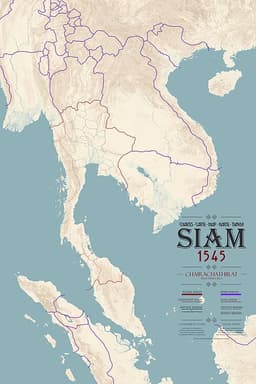
Chairacha
Emperor · Medieval
47.1Total
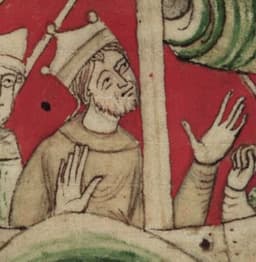
Henry I of England
Emperor · Medieval
55.9Total
Basic Information
Born
1500
1068
Died
1546
1135
Era
Medieval
Medieval
Nationality
Thailand
England
Occupation
Emperor
Emperor
Civilization
Eastern
Western
Score Comparison
Military (10%)
40.0
10.0
Political (20%)
45.1
72.0
Influence (20%)
50.2
56.4
Legacy (20%)
40.0
54.0
Leadership (15%)
62.2
72.0
Strategy (15%)
45.0
57.5
TOTAL
47.1
55.9
Chairacha — Complete Timeline
1540 AD
Military Campaign Against LannaWar◆ Major
Chairacha led a military campaign against the northern kingdom of Lanna, capturing the city of Chiang Mai after a prolonged siege. The victory expanded Ayutthaya's control over northern territories, though the occupation was short-lived due to Lanna resistance and logistical challenges.
Military CampaignLannaChiang Mai
Impact: regional
1545 AD
Suppression of the Mon RebellionWar
Chairacha suppressed a rebellion by the Mon people in the western provinces of Ayutthaya. The rebellion was crushed with significant force, reaffirming royal authority over the Mon population. However, the harsh suppression created lasting resentment among the Mon community.
RebellionMon PeopleSuppression
Impact: regionaldestructive
1546 AD
Poisoning by ConsortPolitical Action
Chairacha was poisoned by his consort, Lady Sri Sudachan, who then placed her lover on the throne. This assassination destabilized the Ayutthayan monarchy, leading to a period of political turmoil and a succession crisis that weakened the kingdom and made it vulnerable to external threats.
AssassinationSuccession CrisisPolitical Instability
Impact: nationaltragic
Henry I of England — Complete Timeline
1100 AD
Coronation of Henry IPolitical Action◆ Major
Henry was crowned king of England on August 5, 1100, just three days after his brother William II's death. He issued the Charter of Liberties, promising to curb royal abuses.
CoronationCharter of LibertiesReform
Impact: nationalconstructive
1106 AD
Battle of TinchebrayWar◆ Major
Henry defeated his brother Robert Curthose at Tinchebray in Normandy. Robert was captured and imprisoned for life, and Henry reunited England and Normandy under his rule.
BattleVictoryNormandy
Impact: regional
1110 AD
Administrative ReformsReform◆ Major
Henry established the Exchequer as a central financial department, standardizing tax collection and accounting. He also issued the Leges Henrici Primi, a legal code that systematized English law.
ExchequerLegal ReformAdministration
Impact: nationalconstructive
1120 AD
White Ship DisasterOther◆ Major
Henry's only legitimate son, William Adelin, drowned in the White Ship disaster off the coast of Normandy. This tragedy left Henry without a male heir, leading to a succession crisis after his death.
DisasterSuccession CrisisHeir
Impact: nationaltragic
1135 AD
Death of Henry IPolitical Action◆ Major
Henry died on December 1, 1135, at Lyons-la-For
DeathSuccession CrisisAnarchy
Impact: nationaltragic
Expert Analysis
Origins
Chairacha (c. 1500–1546) was a king of the Ayutthaya Kingdom in modern-day Thailand. Little is known of his early life; he was born into the royal family and likely received military training. His rise was marked by the sudden death of his predecessor, King Borommarachathirat IV, after which Chairacha seized the throne in 1534. His background was steeped in the militaristic traditions of Ayutthaya, which was frequently at war with neighboring kingdoms.
Henry I of England (1068–1135) was the youngest son of William the Conqueror. Born in England, he was educated in Latin and administration, unlike his warrior brothers. After William's death, Henry received a large sum of money but no land, forcing him to build his own power base. His early years were spent navigating the violent rivalries among his siblings, which shaped his cautious and calculating nature.
Rise to Power
Chairacha became king in 1534 after the death of his half-brother. He quickly consolidated power by eliminating potential rivals. His major turning point was the military campaign against Lanna in 1545, where he captured Chiang Mai after a prolonged siege. This victory expanded Ayutthayan influence but also drained resources. His reign was cut short when he was poisoned by his consort, Lady Sri Sudachan, in 1546, after which she placed her lover on the throne, causing a succession crisis.
Henry I rose to power after the death of his brother William II in a hunting accident in 1100. Henry rushed to Winchester, seized the royal treasury, and was crowned king just three days later. He issued the Charter of Liberties, promising to correct the abuses of his brother, which won him support. He then defeated his elder brother Robert Curthose at the Battle of Tinchebray in 1106, capturing Robert and imprisoning him for life. This reunified England and Normandy under Henry's rule.
Leadership & Governance
Chairacha's leadership was primarily military. He scored 62.2 in leadership, reflecting his ability to command armies. He suppressed a Mon rebellion with force, reaffirming central authority. However, his governance was weak; he failed to secure his succession, and his consort's betrayal highlights a lack of political acumen. His political score of 45.1 indicates poor statecraft.
Henry I was a master administrator. He scored 72.0 in political skill and 72.0 in leadership. He established the Exchequer, a central financial system that standardized tax collection. He issued the Leges Henrici Primi, a legal code that reformed English law. He also appointed competent officials and curbed baronial power. His governance was data-driven and efficient, contrasting sharply with Chairacha's reliance on military force.
Triumph & Tragedy
Chairacha's greatest triumph was the capture of Chiang Mai in 1545, which expanded Ayutthaya's territory. However, his greatest failure was his inability to secure his dynasty. His poisoning by Lady Sri Sudachan led to a period of instability. His military successes were undone by personal betrayal.
Henry I's triumph was the consolidation of England and Normandy after Tinchebray. His administrative reforms created a stable government that lasted for centuries. However, his tragedy was the White Ship disaster in 1120, where his only legitimate son, William Adelin, drowned. This left Henry without a male heir, leading to a succession crisis after his death, plunging England into civil war (the Anarchy).
Character & Destiny
Chairacha appears to have been a capable military leader but politically naive. His trusting nature toward his consort led to his downfall. His character was shaped by the violent politics of Ayutthaya, but he failed to anticipate betrayal. His destiny was cut short by personal treachery.
Henry I was shrewd, calculating, and ruthless. He was known as 'Beauclerc' for his education. He made calculated decisions, such as marrying Matilda of Scotland to gain Anglo-Saxon support. However, his inability to secure the succession after his son's death haunted him. His character—both his strengths and flaws—directly shaped his legacy.
Legacy
Chairacha's legacy is mixed. His military campaigns expanded Ayutthaya, but his assassination weakened the kingdom. He is remembered as a king who was poisoned by his consort, a cautionary tale. His total score of 47.1 reflects limited long-term impact.
Henry I's legacy is more substantial. His administrative reforms, especially the Exchequer, influenced English governance for centuries. The Charter of Liberties was a precursor to Magna Carta. His legal codes standardized royal justice. Despite the succession crisis, his institutional reforms endured. His total score of 55.9 is higher, reflecting greater influence and legacy.
Conclusion
While Chairacha was a competent military leader, his political failures and lack of lasting institutions limit his impact. Henry I, with his administrative reforms, shaped the English state. His political score of 72.0 versus Chairacha's 45.1 and leadership score of 72.0 versus 62.2 show his superiority in governance. The score gap of 8.8 points reflects this. Henry I had greater impact due to his institutional legacy, which outlasted his reign. Chairacha's story is dramatic but ultimately less consequential.
Rankings
🥇
Henry I of EnglandLeader
Mil: 10.0Pol: 72.0Inf: 56.4
55.9
🥈
Chairacha
Mil: 40.0Pol: 45.1Inf: 50.2
47.1
+8.8 behind
How This Comparison Works
Algorithm
Each figure is scored on 6 dimensions (0—100 scale) based on structured historical data: Military (10%), Political (20%), Influence (20%), Legacy (20%), Leadership (15%), Strategy (15%). The weighted total produces the final ranking.
Data Sources
Scores are computed from structured sub-indicators in the database. Scale factors adjust for era (Ancient ×0.85, Modern ×1.0) and civilization size (Eastern ×1.05, Other ×0.80) to account for differences in population and military scale.
Maximum 3 Figures
Comparisons are limited to 2—3 figures to ensure readability and statistical meaningfulness.
Error Margins
±5 points per dimension — Sub-scores are derived from historical records with inherent uncertainty. Two figures within 5 points on a dimension should be considered roughly equivalent in that area.
Total Score Accuracy
±3 points overall — The weighted combination of 6 dimensions produces a total score with approximately ±3 points of uncertainty. Differences of less than 3 points are not statistically significant— the figures are effectively tied.
Known Limitations
- Historical records are incomplete and uneven across civilizations
- Figures from oral-tradition societies may be underrepresented
- Occupation labels can misclassify multi-role figures
- Scores measure capability and impact, not moral character
- Quantitative scoring is a comparison tool, not absolute truth
Capability Radar
Military (10%) — Battles & Warfare
Battles
40
30
Win Rate
45
55
Expansion
50
35
Political (20%) — Governance & Reform
Reform
30
85
Diplomacy
35
75
Economy
30
80
Influence (20%) — Cultural & Global Reach
Cultural
25
40
Global
15
30
Legacy (20%) — Historical Impact
Historical
30
60
Longevity
20
55
Leadership (15%) — Power & Stability
Tenure
40
70
Stability
20
70
Strategy (15%) — Tactics & Innovation
Strategy
40
45
Tactics
35
40
Reform
30
60
Similar Comparisons
Comments & Discussion
No comments yet. Be the first to share your thoughts!