Loading...
Henry I of England vs Lothair I
Henry I of England leads by 7.7 pts · 2 figures compared
…
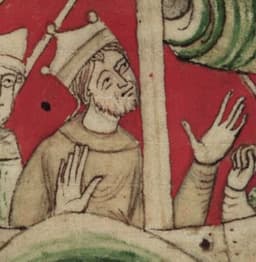
Henry I of England
Emperor · Medieval
55.9Total
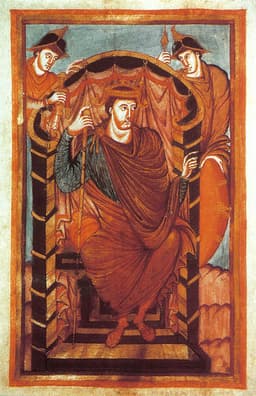
Lothair I
Emperor · Medieval
48.2Total
Basic Information
Born
1068
795
Died
1135
855
Era
Medieval
Medieval
Nationality
England
Frankish Empire
Occupation
Emperor
Emperor
Civilization
Western
Western
Score Comparison
Military (10%)
10.0
55.0
Political (20%)
72.0
37.9
Influence (20%)
56.4
50.2
Legacy (20%)
54.0
42.5
Leadership (15%)
72.0
62.2
Strategy (15%)
57.5
45.0
TOTAL
55.9
48.2
Henry I of England — Complete Timeline
1100 AD
Coronation of Henry IPolitical Action◆ Major
Henry was crowned king of England on August 5, 1100, just three days after his brother William II's death. He issued the Charter of Liberties, promising to curb royal abuses.
CoronationCharter of LibertiesReform
Impact: nationalconstructive
1106 AD
Battle of TinchebrayWar◆ Major
Henry defeated his brother Robert Curthose at Tinchebray in Normandy. Robert was captured and imprisoned for life, and Henry reunited England and Normandy under his rule.
BattleVictoryNormandy
Impact: regional
1110 AD
Administrative ReformsReform◆ Major
Henry established the Exchequer as a central financial department, standardizing tax collection and accounting. He also issued the Leges Henrici Primi, a legal code that systematized English law.
ExchequerLegal ReformAdministration
Impact: nationalconstructive
1120 AD
White Ship DisasterOther◆ Major
Henry's only legitimate son, William Adelin, drowned in the White Ship disaster off the coast of Normandy. This tragedy left Henry without a male heir, leading to a succession crisis after his death.
DisasterSuccession CrisisHeir
Impact: nationaltragic
1135 AD
Death of Henry IPolitical Action◆ Major
Henry died on December 1, 1135, at Lyons-la-For
DeathSuccession CrisisAnarchy
Impact: nationaltragic
Lothair I — Complete Timeline
823 AD
Imperial Coronation by Pope Paschal IPolitical Action◆ Major
Lothair I was crowned co-emperor by Pope Paschal I in Rome, receiving the imperial title from his father Louis the Pious. This coronation affirmed Lothair's status as the senior heir and future ruler of the Carolingian Empire, though it later led to conflict with his brothers.
CarolingianCoronationEmpire
Impact: regionalconstructive
830 AD
Rebellion Against Louis the PiousPolitical Action◆ Major
Lothair I led a rebellion of nobles against his father, Emperor Louis the Pious, resulting in Louis's temporary deposition. Lothair seized power but was later forced to restore his father after the intervention of his brothers. This event deepened family divisions.
CarolingianRebellionLouis the Pious
Impact: regionaldestructive
841 AD
Battle of FontenoyWar◆ Major
Lothair I's forces were defeated by the combined armies of his brothers Louis the German and Charles the Bald at Fontenoy-en-Puisaye. The battle was a bloody civil war that weakened the Carolingian dynasty and led directly to the negotiations for the Treaty of Verdun.
CarolingianBattleCivil War
Impact: regionaldestructive
843 AD
Treaty of VerdunPolitical Action
Lothair I, along with his brothers Louis the German and Charles the Bald, signed the Treaty of Verdun, dividing the Carolingian Empire into three kingdoms. Lothair received Middle Francia, including the imperial title and the cities of Aachen and Rome.
CarolingianTreatyDivision
Impact: global
855 AD
Abdication and Retirement to Prüm AbbeyPolitical Action◆ Major
Lothair I abdicated the throne and divided Middle Francia among his three sons: Louis II (Italy and imperial title), Lothair II (Lotharingia), and Charles (Provence). He then retired to Pr
CarolingianAbdicationDivision
Impact: regional
Expert Analysis
Origins
Henry I of England, born in 1068 in Selby, Yorkshire, was the youngest son of William the Conqueror and Matilda of Flanders. Unlike his older brothers, Henry received no large inheritance but was educated in Latin and the arts, earning the nickname 'Beauclerc' (fine scholar). His early life was overshadowed by his father's death in 1087, leaving him landless and dependent on his brothers.
Lothair I, born in 795, was the eldest son of Emperor Louis the Pious and Ermengarde of Hesbaye. As the heir to the Carolingian Empire, he was groomed for leadership from childhood, crowned king of Italy in 818 and co-emperor in 817. His upbringing was steeped in the traditions of Frankish nobility and imperial authority.
Rise to Power
Henry's rise began after the sudden death of his brother William II in a hunting accident on August 2, 1100. Henry seized the royal treasury at Winchester and was crowned king on August 5, just three days later. He immediately issued the Charter of Liberties, promising to correct the abuses of his predecessor, securing baronial support. His next challenge was his elder brother Robert Curthose, who returned from the First Crusade to claim the throne. Henry defeated Robert at the Battle of Tinchebray on September 28, 1106, capturing him and imprisoning him for life, thereby reuniting England and Normandy.
Lothair's rise was more complex. He was crowned co-emperor by Pope Paschal I in 823, but his father's attempts to secure a new inheritance for his half-brother Charles the Bald led to conflict. In 830, Lothair led a rebellion that temporarily deposed Louis, but he was forced to restore his father. After Louis's death in 840, Lothair claimed the entire empire, but his brothers Louis the German and Charles the Bald allied against him. The decisive Battle of Fontenoy on June 25, 841, ended in Lothair's defeat, forcing him to negotiate the Treaty of Verdun in 843, which divided the empire into three kingdoms.
Leadership & Governance
Henry I was a master administrator. He established the Exchequer as a central financial department, standardizing tax collection and accounting. The Leges Henrici Primi codified English law, and his reign saw the rise of professional bureaucracy. He controlled the nobility through a system of patronage and punishment, confiscating lands from rebellious barons. His political score of 72.0 reflects his skill in governance.
Lothair I, with a political score of 37.9, struggled to maintain authority. He ruled Middle Francia, a strip of land from the North Sea to Italy, but lacked the resources to enforce his will. His governance was marked by constant conflict with his brothers and rebellious nobles. He relied on church support but failed to create a stable administrative system.
Triumph & Tragedy
Henry's greatest triumph was the Battle of Tinchebray (1106), which secured his rule over both England and Normandy. His administrative reforms created a model of medieval governance. However, the White Ship disaster on November 25, 1120, killed his only legitimate son, William Adelin, plunging the succession into crisis. Despite naming his daughter Matilda as heir, his death in 1135 triggered a civil war known as The Anarchy.
Lothair's triumph was the Treaty of Verdun, which formally recognized his imperial title and gave him control of Italy and the imperial capital. But his defeat at Fontenoy (841) was a disaster that permanently fractured the Carolingian Empire. His abdication in 855 and retirement to Prüm Abbey marked a bitter end, as his kingdom was divided among his sons.
Character & Destiny
Henry was pragmatic and calculating, earning the nickname 'Lion of Justice' for his legal reforms. He was known for his intelligence and ruthlessness, imprisoning his brother for life. His character shaped his destiny: his administrative genius brought stability, but his failure to secure a male heir undid his work.
Lothair was ambitious but overreached. His rebellion against his father and claim to the entire empire showed his desire for power, but he lacked the military and political skill to achieve it. His defeat at Fontenoy and subsequent division of the empire sealed his fate as a transitional figure.
Legacy
Henry I's legacy is profound. The Exchequer system continued for centuries, and his legal reforms influenced English common law. His use of charters set a precedent for limiting royal power. His score of 54.0 in legacy reflects his lasting impact on English governance.
Lothair I's legacy is more limited. The Treaty of Verdun is a landmark in European history, creating the basis for modern France, Germany, and Italy. However, his personal rule was ephemeral. His influence score of 50.2 is modest, as his achievements were largely structural rather than personal.
Conclusion
Henry I of England had a greater impact than Lothair I. With a total score of 55.9 compared to Lothair's 48.2, Henry's administrative reforms and political acumen (72.0 vs 37.9) created a stable kingdom that outlasted his reign. Lothair's defeat at Fontenoy and inability to consolidate power left a fragmented legacy. While the Treaty of Verdun was historically significant, Henry's practical governance shaped England's future more directly. Henry I was the more effective ruler.
Rankings
🥇
Henry I of EnglandLeader
Mil: 10.0Pol: 72.0Inf: 56.4
55.9
🥈
Lothair I
Mil: 55.0Pol: 37.9Inf: 50.2
48.2
+7.7 behind
How This Comparison Works
Algorithm
Each figure is scored on 6 dimensions (0—100 scale) based on structured historical data: Military (10%), Political (20%), Influence (20%), Legacy (20%), Leadership (15%), Strategy (15%). The weighted total produces the final ranking.
Data Sources
Scores are computed from structured sub-indicators in the database. Scale factors adjust for era (Ancient ×0.85, Modern ×1.0) and civilization size (Eastern ×1.05, Other ×0.80) to account for differences in population and military scale.
Maximum 3 Figures
Comparisons are limited to 2—3 figures to ensure readability and statistical meaningfulness.
Error Margins
±5 points per dimension — Sub-scores are derived from historical records with inherent uncertainty. Two figures within 5 points on a dimension should be considered roughly equivalent in that area.
Total Score Accuracy
±3 points overall — The weighted combination of 6 dimensions produces a total score with approximately ±3 points of uncertainty. Differences of less than 3 points are not statistically significant— the figures are effectively tied.
Known Limitations
- Historical records are incomplete and uneven across civilizations
- Figures from oral-tradition societies may be underrepresented
- Occupation labels can misclassify multi-role figures
- Scores measure capability and impact, not moral character
- Quantitative scoring is a comparison tool, not absolute truth
Capability Radar
Military (10%) — Battles & Warfare
Battles
30
35
Win Rate
55
30
Expansion
35
25
Political (20%) — Governance & Reform
Reform
85
30
Diplomacy
75
40
Economy
80
30
Influence (20%) — Cultural & Global Reach
Cultural
40
25
Global
30
15
Legacy (20%) — Historical Impact
Historical
60
35
Longevity
55
20
Leadership (15%) — Power & Stability
Tenure
70
55
Stability
70
25
Strategy (15%) — Tactics & Innovation
Strategy
45
35
Tactics
40
30
Reform
60
20
Similar Comparisons
Comments & Discussion
No comments yet. Be the first to share your thoughts!