Loading...
Chairacha vs Julius Caesar
Julius Caesar leads by 35.7 pts · 2 figures compared
…
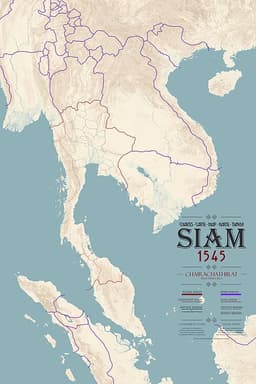
Chairacha
Emperor · Medieval
47.1Total

Julius Caesar
General · Ancient
82.8Total
Basic Information
Born
1500
-100
Died
1546
-44
Era
Medieval
Ancient
Nationality
Thailand
Roman Republic
Occupation
Emperor
General
Civilization
Eastern
Western
Score Comparison
Military (10%)
40.0
88.0
Political (20%)
45.1
78.0
Influence (20%)
50.2
85.0
Legacy (20%)
40.0
82.0
Leadership (15%)
62.2
80.0
Strategy (15%)
45.0
85.0
TOTAL
47.1
82.8
Chairacha — Complete Timeline
1540 AD
Military Campaign Against LannaWar◆ Major
Chairacha led a military campaign against the northern kingdom of Lanna, capturing the city of Chiang Mai after a prolonged siege. The victory expanded Ayutthaya's control over northern territories, though the occupation was short-lived due to Lanna resistance and logistical challenges.
Military CampaignLannaChiang Mai
Impact: regional
1545 AD
Suppression of the Mon RebellionWar
Chairacha suppressed a rebellion by the Mon people in the western provinces of Ayutthaya. The rebellion was crushed with significant force, reaffirming royal authority over the Mon population. However, the harsh suppression created lasting resentment among the Mon community.
RebellionMon PeopleSuppression
Impact: regionaldestructive
1546 AD
Poisoning by ConsortPolitical Action
Chairacha was poisoned by his consort, Lady Sri Sudachan, who then placed her lover on the throne. This assassination destabilized the Ayutthayan monarchy, leading to a period of political turmoil and a succession crisis that weakened the kingdom and made it vulnerable to external threats.
AssassinationSuccession CrisisPolitical Instability
Impact: nationaltragic
Julius Caesar — Complete Timeline
58 BC
Gallic WarsWar◆ Major
Caesar, as proconsul of Gaul, launched a series of campaigns that conquered all of Gaul (modern France, Belgium, and parts of Switzerland). He fought numerous battles, including against the Helvetii, the Belgae, and the Gallic chieftain Vercingetorix. The wars brought immense wealth and a loyal army to Caesar.
Gallic WarsConquestRoman Expansion
Impact: regional
49 BC
Crossing the RubiconPolitical Action◆ Major
Caesar led Legio XIII across the Rubicon River into Italy, defying the Roman Senate's order to disband his army. This act triggered a civil war against Pompey and the Optimates, ultimately leading to Caesar's dictatorship and the end of the Roman Republic.
Roman Civil WarEnd of RepublicPower Struggle
Impact: global
48 BC
Battle of PharsalusWar◆ Major
Caesar's outnumbered army defeated the larger forces of Pompey the Great at Pharsalus in Greece. Caesar's tactical use of a reserve line to counter Pompey's cavalry charge proved decisive. Pompey fled to Egypt, where he was assassinated, leaving Caesar as the undisputed master of the Roman world.
Roman Civil WarBattleDecisive Victory
Impact: regional
44 BC
Appointment as Dictator for LifePolitical Action◆ Major
The Roman Senate appointed Caesar dictator perpetuo (dictator for life), granting him unprecedented personal power. This move concentrated military, legislative, and judicial authority in one person, effectively ending the Roman Republic's traditional system of checks and balances and alarming many senators.
DictatorshipEnd of RepublicPower Consolidation
Impact: regionaldestructive
Assassination on the Ides of MarchPolitical Action◆ Major
A group of Roman senators, led by Marcus Junius Brutus and Gaius Cassius Longinus, stabbed Caesar to death at a meeting of the Senate in the Theatre of Pompey. The assassination was intended to restore the Republic, but instead triggered another civil war that led to the rise of the Roman Empire.
AssassinationRoman PoliticsEnd of Republic
Impact: globaldestructive
Expert Analysis
chairacha-vs-julius-caesar
# The Ides of March and the Poisoned Cup
On a March morning in 44 BCE, the most powerful man in the Roman world fell beneath twenty-three dagger blows delivered by men he had trusted. A little over fifteen centuries later, across the globe in the kingdom of Ayutthaya, another ruler who had held absolute power met a quieter but equally final end—poison slipped into his drink by the woman who shared his bed. Julius Caesar and King Chairacha both died by betrayal, yet their names have traveled through history on vastly different trajectories. One became synonymous with ambition and empire, the other a footnote in the chronicles of Siam. Why?
Origins
Caesar was born into a patrician family that had seen better days. The Roman Republic in 100 BCE was a world of ruthless competition, where noble families jostled for consulships, military commands, and the adoration of the people. Caesar’s uncle by marriage was Gaius Marius, the great general who had reformed the Roman army and set a precedent for personal loyalty between commander and soldier. From his earliest years, Caesar breathed the air of political violence and civil strife. His father died when he was sixteen, thrusting him early into the role of family head.
Chairacha, born in 1500, emerged into a different world entirely. Ayutthaya was a Southeast Asian kingdom built on rice, trade, and Theravada Buddhism. The king was a semi-divine figure, a *devaraja* or god-king, whose authority was absolute but whose palace was a labyrinth of intrigue. Unlike Rome, where ambitious men could rise through military and political careers, Ayutthaya’s throne passed through blood—and bloodshed. Chairacha was a prince of the Suphannaphum dynasty, and his path to power was cleared by the deaths of his predecessors.
Rise to Power
Caesar’s ascent was a masterclass in calculated risk. He fled Rome to avoid Sulla’s proscriptions, then returned to build a career through a series of increasingly bold moves: priesthoods, military service in Asia Minor, the capture of pirates who had kidnapped him, and a relentless climb through the Roman political ladder. His election as pontifex maximus in 63 BCE, followed by a praetorship and then a governorship in Spain, gave him the military reputation he needed. The real breakthrough came in 59 BCE, when he formed the First Triumvirate with Pompey and Crassus, securing the consulship and the command that would make his name: Gaul.
Chairacha’s rise was swifter and bloodier. He became king in 1534 after the death of his predecessor, likely at the age of thirty-four. There is no record of a triumvirate or a political deal—only the fact that he seized a throne that had been unstable for years. His legitimacy rested on birth and the willingness to use force.
Leadership & Governance
In Gaul between 58 and 50 BCE, Caesar demonstrated a style of leadership that blended strategic brilliance with personal charisma. He led from the front, shared his soldiers’ hardships, and rewarded loyalty with wealth and promotions. His *Commentaries on the Gallic War* are not just a historical record but a political document, crafted to shape his image in Rome. He understood that military success was worthless without political narrative.
Chairacha’s military campaigns were more modest but not insignificant. In 1540, he led an army against the northern kingdom of Lanna and captured the city of Chiang Mai after a prolonged siege. It was a genuine achievement—Ayutthaya had long struggled to assert dominance over the northern states. Five years later, in 1545, he suppressed a rebellion by the Mon people in the western provinces. These were the actions of a capable king, not a world-historical genius. Where Caesar conquered all of Gaul, invaded Britain, and defeated his Roman rivals in a civil war, Chairacha consolidated a kingdom that was already established.
Triumph & Tragedy
Caesar’s greatest triumph was also the seed of his destruction. His victory over Pompey at Pharsalus in 48 BCE made him master of the Roman world. He was appointed dictator for ten years, then dictator for life. He reformed the calendar, extended citizenship to provincials, and began building projects that would transform Rome. But his refusal to restore the Republic, his acceptance of divine honors, and his contempt for the senatorial class turned allies into enemies. On the Ides of March, 44 BCE, sixty conspirators ended his life.
Chairacha’s tragedy was more intimate. In 1546, his consort, Lady Sri Sudachan, poisoned him. She then placed her lover on the throne, plunging Ayutthaya into a succession crisis that would weaken the kingdom for years. The king who had captured Chiang Mai and crushed rebellions was undone by the woman he trusted most. There is no record of a dramatic assassination scene, no famous last words—only the quiet horror of a cup passed at dinner.
Character & Destiny
Caesar was audacity incarnate. He crossed the Rubicon with a single legion, gambling everything on the belief that his veterans would follow him against the Republic itself. He pardoned his enemies, only to be killed by them. His character—restless, ambitious, and supremely confident—drove him to take risks that no other Roman would have dared. His destiny was to break the Republic, not because he intended to, but because his ambition could not be contained within its old structures.
Chairacha was a different kind of ruler: competent, traditional, and ultimately vulnerable. He ruled as a god-king but died at the hands of a mortal woman. His character seems to have been that of a conventional monarch—brave in battle, but blind to the dangers within his own palace. His destiny was to be a placeholder, a king who held the throne for twelve years and then vanished from memory.
Legacy
Caesar’s legacy is immeasurable. The name “Caesar” became a title for Roman emperors, then for German kaisers and Russian tsars. His military campaigns are still studied in war colleges. His writings shaped Latin prose. The Republic he destroyed never returned, and the empire he inadvertently created lasted for fifteen centuries.
Chairacha’s legacy is local. He is remembered in Thai history as a king who expanded Ayutthaya’s influence and who died by treachery. His scores—Military 19.2, Political 55.0, Influence 68.3—reflect a ruler who was neither a disaster nor a legend. He exists in the shadow of greater figures: the earlier King Naresuan, who fought the Burmese, and the later King Narai, who opened Siam to the West.
Conclusion
The difference between Caesar and Chairacha is not simply a matter of talent or opportunity. It is a question of scale. Caesar operated in a civilization that was expanding, recording, and centralizing power. His actions were chronicled by himself and by his contemporaries, debated by senators, and remembered by poets. Chairacha ruled in a world where history was carved on temple walls and recited by court chroniclers, where the king was a deity whose deeds needed no explanation. One man broke the world he knew; the other held his world together until it broke him. Both died by betrayal, but only one died in a way that changed the course of history. The Ides of March echo still; the poisoned cup of Ayutthaya is silent.
Rankings
🥇
Julius CaesarLeader
Mil: 88.0Pol: 78.0Inf: 85.0
82.8
🥈
Chairacha
Mil: 40.0Pol: 45.1Inf: 50.2
47.1
+35.7 behind
How This Comparison Works
Algorithm
Each figure is scored on 6 dimensions (0—100 scale) based on structured historical data: Military (10%), Political (20%), Influence (20%), Legacy (20%), Leadership (15%), Strategy (15%). The weighted total produces the final ranking.
Data Sources
Scores are computed from structured sub-indicators in the database. Scale factors adjust for era (Ancient ×0.85, Modern ×1.0) and civilization size (Eastern ×1.05, Other ×0.80) to account for differences in population and military scale.
Maximum 3 Figures
Comparisons are limited to 2—3 figures to ensure readability and statistical meaningfulness.
Error Margins
±5 points per dimension — Sub-scores are derived from historical records with inherent uncertainty. Two figures within 5 points on a dimension should be considered roughly equivalent in that area.
Total Score Accuracy
±3 points overall — The weighted combination of 6 dimensions produces a total score with approximately ±3 points of uncertainty. Differences of less than 3 points are not statistically significant— the figures are effectively tied.
Known Limitations
- Historical records are incomplete and uneven across civilizations
- Figures from oral-tradition societies may be underrepresented
- Occupation labels can misclassify multi-role figures
- Scores measure capability and impact, not moral character
- Quantitative scoring is a comparison tool, not absolute truth
Capability Radar
Military (10%) — Battles & Warfare
Battles
40
95
Win Rate
45
92
Expansion
50
97
Political (20%) — Governance & Reform
Reform
30
90
Diplomacy
35
85
Economy
30
82
Influence (20%) — Cultural & Global Reach
Cultural
25
88
Global
15
94
Legacy (20%) — Historical Impact
Historical
30
95
Longevity
20
96
Leadership (15%) — Power & Stability
Tenure
40
75
Stability
20
60
Strategy (15%) — Tactics & Innovation
Strategy
40
94
Tactics
35
96
Reform
30
88
Similar Comparisons
Comments & Discussion
No comments yet. Be the first to share your thoughts!