Loading...
Chandragupta I vs Diocletian
Diocletian leads by 12.7 pts · 2 figures compared
…

Chandragupta I
Emperor · Ancient
56.9Total
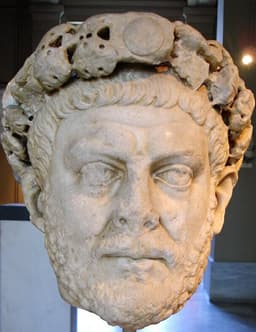
Diocletian
Emperor · Ancient
69.6Total
Basic Information
Born
319
244
Died
335
311
Era
Ancient
Ancient
Nationality
India
Roman Empire
Occupation
Emperor
Emperor
Civilization
Indian
Western
Score Comparison
Military (10%)
55.0
65.0
Political (20%)
61.3
82.0
Influence (20%)
57.2
72.0
Legacy (20%)
50.0
55.0
Leadership (15%)
74.0
82.0
Strategy (15%)
43.3
67.2
TOTAL
56.9
69.6
Chandragupta I — Complete Timeline
308 AD
Married Princess KumaradeviPolitical Action◆ Major
Chandragupta I married Kumaradevi, a princess of the Licchavi clan. This alliance brought the wealthy Licchavi territories under Gupta control, strengthening his political and military position.
Marriage AllianceLicchaviGupta
Impact: regionalconstructive
319 AD
Founded the Gupta EmpirePolitical Action
Chandragupta I established the Gupta Empire by consolidating territories in the Ganges basin. He assumed the title Maharajadhiraja, marking the beginning of a dynasty that would dominate northern India for centuries.
Gupta EmpireFoundingIndia
Impact: regionalconstructive
320 AD
Issued Gupta Era CoinageCultural
Chandragupta I issued gold coins bearing his image and the title Maharajadhiraja. These coins standardized currency in his realm and promoted Gupta sovereignty, becoming a model for later rulers.
CoinageEconomyGupta
Impact: regionalconstructive
Diocletian — Complete Timeline
293 AD
Establishment of the TetrarchyReform
Diocletian created the Tetrarchy, dividing the Roman Empire into four administrative regions ruled by two senior emperors (Augusti) and two junior emperors (Caesares). This system aimed to improve governance and defense, and stabilize imperial succession.
TetrarchyReformAdministration
Impact: globalconstructive
Administrative Reorganization of the EmpireReform◆ Major
Diocletian reorganized the Roman provinces into smaller units (dioceses) grouped into four prefectures, separating civilian and military authority. This reform improved tax collection and administration, but also increased bureaucracy.
AdministrationReformProvinces
Impact: globalconstructive
301 AD
Economic Reforms (Edict on Maximum Prices)Reform◆ Major
Diocletian issued the Edict on Maximum Prices, setting price ceilings on over 1,000 goods and services to combat inflation. The edict was largely ineffective and led to black markets, but demonstrated the state's attempt to control the economy.
Economic ReformPrice ControlsInflation
Impact: global
303 AD
Diocletianic Persecution of ChristiansPolitical Action◆ Major
Diocletian issued a series of edicts ordering the persecution of Christians throughout the Roman Empire. Churches were destroyed, scriptures burned, and Christians were executed or forced to sacrifice to Roman gods. This was the last and most severe state-sponsored persecution.
PersecutionChristianityReligion
Impact: globaldestructive
305 AD
Abdication of DiocletianPolitical Action
Diocletian voluntarily abdicated the throne, retiring to his palace in Split (modern Croatia). He forced his co-emperor Maximian to do the same, setting a precedent for orderly succession, though the Tetrarchy soon collapsed after his departure.
AbdicationRetirementTetrarchy
Impact: global
Expert Analysis
Origins
Chandragupta I was born around 280 CE in the Magadha region of eastern India, into the Gupta family, a clan of modest rulers in the declining Kushan shadow. Little is known of his early life, but he inherited a small kingdom in present-day Bihar and Uttar Pradesh around 320 CE. His background was not aristocratic; he rose from local chieftain to emperor through strategic marriage and conquest.
Diocletian was born around 244 CE in Salona (modern Solin, Croatia) to a family of low status, likely a freedman's son. He served in the Roman army, rising through the ranks to become a commander under Emperor Carus. His early life was marked by military discipline and administrative exposure, shaping his later reforms.
Rise to Power
Chandragupta I's rise began with his marriage to Kumaradevi, a princess of the Licchavi clan, around 320 CE. The Licchavis controlled wealthy territories in the Ganges basin, including Vaishali. This alliance doubled his resources and prestige. By 330 CE, he had consolidated the Ganges basin, assuming the title Maharajadhiraja (King of Kings). His turning point was the Licchavi alliance, which provided the financial and military base for the Gupta Empire.
Diocletian rose to power after the death of Emperor Numerian in 284 CE. The army proclaimed him emperor at Chalcedon. He immediately defeated Carinus, Numerian's brother, at the Battle of the Margus River in 285 CE. His turning point was the establishment of the Tetrarchy in 293 CE, dividing the empire into four regions under two Augusti and two Caesars. This stabilized the empire after decades of crisis.
Leadership & Governance
Chandragupta I's leadership was based on strategic alliances and administrative consolidation. He ruled through a feudal system, granting land to officials and nobles. He issued gold coins with his image and the title Maharajadhiraja, standardizing currency and promoting Gupta sovereignty. His governance was decentralized, relying on local rulers' loyalty. He scored 61.3 in political acumen, reflecting his ability to forge alliances but limited institutional reform.
Diocletian's leadership was autocratic and systematic. He reorganized the empire into 12 dioceses grouped into four prefectures, separating civilian and military authority to prevent usurpation. He issued the Edict on Maximum Prices in 301 CE to curb inflation, though it failed. His political score of 82.0 reflects his comprehensive restructuring, which stabilized Rome for decades. He also persecuted Christians (303-311 CE), a major policy failure that damaged his legacy.
Triumph & Tragedy
Chandragupta I's greatest triumph was founding the Gupta Empire, which became a golden age of Indian culture. His marriage alliance and territorial expansion created a stable state. His tragedy was his short reign (c. 320-335 CE) and limited institutional legacy; his son Samudragupta overshadowed him. He scored 50.0 in legacy, as his empire's enduring fame owes more to his successors.
Diocletian's greatest triumph was the Tetrarchy, which ended the Third-Century Crisis and restored order. His administrative reforms lasted for centuries. His tragedy was the persecution of Christians, which failed to suppress Christianity and led to his posthumous vilification. He also abdicated in 305 CE, but his retirement saw the Tetrarchy collapse, undoing his work. His legacy score of 55.0 reflects his mixed impact.
Character & Destiny
Chandragupta I was pragmatic and diplomatic, prioritizing alliances over conquest. His marriage to Kumaradevi shows strategic foresight. He lacked aggressive military ambition (military score 55.0), focusing on consolidation. His destiny was to lay the foundation for an empire, but his character limited his personal glory.
Diocletian was methodical and authoritarian, believing in order above all. His persecution of Christians stemmed from a desire for religious uniformity. His abdication was a novel act, but his rigid system depended on his presence. His character of control led to initial success but eventual collapse when he left power. His military score of 65.0 indicates competent but not brilliant generalship.
Legacy
Chandragupta I's legacy is as the founder of the Gupta Empire, which fostered classical Indian art, literature, and science. His coinage and title influenced later Indian rulers. However, his personal impact is overshadowed by his son and grandson. He scored 57.2 in influence, reflecting his role as a progenitor.
Diocletian's legacy is profound: his Tetrarchy model influenced Byzantine administration, and his reforms separated civil and military roles, lasting in the Eastern Roman Empire. The persecution of Christians became a cautionary tale. His influence score of 72.0 reflects his lasting systemic changes, despite the Tetrarchy's failure.
Conclusion
Diocletian had greater impact than Chandragupta I. His political and leadership scores (82.0 and 82.0) far exceed Chandragupta's (61.3 and 74.0). While Chandragupta founded a dynasty, his reign was short and his accomplishments limited to alliance-building. Diocletian restructured an empire of 50 million people, creating institutions that survived for centuries. His total score of 69.6 versus Chandragupta's 56.9 reflects this disparity. Diocletian's reforms addressed systemic crises, while Chandragupta's were personal and transient. Thus, Diocletian stands as the more transformative figure.
Rankings
🥇
DiocletianLeader
Mil: 65.0Pol: 82.0Inf: 72.0
69.6
🥈
Chandragupta I
Mil: 55.0Pol: 61.3Inf: 57.2
56.9
+12.7 behind
How This Comparison Works
Algorithm
Each figure is scored on 6 dimensions (0—100 scale) based on structured historical data: Military (10%), Political (20%), Influence (20%), Legacy (20%), Leadership (15%), Strategy (15%). The weighted total produces the final ranking.
Data Sources
Scores are computed from structured sub-indicators in the database. Scale factors adjust for era (Ancient ×0.85, Modern ×1.0) and civilization size (Eastern ×1.05, Other ×0.80) to account for differences in population and military scale.
Maximum 3 Figures
Comparisons are limited to 2—3 figures to ensure readability and statistical meaningfulness.
Error Margins
±5 points per dimension — Sub-scores are derived from historical records with inherent uncertainty. Two figures within 5 points on a dimension should be considered roughly equivalent in that area.
Total Score Accuracy
±3 points overall — The weighted combination of 6 dimensions produces a total score with approximately ±3 points of uncertainty. Differences of less than 3 points are not statistically significant— the figures are effectively tied.
Known Limitations
- Historical records are incomplete and uneven across civilizations
- Figures from oral-tradition societies may be underrepresented
- Occupation labels can misclassify multi-role figures
- Scores measure capability and impact, not moral character
- Quantitative scoring is a comparison tool, not absolute truth
Capability Radar
Military (10%) — Battles & Warfare
Battles
40
65
Win Rate
45
70
Expansion
50
50
Political (20%) — Governance & Reform
Reform
45
95
Diplomacy
50
80
Economy
50
75
Influence (20%) — Cultural & Global Reach
Cultural
55
60
Global
50
75
Legacy (20%) — Historical Impact
Historical
60
85
Longevity
65
70
Leadership (15%) — Power & Stability
Tenure
55
85
Stability
55
80
Strategy (15%) — Tactics & Innovation
Strategy
40
75
Tactics
35
60
Reform
30
85
Similar Comparisons
Comments & Discussion
No comments yet. Be the first to share your thoughts!