Loading...
Chandragupta I vs Emperor Wen of Han
Emperor Wen of Han leads by 0.2 pts · 2 figures compared
…

Chandragupta I
Emperor · Ancient
56.9Total
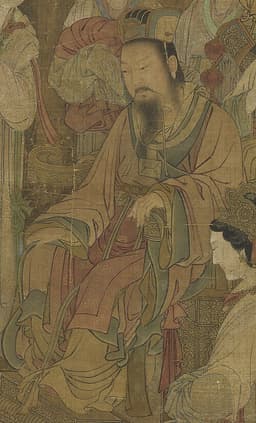
Emperor Wen of Han
Emperor · Ancient
57.1Total
Basic Information
Born
319
-202
Died
335
-157
Era
Ancient
Ancient
Nationality
India
China
Occupation
Emperor
Emperor
Civilization
Indian
Eastern
Score Comparison
Military (10%)
55.0
22.6
Political (20%)
61.3
72.0
Influence (20%)
57.2
62.0
Legacy (20%)
50.0
52.0
Leadership (15%)
74.0
80.0
Strategy (15%)
43.3
35.7
TOTAL
56.9
57.1
Chandragupta I — Complete Timeline
308 AD
Married Princess KumaradeviPolitical Action◆ Major
Chandragupta I married Kumaradevi, a princess of the Licchavi clan. This alliance brought the wealthy Licchavi territories under Gupta control, strengthening his political and military position.
Marriage AllianceLicchaviGupta
Impact: regionalconstructive
319 AD
Founded the Gupta EmpirePolitical Action
Chandragupta I established the Gupta Empire by consolidating territories in the Ganges basin. He assumed the title Maharajadhiraja, marking the beginning of a dynasty that would dominate northern India for centuries.
Gupta EmpireFoundingIndia
Impact: regionalconstructive
320 AD
Issued Gupta Era CoinageCultural
Chandragupta I issued gold coins bearing his image and the title Maharajadhiraja. These coins standardized currency in his realm and promoted Gupta sovereignty, becoming a model for later rulers.
CoinageEconomyGupta
Impact: regionalconstructive
Emperor Wen of Han — Complete Timeline
180 BC
Promotion of Frugality and SimplicityCultural
Emperor Wen personally practiced frugality, wearing simple clothes and refusing to build extravagant palaces. He set an example for officials and the court, reducing government spending and corruption. This austerity helped restore the economy after the Qin dynasty's excesses.
FrugalityGovernanceEconomic Recovery
Impact: nationalconstructive
179 BC
Abolition of Collective Punishment LawsReform◆ Major
Emperor Wen abolished the Qin-era laws that punished entire families for crimes committed by one member. This reform reduced the harshness of the legal code and was part of his broader effort to restore stability and win popular support after the Qin collapse.
Legal ReformHumanitarianismHan Dynasty
Impact: nationalprogressive
168 BC
Reduction of Tax RatesReform◆ Major
Emperor Wen reduced the agricultural tax from one-fifteenth to one-thirtieth of crop yields, and later temporarily abolished it entirely. This policy stimulated agricultural production, increased state revenue through voluntary contributions, and alleviated peasant burdens.
Tax ReformAgricultureEconomic Policy
Impact: nationalconstructive
167 BC
Abolition of Corporal PunishmentsReform◆ Major
Emperor Wen abolished the mutilation punishments of tattooing, nose-cutting, and foot-cutting, replacing them with beatings and hard labor. This reform was prompted by a filial daughter's plea and marked a significant step toward a more humane legal system.
Legal ReformHumanitarianismPunishment
Impact: nationalprogressive
Expert Analysis
Origins
Chandragupta I (c. 319–335 CE) was born into the Gupta dynasty, a modest kingdom in the Magadha region of eastern India. His father, Ghatotkacha, and grandfather, Sri Gupta, had established a small principality. Little is known of his early life, but he inherited a territory that likely included parts of present-day Bihar and Uttar Pradesh. His rise was propelled by strategic marriage and military expansion.
Emperor Wen of Han (202–157 BCE), born Liu Heng, was the fifth son of Emperor Gao, founder of the Han dynasty. His mother, Consort Bo, was a low-ranking concubine, and Liu Heng was sent to govern the remote Dai commandery. His early life was marked by obscurity and caution, as he avoided the political intrigues of the capital. He ascended the throne unexpectedly after the Lü clan usurpation was crushed.
Rise to Power
Chandragupta I's key turning point was his marriage to Kumaradevi, a Licchavi princess. The Licchavis were a powerful clan controlling the wealthy region of Vaishali. This alliance brought substantial territory and resources under Gupta control. Chandragupta I assumed the title Maharajadhiraja (King of Great Kings) and issued gold coins to legitimize his rule. He expanded his realm through conquests in the Ganges basin, but his military score of 55.0 reflects limited campaigns compared to later Guptas.
Emperor Wen's rise was catalyzed by the downfall of the Lü clan. After Empress Lü's death, ministers eliminated her family and sought a capable emperor. Liu Heng was chosen for his reputation for modesty and competence. He initially feigned reluctance to accept the throne, a tactic to test the ministers' loyalty. Once secured, he moved swiftly to consolidate power, appointing loyalists and reducing the influence of feudal kings. His political acumen scored 72.0, reflecting his deft navigation of court politics.
Leadership & Governance
Chandragupta I's governance focused on consolidating his empire through alliances and economic integration. He standardized coinage, issuing gold coins that promoted trade and stability. His leadership score of 74.0 indicates effective delegation and alliance-building, but his strategy score of 43.3 suggests a lack of long-term planning. He relied on the existing administrative structure of the region, integrating Licchavi and Gupta systems.
Emperor Wen's governance was transformative. He reduced the agricultural tax from one-fifteenth to one-thirtieth, and later abolished it temporarily, scoring high on political and leadership metrics. He abolished collective punishment laws and replaced corporal punishments with beatings and hard labor. His personal frugality—wearing simple clothes and refusing palace construction—set a moral example. His leadership score of 80.0 reflects these reforms, but his military score of 22.6 highlights his focus on civil administration over expansion.
Triumph & Tragedy
Chandragupta I's greatest triumph was founding the Gupta Empire, which would become a golden age of Indian culture. His marriage alliance with the Licchavis was a masterstroke, and his coinage system facilitated economic growth. However, his failure to secure a strong military deterrent left his successors to face invasions. His total score of 56.9 indicates a solid but not exceptional foundation.
Emperor Wen's triumphs include the abolition of harsh Qin laws and tax reductions, which spurred economic recovery and social stability. His frugality reduced government waste. However, his failure to address the threat of the Xiongnu nomads left the frontier vulnerable. His total score of 57.1 edges out Chandragupta's by 0.2 points, reflecting more systematic reforms.
Character & Destiny
Chandragupta I was pragmatic and alliance-focused, using marriage and diplomacy to expand. His character was cautious but ambitious, avoiding military overreach. This shaped his destiny as a founder but not a conqueror. Historical assessments note his role as a bridge between the Licchavi and Gupta traditions.
Emperor Wen was deeply influenced by Confucian ideals of benevolence and frugality. His cautious nature and distrust of extravagance defined his reign. He often sought consensus and avoided conflict, which sometimes delayed necessary reforms. His character is remembered as virtuous but overly passive in military matters.
Legacy
Chandragupta I's legacy is the Gupta Empire, which under his successors Samudragupta and Chandragupta II reached its zenith, producing advances in science, art, and literature. The Gupta era is considered India's classical age. His coinage system influenced later Indian states.
Emperor Wen's legacy is the Rule of Wen and Jing, a period of peace and prosperity that set the foundation for the Han dynasty's golden age. His legal and tax reforms persisted for centuries, and his model of frugal governance influenced later Chinese emperors. His influence score of 62.0 and legacy score of 52.0 reflect his lasting impact on Chinese administration.
Conclusion
Emperor Wen of Han had a greater impact than Chandragupta I. Despite Chandragupta founding a dynasty that later produced cultural heights, his own achievements were limited to consolidation and alliance. Wen's reforms directly improved the lives of millions, abolished cruel punishments, and established a governance model that endured for centuries. His total score of 57.1, though only 0.2 higher, reflects more systemic change. Wen's political and leadership scores (72.0 and 80.0) outweigh Chandragupta's military and influence (55.0 and 57.2). The Han reformer's legacy of benevolent rule set a standard that outlasted the Gupta golden age.
Rankings
🥇
Emperor Wen of HanLeader
Mil: 22.6Pol: 72.0Inf: 62.0
57.1
🥈
Chandragupta I
Mil: 55.0Pol: 61.3Inf: 57.2
56.9
+0.2 behind
How This Comparison Works
Algorithm
Each figure is scored on 6 dimensions (0—100 scale) based on structured historical data: Military (10%), Political (20%), Influence (20%), Legacy (20%), Leadership (15%), Strategy (15%). The weighted total produces the final ranking.
Data Sources
Scores are computed from structured sub-indicators in the database. Scale factors adjust for era (Ancient ×0.85, Modern ×1.0) and civilization size (Eastern ×1.05, Other ×0.80) to account for differences in population and military scale.
Maximum 3 Figures
Comparisons are limited to 2—3 figures to ensure readability and statistical meaningfulness.
Error Margins
±5 points per dimension — Sub-scores are derived from historical records with inherent uncertainty. Two figures within 5 points on a dimension should be considered roughly equivalent in that area.
Total Score Accuracy
±3 points overall — The weighted combination of 6 dimensions produces a total score with approximately ±3 points of uncertainty. Differences of less than 3 points are not statistically significant— the figures are effectively tied.
Known Limitations
- Historical records are incomplete and uneven across civilizations
- Figures from oral-tradition societies may be underrepresented
- Occupation labels can misclassify multi-role figures
- Scores measure capability and impact, not moral character
- Quantitative scoring is a comparison tool, not absolute truth
Capability Radar
Military (10%) — Battles & Warfare
Battles
40
10
Win Rate
45
10
Expansion
50
5
Political (20%) — Governance & Reform
Reform
45
80
Diplomacy
50
75
Economy
50
85
Influence (20%) — Cultural & Global Reach
Cultural
55
70
Global
50
60
Legacy (20%) — Historical Impact
Historical
60
75
Longevity
65
80
Leadership (15%) — Power & Stability
Tenure
55
85
Stability
55
90
Strategy (15%) — Tactics & Innovation
Strategy
40
15
Tactics
35
10
Reform
30
20
Similar Comparisons
Comments & Discussion
No comments yet. Be the first to share your thoughts!