Loading...
Chandragupta Maurya vs Euric
Chandragupta Maurya leads by 18.1 pts · 2 figures compared
…

Chandragupta Maurya
Emperor · Ancient
71.0Total
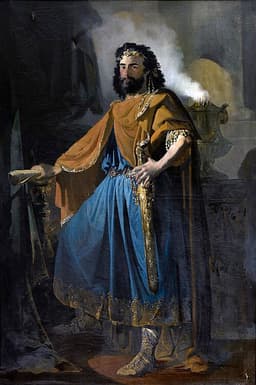
Euric
Emperor · Ancient
52.9Total
Basic Information
Born
-340
415
Died
-297
484
Era
Ancient
Ancient
Nationality
India
Visigothic Kingdom
Occupation
Emperor
Emperor
Civilization
Indian
Western
Score Comparison
Military (10%)
76.0
47.5
Political (20%)
74.9
68.0
Influence (20%)
68.0
56.4
Legacy (20%)
65.0
48.3
Leadership (15%)
78.0
40.0
Strategy (15%)
72.0
57.5
TOTAL
71.0
52.9
Chandragupta Maurya — Complete Timeline
321 BC
Overthrow of the Nanda DynastyPolitical Action
Chandragupta Maurya, with guidance from Chanakya, led a rebellion against the Nanda Empire in Magadha. He defeated the Nanda forces and established the Maurya Empire, marking the beginning of a unified Indian state.
Maurya EmpireNandaChanakya
Impact: regional
320 BC
Unification of Northern IndiaWar◆ Major
Chandragupta Maurya conquered the kingdoms of northern India, including the Punjab and the Gangetic plain. He consolidated these territories into a centralized empire with its capital at Pataliputra, controlling most of the Indian subcontinent.
UnificationNorthern IndiaMaurya Empire
Impact: regional
Establishment of the Mauryan AdministrationReform◆ Major
Chandragupta Maurya implemented a centralized administrative system based on the Arthashastra, with a bureaucracy, taxation, and a standing army. This system enabled effective governance of the vast empire and influenced later Indian states.
AdministrationArthashastraCentralization
Impact: regionalconstructive
305 BC
Conquest of the Indus ValleyWar◆ Major
Chandragupta Maurya fought against Seleucus I Nicator, a successor of Alexander the Great, in the Indus Valley. The war ended with a treaty in which Seleucus ceded territories including Arachosia and Gedrosia, and gave his daughter in marriage.
Seleucid EmpireIndus ValleyTreaty
Impact: regional
298 BC
Conversion to JainismCultural
Chandragupta Maurya converted to Jainism and abdicated his throne. He spent his final years as an ascetic at Shravana Belgola, following Jain practices of fasting and meditation until his death.
JainismAsceticismAbdication
Impact: regional
Euric — Complete Timeline
466 AD
Accession as Visigothic KingPolitical Action◆ Major
Euric became king of the Visigoths after assassinating his brother Theodoric II. His reign marked the beginning of Visigothic expansion and independence from the Western Roman Empire, as he consolidated power in Gaul and Hispania.
Visigothic KingdomSuccessionExpansion
Impact: regional
475 AD
Conquest of AuvergneWar◆ Major
Euric's forces besieged and captured the city of Clermont in Auvergne, a key stronghold of the Gallo-Roman aristocracy. This conquest extended Visigothic control over much of southern Gaul, weakening the remaining Roman authority in the region.
Visigothic KingdomConquestGaul
Impact: regional
Codification of the Code of EuricReform
Euric issued the Code of Euric, the first written law code of the Germanic peoples. It compiled Roman and Germanic legal traditions, governing both Visigoths and Romans in his kingdom. This code influenced later Visigothic legislation and legal development in early medieval Europe.
Visigothic KingdomLaw CodeLegal History
Impact: regionalconstructive
476 AD
Treaty with the Eastern Roman EmpirePolitical Action◆ Major
Euric negotiated a treaty with the Eastern Roman Emperor Zeno, which recognized Visigothic control over most of Gaul and Hispania. This formalized the Visigothic Kingdom as an independent state, ending any nominal allegiance to the Roman Empire.
Visigothic KingdomDiplomacyIndependence
Impact: regionalconstructive
Expert Analysis
Origins
Chandragupta Maurya was born around 340 BCE in the Magadha region of ancient India. His early life is shrouded in legend, but accounts describe him as orphaned and raised in a village, later meeting the Brahmin strategist Chanakya, who recognized his potential. Chanakya mentored him, providing education in statecraft and military tactics. In contrast, Euric was born around 420 CE into the Visigothic royal family, likely in the region of Gaul. He was the younger brother of King Theodoric II, and his upbringing was steeped in the warrior culture of the Visigoths, a Germanic tribe that had settled in Roman territory. While Chandragupta's origins were humble, Euric's were aristocratic.
Rise to Power
Chandragupta's rise began with his overthrow of the Nanda Dynasty around 322 BCE. With Chanakya's guidance, he raised an army, exploited internal dissent, and defeated the Nanda forces, establishing the Maurya Empire. He then expanded westward, clashing with Seleucus I Nicator, a successor of Alexander the Great. The war ended in a treaty around 303 BCE, ceding the Indus Valley to Chandragupta and securing a marital alliance. Euric's path to power was more treacherous. He became king in 466 CE after assassinating his brother Theodoric II, seizing control of the Visigothic Kingdom. He then broke free from the influence of the Western Roman Empire, expanding Visigothic territory through military campaigns. His political acumen scored 68.0, higher than his military score of 47.5, reflecting his reliance on diplomacy and legal consolidation.
Leadership & Governance
Chandragupta's leadership style was centralized and autocratic, based on the Arthashastra, a treatise on statecraft attributed to Chanakya. He established a bureaucratic administration with departments for taxation, trade, and public works, and maintained a large standing army. His governance achieved a political score of 74.9 and a leadership score of 78.0. In contrast, Euric's governance is best known for the Code of Euric, the first written law code of a Germanic kingdom. Issued around 475 CE, it blended Roman and Germanic legal traditions, governing both Visigoths and Romans. This code was a significant political achievement, earning him a political score of 68.0. However, his leadership score of 40.0 reflects his reliance on assassination and coercion. While Chandragupta built a vast empire through conquest and administration, Euric focused on legal codification and territorial consolidation.
Triumph & Tragedy
Chandragupta's greatest triumph was the unification of most of the Indian subcontinent under one rule, a feat unmatched before him. He also successfully repelled Seleucid incursions, securing the Indus Valley. His tragedy came later: he converted to Jainism and abdicated his throne, spending his final years as an ascetic. This spiritual turn may have undermined the stability of his empire. Euric's triumph was the codification of Germanic law, which provided legal unity and influenced subsequent medieval codes. He also expanded Visigothic territory into Gaul and Hispania, negotiating a treaty with the Eastern Roman Empire in 476 CE that recognized his gains. His tragedy was that his legal code did not prevent the eventual collapse of the Visigothic Kingdom after his death, and his assassination of his brother stained his legacy.
Character & Destiny
Chandragupta was ambitious, disciplined, and pragmatic, guided by Chanakya's political realism. His conversion to Jainism reflected a spiritual depth, but also a willingness to abandon power. His character shaped a destiny of empire-building and renunciation. Euric was ruthless and politically astute, willing to kill his brother to gain power. He was less militarily inclined (military score 47.5) but legally innovative. His character led to a reign of consolidation but also isolation from other Germanic tribes. Historical assessments note Chandragupta as a unifier and founder, while Euric is seen as a legal pioneer but a divisive figure.
Legacy
Chandragupta's legacy is immense: the Maurya Empire became the template for Indian statecraft, and his administrative systems influenced later empires. His grandson Ashoka spread Buddhism, but Chandragupta's unification made that possible. His legacy score is 65.0. Euric's legacy is the Code of Euric, which influenced the later Visigothic Code and medieval European law. However, his kingdom was short-lived, and his legal code is primarily of historical interest. His legacy score of 48.3 reflects limited long-term impact.
Conclusion
Chandragupta Maurya had a greater impact than Euric. His total score of 71.0 versus Euric's 52.9 underscores his superiority across military, political, and leadership dimensions. Chandragupta unified a subcontinent, established a centralized administration, and laid the foundation for a dynasty that lasted centuries. Euric's codification of law was significant but limited in scope and duration. While both were transformative figures, Chandragupta's empire reshaped the history of India, whereas Euric's influence was confined to a specific Germanic kingdom. Chandragupta's impact was broader and more enduring.
Rankings
🥇
Chandragupta MauryaLeader
Mil: 76.0Pol: 74.9Inf: 68.0
71.0
🥈
Euric
Mil: 47.5Pol: 68.0Inf: 56.4
52.9
+18.1 behind
How This Comparison Works
Algorithm
Each figure is scored on 6 dimensions (0—100 scale) based on structured historical data: Military (10%), Political (20%), Influence (20%), Legacy (20%), Leadership (15%), Strategy (15%). The weighted total produces the final ranking.
Data Sources
Scores are computed from structured sub-indicators in the database. Scale factors adjust for era (Ancient ×0.85, Modern ×1.0) and civilization size (Eastern ×1.05, Other ×0.80) to account for differences in population and military scale.
Maximum 3 Figures
Comparisons are limited to 2—3 figures to ensure readability and statistical meaningfulness.
Error Margins
±5 points per dimension — Sub-scores are derived from historical records with inherent uncertainty. Two figures within 5 points on a dimension should be considered roughly equivalent in that area.
Total Score Accuracy
±3 points overall — The weighted combination of 6 dimensions produces a total score with approximately ±3 points of uncertainty. Differences of less than 3 points are not statistically significant— the figures are effectively tied.
Known Limitations
- Historical records are incomplete and uneven across civilizations
- Figures from oral-tradition societies may be underrepresented
- Occupation labels can misclassify multi-role figures
- Scores measure capability and impact, not moral character
- Quantitative scoring is a comparison tool, not absolute truth
Capability Radar
Military (10%) — Battles & Warfare
Battles
85
45
Win Rate
90
50
Expansion
92
50
Political (20%) — Governance & Reform
Reform
85
75
Diplomacy
80
55
Economy
78
50
Influence (20%) — Cultural & Global Reach
Cultural
75
55
Global
70
45
Legacy (20%) — Historical Impact
Historical
85
60
Longevity
80
50
Leadership (15%) — Power & Stability
Tenure
75
60
Stability
70
55
Strategy (15%) — Tactics & Innovation
Strategy
88
50
Tactics
80
40
Reform
82
55
Similar Comparisons
Comments & Discussion
No comments yet. Be the first to share your thoughts!