Loading...
Charles Augustus of Saxe-Weimar vs Gojong of Korea
Charles Augustus of Saxe-Weimar leads by 0.3 pts · 2 figures compared
…
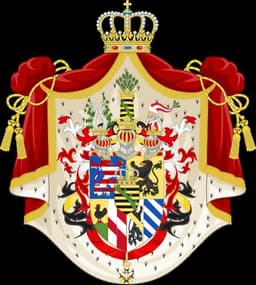
Charles Augustus of Saxe-Weimar
Emperor · Modern
55.8Total
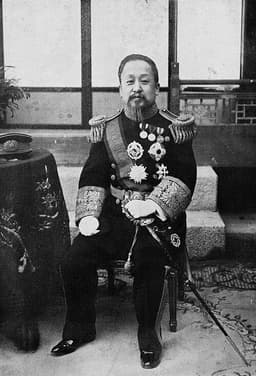
Gojong of Korea
Emperor · Modern
55.5Total
Basic Information
Born
1757
1852
Died
1828
1919
Era
Modern
Modern
Nationality
Saxe-Weimar
Korea
Occupation
Emperor
Emperor
Civilization
Western
Eastern
Score Comparison
Military (10%)
20.0
43.3
Political (20%)
70.0
68.0
Influence (20%)
55.0
60.0
Legacy (20%)
52.0
50.0
Leadership (15%)
82.0
53.2
Strategy (15%)
42.3
54.6
TOTAL
55.8
55.5
Charles Augustus of Saxe-Weimar — Complete Timeline
1775 AD
Patronage of Johann Wolfgang von GoetheCultural◆ Major
Charles Augustus invited Goethe to Weimar and appointed him to various governmental positions. This patronage created the Weimar Classicism cultural movement and made Weimar a major intellectual center in Europe.
Weimar ClassicismGoetheCultural Patronage
Impact: globalconstructive
1806 AD
Joined the Rhine ConfederationPolitical Action◆ Major
Charles Augustus allied Saxe-Weimar with Napoleon's Confederation of the Rhine, gaining territorial enlargement and sovereign status. This decision preserved his duchy's autonomy during the Napoleonic Wars but tied it to French hegemony.
Napoleonic WarsConfederation of the RhineAlliance
Impact: regional
1813 AD
Fought at the Battle of LeipzigWar◆ Major
Charles Augustus switched sides and fought with the Allied coalition against Napoleon at the Battle of Leipzig. His troops participated in the decisive defeat of Napoleon, contributing to the liberation of German states from French control.
Battle of LeipzigNapoleonic WarsCoalition
Impact: regional
1816 AD
Granted the Constitution of 1816Political Action◆ Major
Charles Augustus issued a constitution for Saxe-Weimar-Eisenach, making him the first German ruler to grant a constitution. This established a bicameral parliament and guaranteed basic rights, setting a precedent for constitutionalism in the German states.
ConstitutionConstitutionalismGerman States
Impact: nationalprogressive
Gojong of Korea — Complete Timeline
1897 AD
Proclamation of the Korean EmpirePolitical Action
Gojong declared Korea an empire, assuming the title of Emperor. This was an attempt to assert Korea's sovereignty and equal status with China and Japan, and to modernize the state. The move was partly a response to the assassination of his wife, Empress Myeongseong.
Korean EmpireSovereigntyModernization
Impact: nationalconstructive
1905 AD
Signing of the Japan-Korea Treaty of 1905Political Action
Under Japanese pressure, Gojong's government signed the Eulsa Treaty, making Korea a Japanese protectorate. Gojong did not sign the treaty himself and later attempted to appeal to international powers, but the treaty stripped Korea of its diplomatic sovereignty.
TreatyJapanese ProtectorateLoss of Sovereignty
Impact: nationaltragic
1907 AD
Forced Abdication by JapanPolitical Action◆ Major
Japanese authorities forced Gojong to abdicate in favor of his son, Sunjong, after Gojong sent a secret envoy to the Hague Peace Conference to protest Japanese control. The abdication was part of Japan's consolidation of power over Korea.
AbdicationJapanese ImperialismHague Secret Envoy Affair
Impact: nationaltragic
1919 AD
Death and Funeral of GojongOther
Gojong died suddenly, with rumors of poisoning by Japanese agents. His funeral on March 1, 1919, became a catalyst for the March First Movement, a massive nationwide protest against Japanese rule. The movement was brutally suppressed but galvanized Korean independence efforts.
DeathMarch First MovementKorean Independence
Impact: nationaltragic
Expert Analysis
Gojong of Korea vs Charles Augustus of Saxe-Weimar
The Emperor and the Enlightened Duke
In the autumn of 1905, a Korean emperor sat weeping in his palace as Japanese soldiers enforced a treaty that would strip his nation of sovereignty. Half a world away and a century earlier, a German duke had just finished dining with Johann Wolfgang von Goethe, discussing poetry and the nature of freedom before signing a constitution that made his tiny duchy a beacon of liberal reform. Gojong of Korea and Charles Augustus of Saxe-Weimar both inherited thrones in an age of empires, both sought to modernize their realms, and both left legacies that their people would mourn or celebrate for generations. But one ended his life as a powerless captive of foreign powers, while the other died a revered father of his nation. What explains the chasm between their fates?
Origins
Gojong was born in 1852 into a Korea still called the "Hermit Kingdom," a dynasty that had ruled for five centuries but now faced a world of gunboats and treaties. His father, the regent Heungseon Daewongun, raised him in the shadow of isolationism, convinced that foreign influence would destroy Joseon. When the boy king ascended the throne at age twelve in 1864, he inherited a kingdom that had barely changed since the 17th century—a Confucian bureaucracy, a rigid social hierarchy, and a deep suspicion of the West.
Charles Augustus, born five years earlier in 1757, was a prince of a different world entirely. His tiny duchy of Saxe-Weimar was one of hundreds of German states, but it sat at the crossroads of the Enlightenment. His mother, Duchess Anna Amalia, surrounded him with philosophers, artists, and reformers. When he assumed rule at age eighteen in 1775, he did so not as a divine monarch but as a prince who had already read Rousseau and Voltaire. His first act was to invite the young Goethe to Weimar, a decision that would transform his court into the intellectual capital of Germany.
Rise to Power
Gojong's path was one of survival. The 1860s and 1870s saw Korea battered by French and American naval expeditions, then by Japanese warships. He watched helplessly as China, Korea's ancient suzerain, collapsed before Western powers. His great turning point came in 1897, when he proclaimed the Korean Empire, declaring himself Emperor—a title meant to place Korea on equal footing with China and Japan. It was a desperate act of defiance, a crown placed on a kingdom already bleeding.
Charles Augustus rose differently. He did not need to assert sovereignty; he needed to define it. When Napoleon swept across Europe in 1806, the duke made a calculated choice: he joined the Confederation of the Rhine, swallowing his pride to preserve his duchy. Then, in 1813, he switched sides at the Battle of Leipzig, leading his troops personally alongside the Allied coalition. He understood that survival meant flexibility, not stubbornness.
Leadership & Governance
Gojong governed through crisis. He attempted modernization—building Korea's first electric grid, telegraph system, and railroad—but every reform was shadowed by Japan's growing ambition. His political score of 85.0 reflects genuine diplomatic skill: he played Russia against Japan, sought American support, and sent secret envoys to the Hague Peace Conference in 1907. But his military score of 59.7 and strategy score of 30.0 reveal the tragic truth: he lacked the army to back his diplomacy. When he tried to resist Japan, he had no force to command.
Charles Augustus governed through patronage and principle. His leadership score of 82.0 stems not from battlefield prowess but from his ability to attract and empower genius. He gave Goethe a government post, funded Schiller's plays, and turned Weimar into a laboratory of Enlightenment ideals. His greatest achievement came in 1816, when he granted the Constitution of 1816—the first constitutional charter granted by a German ruler. It guaranteed freedom of the press, abolished censorship, and established a parliament. He did not need to fight empires; he needed to build a state that could survive them.
Triumph & Tragedy
Gojong's triumph was the Korean Empire itself—a brief, shining moment when Korea stood as an equal among nations. But his tragedy was absolute. In 1905, under Japanese pressure, his ministers signed the Eulsa Treaty, making Korea a Japanese protectorate. Gojong himself refused to sign, but his refusal meant nothing. In 1907, Japanese authorities forced him to abdicate in favor of his son, Sunjong. He spent his final years under house arrest in the Deoksu Palace, a ghost emperor in his own capital. When he died in 1919, rumors of Japanese poisoning swept the nation. His funeral on March 1, 1919, became the spark for the March First Movement, a nationwide independence uprising that Japan crushed in blood.
Charles Augustus knew triumph and tragedy as well. The Battle of Leipzig was his finest hour—he fought alongside Blücher and Schwarzenberg, and his troops helped break Napoleon's lines. But the peace that followed brought disillusionment. The Congress of Vienna restored conservative monarchies across Europe, and his beloved constitution faced attacks from reactionaries. Yet he held firm. When he died in 1828, he left behind a duchy that had doubled in size, a constitution that survived, and a cultural legacy that would influence Germany for centuries.
Character & Destiny
What drove these two men to such different fates? Gojong was a tragic figure—intelligent, well-meaning, but trapped by history. He inherited a kingdom that had no army, no allies, and no time. His personality was cautious, even passive, shaped by a Confucian tradition that valued harmony over confrontation. He tried to navigate between empires, but the currents were too strong. His death, likely by poison, was the final indignity of a life spent resisting forces he could not control.
Charles Augustus was a man of action and appetite. He was passionate, impulsive, and generous—a duke who rode to hounds, wrote poetry, and loved opera. He embraced the Enlightenment not as a threat but as an opportunity. When faced with Napoleon, he chose pragmatism; when faced with reactionaries, he chose principle. His personality allowed him to bend without breaking, to adapt without surrendering.
Legacy
Gojong's legacy is one of martyrdom. He is remembered in Korea as the emperor who tried to save his nation, who refused to sign the treaty, who died for his country. The March First Movement that followed his funeral transformed Korean nationalism and eventually led to the independence of 1945. His influence score of 75.7 and legacy score of 69.5 reflect this: he failed in his lifetime but succeeded in death.
Charles Augustus's legacy is one of enlightenment. He is remembered as the patron of Weimar Classicism, the duke who made a tiny duchy a cultural powerhouse. His constitution inspired other German states and helped lay the groundwork for German liberalism. His influence score of 78.0 and legacy score of 68.8 reflect a different kind of success: not a martyr's crown, but a builder's monument.
Conclusion
One emperor wept as his kingdom died; one duke laughed with poets as his duchy thrived. Gojong and Charles Augustus faced the same fundamental challenge—how to rule a small state in an age of empires—but they lived in different worlds. Gojong's world was one of gunboats and ultimatums, where power was measured in cannons and treaties. Charles Augustus's world was one of ideas and alliances, where power could be measured in poems and constitutions. Their fates remind us that history is not just about the choices leaders make, but about the rooms they are given to choose in.
Rankings
🥇
Charles Augustus of Saxe-WeimarLeader
Mil: 20.0Pol: 70.0Inf: 55.0
55.8
🥈
Gojong of Korea
Mil: 43.3Pol: 68.0Inf: 60.0
55.5
+0.3 behind
How This Comparison Works
Algorithm
Each figure is scored on 6 dimensions (0—100 scale) based on structured historical data: Military (10%), Political (20%), Influence (20%), Legacy (20%), Leadership (15%), Strategy (15%). The weighted total produces the final ranking.
Data Sources
Scores are computed from structured sub-indicators in the database. Scale factors adjust for era (Ancient ×0.85, Modern ×1.0) and civilization size (Eastern ×1.05, Other ×0.80) to account for differences in population and military scale.
Maximum 3 Figures
Comparisons are limited to 2—3 figures to ensure readability and statistical meaningfulness.
Error Margins
±5 points per dimension — Sub-scores are derived from historical records with inherent uncertainty. Two figures within 5 points on a dimension should be considered roughly equivalent in that area.
Total Score Accuracy
±3 points overall — The weighted combination of 6 dimensions produces a total score with approximately ±3 points of uncertainty. Differences of less than 3 points are not statistically significant— the figures are effectively tied.
Known Limitations
- Historical records are incomplete and uneven across civilizations
- Figures from oral-tradition societies may be underrepresented
- Occupation labels can misclassify multi-role figures
- Scores measure capability and impact, not moral character
- Quantitative scoring is a comparison tool, not absolute truth
Capability Radar
Military (10%) — Battles & Warfare
Battles
5
5
Win Rate
5
5
Expansion
5
5
Political (20%) — Governance & Reform
Reform
75
40
Diplomacy
60
30
Economy
55
30
Influence (20%) — Cultural & Global Reach
Cultural
65
50
Global
40
40
Legacy (20%) — Historical Impact
Historical
60
60
Longevity
50
40
Leadership (15%) — Power & Stability
Tenure
70
60
Stability
65
20
Strategy (15%) — Tactics & Innovation
Strategy
5
5
Tactics
5
5
Reform
10
10
Similar Comparisons
Comments & Discussion
No comments yet. Be the first to share your thoughts!