Loading...
Charles Augustus of Saxe-Weimar vs King Gojong of Korea
Charles Augustus of Saxe-Weimar leads by 3.0 pts · 2 figures compared
…
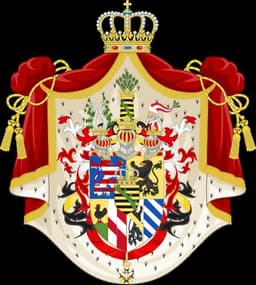
Charles Augustus of Saxe-Weimar
Emperor · Modern
55.8Total
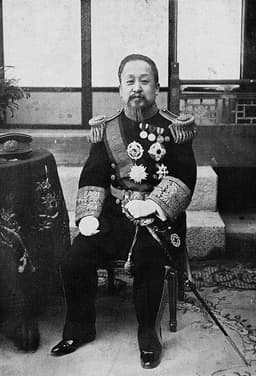
King Gojong of Korea
Emperor · Modern
52.8Total
Basic Information
Born
1757
1852
Died
1828
1919
Era
Modern
Modern
Nationality
Saxe-Weimar
Korea
Occupation
Emperor
Emperor
Civilization
Western
Eastern
Score Comparison
Military (10%)
20.0
50.0
Political (20%)
70.0
68.0
Influence (20%)
55.0
56.4
Legacy (20%)
52.0
48.3
Leadership (15%)
82.0
40.0
Strategy (15%)
42.3
54.6
TOTAL
55.8
52.8
Charles Augustus of Saxe-Weimar — Complete Timeline
1775 AD
Patronage of Johann Wolfgang von GoetheCultural◆ Major
Charles Augustus invited Goethe to Weimar and appointed him to various governmental positions. This patronage created the Weimar Classicism cultural movement and made Weimar a major intellectual center in Europe.
Weimar ClassicismGoetheCultural Patronage
Impact: globalconstructive
1806 AD
Joined the Rhine ConfederationPolitical Action◆ Major
Charles Augustus allied Saxe-Weimar with Napoleon's Confederation of the Rhine, gaining territorial enlargement and sovereign status. This decision preserved his duchy's autonomy during the Napoleonic Wars but tied it to French hegemony.
Napoleonic WarsConfederation of the RhineAlliance
Impact: regional
1813 AD
Fought at the Battle of LeipzigWar◆ Major
Charles Augustus switched sides and fought with the Allied coalition against Napoleon at the Battle of Leipzig. His troops participated in the decisive defeat of Napoleon, contributing to the liberation of German states from French control.
Battle of LeipzigNapoleonic WarsCoalition
Impact: regional
1816 AD
Granted the Constitution of 1816Political Action◆ Major
Charles Augustus issued a constitution for Saxe-Weimar-Eisenach, making him the first German ruler to grant a constitution. This established a bicameral parliament and guaranteed basic rights, setting a precedent for constitutionalism in the German states.
ConstitutionConstitutionalismGerman States
Impact: nationalprogressive
King Gojong of Korea — Complete Timeline
1894 AD
Gabo ReformsReform◆ Major
Gojong's government implemented the Gabo Reforms, a series of modernization measures including the abolition of slavery, reform of the civil service exam, and adoption of a solar calendar. These reforms aimed to strengthen Korea against foreign encroachment.
ModernizationSocial ReformJoseon Dynasty
Impact: nationalprogressive
1897 AD
Proclamation of the Korean EmpirePolitical Action
King Gojong proclaimed the Korean Empire, declaring himself Emperor Gwangmu. This was an attempt to assert Korea's sovereignty and independence from foreign influence, particularly China and Japan, and to modernize the state.
Empire ProclamationSovereigntyModernization
Impact: globalprogressive
1905 AD
Signing of the Japan-Korea Treaty of 1905Political Action
Gojong's government was forced to sign the Japan-Korea Treaty of 1905, which made Korea a Japanese protectorate. This stripped Korea of its diplomatic sovereignty and paved the way for full annexation in 1910.
ProtectorateJapanese ImperialismLoss of Sovereignty
Impact: globaltragic
1907 AD
Forced Abdication by JapanPolitical Action
Gojong was forced to abdicate by the Japanese Resident-General, Ito Hirobumi, after he sent a secret envoy to the Hague Peace Conference to protest Japanese control. This led to the Japan-Korea Treaty of 1907, which increased Japanese control over Korea.
Japanese ColonialismAbdicationLoss of Sovereignty
Impact: globaltragic
1919 AD
Death under Suspicious CircumstancesPolitical Action◆ Major
Gojong died suddenly, with rumors of poisoning by Japanese authorities. His death sparked the March 1st Movement, a nationwide protest against Japanese rule, which became a pivotal event in the Korean independence movement.
DeathIndependence MovementJapanese Colonialism
Impact: nationaltragic
Expert Analysis
King Gojong of Korea vs Charles Augustus of Saxe-Weimar
# The Emperor and the Duke: Two Paths Through the Modern Storm
On a spring morning in 1907, a sixty-year-old man in Seoul wept as he pressed his seal to a document that stripped him of his throne. Half a century earlier and half a world away, a young duke in Weimar had opened his palace gates to a poet, setting in motion a transformation that would make his tiny duchy a beacon of enlightenment. King Gojong of Korea and Charles Augustus of Saxe-Weimar-Eisenach lived in the same century of upheaval, yet one was crushed by the forces of modernity while the other learned to ride them. Why did their fates diverge so radically?
Origins
Gojong was born in 1852 into a Korea that had been called the "Hermit Kingdom" for good reason. The Joseon dynasty, then nearly five centuries old, had built its legitimacy on Neo-Confucian orthodoxy and isolation from the outside world. Gojong ascended the throne at age twelve, a boy king controlled by his father, the regent Daewongun, who burned Catholic texts and executed missionaries. The young king inherited a court paralyzed by factionalism, a military that had not fought a serious war in two hundred years, and a society where the yangban aristocracy resisted any hint of change.
Charles Augustus, born in 1757, inherited a different world entirely. The Duchy of Saxe-Weimar was tiny—barely a hundred thousand souls—but it sat in the heart of the German Enlightenment. His mother, Duchess Anna Amalia, had already transformed Weimar into a cultural salon, inviting writers and thinkers to her court. When Charles Augustus came of age in 1775, he was not a puppet but a young man eager to breathe new air. He had read Rousseau and Voltaire; he believed that a ruler's duty was to improve his people's lives, not merely to preserve his throne.
Rise to Power
Gojong's rise was slow and painful. For a decade, he ruled in name only while his father controlled the state. When he finally asserted himself in the 1870s, it was not from strength but from a desperate need to respond to foreign pressure. Japan, having modernized after the Meiji Restoration, was knocking at Korea's doors with gunboats and treaties. Gojong's first real act of independent rule was to sign the unequal Treaty of Ganghwa with Japan in 1876—a humiliation that set the pattern for everything that followed.
Charles Augustus's path was more deliberate and far less coerced. At eighteen, he met Johann Wolfgang von Goethe, then a twenty-six-year-old lawyer and poet of growing reputation. The duke did not merely patronize Goethe; he befriended him, appointed him to his privy council, and gave him responsibility for roads, mines, and finances. This was not charity but strategy. Charles Augustus understood that a state too small to compete in arms could compete in ideas. By 1800, Weimar had become the intellectual capital of Germany—Goethe, Schiller, Herder, and Wieland all gathered there, their works shaping a nation that did not yet exist.
Leadership & Governance
Here the contrast becomes stark. Gojong, with a political score of 84.8, was no fool. He understood that Korea needed to modernize or perish. In 1894, his government launched the Gabo Reforms: slavery was abolished, the civil service exam system was overhauled, and Western-style institutions were introduced. But these reforms came too late and from too weak a position. They were imposed under Japanese pressure after the First Sino-Japanese War, and they pleased no one. Conservatives saw them as treason; progressives saw them as insufficient. Gojong tried to play China against Japan, Russia against Japan, but he was a chess player whose opponents had cannons.
Charles Augustus, with a leadership score of 82.0, governed differently. He fought alongside his troops at the Battle of Leipzig in 1813, switching sides from Napoleon to the Allies at precisely the right moment. He understood that survival required flexibility. When the Congress of Vienna redrew Europe's map, he gained territory and sovereignty for Saxe-Weimar. Then, in 1816, he did what no other German ruler had dared: he granted a constitution. It established a parliament, guaranteed freedom of the press, and limited his own powers. His nobles were horrified, but Charles Augustus knew that a constitution was not weakness—it was a shield. By giving his people rights, he made them loyal; by limiting himself, he made his state stable.
Triumph & Tragedy
Gojong's greatest moment was also his most tragic. In 1897, he proclaimed the Korean Empire, declaring himself Emperor Gwangmu. It was a bold assertion of sovereignty—Korea would be no one's colony, but an equal among nations. He built a new palace, installed electric lights, and sent students abroad. For a few years, it seemed possible. But the empire was a paper fortress. In 1905, Japan forced him to sign the protectorate treaty that stripped Korea of its foreign policy. Two years later, he secretly sent envoys to the Hague Peace Conference to plead Korea's case. When the envoys were turned away, Japan forced his abdication. He died in 1919, officially of natural causes, but rumors of poison spread instantly. His death ignited the March 1st Movement, a nationwide protest that Japan crushed in blood.
Charles Augustus's triumph was quieter but more lasting. His constitution survived, and Weimar became a model for the liberal reforms that would eventually unify Germany. His patronage of Goethe created works—*Faust*, *Wilhelm Meister*, *The Sorrows of Young Werther*—that would outlive every throne and treaty. When he died in 1828, his duchy was peaceful, prosperous, and respected far beyond its size.
Character & Destiny
Gojong was a man caught between worlds. He wanted to be a modern emperor, but he had been raised in a Confucian court that taught him to preserve tradition. He was cautious to the point of paralysis, trusting no one fully, and often retreating into the Russian legation for safety. His strategy score of 30.0 reflects a leader who reacted rather than acted, who hoped that neutrality would save him when only strength could. His tragedy was not that he failed to modernize, but that he began too late, with too few allies, against an enemy that had already decided his fate.
Charles Augustus was bold by temperament and fortunate by circumstance. He lived in a Europe of competing powers, where a small state could survive by choosing the right side. He had no Japan at his borders, no gunboats in his harbors. But he also had something Gojong lacked: a vision of rule that was not about holding power but about using it. He did not fear giving up authority because he knew that influence mattered more than control.
Legacy
Gojong is remembered today as a martyr. His mausoleum in Seoul draws visitors who see in his tragic reign the birth pangs of Korean independence. The March 1st Movement that his death sparked led directly to the Provisional Government of the Republic of Korea. His legacy score of 68.0 reflects a man who failed in his own time but became a symbol for a future he could not create.
Charles Augustus is less known to the general public, but his legacy is woven into the fabric of modern Germany. The constitution of 1816 was a forerunner of the liberal traditions that would eventually produce the Weimar Republic—named for his city—and the democratic Germany of today. His patronage created a cultural golden age that still shapes how the world sees German literature.
Conclusion
Standing at the edge of modernity, both men faced the same question: how does a small state survive in a world of empires? Gojong answered with resistance, secrecy, and hope. Charles Augustus answered with flexibility, generosity, and vision. One was destroyed by the storm; the other learned to sail with it. Their fates remind us that history judges not only by outcomes but by possibilities. Gojong could not have become Charles Augustus; his world gave him no room. But in his failure, he gave his people a story of defiance that proved more powerful than any treaty. And in his success, Charles Augustus showed that even the smallest ruler can leave a mark on eternity—if he knows what to protect, and what to let go.
Rankings
🥇
Charles Augustus of Saxe-WeimarLeader
Mil: 20.0Pol: 70.0Inf: 55.0
55.8
🥈
King Gojong of Korea
Mil: 50.0Pol: 68.0Inf: 56.4
52.8
+3.0 behind
How This Comparison Works
Algorithm
Each figure is scored on 6 dimensions (0—100 scale) based on structured historical data: Military (10%), Political (20%), Influence (20%), Legacy (20%), Leadership (15%), Strategy (15%). The weighted total produces the final ranking.
Data Sources
Scores are computed from structured sub-indicators in the database. Scale factors adjust for era (Ancient ×0.85, Modern ×1.0) and civilization size (Eastern ×1.05, Other ×0.80) to account for differences in population and military scale.
Maximum 3 Figures
Comparisons are limited to 2—3 figures to ensure readability and statistical meaningfulness.
Error Margins
±5 points per dimension — Sub-scores are derived from historical records with inherent uncertainty. Two figures within 5 points on a dimension should be considered roughly equivalent in that area.
Total Score Accuracy
±3 points overall — The weighted combination of 6 dimensions produces a total score with approximately ±3 points of uncertainty. Differences of less than 3 points are not statistically significant— the figures are effectively tied.
Known Limitations
- Historical records are incomplete and uneven across civilizations
- Figures from oral-tradition societies may be underrepresented
- Occupation labels can misclassify multi-role figures
- Scores measure capability and impact, not moral character
- Quantitative scoring is a comparison tool, not absolute truth
Capability Radar
Military (10%) — Battles & Warfare
Battles
5
5
Win Rate
5
5
Expansion
5
0
Political (20%) — Governance & Reform
Reform
75
40
Diplomacy
60
30
Economy
55
20
Influence (20%) — Cultural & Global Reach
Cultural
65
40
Global
40
30
Legacy (20%) — Historical Impact
Historical
60
50
Longevity
50
40
Leadership (15%) — Power & Stability
Tenure
70
60
Stability
65
15
Strategy (15%) — Tactics & Innovation
Strategy
5
5
Tactics
5
5
Reform
10
10
Similar Comparisons
Comments & Discussion
No comments yet. Be the first to share your thoughts!