Loading...
Charles Augustus of Saxe-Weimar vs Nurhaci
Nurhaci leads by 15.4 pts · 2 figures compared
…
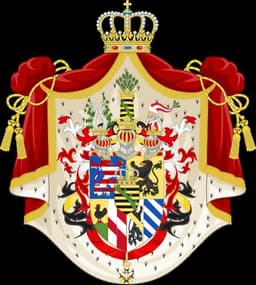
Charles Augustus of Saxe-Weimar
Emperor · Modern
55.8Total
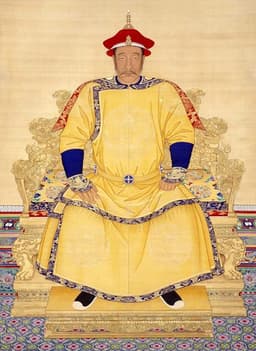
Nurhaci
Emperor · Modern
71.2Total
Basic Information
Born
1757
1559
Died
1828
1626
Era
Modern
Modern
Nationality
Saxe-Weimar
China
Occupation
Emperor
Emperor
Civilization
Western
Eastern
Score Comparison
Military (10%)
20.0
79.9
Political (20%)
70.0
85.0
Influence (20%)
55.0
40.0
Legacy (20%)
52.0
84.0
Leadership (15%)
82.0
79.0
Strategy (15%)
42.3
76.0
TOTAL
55.8
71.2
Charles Augustus of Saxe-Weimar — Complete Timeline
1775 AD
Patronage of Johann Wolfgang von GoetheCultural◆ Major
Charles Augustus invited Goethe to Weimar and appointed him to various governmental positions. This patronage created the Weimar Classicism cultural movement and made Weimar a major intellectual center in Europe.
Weimar ClassicismGoetheCultural Patronage
Impact: globalconstructive
1806 AD
Joined the Rhine ConfederationPolitical Action◆ Major
Charles Augustus allied Saxe-Weimar with Napoleon's Confederation of the Rhine, gaining territorial enlargement and sovereign status. This decision preserved his duchy's autonomy during the Napoleonic Wars but tied it to French hegemony.
Napoleonic WarsConfederation of the RhineAlliance
Impact: regional
1813 AD
Fought at the Battle of LeipzigWar◆ Major
Charles Augustus switched sides and fought with the Allied coalition against Napoleon at the Battle of Leipzig. His troops participated in the decisive defeat of Napoleon, contributing to the liberation of German states from French control.
Battle of LeipzigNapoleonic WarsCoalition
Impact: regional
1816 AD
Granted the Constitution of 1816Political Action◆ Major
Charles Augustus issued a constitution for Saxe-Weimar-Eisenach, making him the first German ruler to grant a constitution. This established a bicameral parliament and guaranteed basic rights, setting a precedent for constitutionalism in the German states.
ConstitutionConstitutionalismGerman States
Impact: nationalprogressive
Nurhaci — Complete Timeline
1616 AD
Unified the Jurchen TribesWar
Nurhaci completed the unification of the fragmented Jurchen tribes of Manchuria. He organized them into the Eight Banners system, a military and social structure that became the foundation of his power. He then proclaimed the Later Jin dynasty.
JurchenUnificationEight Banners
Impact: regionalconstructive
Proclaimed the Later Jin DynastyPolitical Action◆ Major
Nurhaci proclaimed the establishment of the Later Jin dynasty in Manchuria, claiming legitimacy as a successor to the Jin dynasty. This act formally declared his independence from the Ming dynasty and established a rival state.
Later JinDynastyFoundation
Impact: regionalconstructive
1618 AD
Issued the Seven GrievancesPolitical Action◆ Major
Nurhaci issued the Seven Grievances, a formal declaration of war against the Ming dynasty. The grievances listed alleged Ming injustices against the Jurchens, including interference in tribal affairs and killing of Jurchen leaders. This justified his invasion of Ming territory.
Ming-Qing TransitionDeclaration of WarPropaganda
Impact: regionaldestructive
1619 AD
Battle of SarhuWar
Nurhaci's forces decisively defeated a large Ming army at the Battle of Sarhu. The Ming sent four separate armies into Manchuria, but Nurhaci used interior lines to defeat them in detail. This victory secured his control over Manchuria.
Ming-Qing TransitionBattleManchuria
Impact: regionalconstructive
1626 AD
Defeated by Yuan Chonghuan at NingyuanWar◆ Major
Nurhaci led an invasion of Ming territory but was defeated at the Battle of Ningyuan by Ming general Yuan Chonghuan. The Ming used European-style cannons to repel the Later Jin forces. Nurhaci was wounded during the battle and died shortly after.
Ming-Qing TransitionBattleDefeat
Impact: regionaltragic
Expert Analysis
Charles Augustus of Saxe-Weimar vs Nurhaci
**The Chieftain Who Built an Empire and the Duke Who Built a Court**
On a frozen plain in Manchuria in 1619, a Jurchen chieftain watched the Ming armies scatter like startled cranes. Nurhaci had just won the Battle of Sarhu, crushing a force four times his size. Half a world away and two centuries later, a German duke sat in a candlelit study in Weimar, reading poetry with his friend Goethe. Charles Augustus of Saxe-Weimar never commanded a battle; he commanded a conversation. Yet both men shaped the destinies of their peoples. One forged an empire that would rule China for nearly three centuries. The other created a cultural oasis that defined German identity. How did two rulers, born within two years of each other, pursue such different paths to power?
**Origins**
Nurhaci was born in 1559 into a world of blood and snow. The Jurchen tribes of Manchuria were fragmented, feuding, and caught between the declining Ming dynasty and the rising ambitions of Mongol khans. His father and grandfather were killed in a skirmish with Ming forces when he was a boy—a trauma that seeded a lifelong grievance. Nurhaci grew up as a warrior, learning to read the landscape and the enemy. He traded furs in the border markets, studied Chinese military texts, and absorbed the brutal logic of steppe politics: unify or be destroyed.
Charles Augustus was born in 1757 into a world of books and courts. The Duchy of Saxe-Weimar was a tiny speck on the map of the Holy Roman Empire, a principality so small that a traveler could cross it in a day. His mother, Duchess Anna Amalia, was a formidable patron of the arts who turned the court into a haven for writers and musicians. Young Charles Augustus was tutored by the poet Christoph Martin Wieland and, at age eighteen, met a young Johann Wolfgang von Goethe. Their friendship became the axis around which Weimar’s golden age revolved.
**Rise to Power**
Nurhaci’s rise was a slow, patient accumulation of force. He began as a minor chieftain with a few hundred warriors. Over decades, he defeated rival Jurchen clans one by one, absorbing their men into his expanding war machine. In 1616, he proclaimed the Later Jin dynasty, deliberately invoking the name of the Jurchen dynasty that had ruled northern China centuries earlier. It was a claim to legitimacy—and a declaration of intent. The key turning point came in 1619 at Sarhu, where his tactical brilliance annihilated a Ming army that had marched into Manchuria in four separate columns. Nurhaci had demonstrated that the Ming, for all their wealth and numbers, could be beaten.
Charles Augustus’s rise was quieter but no less decisive. He inherited the duchy in 1775 at age eighteen and immediately invited Goethe to Weimar. This was not mere patronage; it was a strategic investment. In an era when small German states competed for prestige, Charles Augustus understood that cultural capital could be as valuable as military power. He gave Goethe a seat on his privy council and funded his scientific and literary work. The court became a magnet for genius: Schiller, Herder, and Wieland all gathered there. While Napoleon reshaped Europe with cannons, Charles Augustus reshaped German culture with conversation.
**Leadership & Governance**
Nurhaci was a military architect of the first order. His greatest innovation was the Eight Banner system, which organized all Manchu society into military-administrative units. Every man was a soldier; every family belonged to a banner. This system allowed him to mobilize massive armies quickly and to maintain loyalty through shared identity and mutual obligation. Politically, he was ruthless and pragmatic. The Seven Grievances he issued in 1618 against the Ming were a masterstroke of propaganda, listing specific wrongs to justify rebellion. Yet his governance remained that of a tribal war leader: decisions were personal, rewards were immediate, and dissent was crushed.
Charles Augustus governed as an enlightened despot—but a gentle one. His 1816 constitution was a landmark: the first granted by a German ruler, it established a bicameral parliament and guaranteed basic rights. He did not surrender power lightly; the constitution was carefully calibrated to preserve ducal authority. But he believed that a ruler’s duty was to foster human flourishing, not merely to command armies. His military record was modest: he joined Napoleon’s Confederation of the Rhine in 1806 to save his duchy from annexation, then switched sides in 1813 to fight at Leipzig. His troops fought bravely, but Charles Augustus was no strategist. His score of 41.4 in strategy reflects a man who preferred libraries to battlefields.
**Triumph & Tragedy**
Nurhaci’s greatest triumph was the Battle of Sarhu, where his smaller, better-organized forces shattered the Ming’s four armies. It was a victory that announced a new power in East Asia. His greatest tragedy came seven years later, at the Battle of Ningyuan in 1626. The Ming general Yuan Chonghuan, using Portuguese cannons, held the city against Nurhaci’s assault. The chieftain was wounded—perhaps fatally—and died soon after. He never saw the conquest of Beijing that his son would achieve.
Charles Augustus’s triumph was the Weimar court itself. The works produced under his patronage—Goethe’s *Faust*, Schiller’s *Wallenstein*—became cornerstones of German literature. His tragedy was that his duchy remained a backwater. He spent his life building a cultural capital, but the political future of Germany would be decided by Prussia and Austria, not by a small duchy on the Ilm River. His constitution was admired but not emulated; his court was brilliant but fragile.
**Character & Destiny**
Nurhaci was shaped by hunger—for power, for revenge, for security. His grievances were real, but his ambition was boundless. He died knowing he had built the foundation of an empire, but also knowing he had not lived to see it. Charles Augustus was shaped by curiosity. He wanted to know, to create, to converse. He died in 1828, having witnessed the fall of Napoleon and the rise of a German cultural nation that he had helped to nurture. Both men were products of their worlds: the steppe demanded warriors; the German Enlightenment demanded patrons.
**Legacy**
Nurhaci’s legacy is the Qing dynasty, which ruled China from 1644 to 1912. His Eight Banner system, his military tactics, and his vision of Manchu unity enabled his descendants to conquer and govern a vast empire. Today, he is remembered as the father of the Qing, a figure of immense historical weight. Charles Augustus’s legacy is Weimar—the city of Goethe and Schiller, a UNESCO World Heritage site. He is remembered not as a conqueror but as a catalyst, the duke who made a tiny duchy into a symbol of German humanism.
**Conclusion**
Standing at the gates of the Forbidden City or walking the streets of Weimar, one feels the presence of these two rulers. Nurhaci built with steel and blood; Charles Augustus built with ink and friendship. Both succeeded in their own terms, but their different paths illuminate a deeper truth: power is not a single currency. It can be measured in territory conquered or in minds awakened. The chieftain who unified the Manchus and the duke who befriended Goethe—each, in his way, changed the world. And history, in its vast indifference, remembers them both.
Rankings
🥇
NurhaciLeader
Mil: 79.9Pol: 85.0Inf: 40.0
71.2
🥈
Charles Augustus of Saxe-Weimar
Mil: 20.0Pol: 70.0Inf: 55.0
55.8
+15.4 behind
How This Comparison Works
Algorithm
Each figure is scored on 6 dimensions (0—100 scale) based on structured historical data: Military (10%), Political (20%), Influence (20%), Legacy (20%), Leadership (15%), Strategy (15%). The weighted total produces the final ranking.
Data Sources
Scores are computed from structured sub-indicators in the database. Scale factors adjust for era (Ancient ×0.85, Modern ×1.0) and civilization size (Eastern ×1.05, Other ×0.80) to account for differences in population and military scale.
Maximum 3 Figures
Comparisons are limited to 2—3 figures to ensure readability and statistical meaningfulness.
Error Margins
±5 points per dimension — Sub-scores are derived from historical records with inherent uncertainty. Two figures within 5 points on a dimension should be considered roughly equivalent in that area.
Total Score Accuracy
±3 points overall — The weighted combination of 6 dimensions produces a total score with approximately ±3 points of uncertainty. Differences of less than 3 points are not statistically significant— the figures are effectively tied.
Known Limitations
- Historical records are incomplete and uneven across civilizations
- Figures from oral-tradition societies may be underrepresented
- Occupation labels can misclassify multi-role figures
- Scores measure capability and impact, not moral character
- Quantitative scoring is a comparison tool, not absolute truth
Capability Radar
Military (10%) — Battles & Warfare
Battles
5
85
Win Rate
5
90
Expansion
5
88
Political (20%) — Governance & Reform
Reform
75
85
Diplomacy
60
80
Economy
55
70
Influence (20%) — Cultural & Global Reach
Cultural
65
85
Global
40
80
Legacy (20%) — Historical Impact
Historical
60
90
Longevity
50
88
Leadership (15%) — Power & Stability
Tenure
70
75
Stability
65
78
Strategy (15%) — Tactics & Innovation
Strategy
5
85
Tactics
5
88
Reform
10
92
Similar Comparisons
Comments & Discussion
SwordOfSarhu6/16/2026
Any military historian will tell you: Nurhaci’s victory at Sarhu wasn’t just numerical superiority defied—it was a masterclass in interior lines and psychological warfare. He split four converging Ming armies by feigning weakness and striking with lightning cavalry. Charles Augustus? His greatest campaign was hosting a poetry reading. One man conquered a continent; the other conquered a salon. Let's not pretend these paths are equally weighty.
雪原铁骑6/16/2026
咱们打开天窗说亮话:努尔哈赤是真正从血海里杀出来的霸主,萨尔浒之战他以六万破明军二十四万,四路围剿被他一块块吃掉。查尔斯·奥古斯都呢?一个连仗都没打过的小公爵,靠着养歌德捧席勒混出个文化标签。一个是铁腕铸帝国,一个是附庸风雅的贵族少爷,这能放在一起比?
NumenoreanNerd6/16/2026
As a classics scholar, I find the comparison deeply unfair to Charles Augustus. His creation of Weimar Classicism was a *soft power* revolution that defined German national identity for centuries—far more enduring than any Manchu banner. Goethe's *Faust* alone outweighs Nurhaci's conquests in cultural weight. The Duke shaped minds, not borders. That’s a legacy that outlasts any empire built on violence.
甲胄书生6/16/2026
我偏要唱个反调。努尔哈赤创立八旗制度,把分散的部落整合成一台战争机器,这比写几首诗牛多了。没有他,后来的清朝能入主中原吗?查尔斯·奥古斯都也就守着个小公国,在歌德席勒的影子里发光。真要论历史分量,一个缔造帝国,一个只配当文化花盆。