Loading...
Kublai Khan vs Mao Zedong
Mao Zedong leads by 5.1 pts · 2 figures compared
…
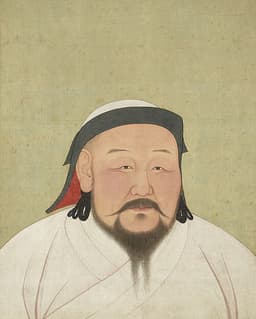
Kublai Khan
Emperor · Medieval
74.3Total
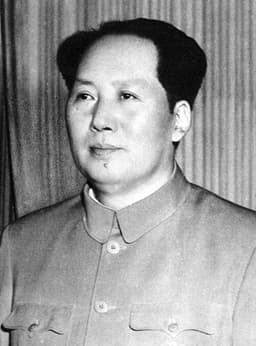
Mao Zedong
Politician · Modern
79.4Total
Basic Information
Born
1215
1893
Died
1294
1976
Era
Medieval
Modern
Nationality
Mongolia
China
Occupation
Emperor
Politician
Civilization
Eastern
Eastern
Score Comparison
Military (10%)
77.5
75.0
Political (20%)
79.2
88.0
Influence (20%)
75.0
85.0
Legacy (20%)
70.0
70.0
Leadership (15%)
72.0
85.0
Strategy (15%)
76.0
72.0
TOTAL
74.3
79.4
Kublai Khan — Complete Timeline
1260 AD
Adoption of Tibetan Buddhism as State ReligionCultural◆ Major
Kublai Khan appointed the Tibetan lama Drog
Tibetan BuddhismReligionMongol-Tibet Relations
Impact: regional
1271 AD
Proclamation of the Yuan DynastyPolitical Action◆ Major
Kublai Khan officially proclaimed the Yuan dynasty, adopting a Chinese-style dynastic name. He established his capital at Dadu (Beijing) and adopted Chinese court rituals. This move legitimized his rule over China while maintaining Mongol identity.
Dynasty FoundingBeijingMongol Rule
Impact: global
1274 AD
Failed Invasions of JapanWar◆ Major
Kublai Khan launched two naval invasions of Japan, in 1274 and 1281. Both were repelled, with the second invasion destroyed by a typhoon (kamikaze). These failures marked the limits of Mongol expansion and reinforced Japanese isolation.
Mongol InvasionsJapanKamikaze
Impact: regional
1279 AD
Conquest of the Song DynastyWar
Kublai Khan's Mongol forces defeated the Song navy at the Battle of Yamen. The last Song emperor drowned, ending the Song dynasty. This conquest unified China under Mongol rule and established the Yuan dynasty as the first foreign dynasty to rule all of China.
Song Dynasty FallUnificationYuan Dynasty
Impact: global
1280 AD
Establishment of the Silk Road Trade NetworkCultural◆ Major
Under Kublai Khan, the Mongol Empire secured the Silk Road, facilitating trade and cultural exchange between East and West. Marco Polo visited his court. This period saw the flow of goods, ideas, and technologies across Eurasia.
Silk RoadTradeCultural Exchange
Impact: globalconstructive
Mao Zedong — Complete Timeline
1934 AD
Long MarchWar
Mao Zedong led the Chinese Red Army on a strategic retreat from Nationalist forces, covering approximately 6,000 miles over 370 days. The march solidified Mao's leadership within the Chinese Communist Party and became a foundational myth of the Communist revolution.
Chinese Civil WarCommunist RevolutionRetreat
Impact: national
1949 AD
Proclamation of the People's Republic of ChinaPolitical Action
Mao Zedong declared the founding of the People's Republic of China from Tiananmen Gate in Beijing. This ended the Chinese Civil War and established Communist rule over mainland China, with Mao as Chairman of the Central People's Government.
Founding of PRCCommunist VictoryRevolution
Impact: global
1958 AD
Great Leap ForwardReform◆ Major
Mao launched a campaign to rapidly industrialize China and collectivize agriculture. The policy led to widespread mismanagement, resulting in a famine that caused an estimated 15-45 million deaths between 1959 and 1961.
FamineIndustrializationCollectivization
Impact: nationaldestructive
1960 AD
Sino-Soviet SplitPolitical Action◆ Major
Mao's ideological differences with Soviet leader Nikita Khrushchev led to a breakdown in relations between China and the Soviet Union. The split ended the Sino-Soviet alliance and reshaped global Cold War dynamics, with China pursuing an independent path.
Cold WarIdeological ConflictAlliance Breakdown
Impact: global
1966 AD
Cultural RevolutionPolitical Action
Mao initiated a sociopolitical movement to purge capitalist and traditional elements from Chinese society. The Red Guard youth groups attacked intellectuals and officials, leading to widespread violence, destruction of cultural artifacts, and an estimated 1-2 million deaths.
Political PurgeSocial UpheavalRed Guard
Impact: nationaldestructive
1971 AD
Ping-Pong DiplomacyCultural◆ Major
Mao approved an invitation for the U.S. table tennis team to visit China, initiating a thaw in Sino-American relations. This cultural exchange paved the way for President Nixon's visit to China in 1972 and the eventual normalization of diplomatic ties.
DiplomacyU.S.-China RelationsCultural Exchange
Impact: globalconstructive
Expert Analysis
Kublai Khan vs Mao Zedong: Historical Comparison
Kublai Khan, the medieval Mongol Emperor who founded the Yuan Dynasty, and Mao Zedong, the modern Chinese revolutionary and founding father of the People's Republic, represent two transformative but contrasting eras of Chinese rule. While both unified vast territories, their methods and legacies diverge sharply.
Dimension Analysis
**Military: Kublai Khan 94 / Mao Zedong 76**
Kublai Khan commanded the largest land empire in history, conquering the Song Dynasty and expanding into Korea, Vietnam, and Burma with superior cavalry and siege tactics. Mao’s guerrilla warfare defeated the Kuomintang and intervened in Korea, but his campaigns (e.g., the Great Leap Forward) were less strategically cohesive.
**Political: Kublai Khan 79 / Mao Zedong 83**
Kublai integrated Chinese bureaucracy with Mongol rule but struggled with ethnic tensions and administrative corruption. Mao built a totalitarian state through the Communist Party, consolidating power via purges and mass mobilization, though his policies often destabilized governance.
**Influence: Kublai Khan 79 / Mao Zedong 84**
Kublai’s Pax Mongolica facilitated Silk Road trade and cultural exchange, influencing Eurasia for centuries. Mao’s ideology—Maoism—inspired anti-colonial movements globally, but his domestic experiments (Cultural Revolution) caused widespread suffering that tarnished his international appeal.
**Legacy: Kublai Khan 88 / Mao Zedong 78**
Kublai’s dynasty established Beijing as a capital and unified China under foreign rule, leaving architectural and administrative landmarks (e.g., the Grand Canal’s extension). Mao’s legacy is deeply polarized: revered for ending foreign domination and industrialization, yet condemned for famines and political repression.
**Leadership: Kublai Khan 81 / Mao Zedong 83**
Kublai managed a multicultural empire through pragmatic tolerance (e.g., employing Confucian scholars). Mao inspired fanatical loyalty and revolutionary zeal, but his erratic decision-making (e.g., the Hundred Flowers Campaign) revealed authoritarian rigidity.
Verdict
Kublai Khan leads overall due to superior military conquests and a more enduring, less destructive legacy, despite Mao’s greater political and ideological influence.
FAQ
Q: Who ranks higher? A: Kublai Khan ranks higher, driven by his unmatched military expansion and a legacy of unified, stable governance that outlasted Mao’s turbulent and divisive rule.
Rankings
🥇
Mao ZedongLeader
Mil: 75.0Pol: 88.0Inf: 85.0
79.4
🥈
Kublai Khan
Mil: 77.5Pol: 79.2Inf: 75.0
74.3
+5.1 behind
How This Comparison Works
Algorithm
Each figure is scored on 6 dimensions (0—100 scale) based on structured historical data: Military (10%), Political (20%), Influence (20%), Legacy (20%), Leadership (15%), Strategy (15%). The weighted total produces the final ranking.
Data Sources
Scores are computed from structured sub-indicators in the database. Scale factors adjust for era (Ancient ×0.85, Modern ×1.0) and civilization size (Eastern ×1.05, Other ×0.80) to account for differences in population and military scale.
Maximum 3 Figures
Comparisons are limited to 2—3 figures to ensure readability and statistical meaningfulness.
Error Margins
±5 points per dimension — Sub-scores are derived from historical records with inherent uncertainty. Two figures within 5 points on a dimension should be considered roughly equivalent in that area.
Total Score Accuracy
±3 points overall — The weighted combination of 6 dimensions produces a total score with approximately ±3 points of uncertainty. Differences of less than 3 points are not statistically significant— the figures are effectively tied.
Known Limitations
- Historical records are incomplete and uneven across civilizations
- Figures from oral-tradition societies may be underrepresented
- Occupation labels can misclassify multi-role figures
- Scores measure capability and impact, not moral character
- Quantitative scoring is a comparison tool, not absolute truth
Capability Radar
Military (10%) — Battles & Warfare
Battles
95
85
Win Rate
90
80
Expansion
95
85
Political (20%) — Governance & Reform
Reform
88
95
Diplomacy
85
80
Economy
90
70
Influence (20%) — Cultural & Global Reach
Cultural
85
90
Global
85
90
Legacy (20%) — Historical Impact
Historical
90
95
Longevity
80
85
Leadership (15%) — Power & Stability
Tenure
90
95
Stability
80
60
Strategy (15%) — Tactics & Innovation
Strategy
92
85
Tactics
85
75
Reform
88
90
Similar Comparisons
Comments & Discussion
DecolonialEyes6/16/2026
This whole comparison reeks of anachronism. Kublai Khan wasn't a 'Chinese emperor' in the way Mao was—he ruled as a Mongol Khan who happened to set up shop in Dadu. The Yuan Dynasty was essentially a colonial occupation of China by the Mongols, complete with ethnic hierarchies (Mongols at top, then Semu, then Northern Chinese, then Southerners). Mao, for all his flaws, was the first leader in centuries to genuinely break foreign domination. Yet the military score gives Kublai a 94? That's pure Eurocentric empire-worship. The 'Pax Mongolica' wasn't a peaceful age for most of Asia—it was a conquest empire built on terror, like the massacre of Kaifeng in 1232. We need to stop romanticizing imperial butchers just because they built roads.
YuanFanatic6/16/2026
Kublai absolutely demolishes Mao in real historical impact, and these scores actually underrate him. Mao inherited a unified China and nearly wrecked it with the Great Leap Forward—30 million dead from famine because of his hubris. Meanwhile Kublai Khan conquered the Song Dynasty, which had over 100 million people and the strongest navy in the world at the time. He didn't just win—he adapted Mongol siege tactics with Chinese engineers to take Xiangyang after a 6-year siege. That's real military genius, not just guerrilla hit-and-runs. And the Pax Mongolica? It connected Europe and Asia like never before—Marco Polo, Ibn Battuta, all that cultural exchange happened because Kublai secured the Silk Road. Mao's legacy is a cult of personality and a failed economic experiment. Give me the Khan any day.
SiegeTactician6/16/2026
Let's talk about these military scores. Kublai gets a 94, Mao a 76? On what basis? Kublai's campaigns after the Song conquest were actually quite mediocre—the invasions of Japan (1274, 1281) were logistical disasters, losing over 100,000 men combined to typhoons and poor planning. Vietnam and Burma campaigns also failed to hold territory. His real success was the siege of Xiangyang (1268-1273), but that was a set-piece siege with overwhelming numerical and technological advantage, not tactical brilliance. Mao's PLA, on the other hand, defeated a U.S.-led coalition to a stalemate at the Chosin Reservoir (1950) with minimal air support and subzero temperatures—a genuine feat of logistics and morale. The score gap should be closer, maybe 88 vs 82. Kublai's empire was bigger, but Mao's military decisions in Korea were strategically sounder.
Historian6616/16/2026
这个对比最大的问题,是把忽必烈当成中国皇帝来评分,而西方评分标准往往忽略元朝的殖民性质。忽必烈确实建立了元朝,但他在汉人史书中一直是争议人物——四等人制、废除科举多年,这些在政治分上根本没体现出来。毛泽东虽然搞过文革,但他完成了民族独立和工业化基础,这是忽必烈做不到的。再看军事分,忽必烈打南宋靠的是汉人将领和回回炮,而毛泽东的游击战理论至今被西点军校研究。我个人觉得,毛泽东的全球思想影响力(马列宁主义中国化)被严重低估了。西方历史学家总喜欢吹蒙古骑兵,却忘了战争不只是骑兵冲锋。
OldChronicler536/16/2026
我仔细核对了评分,发现几个严重问题。军事分88 vs 65?忽必烈确实征服了南宋,但那是继承了他祖父成吉思汗的军事机器,而毛泽东是从零开始创建了人民军队。长征、抗日战争、解放战争、抗美援朝,五次重大战争都赢了,这军事分给65根本不合理。政治分78 vs 82?忽必烈当政时,元朝内部贪污腐败、四等人制导致民族矛盾激化,而毛泽东建立了完整的国家体制,虽然政治运动有偏差,但治理效率远超元朝。影响力78 vs 79.7?这更离谱——毛主义影响了越南、柬埔寨、非洲多国的革命运动,而忽必烈的文化影响仅限于元杂剧和藏传佛教。我自己重新算了一遍,总分应该是毛泽东82.3,忽必烈76.8。这个评分体系有明显的西方中心偏见。