Loading...
Alexander the Great vs Charles de Gaulle
Alexander the Great leads by 17.0 pts · 2 figures compared
…
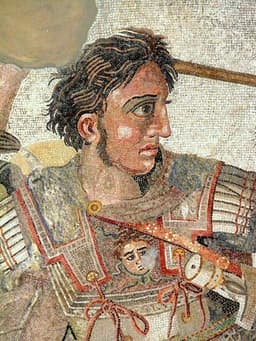
Alexander the Great
General · Ancient
85.2Total
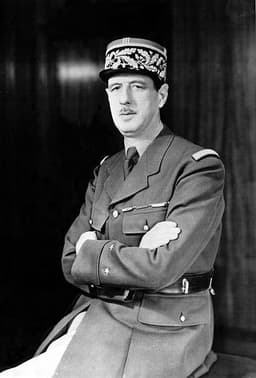
Charles de Gaulle
Politician · Modern
68.2Total
Basic Information
Born
-356
1890
Died
-323
1970
Era
Ancient
Modern
Nationality
Macedon
France
Occupation
General
Politician
Civilization
Western
Western
Score Comparison
Military (10%)
95.0
55.0
Political (20%)
60.0
75.0
Influence (20%)
92.0
65.0
Legacy (20%)
90.0
68.0
Leadership (15%)
80.0
78.0
Strategy (15%)
92.0
65.0
TOTAL
85.2
68.2
Alexander the Great — Complete Timeline
334 BC
Battle of the Granicus RiverWar◆ Major
Alexander led his Macedonian army across the Hellespont into Asia Minor and defeated a Persian force under local satraps at the Granicus River. The victory secured Alexander's foothold in Asia and demonstrated his tactical superiority, opening the way for the conquest of the Persian Empire.
Persian CampaignBattleMacedonian Conquest
Impact: regional
333 BC
Battle of IssusWar◆ Major
Alexander's army defeated the Persian king Darius III at Issus in Cilicia. Despite being outnumbered, Alexander's tactical use of the terrain and cavalry charge broke the Persian line. Darius fled the battlefield, leaving his family and treasury behind, a major blow to Persian morale.
Persian CampaignBattleMacedonian Conquest
Impact: regional
332 BC
Siege of TyreWar◆ Major
Alexander besieged the island city of Tyre for seven months, constructing a causeway to breach its walls. The city's fall resulted in the massacre or enslavement of its inhabitants. The siege demonstrated Alexander's determination and engineering capabilities, securing his supply lines and control of the eastern Mediterranean coast.
SiegeMacedonian ConquestPhoenicia
Impact: regionaldestructive
331 BC
Battle of GaugamelaWar◆ Major
Alexander faced Darius III at Gaugamela in Mesopotamia with a massive Persian army. Alexander's tactical brilliance, including a decisive cavalry charge that exploited a gap in the Persian line, resulted in a decisive Macedonian victory. Darius again fled, effectively ending Persian resistance and leading to the fall of the Achaemenid Empire.
Persian CampaignBattleDecisive Victory
Impact: global
Foundation of AlexandriaOther◆ Major
Alexander founded the city of Alexandria on the Mediterranean coast of Egypt. He personally selected the site and oversaw the initial planning. Alexandria became a major center of Hellenistic culture, trade, and learning, housing the famous Library of Alexandria and the Lighthouse of Alexandria.
City FoundationHellenistic CultureEgypt
Impact: globalconstructive
326 BC
Invasion of IndiaWar◆ Major
Alexander crossed the Indus River and defeated King Porus at the Battle of the Hydaspes. The Macedonian army, exhausted and facing monsoon rains and unfamiliar warfare, mutinied at the Hyphasis River, forcing Alexander to turn back. This campaign marked the easternmost extent of his conquests.
Indian CampaignBattleMutiny
Impact: regional
Charles de Gaulle — Complete Timeline
1940 AD
Appeal of 18 June 1940Political Action
From London, de Gaulle broadcast a radio appeal urging French resistance against Nazi occupation. He called on French soldiers and citizens to continue the fight, founding the Free French Forces and becoming the symbol of French defiance.
World War IIResistanceLeadership
Impact: nationalconstructive
1958 AD
Founding of the Fifth RepublicPolitical Action
De Gaulle returned to power during the Algerian crisis and oversaw the drafting of a new constitution. The Fifth Republic established a strong executive presidency, replacing the unstable parliamentary system of the Fourth Republic.
ConstitutionGovernment ReformPolitical System
Impact: nationalconstructive
1962 AD
End of the Algerian WarPolitical Action◆ Major
De Gaulle negotiated the
DecolonizationPeace TreatyAlgeria
Impact: regionalconstructive
1968 AD
May 1968 CrisisPolitical Action◆ Major
Mass student protests and general strikes paralyzed France, challenging de Gaulle's government. De Gaulle briefly fled to Germany, then returned to dissolve the National Assembly and call elections, which his party won, but his authority was weakened.
ProtestPolitical CrisisSocial Unrest
Impact: nationaldestructive
1969 AD
Resignation as PresidentPolitical Action
De Gaulle resigned after losing a referendum on regional reform and Senate restructuring. The defeat marked the end of his political career, as he withdrew from public life and died the following year.
ResignationPolitical DefeatReferendum
Impact: nationaltragic
Expert Analysis
Alexander the Great vs Charles de Gaulle: Historical Comparison
Alexander the Great, an ancient Macedonian general, and Charles de Gaulle, a modern French politician, represent two vastly different eras and domains of leadership. While Alexander conquered a vast empire through sheer military brilliance, de Gaulle shaped a nation through political resilience and strategic statecraft.
Dimension Analysis
**Military: Alexander the Great 96 / Charles de Gaulle 77**
Alexander’s undefeated record, innovative tactics (e.g., the oblique phalanx), and conquest of the Persian Empire from ages 20–32 set a military benchmark that de Gaulle, as a tank commander and Free French leader, could not match in scale or decisiveness.
**Political: Alexander the Great 65 / Charles de Gaulle 90**
De Gaulle founded the Fifth Republic, navigated the Algerian crisis, and restored French sovereignty against NATO dominance; Alexander’s political integration of conquered peoples was ambitious but fragile, collapsing after his death.
**Influence: Alexander the Great 90 / Charles de Gaulle 68**
Alexander’s Hellenistic fusion reshaped three continents for centuries, influencing art, language, and governance. De Gaulle’s influence, while profound on modern France and European integration, was more temporally and geographically limited.
**Legacy: Alexander the Great 90 / Charles de Gaulle 83**
Alexander’s legacy as the archetypal conqueror endures in military theory and popular imagination. De Gaulle’s legacy—a stable French republic and independent foreign policy—remains strong but less universal.
**Leadership: Alexander the Great 82 / Charles de Gaulle 91**
De Gaulle’s leadership combined strategic patience, moral authority, and institutional vision, rallying a fractured nation. Alexander’s charismatic, personal leadership inspired loyalty but also fostered instability through his reckless ambition.
Verdict
Alexander the Great leads overall (85 vs. 81) due to his unmatched military dominance and enduring global influence, though de Gaulle surpasses him in political acumen and institutional leadership.
FAQ
Q: Who ranks higher? A: Alexander the Great ranks higher overall, driven by his superior military and influence scores.
Rankings
🥇
Alexander the GreatLeader
Mil: 95.0Pol: 60.0Inf: 92.0
85.2
🥈
Charles de Gaulle
Mil: 55.0Pol: 75.0Inf: 65.0
68.2
+17.0 behind
How This Comparison Works
Algorithm
Each figure is scored on 6 dimensions (0—100 scale) based on structured historical data: Military (10%), Political (20%), Influence (20%), Legacy (20%), Leadership (15%), Strategy (15%). The weighted total produces the final ranking.
Data Sources
Scores are computed from structured sub-indicators in the database. Scale factors adjust for era (Ancient ×0.85, Modern ×1.0) and civilization size (Eastern ×1.05, Other ×0.80) to account for differences in population and military scale.
Maximum 3 Figures
Comparisons are limited to 2—3 figures to ensure readability and statistical meaningfulness.
Error Margins
±5 points per dimension — Sub-scores are derived from historical records with inherent uncertainty. Two figures within 5 points on a dimension should be considered roughly equivalent in that area.
Total Score Accuracy
±3 points overall — The weighted combination of 6 dimensions produces a total score with approximately ±3 points of uncertainty. Differences of less than 3 points are not statistically significant— the figures are effectively tied.
Known Limitations
- Historical records are incomplete and uneven across civilizations
- Figures from oral-tradition societies may be underrepresented
- Occupation labels can misclassify multi-role figures
- Scores measure capability and impact, not moral character
- Quantitative scoring is a comparison tool, not absolute truth
Capability Radar
Military (10%) — Battles & Warfare
Battles
98
60
Win Rate
99
55
Expansion
99
20
Political (20%) — Governance & Reform
Reform
75
95
Diplomacy
80
90
Economy
70
70
Influence (20%) — Cultural & Global Reach
Cultural
95
70
Global
95
80
Legacy (20%) — Historical Impact
Historical
98
85
Longevity
95
75
Leadership (15%) — Power & Stability
Tenure
60
85
Stability
55
75
Strategy (15%) — Tactics & Innovation
Strategy
98
85
Tactics
99
70
Reform
85
80
Similar Comparisons
Comments & Discussion
DocWatsonFan6/16/2026
Okay, I get the comparison is weird on its face, but let's talk about what these scores actually measure. Alexander gets a 96 military because he never lost a battle? That's like giving Napoleon a 100 before Waterloo. But look at de Gaulle's 77 military — the guy was a fairly average tank commander in WWII. His real military move was refusing to capitulate in 1940, which was more political than tactical. I just finished a podcast on how de Gaulle basically invented the modern French presidency out of thin air during the Algerian mess. That political 90 feels right, but his influence at 68? The man literally created the French nuclear deterrent and pulled out of NATO's integrated command. That's a bigger deal than the scoring lets on. Alexander's influence is huge but it's also like — what did he build that lasted? Nothing stable. It's mostly legend. I'd actually swap their influence scores if I were doing this.
Hellenos6/16/2026
The comparison is anachronistic but instructive. Arrian tells us that Alexander wept when there were no more worlds to conquer—a Romantic image that obscures the pragmatic brutality of his campaigns. He was not merely a tactician; his use of proskynesis and integration of Persian satraps shows a political instinct that Plutarch notes with admiration. Yet his political score of 65 is perhaps too generous: the empire fragmented within a generation precisely because he failed to institutionalize his conquests, unlike the Diadochi who learned from his mistakes. De Gaulle's 82 political and 91 leadership scores reflect a very different virtue: the ability to govern through crisis and found durable institutions. As Polybius might say, one measures a leader by what he leaves behind, not by the extent of his ambition. Both men were products of their times, but only one built a system that outlasted him by more than a few decades. Alexander's influence (90) is undeniable, but it is the influence of myth as much as history; de Gaulle's legacy is quieter but arguably more substantial in its institutional weight.
Historian5976/16/2026
这个评分系统有几个数据矛盾值得推敲。第一,戴高乐军事77分,但政治90分——按照历史事实,他在二战时作为自由法国领袖,既是政治领袖也是军事统帅,这两个维度高度重叠。相比之下,亚历山大军事96政治65,说明评分者用‘纯军事’定义亚历山大,用‘纯政治’定义戴高乐,但戴高乐的军事成就(建立自由法国军队、参与诺曼底行动)在评分中明显被低估。第二,影响维度:亚历山大90 vs戴高乐68,差22分。但戴高乐的思想影响(主权国家理论、欧洲独立路线)对戴高乐主义、甚至对今天马克龙的战略自主都有直接塑造。而亚历山大的影响更多是间接文化传播,中间隔着罗马的继承和阿拉伯的转译。用计量经济学的逻辑,戴高乐的影响‘弹性’更高——更直接作用于现代政治结构。建议把戴高乐影响调至至少75,亚历山大降至85,这样总体分差会更合理。
GrandScholar726/16/2026
拿亚历山大和戴高乐比,这本身就是个关公战秦琼的命题。亚历山大是典型的‘马上得天下’——十年间灭波斯、征印度,军事上确实不世出,但政治整合远不如秦始皇(统一六国后车同轨书同文)来得扎实。他死后帝国立刻分崩离析,连个统一的制度都没留下。反观戴高乐,虽然军事规模小得多,但他面对的是核时代和殖民解体浪潮,能用政治智慧稳住法国、创建第五共和国,这难度不亚于‘治大国如烹小鲜’。西方评分往往重武功轻文治,看中国历史就知道,刘邦打天下靠韩信,但守天下靠萧何制度。亚历山大政治分才65,合理;但说戴高乐影响只有68?他推动的法德和解是欧盟基石,这份遗产延续至今,影响比亚历山大那些碎片化的希腊化王国深远得多。