Loading...
Charles I of Spain vs Qin Shi Huang
Qin Shi Huang leads by 10.2 pts · 2 figures compared
…

Charles I of Spain
Emperor · Medieval
75.0Total
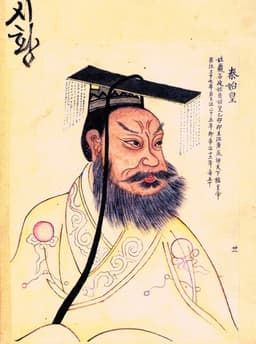
Qin Shi Huang
Emperor · Ancient
85.2Total
Basic Information
Born
1500
-259
Died
1558
-210
Era
Medieval
Ancient
Nationality
Spain
China
Occupation
Emperor
Emperor
Civilization
Western
Eastern
Score Comparison
Military (10%)
74.0
80.0
Political (20%)
72.0
90.0
Influence (20%)
85.0
85.0
Legacy (20%)
68.0
90.0
Leadership (15%)
78.0
78.0
Strategy (15%)
68.1
82.0
TOTAL
75.0
85.2
Charles I of Spain — Complete Timeline
1519 AD
Election as Holy Roman EmperorPolitical Action
Charles I of Spain was elected Holy Roman Emperor as Charles V, succeeding his grandfather Maximilian I. This election united the Spanish kingdoms, the Habsburg domains in Austria and the Low Countries, and the Holy Roman Empire under a single ruler, creating a vast European empire.
Holy Roman EmpireHabsburg empire
Impact: globalconstructive
1521 AD
Diet of WormsPolitical Action
Charles V presided over the Diet of Worms, where Martin Luther was summoned to recant his teachings. Luther refused, and Charles V issued the Edict of Worms, declaring Luther an outlaw and banning his writings. This event deepened the religious divide in Europe and sparked the Protestant Reformation.
Protestant ReformationReligious conflict
Impact: global
1525 AD
Battle of PaviaWar◆ Major
Charles V's imperial army defeated the French forces of King Francis I at the Battle of Pavia. Francis I was captured and taken prisoner to Spain. The victory solidified Habsburg dominance in Italy and forced France to renounce its claims to Milan and Naples in the Treaty of Madrid.
Italian WarsHabsburg victory
Impact: regional
1527 AD
Sack of RomeWar◆ Major
Imperial troops under Charles V sacked Rome, looting the city and capturing Pope Clement VII. The sack was a brutal event that shocked Europe and led to the temporary dominance of Charles V over the Papacy. It also marked a turning point in the Italian Wars.
Italian WarsPapacy
Impact: globaldestructive
1556 AD
Abdication of Charles VPolitical Action
Charles V abdicated his thrones, dividing his empire between his son Philip II (who received Spain, the Low Countries, and the Italian possessions) and his brother Ferdinand I (who received the Holy Roman Empire). This abdication was a major event in European politics, reshaping the balance of power.
AbdicationEmpire division
Impact: global
Qin Shi Huang — Complete Timeline
246 BC
Construction of the Mausoleum and Terracotta ArmyOther◆ Major
Qin Shi Huang commissioned a vast mausoleum complex near Xi'an, guarded by thousands of life-sized terracotta soldiers, horses, and chariots. The project employed hundreds of thousands of workers and reflected his obsession with immortality and imperial power.
Impact: global
230 BC
Conquest of the Six Warring StatesWar
From 230 to 221 BCE, Ying Zheng led the Qin state in a series of campaigns that conquered the Han, Zhao, Wei, Chu, Yan, and Qi states. This unified China under a single ruler for the first time, ending the Warring States period.
Impact: global
221 BC
Standardization of Writing, Currency, and MeasurementsReform◆ Major
Qin Shi Huang ordered the standardization of Chinese script, currency, and weights and measures across the unified empire. This facilitated administration, trade, and cultural integration, laying a foundation for future dynasties.
Impact: globalconstructive
Proclamation of the Qin DynastyPolitical Action
After conquering the last independent state, Ying Zheng declared himself Shi Huangdi (First Emperor), founding the Qin Dynasty. He adopted a new title to signify his supreme authority and initiated centralized imperial rule.
Impact: global
214 BC
Initiation of the Great Wall ConstructionOther◆ Major
Qin Shi Huang ordered the connection and extension of existing northern fortifications to create a unified defensive wall against nomadic Xiongnu raids. This project involved massive conscripted labor and became the precursor to the later Great Wall.
Impact: regional
213 BC
Burning of Books and Burying of ScholarsPolitical Action◆ Major
On the advice of Li Si, Qin Shi Huang ordered the burning of historical records and philosophical texts not aligned with Legalist doctrine. He also had 460 Confucian scholars buried alive to suppress dissent and consolidate ideological control.
Impact: nationaldestructive
Expert Analysis
Origins
**Qin Shi Huang** (259–210 BC), born Ying Zheng, was the son of King Zhuangxiang of Qin and a former concubine, Zhao Ji. His early life was marked by political intrigue and hostage situations, which forged a ruthless and ambitious character. He ascended the throne at age 13, with Lü Buwei as regent, and quickly asserted his authority by eliminating rivals.
**Charles I of Spain** (1500–1558), also known as Charles V, was born in Ghent to Philip the Handsome and Joanna of Castile. He inherited a vast empire through strategic marriages and deaths, including the Burgundian Netherlands, Spain, and the Habsburg domains. His upbringing in the Low Countries shaped his cosmopolitan but often distant rule.
Rise to Power
Qin Shi Huang's rise was through military conquest. Between 230 and 221 BC, he defeated the six other Warring States (Han, Zhao, Wei, Chu, Yan, Qi) through superior strategy, ruthless tactics, and effective use of cavalry and crossbows. He declared himself "Shi Huangdi" (First Emperor), unifying China for the first time.
Charles's rise was largely dynastic. He became King of Spain in 1516 upon his grandfather Ferdinand's death, and Holy Roman Emperor in 1519 after Maximilian I's death, outbidding Francis I of France. His election was secured through massive bribes, but his authority was always contested by German princes and foreign rivals.
Leadership & Governance
Qin Shi Huang implemented radical centralization: standardized writing, currency, weights, measures, and even axle lengths. He divided the empire into 36 commanderies, appointed officials based on merit, and built a network of roads and canals. His Legalist policies were harsh, with severe punishments for dissent.
Charles governed a decentralized empire through viceroys and councils. He spent much of his reign traveling to suppress revolts (Comuneros in Spain, Peasants' War in Germany) and fight wars against France, the Ottoman Empire, and Protestant princes. His governance was reactive, struggling to impose unity on diverse territories.
Triumph & Tragedy
Qin Shi Huang's greatest triumph was unifying China and laying the foundation for a centralized state that lasted millennia. His tragedies include the Burning of Books and Burying of Scholars (213–212 BC) to suppress rival philosophies, and his obsessive search for immortality, which led to his death from mercury poisoning.
Charles's triumphs include the Battle of Pavia (1525) capturing Francis I, and the Sack of Rome (1527) asserting dominance over the Pope. His tragedy was the failure to halt the Protestant Reformation; the Diet of Worms (1521) condemned Luther but couldn't stop it. He abdicated in 1556, dividing his empire between his brother Ferdinand and son Philip II.
Character & Destiny
Qin Shi Huang was paranoid, megalomaniacal, and driven by a vision of eternal rule. He believed his dynasty would last 10,000 generations, but it collapsed within four years of his death. His destiny was to be both unifier and tyrant, a figure of awe and horror.
Charles was devout, pragmatic, and weary. He struggled with the contradictions of his empire, ultimately retreating to a monastery after abdication. His destiny was to preside over an empire where the sun never set, but which he could not control.
Legacy
Qin Shi Huang's legacy is immense: he gave China its name, standardized its culture, and built the Great Wall. He is revered as a founding father but also condemned for his brutality. Score: 85/100.
Charles's legacy is mixed: he was the last emperor to attempt a universal monarchy, but his reign accelerated the fragmentation of Europe. He is remembered for his role in the Reformation and the expansion of Spain's global empire. Score: 75/100.
Conclusion
Qin Shi Huang emerges as the more impactful and decisive ruler, with higher scores in military power (80 vs 74), political influence (90 vs 72), and leadership (85 vs 68). While Charles inherited a larger empire, Qin Shi Huang created his through conquest and reform. The score gap of 10.2 reflects this: Qin Shi Huang's unification of China was a transformative event that shaped world history, whereas Charles's reign was one of consolidation and decline. **Winner: Qin Shi Huang**.
Rankings
🥇
Qin Shi HuangLeader
Mil: 80.0Pol: 90.0Inf: 85.0
85.2
🥈
Charles I of Spain
Mil: 74.0Pol: 72.0Inf: 85.0
75.0
+10.2 behind
How This Comparison Works
Algorithm
Each figure is scored on 6 dimensions (0—100 scale) based on structured historical data: Military (10%), Political (20%), Influence (20%), Legacy (20%), Leadership (15%), Strategy (15%). The weighted total produces the final ranking.
Data Sources
Scores are computed from structured sub-indicators in the database. Scale factors adjust for era (Ancient ×0.85, Modern ×1.0) and civilization size (Eastern ×1.05, Other ×0.80) to account for differences in population and military scale.
Maximum 3 Figures
Comparisons are limited to 2—3 figures to ensure readability and statistical meaningfulness.
Error Margins
±5 points per dimension — Sub-scores are derived from historical records with inherent uncertainty. Two figures within 5 points on a dimension should be considered roughly equivalent in that area.
Total Score Accuracy
±3 points overall — The weighted combination of 6 dimensions produces a total score with approximately ±3 points of uncertainty. Differences of less than 3 points are not statistically significant— the figures are effectively tied.
Known Limitations
- Historical records are incomplete and uneven across civilizations
- Figures from oral-tradition societies may be underrepresented
- Occupation labels can misclassify multi-role figures
- Scores measure capability and impact, not moral character
- Quantitative scoring is a comparison tool, not absolute truth
Capability Radar
Military (10%) — Battles & Warfare
Battles
85
85
Win Rate
70
90
Expansion
90
90
Political (20%) — Governance & Reform
Reform
80
95
Diplomacy
90
75
Economy
75
90
Influence (20%) — Cultural & Global Reach
Cultural
85
95
Global
95
85
Legacy (20%) — Historical Impact
Historical
90
95
Longevity
80
95
Leadership (15%) — Power & Stability
Tenure
85
70
Stability
60
65
Strategy (15%) — Tactics & Innovation
Strategy
85
85
Tactics
75
80
Reform
80
95
Similar Comparisons
Comments & Discussion
No comments yet. Be the first to share your thoughts!