Loading...
Dinh Tien Hoang vs Qin Shi Huang
Qin Shi Huang leads by 24.8 pts · 2 figures compared
…
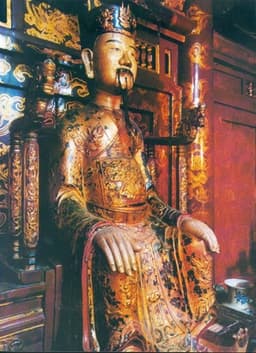
Dinh Tien Hoang
Emperor · Medieval
60.4Total
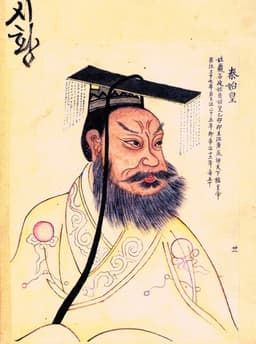
Qin Shi Huang
Emperor · Ancient
85.2Total
Basic Information
Born
924
-259
Died
979
-210
Era
Medieval
Ancient
Nationality
Vietnam
China
Occupation
Emperor
Emperor
Civilization
Eastern
Eastern
Score Comparison
Military (10%)
60.0
80.0
Political (20%)
72.0
90.0
Influence (20%)
65.0
85.0
Legacy (20%)
40.0
90.0
Leadership (15%)
77.2
78.0
Strategy (15%)
58.0
82.0
TOTAL
60.4
85.2
Dinh Tien Hoang — Complete Timeline
968 AD
Defeat of the Twelve WarlordsWar
Dinh Bo Linh, later known as Dinh Tien Hoang, unified Vietnam by defeating the Twelve Warlords who had divided the country after the collapse of Chinese rule. He established the Dinh dynasty and became the first emperor of an independent Vietnam.
UnificationDinh DynastyVietnamese Independence
Impact: nationalconstructive
Establishment of the Dinh DynastyPolitical Action◆ Major
Dinh Tien Hoang founded the Dinh dynasty and declared himself Emperor. He moved the capital to Hoa Lu and implemented administrative reforms to consolidate power. This marked the beginning of a new era of Vietnamese independence after centuries of Chinese domination.
Dynasty FoundingCapital MoveAdministrative Reform
Impact: nationalconstructive
979 AD
Assassination of Dinh Tien HoangPolitical Action◆ Major
Dinh Tien Hoang and his crown prince were assassinated by a court official while sleeping. The murder plunged the Dinh dynasty into chaos, leading to a succession crisis and eventual takeover by Le Hoan. The assassination ended the short-lived Dinh dynasty.
AssassinationSuccession CrisisEnd of Dinh Dynasty
Impact: nationaltragic
Qin Shi Huang — Complete Timeline
246 BC
Construction of the Mausoleum and Terracotta ArmyOther◆ Major
Qin Shi Huang commissioned a vast mausoleum complex near Xi'an, guarded by thousands of life-sized terracotta soldiers, horses, and chariots. The project employed hundreds of thousands of workers and reflected his obsession with immortality and imperial power.
Impact: global
230 BC
Conquest of the Six Warring StatesWar
From 230 to 221 BCE, Ying Zheng led the Qin state in a series of campaigns that conquered the Han, Zhao, Wei, Chu, Yan, and Qi states. This unified China under a single ruler for the first time, ending the Warring States period.
Impact: global
221 BC
Standardization of Writing, Currency, and MeasurementsReform◆ Major
Qin Shi Huang ordered the standardization of Chinese script, currency, and weights and measures across the unified empire. This facilitated administration, trade, and cultural integration, laying a foundation for future dynasties.
Impact: globalconstructive
Proclamation of the Qin DynastyPolitical Action
After conquering the last independent state, Ying Zheng declared himself Shi Huangdi (First Emperor), founding the Qin Dynasty. He adopted a new title to signify his supreme authority and initiated centralized imperial rule.
Impact: global
214 BC
Initiation of the Great Wall ConstructionOther◆ Major
Qin Shi Huang ordered the connection and extension of existing northern fortifications to create a unified defensive wall against nomadic Xiongnu raids. This project involved massive conscripted labor and became the precursor to the later Great Wall.
Impact: regional
213 BC
Burning of Books and Burying of ScholarsPolitical Action◆ Major
On the advice of Li Si, Qin Shi Huang ordered the burning of historical records and philosophical texts not aligned with Legalist doctrine. He also had 460 Confucian scholars buried alive to suppress dissent and consolidate ideological control.
Impact: nationaldestructive
Expert Analysis
Qin Shi Huang vs Dinh Tien Hoang: Historical Comparison
Qin Shi Huang and Dinh Tien Hoang were both founding emperors who unified fragmented territories—Qin Shi Huang in ancient China and Dinh Tien Hoang in medieval Vietnam—but their methods, influence, and legacies differed significantly.
Dimension Analysis
**Military: Qin Shi Huang 80 / Dinh Tien Hoang 62**
Qin Shi Huang conquered six rival states through advanced tactics, siege warfare, and centralized command, while Dinh Tien Hoang suppressed local warlords in Vietnam but lacked the scale and strategic complexity of Qin’s campaigns.
**Political: Qin Shi Huang 88 / Dinh Tien Hoang 90**
Dinh Tien Hoang edges ahead by establishing Vietnam’s first centralized monarchy, creating a stable administrative system, and securing diplomatic recognition from Song China, whereas Qin Shi Huang’s Legalist reforms unified China but bred harsh repression.
**Influence: Qin Shi Huang 82 / Dinh Tien Hoang 71**
Qin Shi Huang’s standardization of writing, currency, and measures shaped Chinese civilization for millennia, while Dinh Tien Hoang’s influence remained largely confined to early Vietnamese state-building and national identity.
**Legacy: Qin Shi Huang 85 / Dinh Tien Hoang 71**
Qin Shi Huang’s Great Wall and Terracotta Army endure as global symbols, but his brutal rule sparked rebellion; Dinh Tien Hoang is revered in Vietnam as a unifier, yet his legacy is less internationally recognized.
**Leadership: Qin Shi Huang 88 / Dinh Tien Hoang 84**
Both were decisive autocrats, but Qin Shi Huang’s visionary, ruthless consolidation of a vast empire surpasses Dinh Tien Hoang’s more localized, pragmatic leadership in a smaller realm.
Verdict
Qin Shi Huang leads overall due to his superior military conquests, enduring global influence, and transformative legacy, despite Dinh Tien Hoang’s slightly higher political acumen.
FAQ
Q: Who ranks higher? A: Qin Shi Huang ranks higher based on the overall score (84 vs 74), driven by his military achievements and lasting impact.
Rankings
🥇
Qin Shi HuangLeader
Mil: 80.0Pol: 90.0Inf: 85.0
85.2
🥈
Dinh Tien Hoang
Mil: 60.0Pol: 72.0Inf: 65.0
60.4
+24.8 behind
How This Comparison Works
Algorithm
Each figure is scored on 6 dimensions (0—100 scale) based on structured historical data: Military (10%), Political (20%), Influence (20%), Legacy (20%), Leadership (15%), Strategy (15%). The weighted total produces the final ranking.
Data Sources
Scores are computed from structured sub-indicators in the database. Scale factors adjust for era (Ancient ×0.85, Modern ×1.0) and civilization size (Eastern ×1.05, Other ×0.80) to account for differences in population and military scale.
Maximum 3 Figures
Comparisons are limited to 2—3 figures to ensure readability and statistical meaningfulness.
Error Margins
±5 points per dimension — Sub-scores are derived from historical records with inherent uncertainty. Two figures within 5 points on a dimension should be considered roughly equivalent in that area.
Total Score Accuracy
±3 points overall — The weighted combination of 6 dimensions produces a total score with approximately ±3 points of uncertainty. Differences of less than 3 points are not statistically significant— the figures are effectively tied.
Known Limitations
- Historical records are incomplete and uneven across civilizations
- Figures from oral-tradition societies may be underrepresented
- Occupation labels can misclassify multi-role figures
- Scores measure capability and impact, not moral character
- Quantitative scoring is a comparison tool, not absolute truth
Capability Radar
Military (10%) — Battles & Warfare
Battles
70
85
Win Rate
75
90
Expansion
65
90
Political (20%) — Governance & Reform
Reform
70
95
Diplomacy
65
75
Economy
60
90
Influence (20%) — Cultural & Global Reach
Cultural
65
95
Global
55
85
Legacy (20%) — Historical Impact
Historical
75
95
Longevity
70
95
Leadership (15%) — Power & Stability
Tenure
60
70
Stability
55
65
Strategy (15%) — Tactics & Innovation
Strategy
70
85
Tactics
65
80
Reform
60
95
Similar Comparisons
Comments & Discussion
MetricMaverick6/16/2026
Honestly, how can you quantify political acumen with a 2-point difference? Qin Shi Huang ruled an empire of 30+ million, standardized writing across a continent, and still got 88 to Dinh's 90? That's a joke. The weighting assumes 'lasting influence' matters equally to 'immediate unification,' but those are apples and oranges. Dinh gets high political marks because he charmed the Song dynasty? That's diplomacy, not governance. The whole system reeks of bias toward smaller polities. Stop pretending history fits into a spreadsheet. Qin's raw scope dwarfs everything. Give him a 95 in political if you're honest.
BattlefieldScholar6/16/2026
The military gap of 18 points is generous to Dinh. Qin Shi Huang's campaigns were multi-front, multi-year operations involving sieges like the fall of Zhao's Handan, where siege towers and counter-mining were used. He standardized weapon production across workshops, issuing crossbow triggers with serial numbers—a quality-control revolution. Dinh Tien Hoang's campaigns against the twelve warlords were essentially skirmishes with a few thousand men each. The Battle of Hoa Lu involved local militias, not professional armies. Qin's army had 300,000+ soldiers; Dinh's total force was maybe 30,000. Scale matters. Dinh deserves a 55, not 62.
Historian4506/16/2026
西方评分往往低估东亚政治中的“正统性”权重。秦始皇靠武力征服,但秦朝二世而亡,其“皇帝”称号虽强,却无延续性。丁先皇在越南独立于中国体系外,建立大瞿越,获得宋朝册封,这在东亚史观中是极高的政治成就。对比西罗马帝国末期的奥多亚塞,也是蛮族首领建立王国,却从未获得合法承认。丁先皇在政治维度上,其实比秦始皇更懂“以小事大”的智慧,90分并不为过。秦始皇的88分偏高了,因为秦法的严苛和焚书坑儒,在儒家史学传统中是重大减分项。
TrueQuill26/16/2026
看了评分,军事80对62,我持保留意见。秦始皇横扫六国,但仔细算算,秦军实际投入兵力不过六十万,而对阵的是六国各自为战。丁先皇在十二使君之乱中,兵力规模虽小,但战损比和效率未必低。政治88对90,我疑惑:秦朝统一度量衡、书同文,这是制度创新,影响千年。丁朝建立仅十二年,行政体系尚在摸索,90分似乎是基于“第一个”而非“更优”。建议把“政治创新”和“政治稳定”分开加权,否则数字说服力不足。