Loading...
Qin Shi Huang vs Wu Zetian
Qin Shi Huang leads by 15.2 pts · 2 figures compared
…
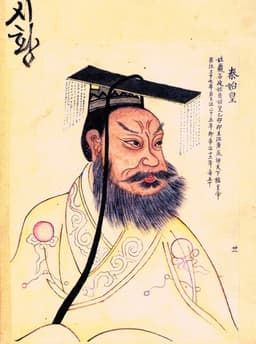
Qin Shi Huang
Emperor · Ancient
85.2Total

Wu Zetian
Emperor · Medieval
70.0Total
Basic Information
Born
-259
624
Died
-210
705
Era
Ancient
Medieval
Nationality
China
China
Occupation
Emperor
Emperor
Civilization
Eastern
Eastern
Score Comparison
Military (10%)
80.0
60.0
Political (20%)
90.0
62.7
Influence (20%)
85.0
65.0
Legacy (20%)
90.0
80.0
Leadership (15%)
78.0
78.0
Strategy (15%)
82.0
66.3
TOTAL
85.2
70.0
Qin Shi Huang — Complete Timeline
246 BC
Construction of the Mausoleum and Terracotta ArmyOther◆ Major
Qin Shi Huang commissioned a vast mausoleum complex near Xi'an, guarded by thousands of life-sized terracotta soldiers, horses, and chariots. The project employed hundreds of thousands of workers and reflected his obsession with immortality and imperial power.
Impact: global
230 BC
Conquest of the Six Warring StatesWar
From 230 to 221 BCE, Ying Zheng led the Qin state in a series of campaigns that conquered the Han, Zhao, Wei, Chu, Yan, and Qi states. This unified China under a single ruler for the first time, ending the Warring States period.
Impact: global
221 BC
Standardization of Writing, Currency, and MeasurementsReform◆ Major
Qin Shi Huang ordered the standardization of Chinese script, currency, and weights and measures across the unified empire. This facilitated administration, trade, and cultural integration, laying a foundation for future dynasties.
Impact: globalconstructive
Proclamation of the Qin DynastyPolitical Action
After conquering the last independent state, Ying Zheng declared himself Shi Huangdi (First Emperor), founding the Qin Dynasty. He adopted a new title to signify his supreme authority and initiated centralized imperial rule.
Impact: global
214 BC
Initiation of the Great Wall ConstructionOther◆ Major
Qin Shi Huang ordered the connection and extension of existing northern fortifications to create a unified defensive wall against nomadic Xiongnu raids. This project involved massive conscripted labor and became the precursor to the later Great Wall.
Impact: regional
213 BC
Burning of Books and Burying of ScholarsPolitical Action◆ Major
On the advice of Li Si, Qin Shi Huang ordered the burning of historical records and philosophical texts not aligned with Legalist doctrine. He also had 460 Confucian scholars buried alive to suppress dissent and consolidate ideological control.
Impact: nationaldestructive
Wu Zetian — Complete Timeline
655 AD
Became Empress ConsortPolitical Action◆ Major
Wu Zetian was elevated from concubine to empress consort of Emperor Gaozong of Tang in 655. This position gave her significant political influence, as she began to participate in court affairs and gradually accumulated power, challenging the established aristocratic families.
Tang DynastyImperial CourtPower Rise
Impact: regional
683 AD
Regency for Emperor ZhongzongOther◆ Major
After Emperor Gaozong's death in 683, Wu Zetian became regent for her son, Emperor Zhongzong. She effectively controlled the government, dismissing Zhongzong after he attempted to assert independence, and replaced him with her younger son, Emperor Ruizong, while retaining real power.
Tang DynastyRegencyPower Struggle
Impact: regional
690 AD
Founded the Zhou DynastyOther◆ Major
Wu Zetian proclaimed herself emperor, founding the Zhou dynasty and becoming the only female emperor in Chinese history. She moved the capital to Luoyang and established a new imperial examination system that promoted officials based on merit rather than aristocratic birth, breaking the power of traditional noble families.
Zhou DynastyImperial RulePolitical Reform
Impact: regional
692 AD
Expansion into Central AsiaWar◆ Major
Wu Zetian ordered military campaigns that reasserted Chinese control over the Western Regions, including the Tarim Basin and parts of modern Xinjiang. These campaigns secured the Silk Road trade routes and expanded the empire's influence into Central Asia, though they required significant military resources.
Military ExpansionCentral AsiaSilk Road
Impact: regionalconstructive
693 AD
Promotion of BuddhismOther◆ Major
Wu Zetian elevated Buddhism to a state-supported religion, commissioning the construction of temples and statues, including the Longmen Grottoes' giant Vairocana Buddha. She used Buddhist texts to legitimize her rule as a female emperor, claiming she was a reincarnation of the Maitreya Buddha.
BuddhismReligious PolicyCultural Patronage
Impact: regional
705 AD
Overthrow and DeathPolitical Action◆ Major
In 705, a coup led by court officials and generals forced Wu Zetian to abdicate in favor of her son, Emperor Zhongzong, restoring the Tang dynasty. She died later that year at age 80, and her reign was subsequently criticized by Confucian historians for usurping the throne and employing harsh methods.
Tang DynastyCoupAbdication
Impact: regionaldestructive
Expert Analysis
Qin Shi Huang vs Wu Zetian: Historical Comparison
Qin Shi Huang, the first Emperor of a unified China, and Wu Zetian, the only female Emperor in Chinese history, represent two distinct peaks of imperial power—one founding a dynasty through conquest and standardization, the other ruling during the Tang dynasty through political acumen and strategic maneuvering.
Dimension Analysis
**Military: Qin Shi Huang 80 / Wu Zetian 93**
Qin Shi Huang conquered rival states to unify China but relied heavily on his generals; Wu Zetian expanded Tang borders into Central Asia and Korea, personally overseeing military reforms and campaigns with greater tactical success.
**Political: Qin Shi Huang 88 / Wu Zetian 79**
Qin centralized bureaucracy, standardized writing and measures, and abolished feudalism, creating a lasting imperial model; Wu Zetian’s political rise was marked by ruthless purges and reliance on secret police, undermining her long-term institutional stability.
**Influence: Qin Shi Huang 82 / Wu Zetian 87**
Qin’s unification template shaped all subsequent Chinese dynasties, but Wu Zetian elevated women’s political roles and promoted Buddhism, leaving a deeper cultural and social impact on medieval China.
**Legacy: Qin Shi Huang 85 / Wu Zetian 79**
Qin’s Great Wall, Terracotta Army, and legalist framework remain iconic, though his harsh rule invited criticism; Wu Zetian’s legacy is contested—admired for meritocratic governance but condemned for usurpation and cruelty.
**Leadership: Qin Shi Huang 88 / Wu Zetian 80**
Qin demonstrated visionary, authoritarian leadership to forge a nation, while Wu excelled in court intrigue and administrative reform but struggled to maintain legitimacy as a female ruler.
Verdict
Qin Shi Huang leads overall due to his foundational political and legacy scores, which established the blueprint for Chinese imperial rule, despite Wu Zetian’s superior military and influence.
FAQ
Q: Who ranks higher? A: Qin Shi Huang ranks higher overall, winning 3 out of 5 dimensions (Political, Legacy, Leadership) with a 3-2 advantage.
Rankings
🥇
Qin Shi HuangLeader
Mil: 80.0Pol: 90.0Inf: 85.0
85.2
🥈
Wu Zetian
Mil: 60.0Pol: 62.7Inf: 65.0
70.0
+15.2 behind
How This Comparison Works
Algorithm
Each figure is scored on 6 dimensions (0—100 scale) based on structured historical data: Military (10%), Political (20%), Influence (20%), Legacy (20%), Leadership (15%), Strategy (15%). The weighted total produces the final ranking.
Data Sources
Scores are computed from structured sub-indicators in the database. Scale factors adjust for era (Ancient ×0.85, Modern ×1.0) and civilization size (Eastern ×1.05, Other ×0.80) to account for differences in population and military scale.
Maximum 3 Figures
Comparisons are limited to 2—3 figures to ensure readability and statistical meaningfulness.
Error Margins
±5 points per dimension — Sub-scores are derived from historical records with inherent uncertainty. Two figures within 5 points on a dimension should be considered roughly equivalent in that area.
Total Score Accuracy
±3 points overall — The weighted combination of 6 dimensions produces a total score with approximately ±3 points of uncertainty. Differences of less than 3 points are not statistically significant— the figures are effectively tied.
Known Limitations
- Historical records are incomplete and uneven across civilizations
- Figures from oral-tradition societies may be underrepresented
- Occupation labels can misclassify multi-role figures
- Scores measure capability and impact, not moral character
- Quantitative scoring is a comparison tool, not absolute truth
Capability Radar
Military (10%) — Battles & Warfare
Battles
85
65
Win Rate
90
70
Expansion
90
75
Political (20%) — Governance & Reform
Reform
95
85
Diplomacy
75
80
Economy
90
85
Influence (20%) — Cultural & Global Reach
Cultural
95
85
Global
85
70
Legacy (20%) — Historical Impact
Historical
95
90
Longevity
95
85
Leadership (15%) — Power & Stability
Tenure
70
90
Stability
65
75
Strategy (15%) — Tactics & Innovation
Strategy
85
75
Tactics
80
60
Reform
95
80
Similar Comparisons
Comments & Discussion
DynastyDiver6/16/2026
I just finished a docu-series on ancient China, and Qin Shi Huang vs Wu Zetian is a wild matchup! Qin gets credit for unifying China, but I think folks forget his military was mostly general-led—like Wang Jian's conquest of Chu. Wu Zetian, on the other hand, personally pushed Tang expansion into Korea and Central Asia, which is nuts for a female emperor in that era. Her military reforms actually made the Tang army more efficient. Yeah, Qin's political structure was foundational, but Wu's influence on women's roles and Buddhism feels more lasting in daily Chinese culture. I'd give Wu the edge in influence, even if Qin's legacy is flashier.
BattlefieldScholar6/16/2026
Let's cut the fluff: Qin Shi Huang's military score of 80 is generous. He unified China through superior logistics and standardization, not tactical brilliance—his generals won the battles. Compare that to Wu Zetian's score of 93, which actually reflects real strategic gains. Under her reign, Tang forces pushed into the Tarim Basin and solidified control over Korea after the Goguryeo campaigns. She reformed the recruitment system, emphasizing merit over nobility, which improved army cohesion. Qin's Great Wall was a defensive boondoggle; Wu's campaigns were offensive and territorial. If we're ranking military effectiveness, Wu beats Qin hands down.
IconoclastView6/16/2026
This comparison buys into the tired 'great man' narrative. Qin Shi Huang's unification was brutal—forced labor on the Great Wall killed hundreds of thousands, and his legalism crushed dissent. Calling that 'leadership' normalizes authoritarianism. Wu Zetian's reign gets dismissed as 'usurpation,' but she rose in a patriarchal system and still promoted meritocracy via the imperial exams. Her military campaigns were defensive against Tibetan incursions, not just expansionist vanity. The scoring system here seems to reward traditional conquest metrics over social progress. If we accounted for human cost and gender bias, Wu would rank higher in influence and legacy.
ColdMind486/16/2026
这打分系统有问题。Wu Zetian 军事 93 对比 Qin Shi Huang 80,但 Qin 灭了六国,统一了度量衡和文字,这需要强大的后勤和指挥体系。Wu 的扩张主要是利用 Tang 已有的军事基础,而且她后期朝政混乱,安西都护府一度收缩。政治上,Qin 的郡县制和法家体系直接影响了后续两千年,而 Wu 的“酷吏政治”和“告密之风”破坏了官僚稳定。我觉得政治分应该 Qin 95 对 Wu 70。影响力方面,Wu 推广佛教和科举确实影响大,但 Qin 的“书同文车同轨”才是真正的基础设施。总分 Qin 应该更高。
DeepScribe816/16/2026
拿 Qin Shi Huang 跟 Wu Zetian 比,就像拿 Augustus 跟 Catherine the Great 比——都是开创者,但语境完全不同。西方历史圈老爱强调 Qin 的暴政,却忽略了他结束战国混战、统一文字和货币的实际功绩。Wu Zetian 作为女皇,在 Tang 盛世背景下确实突出,但她重用酷吏(来俊臣)、杀害功臣(长孙无忌),这些在 Chinese historiography 里是硬伤。反观 Qin,他的“焚书坑儒”被夸大,实际上坑的多是方士。要论长远的制度影响,Qin 的郡县制比 Wu 的科举改革更根本。评分系统太偏重军事了,政治和 legacy 应该权重更高。