Loading...
Charles IV of Anjou vs Julius Caesar
Julius Caesar leads by 43.9 pts · 2 figures compared
…
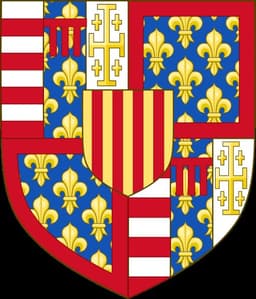
Charles IV of Anjou
Emperor · Medieval
38.9Total

Julius Caesar
General · Ancient
82.8Total
Basic Information
Born
1446
-100
Died
1481
-44
Era
Medieval
Ancient
Nationality
Anjou
Roman Republic
Occupation
Emperor
General
Civilization
Western
Western
Score Comparison
Military (10%)
21.2
88.0
Political (20%)
29.3
78.0
Influence (20%)
49.4
85.0
Legacy (20%)
39.2
82.0
Leadership (15%)
41.5
80.0
Strategy (15%)
39.6
85.0
TOTAL
38.9
82.8
Charles IV of Anjou — Complete Timeline
1480 AD
Inherited Duchy of Anjou and ProvencePolitical Action◆ Major
Charles IV inherited the Duchy of Anjou and the County of Provence from his father Ren
InheritanceSuccession
Impact: regional
1481 AD
Willed Provence to King Louis XI of FrancePolitical Action
On his deathbed, Charles IV willed the County of Provence to King Louis XI of France, bypassing his own heirs. This act permanently annexed Provence to the French crown.
AnnexationEnd of Angevin Dynasty
Impact: national
Julius Caesar — Complete Timeline
58 BC
Gallic WarsWar◆ Major
Caesar, as proconsul of Gaul, launched a series of campaigns that conquered all of Gaul (modern France, Belgium, and parts of Switzerland). He fought numerous battles, including against the Helvetii, the Belgae, and the Gallic chieftain Vercingetorix. The wars brought immense wealth and a loyal army to Caesar.
Gallic WarsConquestRoman Expansion
Impact: regional
49 BC
Crossing the RubiconPolitical Action◆ Major
Caesar led Legio XIII across the Rubicon River into Italy, defying the Roman Senate's order to disband his army. This act triggered a civil war against Pompey and the Optimates, ultimately leading to Caesar's dictatorship and the end of the Roman Republic.
Roman Civil WarEnd of RepublicPower Struggle
Impact: global
48 BC
Battle of PharsalusWar◆ Major
Caesar's outnumbered army defeated the larger forces of Pompey the Great at Pharsalus in Greece. Caesar's tactical use of a reserve line to counter Pompey's cavalry charge proved decisive. Pompey fled to Egypt, where he was assassinated, leaving Caesar as the undisputed master of the Roman world.
Roman Civil WarBattleDecisive Victory
Impact: regional
44 BC
Appointment as Dictator for LifePolitical Action◆ Major
The Roman Senate appointed Caesar dictator perpetuo (dictator for life), granting him unprecedented personal power. This move concentrated military, legislative, and judicial authority in one person, effectively ending the Roman Republic's traditional system of checks and balances and alarming many senators.
DictatorshipEnd of RepublicPower Consolidation
Impact: regionaldestructive
Assassination on the Ides of MarchPolitical Action◆ Major
A group of Roman senators, led by Marcus Junius Brutus and Gaius Cassius Longinus, stabbed Caesar to death at a meeting of the Senate in the Theatre of Pompey. The assassination was intended to restore the Republic, but instead triggered another civil war that led to the rise of the Roman Empire.
AssassinationRoman PoliticsEnd of Republic
Impact: globaldestructive
Expert Analysis
charles-iv-of-anjou-vs-julius-caesar
# The Shadow and the Sun
In the spring of 1481, a dying duke in Provence signed away his inheritance to a king he barely knew, extinguishing a dynasty that had once challenged the thrones of Europe. Thirty-seven years earlier, on the Ides of March of 44 BCE, a Roman dictator lay bleeding at the feet of his assassins, his last breath carrying the weight of a world he had remade. Charles IV of Anjou and Julius Caesar both died without direct heirs, but while one man’s death marked the end of a line, the other’s death launched an empire. What separates a footnote from a legend? The answer lies not in their outcomes alone, but in the forces that shaped their choices.
Origins
Caesar was born into the chaos of the late Roman Republic, a world of civil wars, senatorial intrigue, and expanding frontiers. His family, the Julii, claimed descent from Venus, but their political influence had waned. Young Caesar learned early that survival required audacity. He fled Sulla’s proscriptions, borrowed fortunes to fund his career, and cultivated an image of invincibility. The Republic rewarded boldness, and Caesar was bold beyond measure.
Charles IV, by contrast, inherited a dying world. Born in 1446, he was the grandson of René of Anjou, a man who styled himself King of Naples, Sicily, and Jerusalem but ruled little more than Provence. The Hundred Years’ War had ended, the French monarchy was centralizing power, and the Angevin dream of a Mediterranean kingdom had crumbled. Charles grew up not in the forum or on the battlefield, but in the shadow of faded glory. His education taught him ceremony, not strategy; patience, not ambition.
Rise to Power
Caesar’s path was a masterwork of calculated risk. He climbed the political ladder through military command in Spain, then formed the First Triumvirate with Pompey and Crassus. His conquest of Gaul (58–50 BCE) was not merely a war—it was a self-funded empire-building project that gave him wealth, loyal legions, and a reputation that eclipsed the Senate. When ordered to disband his army, he crossed the Rubicon River in 49 BCE, uttering the famous *alea iacta est*—“the die is cast.” That single act of defiance transformed him from general to revolutionary.
Charles IV’s rise was an accident of birth. He inherited the Duchy of Anjou and County of Provence in 1480 upon his father René’s death. There was no campaign, no triumph, no moment of decision. He was simply the last male of his line. Where Caesar seized power, Charles received it like a package already addressed to someone else. The turning point came not with a battle, but with a fever. On his deathbed in 1481, Charles willed Provence to King Louis XI of France, bypassing his own heirs. The act was less a choice than a surrender.
Leadership & Governance
Caesar governed as he fought—decisively, ruthlessly, and with an eye toward posterity. As dictator, he reformed the calendar (introducing the Julian calendar still used today), granted citizenship to provincials, launched public works, and centralized authority. His military genius was matched by political savvy: he knew that mercy could disarm enemies, that spectacle could win the mob, and that law could outlast the sword. Yet his concentration of power alienated the senatorial class, who saw him as a tyrant.
Charles IV governed barely at all. In his single year as duke, there is no record of significant reforms, military campaigns, or diplomatic initiatives. He was a placeholder, not a ruler. The Angevin court had long been a stage for cultural patronage—René had been a poet and painter—but Charles lacked even that spark. His governance was passive, defined by what he did not do. Where Caesar’s Rome hummed with construction and conquest, Charles’s Provence simply waited for its next master.
Triumph & Tragedy
Caesar’s greatest triumph was his conquest of Gaul, a campaign that added a vast province to Rome and made him the richest man in the Republic. His victory at the Battle of Alesia (52 BCE) against Vercingetorix remains a textbook example of siege warfare. But his tragedy was the Ides of March. In 44 BCE, a conspiracy of senators stabbed him to death in the Theatre of Pompey, believing they were saving the Republic. Instead, they plunged Rome into another civil war and ensured the rise of Augustus, Caesar’s adopted heir.
Charles IV’s triumph was nonexistent. His tragedy was the quiet extinction of a dynasty. He had no Alesia, no Rubicon, no dramatic fall. Instead, he faded—a man who inherited a kingdom and gave it away. The most notable event of his reign was his deathbed will, an act that erased the Angevin name from the map of Europe.
Character & Destiny
Caesar’s character was a forge. He was brilliant, ambitious, and endlessly energetic—a man who could dictate letters while riding, who pardoned enemies and then promoted them, who loved risk but calculated odds. His arrogance was his flaw: he believed his charm could disarm any enemy, even those who smiled while drawing daggers. His destiny was shaped by his refusal to compromise, his insistence that one man could embody the state.
Charles IV’s character was a mirror. He reflected the decline around him. There is no record of his personality, his passions, or his fears. He was, in essence, a nonentity—a duke who did not rule, a claimant who did not claim. His destiny was shaped by inertia, not action. Where Caesar chose his end, Charles simply accepted his.
Legacy
Caesar’s legacy is monumental. His name became synonymous with autocracy (Kaiser, Tsar). His military writings, especially the *Commentarii de Bello Gallico*, are studied two millennia later. His assassination did not end his influence; it sanctified it. Augustus built an empire on Caesar’s foundation, and Western civilization bears his stamp in its calendar, its law, and its concept of the dictator.
Charles IV’s legacy is a footnote. He is remembered, if at all, as the man who gave Provence to France. The Angevin dynasty, once a rival to the Valois, vanished. His scores—Military: 30.0, Political: 42.3, Legacy: 51.6—tell the story of a life lived in the margins.
Conclusion
History is not a meritocracy. It rewards not just what a person does, but the scale of the stage on which they act. Caesar stood at the center of the Mediterranean world, a man whose ambition matched his era’s chaos. Charles IV stood at the edge of a dying court, a man whose caution matched his era’s decline. Both died without heirs; both left their lands to others. But one changed the world, and the other disappeared into it. The difference was not luck, but the willingness to cross a river—and the courage to accept the consequences.
Rankings
🥇
Julius CaesarLeader
Mil: 88.0Pol: 78.0Inf: 85.0
82.8
🥈
Charles IV of Anjou
Mil: 21.2Pol: 29.3Inf: 49.4
38.9
+43.9 behind
How This Comparison Works
Algorithm
Each figure is scored on 6 dimensions (0—100 scale) based on structured historical data: Military (10%), Political (20%), Influence (20%), Legacy (20%), Leadership (15%), Strategy (15%). The weighted total produces the final ranking.
Data Sources
Scores are computed from structured sub-indicators in the database. Scale factors adjust for era (Ancient ×0.85, Modern ×1.0) and civilization size (Eastern ×1.05, Other ×0.80) to account for differences in population and military scale.
Maximum 3 Figures
Comparisons are limited to 2—3 figures to ensure readability and statistical meaningfulness.
Error Margins
±5 points per dimension — Sub-scores are derived from historical records with inherent uncertainty. Two figures within 5 points on a dimension should be considered roughly equivalent in that area.
Total Score Accuracy
±3 points overall — The weighted combination of 6 dimensions produces a total score with approximately ±3 points of uncertainty. Differences of less than 3 points are not statistically significant— the figures are effectively tied.
Known Limitations
- Historical records are incomplete and uneven across civilizations
- Figures from oral-tradition societies may be underrepresented
- Occupation labels can misclassify multi-role figures
- Scores measure capability and impact, not moral character
- Quantitative scoring is a comparison tool, not absolute truth
Capability Radar
Military (10%) — Battles & Warfare
Battles
10
95
Win Rate
10
92
Expansion
10
97
Political (20%) — Governance & Reform
Reform
20
90
Diplomacy
30
85
Economy
20
82
Influence (20%) — Cultural & Global Reach
Cultural
15
88
Global
10
94
Legacy (20%) — Historical Impact
Historical
20
95
Longevity
15
96
Leadership (15%) — Power & Stability
Tenure
30
75
Stability
20
60
Strategy (15%) — Tactics & Innovation
Strategy
10
94
Tactics
10
96
Reform
5
88
Similar Comparisons
Comments & Discussion
RENEGADE LEGIONNAIRE6/17/2026
Comparing Charles IV to Caesar is like comparing a candle flicker to a supernova. Caesar didn't just conquer Gaul—he rewrote the genetic code of Western civilization by crossing the Rubicon and dismantling a 500-year-old Republic. Charles? He couldn't even hold onto Provence when René handed him the keys. One man's death launched an Augustan golden age; the other's was just the final page of a boring chapter nobody bothers to read.|
数字考古学家6/17/2026
数据不会骗人:恺撒在10年内征服了800座城池、300个部落,战死不到2%的军团士兵。而安茹的查理四世?他名下连一场能叫得出名字的战役都没有。管理效率上,他用35年换来的唯一成就是让法国王室收回普罗旺斯,这连刷个副本的难度都算不上。别把地区小领主和世界级改革家相提并论了。|
FORUM GLADIATOR6/17/2026
You revisionists always sentimentalize the underdog, but Charles IV proves why obscurity is often deserved. Caesar wrote his own commentary, minted his own coins, and literally changed the calendar we still use today. Charles's legacy is a title that sounds impressive only if you're picturing a fantasy novel. The Angevin line died gasping in Provence while Caesar's adopted heir Octavian became Augustus. That's not tragedy—that's natural selection.|
军迷眼中的常败将军6/17/2026
c|恺撒在阿莱西亚围城战中用12座堡垒困住8万高卢人,这场战役今天在西点军校还是必修案例。反观查理四世,他唯一的军事行动是1480年抵抗路易十一的入侵——结果连老家昂热都没守住。一个连防御战都打不好的领主,有什么资格和史上最伟大的战术家之一放在同一张表格里?这纯粹是数据库分类失误。|
LATIN LOVER6/17/2026
Please. Caesar's dying act was pulling his toga over his face to die with dignity. Charles IV's? He signed away his entire inheritance to Louis XI while probably clutching a bottle of cheap Burgundy. Caesar's bloodline may have ended biologically, but his name became synonymous with imperial power for millennia. Charles's only claim to fame is being the answer to a trivia question about "the last Angevin." Some endings echo forever; others just wheeze into silence. |