Loading...
Charles IV of Bohemia vs Julius Caesar
Julius Caesar leads by 21.2 pts · 2 figures compared
…
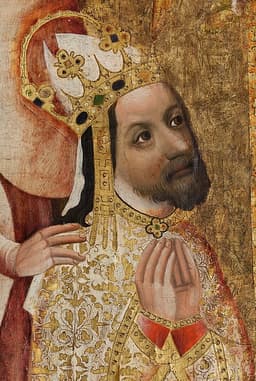
Charles IV of Bohemia
Emperor · Medieval
61.6Total

Julius Caesar
General · Ancient
82.8Total
Basic Information
Born
1316
-100
Died
1378
-44
Era
Medieval
Ancient
Nationality
Bohemia
Roman Republic
Occupation
Emperor
General
Civilization
Western
Western
Score Comparison
Military (10%)
46.7
88.0
Political (20%)
78.0
78.0
Influence (20%)
65.0
85.0
Legacy (20%)
55.0
82.0
Leadership (15%)
78.0
80.0
Strategy (15%)
35.0
85.0
TOTAL
61.6
82.8
Charles IV of Bohemia — Complete Timeline
1348 AD
Foundation of Charles UniversityCultural◆ Major
Charles IV founded Charles University in Prague, the first university in Central Europe. The institution became a center of learning and culture, attracting scholars from across Europe and fostering the development of Czech intellectual life.
EducationUniversityCultural Center
Impact: regionalconstructive
1355 AD
Coronation as Holy Roman EmperorPolitical Action◆ Major
Charles IV was crowned Holy Roman Emperor in Rome by Pope Innocent VI. This coronation solidified his authority over the empire and allowed him to implement reforms that strengthened imperial governance.
CoronationImperial AuthorityPapal Relations
Impact: global
1356 AD
Golden Bull of 1356Reform
Charles IV issued the Golden Bull, a constitutional document that regulated the election of the Holy Roman Emperor. It established the seven prince-electors and defined their privileges, stabilizing the empire's political structure for centuries.
ConstitutionHoly Roman EmpireElectoral System
Impact: globalconstructive
1357 AD
Construction of Charles BridgeCultural◆ Major
Charles IV commissioned the construction of the Charles Bridge in Prague, a stone bridge connecting the Old Town with the Lesser Quarter. The bridge became a vital trade route and a symbol of Prague's architectural heritage.
ArchitectureInfrastructurePrague
constructive
Julius Caesar — Complete Timeline
58 BC
Gallic WarsWar◆ Major
Caesar, as proconsul of Gaul, launched a series of campaigns that conquered all of Gaul (modern France, Belgium, and parts of Switzerland). He fought numerous battles, including against the Helvetii, the Belgae, and the Gallic chieftain Vercingetorix. The wars brought immense wealth and a loyal army to Caesar.
Gallic WarsConquestRoman Expansion
Impact: regional
49 BC
Crossing the RubiconPolitical Action◆ Major
Caesar led Legio XIII across the Rubicon River into Italy, defying the Roman Senate's order to disband his army. This act triggered a civil war against Pompey and the Optimates, ultimately leading to Caesar's dictatorship and the end of the Roman Republic.
Roman Civil WarEnd of RepublicPower Struggle
Impact: global
48 BC
Battle of PharsalusWar◆ Major
Caesar's outnumbered army defeated the larger forces of Pompey the Great at Pharsalus in Greece. Caesar's tactical use of a reserve line to counter Pompey's cavalry charge proved decisive. Pompey fled to Egypt, where he was assassinated, leaving Caesar as the undisputed master of the Roman world.
Roman Civil WarBattleDecisive Victory
Impact: regional
44 BC
Appointment as Dictator for LifePolitical Action◆ Major
The Roman Senate appointed Caesar dictator perpetuo (dictator for life), granting him unprecedented personal power. This move concentrated military, legislative, and judicial authority in one person, effectively ending the Roman Republic's traditional system of checks and balances and alarming many senators.
DictatorshipEnd of RepublicPower Consolidation
Impact: regionaldestructive
Assassination on the Ides of MarchPolitical Action◆ Major
A group of Roman senators, led by Marcus Junius Brutus and Gaius Cassius Longinus, stabbed Caesar to death at a meeting of the Senate in the Theatre of Pompey. The assassination was intended to restore the Republic, but instead triggered another civil war that led to the rise of the Roman Empire.
AssassinationRoman PoliticsEnd of Republic
Impact: globaldestructive
Expert Analysis
charles-iv-of-bohemia-vs-julius-caesar
### The Builder and the Destroyer: Charles IV and Julius Caesar
On a spring morning in 1357, Charles IV, King of Bohemia and Holy Roman Emperor, laid the first stone of a bridge that would bear his name for centuries. He was a man of careful calculation, who believed that the foundation of power lay in stone, law, and learning. Two thousand years earlier and a thousand miles away, another man stood on the banks of a different river—the Rubicon in northern Italy. Gaius Julius Caesar, a Roman general, paused for a moment, then crossed with his army, unleashing a civil war that would shatter the Republic. One man built a bridge to connect his people; the other crossed a river to divide his world. The question that lingers across the ages is not merely who was greater, but what drove two such different paths to power—and what those paths reveal about the nature of leadership itself.
### Origins
Caesar was born into the chaos of the dying Roman Republic, a world of senatorial intrigue, street violence, and constant war. His family, the Julii, claimed descent from the goddess Venus, but they were politically marginal. Caesar’s father died when he was sixteen, leaving him to navigate a brutal system where survival required audacity. He learned early that in Rome, reputation was currency and risk was the only path to greatness. He was a gambler by instinct, a man who once told his captors, “I am Caesar, and I will not be ransomed”—a bluff that worked, but only just.
Charles IV was born in 1316 into a very different world: the Holy Roman Empire, a patchwork of kingdoms, duchies, and free cities where power was measured not in legions but in alliances, charters, and the slow accretion of prestige. His father, John of Luxembourg, was a warrior-king who spent more time fighting in France and Italy than ruling Bohemia. Charles grew up in the French court, educated at the University of Paris, steeped in theology, law, and the arts. Where Caesar learned to fight, Charles learned to negotiate. He was a man who understood that in a world of princes and popes, the sharpest weapon was a well-written document.
### Rise to Power
Caesar’s rise was a masterpiece of calculated risk. He began as a military tribune, then climbed through the cursus honorum—quaestor, aedile, praetor—each step financed by enormous debt and secured by political marriages. His true breakthrough came in 58 BCE when he secured the governorship of Gaul. Over the next eight years, he conquered a territory larger than Italy, winning battles against Gallic tribes, Germanic invaders, and even a Roman rival in Britain. He wrote his own commentaries, turning military victories into political propaganda. When the Senate ordered him to disband his army and return to Rome as a private citizen, he chose war instead. Crossing the Rubicon in 49 BCE was a moment of supreme self-confidence: he knew that either he would become master of Rome, or he would die trying.
Charles IV’s path was slower and more patient. He was elected King of the Romans in 1346, but his father’s death and the Black Death delayed his coronation as Holy Roman Emperor until 1355. His power came not from conquest but from consolidation. He understood that the Empire was too fragmented to be ruled by force; it had to be held together by law and loyalty. His key event was the Golden Bull of 1356, a constitutional document that fixed the rules for electing the emperor, ending centuries of papal interference and princely infighting. It was a quiet revolution, achieved not with swords but with ink.
### Leadership & Governance
As a leader, Caesar was a force of nature. He led from the front, sharing the hardships of his soldiers, marching barefoot alongside them in the snow. His military genius was unmatched: at the Battle of Alesia in 52 BCE, he besieged a Gallic fortress while simultaneously building a second ring of fortifications to hold off a massive relief army—a feat of logistics and nerve that still astounds military historians. His political reforms were equally audacious: he reformed the calendar, granted citizenship to provincials, and began massive public works. But his style was autocratic. He centralized power in his own hands, packed the Senate with his supporters, and accepted the title of dictator for life. He believed that the Republic was too corrupt to save, and only a single strong hand could govern.
Charles IV governed by consensus. He was not a warrior—his military score of 34.1 reflects a man who preferred diplomacy to battle—but he was a master of political engineering. He founded Charles University in Prague in 1348, the first university in Central Europe, turning his capital into a center of learning. He commissioned the Charles Bridge, not just as a practical crossing but as a symbol of unity between the Old Town and the Lesser Town. His Golden Bull was his masterpiece: by codifying the electoral process, he reduced chaos and gave the Empire a stable foundation. He was a builder, not a destroyer. Where Caesar tore down institutions to remake them, Charles built new ones to preserve the old.
### Triumph & Tragedy
Caesar’s greatest triumph was the conquest of Gaul, which doubled Rome’s territory and made him the richest man in the Republic. His tragedy was that he could not stop. After defeating his rivals in the civil war, he had a chance to restore the Republic, but he chose to rule alone. On the Ides of March, 44 BCE, a group of senators stabbed him to death in the Senate chamber. His last words, according to legend, were to his friend Brutus: “Et tu, Brute?”—a recognition that even his closest allies had turned against him. His assassination did not save the Republic; it plunged Rome into another civil war, from which his adopted heir, Octavian, emerged as the first emperor.
Charles IV’s triumph was the Golden Bull, which stabilized the Holy Roman Empire for centuries. His tragedy was more subtle: he built a golden age for Bohemia, but it rested on his own personal authority. After his death in 1378, the empire slipped back into fragmentation. His son, Wenceslaus, lacked his father’s skill, and the Hussite Wars would tear Bohemia apart a generation later. Charles’s bridges and universities endured, but the political unity he forged did not.
### Character & Destiny
Caesar was driven by an insatiable ambition. He wanted glory, power, and immortality. He was also generous, charming, and ruthless by turns. His personality shaped his destiny: he could not imagine a world where he was not the center of it. That hubris led to his death, but it also made him a legend.
Charles IV was driven by a different impulse: duty. He saw himself as a steward, not a conqueror. He wanted to leave his kingdom stronger than he found it. His caution and patience were his strength, but they also meant he never reached for the stars. He built a legacy that lasted, but it was a legacy of stone and law, not of fire and blood.
### Legacy
Caesar’s legacy is the Roman Empire. He did not create it, but he made it inevitable. His name became a title—Kaiser, Tsar—and his military tactics are still studied. He is remembered as a genius and a tyrant, a man who destroyed a republic to build an empire.
Charles IV’s legacy is the city of Prague. The Charles Bridge, Charles University, and the Golden Bull are his monuments. He is remembered as a wise ruler, the father of his country, but his fame is local. He did not change the world; he made his corner of it better.
### Conclusion
Standing on the Charles Bridge today, looking at the statues of saints and the flowing Vltava River, it is hard to imagine the bridge as an act of power. But it was. Charles IV understood that power could be built as well as seized. Caesar understood that sometimes you have to break the world to remake it. Both were right, and both were wrong. The builder and the destroyer—each shaped his age, and each paid the price for his vision. The difference between them is not one of greatness, but of choice: to build or to break, to lead or to rule, to leave a bridge or a scar.
Rankings
🥇
Julius CaesarLeader
Mil: 88.0Pol: 78.0Inf: 85.0
82.8
🥈
Charles IV of Bohemia
Mil: 46.7Pol: 78.0Inf: 65.0
61.6
+21.2 behind
How This Comparison Works
Algorithm
Each figure is scored on 6 dimensions (0—100 scale) based on structured historical data: Military (10%), Political (20%), Influence (20%), Legacy (20%), Leadership (15%), Strategy (15%). The weighted total produces the final ranking.
Data Sources
Scores are computed from structured sub-indicators in the database. Scale factors adjust for era (Ancient ×0.85, Modern ×1.0) and civilization size (Eastern ×1.05, Other ×0.80) to account for differences in population and military scale.
Maximum 3 Figures
Comparisons are limited to 2—3 figures to ensure readability and statistical meaningfulness.
Error Margins
±5 points per dimension — Sub-scores are derived from historical records with inherent uncertainty. Two figures within 5 points on a dimension should be considered roughly equivalent in that area.
Total Score Accuracy
±3 points overall — The weighted combination of 6 dimensions produces a total score with approximately ±3 points of uncertainty. Differences of less than 3 points are not statistically significant— the figures are effectively tied.
Known Limitations
- Historical records are incomplete and uneven across civilizations
- Figures from oral-tradition societies may be underrepresented
- Occupation labels can misclassify multi-role figures
- Scores measure capability and impact, not moral character
- Quantitative scoring is a comparison tool, not absolute truth
Capability Radar
Military (10%) — Battles & Warfare
Battles
30
95
Win Rate
40
92
Expansion
25
97
Political (20%) — Governance & Reform
Reform
80
90
Diplomacy
85
85
Economy
80
82
Influence (20%) — Cultural & Global Reach
Cultural
80
88
Global
60
94
Legacy (20%) — Historical Impact
Historical
75
95
Longevity
70
96
Leadership (15%) — Power & Stability
Tenure
85
75
Stability
75
60
Strategy (15%) — Tactics & Innovation
Strategy
45
94
Tactics
35
96
Reform
20
88
Similar Comparisons
Comments & Discussion
PonsFactor6/17/2026
The "Builder vs. Destroyer" framing is pure romantic fluff. Caesar wasn't just a destroyer—he was Rome's greatest urban planner. He reformed the calendar, began public works projects that rivaled any medieval city, and his Forum Julium was a deliberate architectural statement. Charles IV built one bridge. Caesar built an entire administrative machine that outlasted his assassination. If we're measuring by infrastructure impact, Caesar wins hands down. Charles gets romanticized because his bridge
卢比孔法则6/17/2026
军事史实错误:凯撒跨过卢比孔河时并非在“扩展权力”——他是在合法行省总督任期内被元老院非法剥夺指挥权,为了自保而行动。对比之下,查理四世即位前与敌对贵族签下的《纳赫德条约》才是真正的卑躬屈膝。凯撒征服高卢杀了100万人,查理连打一场像样的仗都不敢。一个是战士皇帝,一个是修桥的官僚。权力本质不同,但只有一种能改变历史。
VeritasVindex6/17/2026
Data point: Caesar's writings survive in their entirety—his Commentaries are still assigned in military academies. Charles IV's autobiography exists only in fragments. That's not coincidence. Caesar understood propaganda as a strategic weapon, controlling his own narrative 1,500 years before Gutenberg. Charles relied on cathedral architecture and university charters. One shaped how we think about leadership; the other shaped how we think about Prague. Different leagues entirely.
黄金诏书6/17/2026
作为查理四世的辩护者,我要求你们看看《黄金诏书》——这部1356年的帝国宪法重塑了神圣罗马帝国的选举制度,直接影响了现代德国的联邦制思想。凯撒被刺杀后罗马再次陷入内战;查理的法律框架在14世纪就预见了权力平衡。凯撒的“伟大”是个人崇拜的产物,查理的伟大是制度文明的胜利。请问,刺杀凯撒的刀比查理建构的体系更持久吗?
ClassicJibe6/17/2026
Let's not pretend Charles IV wasn't a lucky monarch. He inherited Bohemia's silver mines from his father, which funded every bridge, university, and cathedral he ever built. Caesar started as a debt-ridden young noble who had to flee Rome to avoid prosecution. One was born with a golden spoon; the other had to conquer his fortune. "Builder vs. Destroyer" is just a classist metaphor for "born rich vs. self-made." Give me the risk-taker any day.