Loading...
Charles IV of France vs William II of Hainaut
Charles IV of France leads by 8.6 pts · 2 figures compared
…
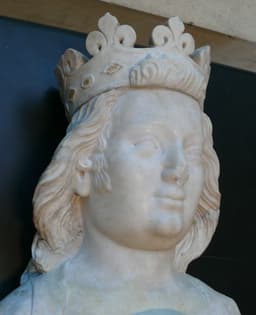
Charles IV of France
Emperor · Medieval
42.8Total
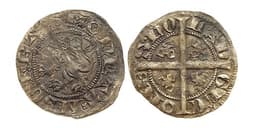
William II of Hainaut
Emperor · Medieval
34.2Total
Basic Information
Born
1294
1307
Died
1328
1345
Era
Medieval
Medieval
Nationality
France
Hainaut
Occupation
Emperor
Emperor
Civilization
Western
Western
Score Comparison
Military (10%)
20.0
22.6
Political (20%)
35.1
25.0
Influence (20%)
50.2
46.3
Legacy (20%)
45.0
35.8
Leadership (15%)
48.4
34.6
Strategy (15%)
45.0
25.0
TOTAL
42.8
34.2
Charles IV of France — Complete Timeline
1328 AD
Death Without Male HeirOther
Charles IV died without a male heir, ending the direct Capetian line. His death triggered a succession dispute between Philip of Valois and Edward III of England, leading to the Hundred Years' War.
Succession CrisisHundred Years' WarCapetian
Impact: globaltragic
William II of Hainaut — Complete Timeline
1337 AD
Inherited Counties of Hainaut, Holland, and ZeelandPolitical Action◆ Major
William II inherited the counties of Hainaut, Holland, and Zeeland from his father William I. He continued his father's policies of alliance with England and the Holy Roman Empire.
InheritanceHainautHolland
Impact: regionalconstructive
1345 AD
Battle of WarnsWar◆ Major
William II of Hainaut led a military campaign against the Frisians to suppress a rebellion. He was killed in the Battle of Warns, where his army was defeated by Frisian forces. His death ended the Avesnes line in Hainaut.
BattleFrisiaDeath
Impact: regionaltragic
Expert Analysis
Origins
Charles IV of France was born in 1294, the third son of King Philip IV and Joan I of Navarre. As a younger son, he was not initially expected to inherit the throne. He received a traditional princely education focused on chivalry and governance. His older brothers, Louis X and Philip V, both became kings but died without surviving male heirs, clearing Charles's path to the crown. Charles inherited a kingdom strained by fiscal crises and conflicts with the papacy and Flanders.
William II of Hainaut was born around 1325, the son of William I, Count of Hainaut, Holland, and Zeeland. His family was deeply entangled in English politics through his sister Philippa's marriage to Edward III. William inherited his father's counties in 1337 at a young age, with his mother Joan of Valois acting as regent. He grew up amidst the early stages of the Hundred Years' War, with his territories serving as a strategic link between England and the Low Countries.
Rise to Power
Charles IV ascended the French throne in 1322 upon the death of his brother Philip V, who also left no male heir. Charles had previously been Count of La Marche and had shown administrative competence. His reign focused on consolidating royal authority and recovering territories lost to England. He married three times in pursuit of a male heir, but his third wife, Jeanne d'Évreux, gave birth only to daughters.
William II inherited his counties in 1337 at age 12. His mother's regency maintained stability and continued the pro-English alliance. In 1345, William reached majority and began actively ruling. He faced a rebellion in Friesland, where local nobles resisted comital authority. He led a military campaign to suppress this revolt, but his army was defeated at the Battle of Warns on September 26, 1345, where William was killed. His death ended the direct Avesnes line in Hainaut.
Leadership & Governance
Charles IV's governance focused on centralization. He continued the Capetian policy of expanding royal domain, annexing territories through purchase and forfeiture. He reformed the royal administration, improving tax collection and justice. Charles also maintained peace with the papacy, avoiding the conflicts that marred his father's reign. However, his diplomatic efforts with England were less successful; he seized Gascony in 1324 but returned it in 1327 under the Treaty of Paris.
William II's leadership was cut short. His brief independent rule saw continuation of his father's alliance with England, which provided economic benefits but also drawn him into the Hundred Years' War's early campaigns. He participated in Edward III's 1345 campaign in Flanders, though his contribution was limited. At home, he faced the Frisian rebellion, which he attempted to suppress with a small army. His military score of 22.6 reflects limited experience, while Charles IV's score of 20.0 indicates minimal direct military involvement.
Triumph & Tragedy
Charles IV's greatest success was maintaining French territorial integrity and centralizing power. He secured the Vexin and other territories through diplomacy. His greatest failure was the lack of a male heir, which ended the direct Capetian line and triggered the succession crisis leading to the Hundred Years' War. The war devastated France for over a century. Charles scored 35.1 in political leadership, reflecting competent but short-sighted governance.
William II's triumph was inheriting and briefly ruling a prosperous county complex. His tragedy was his premature death at the Battle of Warns, where he was killed alongside many nobles. His death without a direct heir led to the counties passing to the Bavarian Wittelsbachs through his sister Margaret. His military score of 22.6 reflects his fatal campaign, while his political score of 25.0 indicates limited diplomatic achievements.
Character & Destiny
Charles IV was described as competent but unremarkable. He pursued a male heir obsessively, marrying three times. His character was cautious and legalistic, focusing on administrative consolidation rather than military glory. His destiny was to be the last Capetian king, a role he did not choose but which defined his legacy.
William II was young and ambitious, eager to prove himself in battle. His decision to confront the Frisians personally proved fatal. His character mirrored the chivalric ideals of his time—brave but reckless. His destiny was to die young, leaving a fragmented inheritance.
Legacy
Charles IV's legacy is paradoxical: his reign was stable, but his death caused the Hundred Years' War. His efforts to centralize the French monarchy laid groundwork for later Valois successes. He scored 45.0 in legacy, reflecting his indirect but massive impact on European history.
William II's legacy is minimal. He is remembered mainly as a footnote in the Hundred Years' War and the Battle of Warns. His death ended the Avesnes dynasty's male line, shifting power to the Wittelsbachs. He scored 35.8 in legacy, reflecting limited lasting influence.
Conclusion
Charles IV had greater impact than William II. Despite his lower military score (20.0 vs 22.6), Charles's political and legacy scores (35.1 and 45.0) far exceed William's (25.0 and 35.8). Charles's death triggered the Hundred Years' War, reshaping European geopolitics. William's death was a local tragedy with no lasting consequences beyond his dynasty's extinction. The score gap of 8.6 points reflects this: Charles's influence on history is undeniable, while William remains a minor figure.
Rankings
🥇
Charles IV of FranceLeader
Mil: 20.0Pol: 35.1Inf: 50.2
42.8
🥈
William II of Hainaut
Mil: 22.6Pol: 25.0Inf: 46.3
34.2
+8.6 behind
How This Comparison Works
Algorithm
Each figure is scored on 6 dimensions (0—100 scale) based on structured historical data: Military (10%), Political (20%), Influence (20%), Legacy (20%), Leadership (15%), Strategy (15%). The weighted total produces the final ranking.
Data Sources
Scores are computed from structured sub-indicators in the database. Scale factors adjust for era (Ancient ×0.85, Modern ×1.0) and civilization size (Eastern ×1.05, Other ×0.80) to account for differences in population and military scale.
Maximum 3 Figures
Comparisons are limited to 2—3 figures to ensure readability and statistical meaningfulness.
Error Margins
±5 points per dimension — Sub-scores are derived from historical records with inherent uncertainty. Two figures within 5 points on a dimension should be considered roughly equivalent in that area.
Total Score Accuracy
±3 points overall — The weighted combination of 6 dimensions produces a total score with approximately ±3 points of uncertainty. Differences of less than 3 points are not statistically significant— the figures are effectively tied.
Known Limitations
- Historical records are incomplete and uneven across civilizations
- Figures from oral-tradition societies may be underrepresented
- Occupation labels can misclassify multi-role figures
- Scores measure capability and impact, not moral character
- Quantitative scoring is a comparison tool, not absolute truth
Capability Radar
Military (10%) — Battles & Warfare
Battles
5
15
Win Rate
5
10
Expansion
5
10
Political (20%) — Governance & Reform
Reform
30
15
Diplomacy
30
20
Economy
30
20
Influence (20%) — Cultural & Global Reach
Cultural
10
10
Global
20
5
Legacy (20%) — Historical Impact
Historical
40
10
Longevity
30
5
Leadership (15%) — Power & Stability
Tenure
40
25
Stability
20
15
Strategy (15%) — Tactics & Innovation
Strategy
5
15
Tactics
5
15
Reform
5
5
Similar Comparisons
Comments & Discussion
No comments yet. Be the first to share your thoughts!