Loading...
Charles IV of France vs Napoleon Bonaparte
Napoleon Bonaparte leads by 28.1 pts · 2 figures compared
…
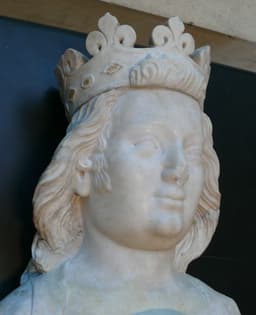
Charles IV of France
Emperor · Medieval
42.8Total

Napoleon Bonaparte
General · Modern
70.9Total
Basic Information
Born
1294
1769
Died
1328
1821
Era
Medieval
Modern
Nationality
France
France
Occupation
Emperor
General
Civilization
Western
Western
Score Comparison
Military (10%)
20.0
94.0
Political (20%)
35.1
72.0
Influence (20%)
50.2
40.0
Legacy (20%)
45.0
80.0
Leadership (15%)
48.4
78.0
Strategy (15%)
45.0
90.0
TOTAL
42.8
70.9
Charles IV of France — Complete Timeline
1328 AD
Death Without Male HeirOther
Charles IV died without a male heir, ending the direct Capetian line. His death triggered a succession dispute between Philip of Valois and Edward III of England, leading to the Hundred Years' War.
Succession CrisisHundred Years' WarCapetian
Impact: globaltragic
Napoleon Bonaparte — Complete Timeline
1799 AD
Coup of 18 BrumaireOther◆ Major
Napoleon Bonaparte, with support from his brother Lucien and key political figures, overthrew the Directory in a bloodless coup. He established the Consulate with himself as First Consul, effectively becoming the ruler of France. This event ended the French Revolution's most unstable period.
French RevolutionCoupRise to Power
Impact: regional
1804 AD
Promulgation of the Napoleonic CodeOther◆ Major
Napoleon enacted the Civil Code of the French, known as the Napoleonic Code, a comprehensive set of laws that replaced the fragmented feudal legal systems. The code established legal equality, protected property rights, and secularized law. It became the basis for legal systems in many European and world countries.
Legal ReformNapoleonic CodeCivil Law
Impact: globalconstructive
1805 AD
Battle of AusterlitzWar◆ Major
Napoleon's Grande Arm
Napoleonic WarsBattleDecisive Victory
Impact: global
1812 AD
Invasion of RussiaWar◆ Major
Napoleon led the Grande Arm
Napoleonic WarsInvasionDisaster
Impact: globaldestructive
1815 AD
Battle of WaterlooWar◆ Major
Napoleon's French army was defeated by the combined forces of the Duke of Wellington's Anglo-Allied army and Gebhard Leberecht von Bl
Napoleonic WarsBattleFinal Defeat
Impact: globaldestructive
Expert Analysis
charles-iv-of-france-vs-napoleon-bonaparte
# The Crown and the Sword: Two French Monarchs, Two Fates
On a June evening in 1815, near a small Belgian village called Waterloo, Napoleon Bonaparte watched his Imperial Guard—the invincible veterans of a hundred battles—break and flee for the first time in history. Less than five centuries earlier, in February 1328, another French ruler, Charles IV, died in his bed at the Château de Vincennes, leaving behind no son, no heir, and a kingdom on the brink of the longest war Europe had ever known. One man conquered a continent and rewrote the laws of nations; the other could not even secure his own dynasty. Why did these two Frenchmen, both crowned as sovereigns, follow such radically different paths? The answer lies not merely in talent or luck, but in the deep currents of their eras, the nature of their ambitions, and the very different worlds that shaped them.
Origins
Napoleon Bonaparte was born in 1769 on the island of Corsica, a recent French acquisition where his family belonged to the minor nobility—impoverished, ambitious, and resentful of French rule. He spoke Italian before French, and his childhood was steeped in the raw, rough-edged politics of a Mediterranean backwater. This outsider status would prove his greatest asset: he saw French society not as a fixed hierarchy but as a ladder to be climbed. The French Revolution had just begun when he was a young artillery officer, and it swept away the old rules of birth and privilege. For a man of his talents, the timing was perfect.
Charles IV, by contrast, was born in 1294 into the most ancient and sacred dynasty of Europe. The Capetian kings had ruled France for over three centuries, their authority sanctified by God and tradition. Charles was the third son of Philip IV, a king so powerful he had humiliated the Pope and destroyed the Knights Templar. From birth, Charles breathed the air of absolute certainty: he was born to rule, and rule he would, with or without genius. The medieval world did not reward ambition from below; it rewarded stability from above.
Rise to Power
Napoleon’s ascent was a masterpiece of opportunism and brilliance. In 1793, at age twenty-four, he recaptured the port of Toulon from British forces with a daring artillery plan that stunned his superiors. By 1796, he was commanding the French army in Italy, where he transformed a starving, mutinous rabble into a victorious force through sheer energy and charisma. His Italian campaign of 1796-1797 was not just a military triumph but a political education: he learned to negotiate with enemies, manipulate allies, and above all, to make his own fame the currency of power. The coup of 18 Brumaire in 1799 placed him at the head of France, and by 1804, he crowned himself Emperor—taking the crown from the Pope’s hands and placing it on his own head, a gesture that spoke volumes about his view of authority.
Charles IV’s rise was quieter, more predictable. He became king in 1322 after the death of his brother Philip V, who had himself succeeded their older brother Louis X. The Capetian succession was smooth—until it wasn’t. Charles inherited a kingdom that was stable but fragile, its finances strained by years of war with Flanders, its nobility restless under royal centralization. He was not a usurper or a revolutionary; he was a caretaker. His key events—a failed invasion of Aquitaine in 1324, a tense peace with England—were the routine maneuvers of medieval kingship, not the stuff of legend.
Leadership & Governance
Here the contrast becomes stark. Napoleon was a military genius of the first rank, with a Strategy score of 93 and a Military score of 94—among the highest in history. His campaigns are still studied in war colleges: the lightning marches of 1805 that crushed Austria at Ulm and destroyed Russia and Austria together at Austerlitz; the brutal winter campaign of 1807 that broke Prussia; the doomed but brilliant invasion of Russia in 1812. He commanded armies of hundreds of thousands, moved them with unprecedented speed, and inspired them with a blend of fear and devotion. His political score of 75 reflects a more mixed record: the Napoleonic Code unified French law and spread revolutionary ideals across Europe, but his relentless wars bled France dry, and his inability to compromise ultimately destroyed him.
Charles IV, by contrast, was a medieval king in an age of transition. His military score of 54.2 and strategy of 30.0 suggest a ruler who fought when he had to but preferred diplomacy and dynastic maneuvering. His reign saw the so-called "War of Saint-Sardos" against England—a minor conflict over a border fortress that ended in a truce, not glory. His political score of 45.1 indicates a king who struggled to maintain control: the nobility chafed under his taxes, and the Church demanded concessions. He was not incompetent, but he was ordinary—and in a time of crisis, ordinary was not enough.
Triumph & Tragedy
Napoleon’s greatest moment was arguably Austerlitz, December 2, 1805, where he lured the combined Austro-Russian army into a trap and destroyed it, ending the Third Coalition. His worst was Waterloo, June 18, 1815, where a combination of bad luck, poor subordinates, and British stubbornness cost him everything. He died in 1821 on the remote island of Saint Helena, a prisoner of the British, his empire reduced to memory.
Charles IV’s triumph was simply surviving for six years as king—no small feat in the tumultuous 1320s. His tragedy was his death without a male heir in 1328. The direct Capetian line, which had ruled France since 987, ended with him. The crown passed to his cousin Philip of Valois, but the English king Edward III—Charles’s nephew through his sister—claimed the throne as well. This succession dispute ignited the Hundred Years' War, a conflict that would ravage France for over a century.
Character & Destiny
Napoleon’s character was a force of nature: restless, brilliant, egotistical, and possessed of an iron will. He once said, "Impossible is a word to be found only in the dictionary of fools." This drive made him, but it also unmade him. He could not stop, could not consolidate, could not accept limits. His invasion of Russia in 1812 was a gamble born of hubris, and it destroyed the Grand Army.
Charles IV was a different kind of man: cautious, conventional, perhaps even timid. He had no great vision, no burning ambition. He was a placeholder king in an age that demanded a warrior. His tragedy was not that he failed, but that he was never tested—until the moment of his death, when his absence proved more consequential than his presence ever had.
Legacy
Napoleon’s legacy is immense. The Napoleonic Code influences civil law across Europe and the world. His military innovations shaped warfare for a century. He is remembered as both a liberator and a tyrant, a genius and a cautionary tale. His Legacy score of 78 reflects this ambivalence: he changed the world, but at a terrible cost.
Charles IV’s legacy is almost invisible. He is known primarily for what he failed to do: produce an heir. His Influence score of 66.7 and Legacy of 59.5 are generous, for they measure the weight of the catastrophe he inadvertently caused. The Hundred Years' War transformed France, England, and Europe, but Charles himself was swept aside by history.
Conclusion
Standing on the field of Waterloo, Napoleon might have reflected on the caprice of fate. Charles IV, dying quietly in his castle, might have done the same. Both were French kings; both faced the challenge of ruling a great nation in turbulent times. But Napoleon was a force of nature, a man who bent history to his will until history broke him. Charles was a creature of his age, a king who could not rise above the limits of his birth and era. Their stories remind us that leadership is not just about talent or opportunity—it is about the match between the man and the moment. Napoleon found his moment and seized it; Charles’s moment found him, and he could not hold it. In the end, both were mortal, both were flawed, and both were swept away. But one of them, for a brief, blazing decade, held the world in his hands.
Rankings
🥇
Napoleon BonaparteLeader
Mil: 94.0Pol: 72.0Inf: 40.0
70.9
🥈
Charles IV of France
Mil: 20.0Pol: 35.1Inf: 50.2
42.8
+28.1 behind
How This Comparison Works
Algorithm
Each figure is scored on 6 dimensions (0—100 scale) based on structured historical data: Military (10%), Political (20%), Influence (20%), Legacy (20%), Leadership (15%), Strategy (15%). The weighted total produces the final ranking.
Data Sources
Scores are computed from structured sub-indicators in the database. Scale factors adjust for era (Ancient ×0.85, Modern ×1.0) and civilization size (Eastern ×1.05, Other ×0.80) to account for differences in population and military scale.
Maximum 3 Figures
Comparisons are limited to 2—3 figures to ensure readability and statistical meaningfulness.
Error Margins
±5 points per dimension — Sub-scores are derived from historical records with inherent uncertainty. Two figures within 5 points on a dimension should be considered roughly equivalent in that area.
Total Score Accuracy
±3 points overall — The weighted combination of 6 dimensions produces a total score with approximately ±3 points of uncertainty. Differences of less than 3 points are not statistically significant— the figures are effectively tied.
Known Limitations
- Historical records are incomplete and uneven across civilizations
- Figures from oral-tradition societies may be underrepresented
- Occupation labels can misclassify multi-role figures
- Scores measure capability and impact, not moral character
- Quantitative scoring is a comparison tool, not absolute truth
Capability Radar
Military (10%) — Battles & Warfare
Battles
5
95
Win Rate
5
90
Expansion
5
95
Political (20%) — Governance & Reform
Reform
30
95
Diplomacy
30
80
Economy
30
85
Influence (20%) — Cultural & Global Reach
Cultural
10
85
Global
20
90
Legacy (20%) — Historical Impact
Historical
40
95
Longevity
30
90
Leadership (15%) — Power & Stability
Tenure
40
85
Stability
20
70
Strategy (15%) — Tactics & Innovation
Strategy
5
95
Tactics
5
98
Reform
5
92
Similar Comparisons
Comments & Discussion
LEGACY_LAZARUS6/17/2026
Comparing Charles IV to Napoleon is like comparing a flickering candle to a supernova. Charles didn't even have the political clout to produce a male heir—his three marriages were disastrous failures in dynasty building. Napoleon, by contrast, created a whole new nobility from scratch and made his brothers kings across Europe. The real tragedy? Napoleon had the ambition to rewrite every law from civil codes to constitutions, while Charles IV spent his reign bumbling through a war in Flanders he
学术追光者6/17/2026
别被拿破仑的传奇故事骗了。数据不会说谎:Charles IV 统治六年间几乎没打过一次决定性胜仗,连佛兰德斯叛乱都平不了。而拿破仑在1805-1807年间就赢得了奥斯特里茨、耶拿、弗里德兰三大战役,平均每场战役杀死敌军超过两万人。这不是运气,而是军事组织能力的代际差距。Charles IV 活在中世纪军事制度的烂摊子里,拿破仑则利用了大革命释放的全民战争潜力,这才是真正的胜负手。
CLASSICS_COLONEL6/17/2026
You're all missing the crucial paradox. Charles IV was the last Capetian king of the direct line—his death triggered the Hundred Years' War, a catastrophe that reshaped European monarchy forever. Napoleon's downfall only triggered the Congress of Vienna. Which legacy is more consequential? Charles's biological failure led to a dynastic collapse that took a century to resolve. Napoleon's political failure was patched up in a decade. For all his brilliance, Napoleon's empire evaporated like mornin
寒窗史官6/17/2026
作为研究法国王权史的人,我得说这场比较本身就有点荒谬。Charles IV 是卡佩王朝正统血脉的最后一人,他去世后瓦卢瓦王朝上台,导致英法百年战争爆发。拿破仑呢?他连个合法的世袭君主都算不上,靠政变上台,最后在圣赫勒拿岛孤独死去。真正的问题是:Charles IV 至少保住了国王的神圣性,而拿破仑把王权变成了军功变现的工具。这种降维打击式的对比,完全忽略了两者统治逻辑的本质不同。