Loading...
This comparison has not been analyzed yet.
One-time AI generation (~1 minute). Scores and timeline are already available below.
Charles IV of Hungary vs Guru Arjan Dev
Guru Arjan Dev leads by 15.9 pts · 2 figures compared
…

Charles IV of Hungary
Emperor · Modern
37.7Total
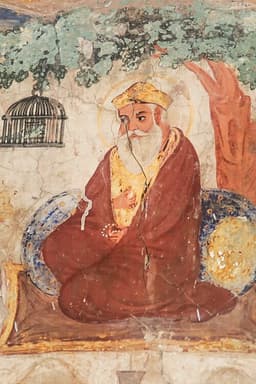
Guru Arjan Dev
Emperor · Modern
53.6Total
Basic Information
Born
1887
1563
Died
1922
1606
Era
Modern
Modern
Nationality
Hungary
India
Occupation
Emperor
Emperor
Civilization
Western
Indian
Score Comparison
Military (10%)
21.4
35.7
Political (20%)
25.0
53.8
Influence (20%)
47.1
72.0
Legacy (20%)
37.5
40.0
Leadership (15%)
31.2
58.8
Strategy (15%)
60.0
51.3
TOTAL
37.7
53.6
Charles IV of Hungary — Complete Timeline
1916 AD
Crowned King of HungaryPolitical Action◆ Major
Charles IV was crowned King of Hungary in Budapest, succeeding his great-uncle Franz Joseph I. His coronation took place during World War I, and he inherited a monarchy strained by war and nationalist tensions. He was the last Habsburg to be crowned King of Hungary.
CoronationHabsburgWorld War I
Impact: regional
1917 AD
Attempted Peace Negotiations in World War IPolitical Action◆ Major
Charles IV secretly attempted to negotiate a separate peace with the Allies through his brother-in-law, Prince Sixtus of Bourbon-Parma. The Sixtus Affair failed when the negotiations were revealed, angering Germany and weakening Austria-Hungary's position.
Sixtus AffairPeace NegotiationsWorld War I
Impact: globalconstructive
1918 AD
Abdicated as Emperor of AustriaPolitical Action◆ Major
Following the collapse of Austria-Hungary at the end of World War I, Charles IV issued a proclamation renouncing participation in state affairs but did not formally abdicate. He went into exile in Switzerland, and the Austrian Republic was proclaimed.
AbdicationEnd of Habsburg MonarchyExile
Impact: regionaltragic
1921 AD
Attempted Restoration in HungaryPolitical Action◆ Major
Charles IV made two attempts to regain the Hungarian throne, traveling to Hungary in March and October 1921. Both attempts failed due to opposition from the Entente powers and the Hungarian regent Miklos Horthy. After the second attempt, he was exiled to Madeira.
Restoration AttemptHorthyExile
Impact: regionaltragic
Guru Arjan Dev — Complete Timeline
1581 AD
Appointed Fifth Sikh GuruPolitical Action
Guru Ram Das appointed Arjan Dev as his successor, making him the fifth Sikh Guru. This continued the tradition of guru succession and marked a period of consolidation for Sikhism.
SikhismGuru SuccessionLeadership
Impact: globalconstructive
1590 AD
Established the City of Tarn TaranCultural
Guru Arjan Dev founded the city of Tarn Taran and built a large sarovar (pool) there. It became a center for Sikh pilgrimage and community activities.
City FoundationPilgrimageSikhism
Impact: regionalconstructive
1604 AD
Compiled the Adi GranthCultural◆ Major
Guru Arjan Dev compiled the Adi Granth, the primary Sikh scripture, containing hymns of Sikh Gurus and other saints. He installed it at the Harmandir Sahib, establishing it as the central religious text of Sikhism.
ScriptureAdi GranthSikhism
Impact: globalconstructive
Completed the Harmandir Sahib (Golden Temple)Cultural◆ Major
Guru Arjan Dev completed the construction of the Harmandir Sahib in Amritsar, with a central location and doors on all four sides symbolizing openness. It became the holiest Sikh shrine and a symbol of Sikh identity.
TempleAmritsarSikhism
Impact: globalconstructive
1606 AD
Martyred by Mughal Emperor JahangirPolitical Action
Guru Arjan Dev was arrested and executed by order of Emperor Jahangir, accused of supporting a rebel prince. He was tortured for five days and died in the Ravi River. This event became a turning point, militarizing the Sikh community.
MartyrdomMughal PersecutionSikhism
Impact: globaltragic
This comparison has not been analyzed yet.
One-time AI generation (~1 minute). Scores and timeline are already available below.
Rankings
🥇
Guru Arjan DevLeader
Mil: 35.7Pol: 53.8Inf: 72.0
53.6
🥈
Charles IV of Hungary
Mil: 21.4Pol: 25.0Inf: 47.1
37.7
+15.9 behind
How This Comparison Works
Algorithm
Each figure is scored on 6 dimensions (0—100 scale) based on structured historical data: Military (10%), Political (20%), Influence (20%), Legacy (20%), Leadership (15%), Strategy (15%). The weighted total produces the final ranking.
Data Sources
Scores are computed from structured sub-indicators in the database. Scale factors adjust for era (Ancient ×0.85, Modern ×1.0) and civilization size (Eastern ×1.05, Other ×0.80) to account for differences in population and military scale.
Maximum 3 Figures
Comparisons are limited to 2—3 figures to ensure readability and statistical meaningfulness.
Error Margins
±5 points per dimension — Sub-scores are derived from historical records with inherent uncertainty. Two figures within 5 points on a dimension should be considered roughly equivalent in that area.
Total Score Accuracy
±3 points overall — The weighted combination of 6 dimensions produces a total score with approximately ±3 points of uncertainty. Differences of less than 3 points are not statistically significant— the figures are effectively tied.
Known Limitations
- Historical records are incomplete and uneven across civilizations
- Figures from oral-tradition societies may be underrepresented
- Occupation labels can misclassify multi-role figures
- Scores measure capability and impact, not moral character
- Quantitative scoring is a comparison tool, not absolute truth
Capability Radar
Military (10%) — Battles & Warfare
Battles
34
31
Win Rate
41
32
Expansion
41
38
Political (20%) — Governance & Reform
Reform
5
70
Diplomacy
15
40
Economy
5
50
Influence (20%) — Cultural & Global Reach
Cultural
10
75
Global
10
60
Legacy (20%) — Historical Impact
Historical
20
80
Longevity
15
85
Leadership (15%) — Power & Stability
Tenure
10
25
Stability
5
30
Strategy (15%) — Tactics & Innovation
Strategy
43
39
Tactics
47
43
Reform
52
43
Similar Comparisons
Comments & Discussion
No comments yet. Be the first to share your thoughts!