Loading...
Charles IV vs Sigismund of Luxembourg
Sigismund of Luxembourg leads by 0.3 pts · 2 figures compared
…

Charles IV
Emperor · Medieval
59.7Total
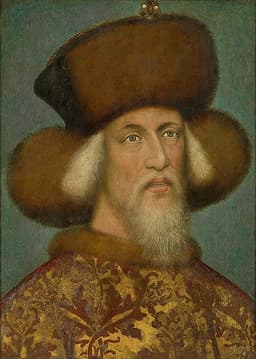
Sigismund of Luxembourg
Emperor · Medieval
60.0Total
Basic Information
Born
1316
1368
Died
1378
1437
Era
Medieval
Medieval
Nationality
Holy Roman Empire
Holy Roman Empire
Occupation
Emperor
Emperor
Civilization
Western
Western
Score Comparison
Military (10%)
50.0
50.0
Political (20%)
78.0
62.7
Influence (20%)
55.0
62.0
Legacy (20%)
52.0
52.0
Leadership (15%)
78.0
74.0
Strategy (15%)
45.0
60.0
TOTAL
59.7
60.0
Charles IV — Complete Timeline
1344 AD
Made Prague the Imperial CapitalPolitical Action◆ Major
Charles IV, as King of Bohemia and Holy Roman Emperor, established Prague as the permanent imperial capital. He initiated extensive building projects including the Charles Bridge and St. Vitus Cathedral, transforming Prague into a major European cultural and political center.
Urban DevelopmentImperial CapitalPrague
Impact: regionalconstructive
1348 AD
Founded Charles UniversityCultural◆ Major
Charles IV founded the University of Prague, later named Charles University, as the first university in Central Europe. It became a leading center for learning and attracted scholars from across the continent, strengthening Prague's intellectual reputation.
EducationUniversityCultural Development
Impact: regionalconstructive
1356 AD
Issued the Golden Bull of 1356Reform
Charles IV issued the Golden Bull, a constitutional document that regulated the election of the Holy Roman Emperor by seven prince-electors. This law stabilized imperial succession and defined the electoral process for centuries, reducing papal influence.
Constitutional LawImperial ReformElectoral System
Impact: regionalconstructive
1373 AD
Acquired BrandenburgPolitical Action
Charles IV secured the Margraviate of Brandenburg for the Luxembourg dynasty through a treaty with the Wittelsbachs. This territorial acquisition expanded his family's holdings in northern Germany and strengthened imperial authority.
Territorial ExpansionLuxembourg DynastyBrandenburg
Impact: regional
Sigismund of Luxembourg — Complete Timeline
1410 AD
Election as King of GermanyPolitical Action◆ Major
Sigismund, King of Hungary and son of Charles IV, was elected King of Germany by one faction of electors, while Jobst of Moravia was elected by another. This led to a double kingship until Jobst's death in 1411.
ElectionDouble Kingship
Impact: national
1414 AD
Convening of the Council of ConstancePolitical Action
Sigismund convened the Council of Constance to end the Western Schism. The council deposed all three rival popes and elected Pope Martin V, restoring unity to the Catholic Church.
CouncilEnd of Schism
Impact: globalconstructive
1415 AD
Execution of Jan HusPolitical Action
Despite granting Jan Hus a safe-conduct to the Council of Constance, Sigismund allowed Hus to be tried and burned at the stake for heresy. This act sparked the Hussite Wars in Bohemia.
ExecutionHussite Wars
Impact: regionaltragic
1433 AD
Coronation as Holy Roman EmperorPolitical Action◆ Major
Sigismund was crowned Holy Roman Emperor in Rome by Pope Eugene IV. His coronation marked the end of a long struggle for imperial recognition and solidified his authority.
CoronationImperial Authority
Impact: globalconstructive
Expert Analysis
Origins
Charles IV, born in 1316 in Prague, was the eldest son of John of Luxembourg, King of Bohemia. Educated at the French court, he absorbed administrative and cultural influences that shaped his later rule. His father's frequent absences left Charles to manage Bohemian affairs early, fostering a pragmatic and diplomatic approach.
Sigismund, born in 1368 in Nuremberg, was Charles IV's son from his third marriage. Raised in the Luxembourg court, he inherited the Margraviate of Brandenburg as a child. His early years were marked by political maneuvering, as he sought to secure the Hungarian throne through marriage to Mary of Hungary.
Rise to Power
Charles IV rose to power after his father's death in 1346, securing election as King of Germany in 1346 and Holy Roman Emperor in 1355. His key turning point was the 1355 imperial coronation, followed by the 1356 Golden Bull, which stabilized imperial succession by defining the seven electors. He skillfully used marriage alliances and territorial acquisitions, such as acquiring Brandenburg in 1373, to expand Luxembourg influence.
Sigismund's path was more contested. He became King of Hungary in 1387 through marriage, but faced rebellions and Ottoman threats. His election as King of Germany in 1410 was disputed, with rival candidate Jobst of Moravia. Sigismund secured sole kingship after Jobst's death in 1411. His coronation as Holy Roman Emperor came later, in 1433, after resolving the Western Schism.
Leadership & Governance
Charles IV's governance focused on centralization and cultural patronage. He made Prague the imperial capital, initiating construction of St. Vitus Cathedral and Charles Bridge. He founded Charles University in 1348, the first in Central Europe, boosting education. His Golden Bull of 1356 reduced papal influence in imperial elections, strengthening the empire's legal framework. His political score of 78.0 reflects effective administration.
Sigismund's leadership was more reactive. He convened the Council of Constance (1414–1418) to end the Western Schism, a major political achievement that restored unity to the Church. However, his handling of Jan Hus damaged his reputation. Despite granting Hus a safe-conduct, he allowed his execution, sparking the Hussite Wars. His military score of 50.0 and strategy of 60.0 indicate mixed effectiveness; he struggled to suppress the Hussites and relied on diplomacy.
Triumph & Tragedy
Charles IV's triumphs include the Golden Bull, which regulated imperial elections for centuries, and the cultural flourishing of Prague. His founding of Charles University created a lasting educational hub. A tragedy was his inability to secure a stable succession; his son Wenceslaus IV proved ineffective, leading to later conflicts.
Sigismund's greatest triumph was ending the Western Schism, a feat that required diplomatic skill. His coronation as emperor in 1433 solidified his legitimacy. Yet his tragedy was the Hussite crisis: his betrayal of Hus ignited wars that devastated Bohemia and undermined his reign. He died in 1437 without a male heir, ending the Luxembourg dynasty.
Character & Destiny
Charles IV was pragmatic, scholarly, and cautious. He prioritized legal reforms and cultural projects over military expansion. His personality shaped a stable, prosperous reign, but his aversion to conflict left his dynasty vulnerable. Historical assessments rate his leadership at 78.0, reflecting effective governance.
Sigismund was ambitious and charismatic but inconsistent. His decisions often backfired, as with Hus. He scored 62.7 in political acumen, lower than Charles. His destiny was to be a transitional figure, bridging the medieval and early modern eras but failing to secure his dynasty's future.
Legacy
Charles IV's legacy endures in Prague's architecture, Charles University, and the Golden Bull, which influenced German constitutional law until 1806. His cultural patronage left a lasting imprint on Central Europe. His legacy score is 52.0, reflecting long-term impact.
Sigismund's legacy is mixed. The Council of Constance resolved the schism but also set a precedent for conciliarism. His role in Hus's death fueled Czech nationalism and religious conflict. His influence score of 62.0 is higher than Charles's 55.0, but his legacy is more controversial.
Conclusion
Charles IV had greater impact on the Holy Roman Empire's stability and cultural development. His political reforms (score 78.0) and institutional foundations outlasted Sigismund's temporary diplomatic successes. While Sigismund's total score (60.0) slightly exceeds Charles's (59.7), Charles's achievements—the Golden Bull, Charles University, and Prague's transformation—created enduring structures. Sigismund's legacy is overshadowed by the Hussite Wars and his dynasty's extinction. Charles IV is the more consequential figure.
Rankings
🥇
Sigismund of LuxembourgLeader
Mil: 50.0Pol: 62.7Inf: 62.0
60.0
🥈
Charles IV
Mil: 50.0Pol: 78.0Inf: 55.0
59.7
+0.3 behind
How This Comparison Works
Algorithm
Each figure is scored on 6 dimensions (0—100 scale) based on structured historical data: Military (10%), Political (20%), Influence (20%), Legacy (20%), Leadership (15%), Strategy (15%). The weighted total produces the final ranking.
Data Sources
Scores are computed from structured sub-indicators in the database. Scale factors adjust for era (Ancient ×0.85, Modern ×1.0) and civilization size (Eastern ×1.05, Other ×0.80) to account for differences in population and military scale.
Maximum 3 Figures
Comparisons are limited to 2—3 figures to ensure readability and statistical meaningfulness.
Error Margins
±5 points per dimension — Sub-scores are derived from historical records with inherent uncertainty. Two figures within 5 points on a dimension should be considered roughly equivalent in that area.
Total Score Accuracy
±3 points overall — The weighted combination of 6 dimensions produces a total score with approximately ±3 points of uncertainty. Differences of less than 3 points are not statistically significant— the figures are effectively tied.
Known Limitations
- Historical records are incomplete and uneven across civilizations
- Figures from oral-tradition societies may be underrepresented
- Occupation labels can misclassify multi-role figures
- Scores measure capability and impact, not moral character
- Quantitative scoring is a comparison tool, not absolute truth
Capability Radar
Military (10%) — Battles & Warfare
Battles
25
55
Win Rate
20
45
Expansion
15
40
Political (20%) — Governance & Reform
Reform
80
60
Diplomacy
85
75
Economy
80
50
Influence (20%) — Cultural & Global Reach
Cultural
75
55
Global
55
55
Legacy (20%) — Historical Impact
Historical
70
70
Longevity
65
60
Leadership (15%) — Power & Stability
Tenure
85
70
Stability
75
35
Strategy (15%) — Tactics & Innovation
Strategy
35
50
Tactics
30
40
Reform
20
30
Similar Comparisons
Comments & Discussion
No comments yet. Be the first to share your thoughts!