Loading...
Napoleon Bonaparte vs Sigismund of Luxembourg
Napoleon Bonaparte leads by 10.9 pts · 2 figures compared
…

Napoleon Bonaparte
General · Modern
70.9Total
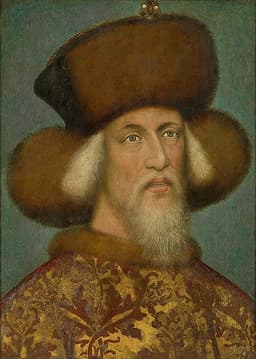
Sigismund of Luxembourg
Emperor · Medieval
60.0Total
Basic Information
Born
1769
1368
Died
1821
1437
Era
Modern
Medieval
Nationality
France
Holy Roman Empire
Occupation
General
Emperor
Civilization
Western
Western
Score Comparison
Military (10%)
94.0
50.0
Political (20%)
72.0
62.7
Influence (20%)
40.0
62.0
Legacy (20%)
80.0
52.0
Leadership (15%)
78.0
74.0
Strategy (15%)
90.0
60.0
TOTAL
70.9
60.0
Napoleon Bonaparte — Complete Timeline
1799 AD
Coup of 18 BrumaireOther◆ Major
Napoleon Bonaparte, with support from his brother Lucien and key political figures, overthrew the Directory in a bloodless coup. He established the Consulate with himself as First Consul, effectively becoming the ruler of France. This event ended the French Revolution's most unstable period.
French RevolutionCoupRise to Power
Impact: regional
1804 AD
Promulgation of the Napoleonic CodeOther◆ Major
Napoleon enacted the Civil Code of the French, known as the Napoleonic Code, a comprehensive set of laws that replaced the fragmented feudal legal systems. The code established legal equality, protected property rights, and secularized law. It became the basis for legal systems in many European and world countries.
Legal ReformNapoleonic CodeCivil Law
Impact: globalconstructive
1805 AD
Battle of AusterlitzWar◆ Major
Napoleon's Grande Arm
Napoleonic WarsBattleDecisive Victory
Impact: global
1812 AD
Invasion of RussiaWar◆ Major
Napoleon led the Grande Arm
Napoleonic WarsInvasionDisaster
Impact: globaldestructive
1815 AD
Battle of WaterlooWar◆ Major
Napoleon's French army was defeated by the combined forces of the Duke of Wellington's Anglo-Allied army and Gebhard Leberecht von Bl
Napoleonic WarsBattleFinal Defeat
Impact: globaldestructive
Sigismund of Luxembourg — Complete Timeline
1410 AD
Election as King of GermanyPolitical Action◆ Major
Sigismund, King of Hungary and son of Charles IV, was elected King of Germany by one faction of electors, while Jobst of Moravia was elected by another. This led to a double kingship until Jobst's death in 1411.
ElectionDouble Kingship
Impact: national
1414 AD
Convening of the Council of ConstancePolitical Action
Sigismund convened the Council of Constance to end the Western Schism. The council deposed all three rival popes and elected Pope Martin V, restoring unity to the Catholic Church.
CouncilEnd of Schism
Impact: globalconstructive
1415 AD
Execution of Jan HusPolitical Action
Despite granting Jan Hus a safe-conduct to the Council of Constance, Sigismund allowed Hus to be tried and burned at the stake for heresy. This act sparked the Hussite Wars in Bohemia.
ExecutionHussite Wars
Impact: regionaltragic
1433 AD
Coronation as Holy Roman EmperorPolitical Action◆ Major
Sigismund was crowned Holy Roman Emperor in Rome by Pope Eugene IV. His coronation marked the end of a long struggle for imperial recognition and solidified his authority.
CoronationImperial Authority
Impact: globalconstructive
Expert Analysis
napoleon-bonaparte-vs-sigismund-of-luxembourg
# The Emperor and the Conqueror: Two Paths to Power in Christendom
On a June morning in 1815, Napoleon Bonaparte watched his Imperial Guard march into the cannon fire of Wellington’s squares at Waterloo. Less than four centuries earlier, another ruler had stood before the walls of Constance, watching a different kind of fire consume a man he had promised to protect. Both moments defined their legacies—one of military brilliance undone by hubris, the other of political calculation stained by betrayal. How did these two leaders, both crowned emperors of a fractured Christendom, come to represent such different fates?
Origins
Napoleon Bonaparte was born in 1769 on the island of Corsica, a year after France had purchased the island from Genoa. His family were minor nobles of Italian origin, speaking Corsican dialect and resentful of French rule. The young Napoleon was sent to military school in mainland France, where he was mocked for his accent and small stature. He read voraciously—history, strategy, the campaigns of Alexander and Caesar—and emerged as a product of the Enlightenment and the French Revolution. His world was one of upheaval, where talent could overturn tradition, and a young artillery officer could become emperor.
Sigismund of Luxembourg was born in 1368 into the heart of medieval power. His father was Charles IV, Holy Roman Emperor and King of Bohemia, one of the most learned and politically astute rulers of the age. Sigismund grew up in Prague, then the cultural capital of Europe, surrounded by the rituals of imperial ceremony and the intrigues of princely courts. Where Napoleon forged himself through struggle, Sigismund inherited a name and a network. His path was not one of revolution but of negotiation, marriage, and the careful manipulation of the complex feudal order that dominated late medieval politics.
Rise to Power
Napoleon’s ascent was meteoric. At twenty-four, he drove the British out of Toulon. At twenty-six, he crushed a royalist uprising in Paris with a “whiff of grapeshot.” By thirty, he had conquered Italy and Egypt, his dispatches electrifying France. His coup of 18 Brumaire in 1799 made him First Consul, and by 1804, he crowned himself Emperor in Notre Dame. Each step was a gamble, a demonstration of will and military genius that seemed to bend history to his ambition.
Sigismund’s rise was slower, more labyrinthine. He became King of Hungary in 1387 through marriage, spending years fighting rebellious nobles and Ottoman incursions. His election as King of Germany in 1410 was contested—one faction chose him, another chose his cousin Jobst. Only after Jobst’s sudden death did Sigismund secure his claim. Unlike Napoleon, who seized power with armies, Sigismund accumulated it through patience, diplomacy, and survival. His coronation as Holy Roman Emperor did not come until 1433, when he was sixty-five years old.
Leadership & Governance
Napoleon ruled with energy and vision. He reformed French law into the Napoleonic Code, rationalized administration, established the Bank of France, and built a system of lycées that educated a generation. His military strategy was revolutionary: rapid marches, concentration of force, and the destruction of enemy armies rather than the capture of territory. At Austerlitz in 1805, he destroyed the combined forces of Austria and Russia in a single day. His political wisdom, however, was brittle. He alienated the European powers, installed his brothers on thrones, and failed to consolidate his gains.
Sigismund’s governance was the art of the possible. His military scores are low—25.8—and for good reason. He lost battles to the Ottomans, struggled to control Hungary, and never commanded armies with Napoleon’s genius. But his political score of 78.5 reflects a different kind of mastery. He convened the Council of Constance in 1414, ending the Western Schism that had divided Christendom between three rival popes. The council deposed all three and elected Martin V, restoring unity to the Church. It was a feat of diplomacy that no general could achieve.
Triumph & Tragedy
Napoleon’s greatest moment was Austerlitz, where the sun broke through the mist to reveal his trap sprung perfectly. His greatest tragedy was the Russian campaign of 1812, where he lost half a million men to winter, hunger, and Cossacks. He abdicated in 1814, returned for the Hundred Days in 1815, and was defeated at Waterloo. He died in exile on Saint Helena in 1821, a prisoner of the British.
Sigismund’s triumph was Constance, where he demonstrated that political will could heal the deepest wounds of Christendom. His tragedy was the execution of Jan Hus in 1415. Sigismund had granted Hus a safe-conduct to the council, guaranteeing his safety. Yet when Hus was tried and condemned for heresy, Sigismund allowed him to be burned at the stake. The betrayal sparked the Hussite Wars that ravaged Bohemia for decades. Sigismund’s word was broken, and his reputation never fully recovered.
Character & Destiny
Napoleon was driven by an insatiable ambition. “I am not a man,” he once said, “but a thing.” He saw himself as an instrument of destiny, a force of nature. This made him unstoppable in victory but incapable of compromise. He could not share power, could not accept limits, and so he overreached until he broke.
Sigismund was a pragmatist. He was charming, learned, and eloquent, speaking several languages fluently. But he was also calculating, willing to sacrifice Hus for the greater political goal of ending the Schism. His personality was that of a survivor, not a conqueror. He adapted, negotiated, and endured. Where Napoleon burned bright and fast, Sigismund burned long and low.
Legacy
Napoleon’s legacy is colossal. The Napoleonic Code influences civil law worldwide. His military campaigns are studied in every war college. He reshaped Europe, spread nationalism, and destroyed the old feudal order. His scores reflect this: Military 94, Influence 82, Legacy 78. He is remembered as both hero and tyrant, a figure of epic scale.
Sigismund’s legacy is quieter but significant. He preserved the Holy Roman Empire, ended the Schism, and left a mark on constitutional development in Hungary and Bohemia. His scores—Political 78.5, Leadership 85—speak to his skill in holding together a crumbling structure. But his betrayal of Hus stains his memory, especially in the Czech lands, where Hus is a national martyr.
Conclusion
One conquered with cannon, the other with councils. Napoleon changed the world through war; Sigismund held it together through patience. Both were emperors, both were flawed, both were shaped by their times. Napoleon’s era of revolution demanded audacity and rewarded the bold. Sigismund’s age of schism required caution and rewarded the cunning. In the end, the question is not which was greater, but which was wiser. Napoleon gave Europe glory and blood. Sigismund gave it peace—at a price. Their stories remind us that history judges not only by victory, but by what was built, and what was broken.
Rankings
🥇
Napoleon BonaparteLeader
Mil: 94.0Pol: 72.0Inf: 40.0
70.9
🥈
Sigismund of Luxembourg
Mil: 50.0Pol: 62.7Inf: 62.0
60.0
+10.9 behind
How This Comparison Works
Algorithm
Each figure is scored on 6 dimensions (0—100 scale) based on structured historical data: Military (10%), Political (20%), Influence (20%), Legacy (20%), Leadership (15%), Strategy (15%). The weighted total produces the final ranking.
Data Sources
Scores are computed from structured sub-indicators in the database. Scale factors adjust for era (Ancient ×0.85, Modern ×1.0) and civilization size (Eastern ×1.05, Other ×0.80) to account for differences in population and military scale.
Maximum 3 Figures
Comparisons are limited to 2—3 figures to ensure readability and statistical meaningfulness.
Error Margins
±5 points per dimension — Sub-scores are derived from historical records with inherent uncertainty. Two figures within 5 points on a dimension should be considered roughly equivalent in that area.
Total Score Accuracy
±3 points overall — The weighted combination of 6 dimensions produces a total score with approximately ±3 points of uncertainty. Differences of less than 3 points are not statistically significant— the figures are effectively tied.
Known Limitations
- Historical records are incomplete and uneven across civilizations
- Figures from oral-tradition societies may be underrepresented
- Occupation labels can misclassify multi-role figures
- Scores measure capability and impact, not moral character
- Quantitative scoring is a comparison tool, not absolute truth
Capability Radar
Military (10%) — Battles & Warfare
Battles
95
55
Win Rate
90
45
Expansion
95
40
Political (20%) — Governance & Reform
Reform
95
60
Diplomacy
80
75
Economy
85
50
Influence (20%) — Cultural & Global Reach
Cultural
85
55
Global
90
55
Legacy (20%) — Historical Impact
Historical
95
70
Longevity
90
60
Leadership (15%) — Power & Stability
Tenure
85
70
Stability
70
35
Strategy (15%) — Tactics & Innovation
Strategy
95
50
Tactics
98
40
Reform
92
30
Similar Comparisons
Comments & Discussion
No comments yet. Be the first to share your thoughts!