Loading...
This comparison has not been analyzed yet.
One-time AI generation (~1 minute). Scores and timeline are already available below.
Charles IX of Sweden vs Mwambutsa IV
Charles IX of Sweden leads by 14.2 pts · 2 figures compared
…
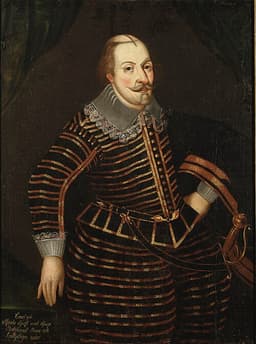
Charles IX of Sweden
Emperor · Modern
52.7Total

Mwambutsa IV
Emperor · Modern
38.5Total
Basic Information
Born
1550
1912
Died
1611
1977
Era
Modern
Modern
Nationality
Sweden
Burundi
Occupation
Emperor
Emperor
Civilization
Western
Other
Score Comparison
Military (10%)
10.0
18.6
Political (20%)
68.0
35.1
Influence (20%)
53.3
47.9
Legacy (20%)
47.5
36.7
Leadership (15%)
74.0
48.4
Strategy (15%)
51.7
29.9
TOTAL
52.7
38.5
Charles IX of Sweden — Complete Timeline
1599 AD
Regency of Charles IXPolitical Action
Charles IX, then Duke of S
RegencyRebellionSigismund
Impact: national
1600 AD
War against Poland (Polish–Swedish War)War◆ Major
Charles IX launched a war against Poland to claim the Swedish throne from Sigismund III. The war included the Battle of Kircholm (1605), a major Polish victory, and continued intermittently until 1629.
Polish-Swedish WarDynastic Conflict
Impact: regional
1604 AD
Coronation of Charles IXPolitical Action◆ Major
Charles IX was formally crowned King of Sweden after the Riksdag declared Sigismund deposed. His coronation solidified the Vasa dynasty's break with Poland and established a Protestant, anti-Catholic policy.
CoronationSuccession
Impact: national
1611 AD
War against Denmark (Kalmar War)War◆ Major
Charles IX initiated the Kalmar War against Denmark-Norway over control of the Baltic Sea. The war ended in 1613 with the Treaty of Kn
Kalmar WarDenmarkBaltic
Impact: regionaldestructive
Founding of the Swedish East India CompanyPolitical Action
Charles IX granted a charter for the Swedish East India Company, though it was not fully realized until later. This initiative aimed to expand Swedish trade and influence in Asia.
TradeEast India CompanyColonialism
Impact: nationalconstructive
Mwambutsa IV — Complete Timeline
1962 AD
Presided over Burundi's independence from BelgiumPolitical Action◆ Major
Mwambutsa IV was the reigning mwami when Burundi gained independence from Belgian colonial rule on July 1, 1962. He became the constitutional monarch of the newly independent Kingdom of Burundi, with a government led by a prime minister under a parliamentary system.
IndependenceDecolonizationMonarchy
Impact: regionalconstructive
1963 AD
Navigated ethnic tensions between Hutu and TutsiPolitical Action◆ Major
Mwambutsa IV attempted to balance power between Hutu and Tutsi political factions in the post-independence government. He appointed both Hutu and Tutsi prime ministers, but ethnic violence erupted in 1965 after a failed Hutu coup attempt, leading to reprisals and deepening divisions.
Ethnic ConflictPoliticsCoup Attempt
Impact: regionaltragic
1966 AD
Fled into exile after the 1966 coupPolitical Action◆ Major
Following a military coup led by Tutsi officers, Mwambutsa IV was deposed and fled into exile in Switzerland. The coup abolished the monarchy and established a republic, ending the Ganwa dynasty's rule. Mwambutsa IV never returned to Burundi, dying in exile in 1977.
CoupExileEnd of Monarchy
Impact: regionaltragic
This comparison has not been analyzed yet.
One-time AI generation (~1 minute). Scores and timeline are already available below.
Rankings
🥇
Charles IX of SwedenLeader
Mil: 10.0Pol: 68.0Inf: 53.3
52.7
🥈
Mwambutsa IV
Mil: 18.6Pol: 35.1Inf: 47.9
38.5
+14.2 behind
How This Comparison Works
Algorithm
Each figure is scored on 6 dimensions (0—100 scale) based on structured historical data: Military (10%), Political (20%), Influence (20%), Legacy (20%), Leadership (15%), Strategy (15%). The weighted total produces the final ranking.
Data Sources
Scores are computed from structured sub-indicators in the database. Scale factors adjust for era (Ancient ×0.85, Modern ×1.0) and civilization size (Eastern ×1.05, Other ×0.80) to account for differences in population and military scale.
Maximum 3 Figures
Comparisons are limited to 2—3 figures to ensure readability and statistical meaningfulness.
Error Margins
±5 points per dimension — Sub-scores are derived from historical records with inherent uncertainty. Two figures within 5 points on a dimension should be considered roughly equivalent in that area.
Total Score Accuracy
±3 points overall — The weighted combination of 6 dimensions produces a total score with approximately ±3 points of uncertainty. Differences of less than 3 points are not statistically significant— the figures are effectively tied.
Known Limitations
- Historical records are incomplete and uneven across civilizations
- Figures from oral-tradition societies may be underrepresented
- Occupation labels can misclassify multi-role figures
- Scores measure capability and impact, not moral character
- Quantitative scoring is a comparison tool, not absolute truth
Capability Radar
Military (10%) — Battles & Warfare
Battles
45
6
Win Rate
40
12
Expansion
45
11
Political (20%) — Governance & Reform
Reform
60
20
Diplomacy
40
25
Economy
50
15
Influence (20%) — Cultural & Global Reach
Cultural
30
15
Global
30
10
Legacy (20%) — Historical Impact
Historical
45
20
Longevity
40
10
Leadership (15%) — Power & Stability
Tenure
55
30
Stability
30
10
Strategy (15%) — Tactics & Innovation
Strategy
40
14
Tactics
35
18
Reform
50
23
Similar Comparisons
Comments & Discussion
No comments yet. Be the first to share your thoughts!