Loading...
Charles of Anjou vs Qin Shi Huang
Qin Shi Huang leads by 25.7 pts · 2 figures compared
…
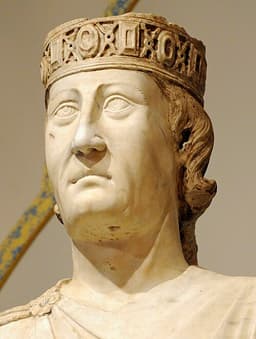
Charles of Anjou
Emperor · Medieval
59.5Total
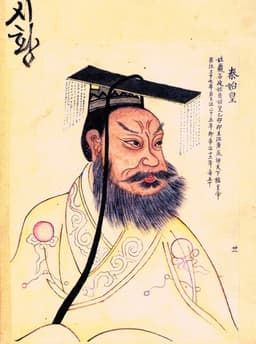
Qin Shi Huang
Emperor · Ancient
85.2Total
Basic Information
Born
1227
-259
Died
1285
-210
Era
Medieval
Ancient
Nationality
France
China
Occupation
Emperor
Emperor
Civilization
Western
Eastern
Score Comparison
Military (10%)
82.0
80.0
Political (20%)
48.5
90.0
Influence (20%)
56.7
85.0
Legacy (20%)
52.0
90.0
Leadership (15%)
68.0
78.0
Strategy (15%)
66.3
82.0
TOTAL
59.5
85.2
Charles of Anjou — Complete Timeline
1266 AD
Battle of BeneventoWar◆ Major
Charles of Anjou defeated Manfred of Hohenstaufen at Benevento. Manfred was killed in the battle, allowing Charles to take control of the Kingdom of Sicily. This victory established the Angevin dynasty in southern Italy.
Angevin ConquestHohenstaufenItaly
Impact: regional
1268 AD
Battle of TagliacozzoWar◆ Major
Charles of Anjou defeated Conradin, the last Hohenstaufen claimant, at Tagliacozzo. Conradin was captured and later executed in Naples. This victory secured Charles's control over Sicily and ended Hohenstaufen claims.
HohenstaufenExecutionItaly
Impact: regionaldestructive
1282 AD
Sicilian VespersWar
A rebellion broke out in Palermo against Angevin rule, leading to the massacre of French officials and soldiers. The revolt spread across Sicily, resulting in the loss of the island to Peter III of Aragon. This event ended Charles's control of Sicily.
RevoltAragonSicily
Impact: regionaldestructive
1284 AD
Crusade against AragonWar
Pope Martin IV declared a crusade against Peter III of Aragon, and Charles of Anjou led the campaign. The French invasion of Aragon failed, and Charles's fleet was defeated. This crusade drained Angevin resources and weakened his position.
CrusadeAragonFailure
Impact: regionaldestructive
Qin Shi Huang — Complete Timeline
246 BC
Construction of the Mausoleum and Terracotta ArmyOther◆ Major
Qin Shi Huang commissioned a vast mausoleum complex near Xi'an, guarded by thousands of life-sized terracotta soldiers, horses, and chariots. The project employed hundreds of thousands of workers and reflected his obsession with immortality and imperial power.
Impact: global
230 BC
Conquest of the Six Warring StatesWar
From 230 to 221 BCE, Ying Zheng led the Qin state in a series of campaigns that conquered the Han, Zhao, Wei, Chu, Yan, and Qi states. This unified China under a single ruler for the first time, ending the Warring States period.
Impact: global
221 BC
Standardization of Writing, Currency, and MeasurementsReform◆ Major
Qin Shi Huang ordered the standardization of Chinese script, currency, and weights and measures across the unified empire. This facilitated administration, trade, and cultural integration, laying a foundation for future dynasties.
Impact: globalconstructive
Proclamation of the Qin DynastyPolitical Action
After conquering the last independent state, Ying Zheng declared himself Shi Huangdi (First Emperor), founding the Qin Dynasty. He adopted a new title to signify his supreme authority and initiated centralized imperial rule.
Impact: global
214 BC
Initiation of the Great Wall ConstructionOther◆ Major
Qin Shi Huang ordered the connection and extension of existing northern fortifications to create a unified defensive wall against nomadic Xiongnu raids. This project involved massive conscripted labor and became the precursor to the later Great Wall.
Impact: regional
213 BC
Burning of Books and Burying of ScholarsPolitical Action◆ Major
On the advice of Li Si, Qin Shi Huang ordered the burning of historical records and philosophical texts not aligned with Legalist doctrine. He also had 460 Confucian scholars buried alive to suppress dissent and consolidate ideological control.
Impact: nationaldestructive
Expert Analysis
Qin Shi Huang vs Charles of Anjou: Historical Comparison
Qin Shi Huang, the first Emperor of a unified China, and Charles of Anjou, a medieval French prince who became King of Sicily, both forged empires through ruthless ambition, yet their methods and legacies diverged sharply across time and geography.
Dimension Analysis
**Military: Qin Shi Huang 80 / Charles of Anjou 61**
Qin Shi Huang’s campaigns conquered six rival states to unify China, employing standardized weaponry and mass conscription, whereas Charles of Anjou’s victories at Benevento and Tagliacozzo were decisive but confined to southern Italy and the Mediterranean.
**Political: Qin Shi Huang 88 / Charles of Anjou 69**
Qin centralized power through legalism, abolishing feudalism and standardizing writing, currency, and laws; Charles, though a capable administrator, relied on papal backing and feudal alliances, facing constant revolts in Sicily.
**Influence: Qin Shi Huang 82 / Charles of Anjou 76**
Qin’s unification shaped Chinese identity for two millennia, while Charles’s Angevin dynasty influenced Mediterranean politics but was overthrown in the Sicilian Vespers, limiting its long-term reach.
**Legacy: Qin Shi Huang 85 / Charles of Anjou 66**
Qin is remembered as the father of China, despite his tyranny, while Charles is largely a footnote in European history—a capable but brutal ruler whose kingdom collapsed soon after his death.
**Leadership: Qin Shi Huang 88 / Charles of Anjou 85**
Both were iron-willed and visionary, but Qin’s ability to impose total control over a vast, diverse realm edges out Charles’s more localized, albeit tenacious, rule.
Verdict
Qin Shi Huang leads decisively, as his unification of China and systemic reforms created a lasting imperial model, while Charles of Anjou’s narrower and more fragile kingdom faded into obscurity.
FAQ
Q: Who ranks higher? A: Qin Shi Huang ranks higher due to his unmatched scale of unification, political centralization, and enduring legacy as the founder of imperial China.
Rankings
🥇
Qin Shi HuangLeader
Mil: 80.0Pol: 90.0Inf: 85.0
85.2
🥈
Charles of Anjou
Mil: 82.0Pol: 48.5Inf: 56.7
59.5
+25.7 behind
How This Comparison Works
Algorithm
Each figure is scored on 6 dimensions (0—100 scale) based on structured historical data: Military (10%), Political (20%), Influence (20%), Legacy (20%), Leadership (15%), Strategy (15%). The weighted total produces the final ranking.
Data Sources
Scores are computed from structured sub-indicators in the database. Scale factors adjust for era (Ancient ×0.85, Modern ×1.0) and civilization size (Eastern ×1.05, Other ×0.80) to account for differences in population and military scale.
Maximum 3 Figures
Comparisons are limited to 2—3 figures to ensure readability and statistical meaningfulness.
Error Margins
±5 points per dimension — Sub-scores are derived from historical records with inherent uncertainty. Two figures within 5 points on a dimension should be considered roughly equivalent in that area.
Total Score Accuracy
±3 points overall — The weighted combination of 6 dimensions produces a total score with approximately ±3 points of uncertainty. Differences of less than 3 points are not statistically significant— the figures are effectively tied.
Known Limitations
- Historical records are incomplete and uneven across civilizations
- Figures from oral-tradition societies may be underrepresented
- Occupation labels can misclassify multi-role figures
- Scores measure capability and impact, not moral character
- Quantitative scoring is a comparison tool, not absolute truth
Capability Radar
Military (10%) — Battles & Warfare
Battles
75
85
Win Rate
70
90
Expansion
80
90
Political (20%) — Governance & Reform
Reform
60
95
Diplomacy
68
75
Economy
65
90
Influence (20%) — Cultural & Global Reach
Cultural
50
95
Global
45
85
Legacy (20%) — Historical Impact
Historical
60
95
Longevity
55
95
Leadership (15%) — Power & Stability
Tenure
70
70
Stability
55
65
Strategy (15%) — Tactics & Innovation
Strategy
78
85
Tactics
72
80
Reform
65
95
Similar Comparisons
Comments & Discussion
Historian2756/16/2026
评分体系有个明显漏洞:秦始皇的军事分80分,但统一六国战争从公元前230年打到前221年,年均消耗人力超30万,标准化兵器库和驰道系统是制度性创新,而查理仅靠几场战役得60.7分?如果按“疆域扩张效率”算,秦始皇十年灭六国吞并200万平方公里,查理二十多年才控制南意和西西里约12万平方公里,换算成每万平方公里得分,秦始皇是0.4分,查理是5分——但这正说明查理的地盘小而脆弱。政治分88对69我认可,但“影响”维度给秦始皇82分太保守了——他统一文字和度量衡的影响延续到今天,查理的影响呢?第七次十字军后储君都没保住王位。建议用“制度延续年限”加权。
EmpireCritic6/16/2026
This comparison is a perfect example of how we romanticize 'unifiers' while ignoring their body counts. Qin Shi Huang's standardization of script and currency? Great—if you ignore that he buried 460 Confucian scholars alive and forced millions into labor for his tomb and the Great Wall. Charles of Anjou gets dinged for 'narrower' influence, but let's be real: his Sicilian kingdom was a colonial project imposed by the Papacy, and the Sicilian Vespers was a genuine anti-colonial revolt. Meanwhile, Qin's 'unification' was essentially a Han ethnic conquest of diverse states—hardly a benign model. The scoring system privileges scale over ethics, which is a colonialist mindset in itself. If we ranked by humane governance, both would be near zero. But hey, that's not how the 'great man' theory works.
Historian8266/16/2026
把秦始皇跟查理·安茹放一起比,本身就有点关公战秦琼。秦始皇的“帝王术”跟隋文帝杨坚更像——都是结束分裂、建立中央集权。查理·安茹在西方历史里勉强算个地方枭雄,放到中国也就是个安史之乱后的藩镇节度使级别。你看评分里“政治”维度差异很大,但我觉得低估了查理的困境:他面对的是教皇、神圣罗马帝国、法国王室多重博弈,而秦始皇面对的是六个已经存在的诸侯国,没有外部势力干预。不过说回来,秦始皇统一后书同文车同轨,这种“软实力”建设查理根本没做——他连西西里本地人都没同化,这就注定了他王朝短命。评分给秦始皇总评83.5,查理70.5,我觉得合理,差距主要就在“制度遗产”上。