Loading...
Alexander the Great vs Charles of Anjou
Alexander the Great leads by 25.7 pts · 2 figures compared
…
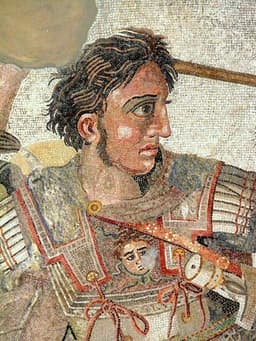
Alexander the Great
General · Ancient
85.2Total
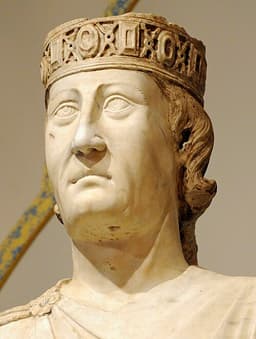
Charles of Anjou
Emperor · Medieval
59.5Total
Basic Information
Born
-356
1227
Died
-323
1285
Era
Ancient
Medieval
Nationality
Macedon
France
Occupation
General
Emperor
Civilization
Western
Western
Score Comparison
Military (10%)
95.0
82.0
Political (20%)
60.0
48.5
Influence (20%)
92.0
56.7
Legacy (20%)
90.0
52.0
Leadership (15%)
80.0
68.0
Strategy (15%)
92.0
66.3
TOTAL
85.2
59.5
Alexander the Great — Complete Timeline
334 BC
Battle of the Granicus RiverWar◆ Major
Alexander led his Macedonian army across the Hellespont into Asia Minor and defeated a Persian force under local satraps at the Granicus River. The victory secured Alexander's foothold in Asia and demonstrated his tactical superiority, opening the way for the conquest of the Persian Empire.
Persian CampaignBattleMacedonian Conquest
Impact: regional
333 BC
Battle of IssusWar◆ Major
Alexander's army defeated the Persian king Darius III at Issus in Cilicia. Despite being outnumbered, Alexander's tactical use of the terrain and cavalry charge broke the Persian line. Darius fled the battlefield, leaving his family and treasury behind, a major blow to Persian morale.
Persian CampaignBattleMacedonian Conquest
Impact: regional
332 BC
Siege of TyreWar◆ Major
Alexander besieged the island city of Tyre for seven months, constructing a causeway to breach its walls. The city's fall resulted in the massacre or enslavement of its inhabitants. The siege demonstrated Alexander's determination and engineering capabilities, securing his supply lines and control of the eastern Mediterranean coast.
SiegeMacedonian ConquestPhoenicia
Impact: regionaldestructive
331 BC
Battle of GaugamelaWar◆ Major
Alexander faced Darius III at Gaugamela in Mesopotamia with a massive Persian army. Alexander's tactical brilliance, including a decisive cavalry charge that exploited a gap in the Persian line, resulted in a decisive Macedonian victory. Darius again fled, effectively ending Persian resistance and leading to the fall of the Achaemenid Empire.
Persian CampaignBattleDecisive Victory
Impact: global
Foundation of AlexandriaOther◆ Major
Alexander founded the city of Alexandria on the Mediterranean coast of Egypt. He personally selected the site and oversaw the initial planning. Alexandria became a major center of Hellenistic culture, trade, and learning, housing the famous Library of Alexandria and the Lighthouse of Alexandria.
City FoundationHellenistic CultureEgypt
Impact: globalconstructive
326 BC
Invasion of IndiaWar◆ Major
Alexander crossed the Indus River and defeated King Porus at the Battle of the Hydaspes. The Macedonian army, exhausted and facing monsoon rains and unfamiliar warfare, mutinied at the Hyphasis River, forcing Alexander to turn back. This campaign marked the easternmost extent of his conquests.
Indian CampaignBattleMutiny
Impact: regional
Charles of Anjou — Complete Timeline
1266 AD
Battle of BeneventoWar◆ Major
Charles of Anjou defeated Manfred of Hohenstaufen at Benevento. Manfred was killed in the battle, allowing Charles to take control of the Kingdom of Sicily. This victory established the Angevin dynasty in southern Italy.
Angevin ConquestHohenstaufenItaly
Impact: regional
1268 AD
Battle of TagliacozzoWar◆ Major
Charles of Anjou defeated Conradin, the last Hohenstaufen claimant, at Tagliacozzo. Conradin was captured and later executed in Naples. This victory secured Charles's control over Sicily and ended Hohenstaufen claims.
HohenstaufenExecutionItaly
Impact: regionaldestructive
1282 AD
Sicilian VespersWar
A rebellion broke out in Palermo against Angevin rule, leading to the massacre of French officials and soldiers. The revolt spread across Sicily, resulting in the loss of the island to Peter III of Aragon. This event ended Charles's control of Sicily.
RevoltAragonSicily
Impact: regionaldestructive
1284 AD
Crusade against AragonWar
Pope Martin IV declared a crusade against Peter III of Aragon, and Charles of Anjou led the campaign. The French invasion of Aragon failed, and Charles's fleet was defeated. This crusade drained Angevin resources and weakened his position.
CrusadeAragonFailure
Impact: regionaldestructive
Expert Analysis
Alexander the Great vs Charles of Anjou: Historical Comparison
Alexander the Great, the ancient Macedonian general who forged an empire from Greece to India, and Charles of Anjou, the medieval French prince who became King of Sicily and a dominant Mediterranean power, represent two vastly different eras of conquest. While both were ambitious expansionists, Alexander’s military brilliance and enduring legacy far outshine Charles’s more localized but politically astute reign.
Dimension Analysis
**Military: Alexander the Great 96 / Charles of Anjou 61**
Alexander’s tactical innovations—the oblique phalanx, combined arms, and siegecraft—crushed the Persian Empire in a decade; Charles’s campaigns, though successful in Italy and the Crusades, relied on superior resources and often faltered against resilient foes like the Byzantines.
**Political: Alexander the Great 65 / Charles of Anjou 69**
Alexander’s fusion policy (marrying Persian nobles, appointing satraps) was visionary but fragile, leading to empire collapse after his death; Charles shrewdly manipulated papal alliances and feudal networks to secure his Sicilian throne, though his heavy-handed rule sparked the Sicilian Vespers revolt.
**Influence: Alexander the Great 90 / Charles of Anjou 76**
Alexander’s conquests spread Hellenistic culture across three continents, shaping art, science, and language for centuries; Charles’s influence was confined to Mediterranean politics, strengthening Angevin power but leaving no comparable cultural diffusion.
**Legacy: Alexander the Great 90 / Charles of Anjou 66**
Alexander remains a near-mythical archetype of the conqueror, inspiring Caesar, Napoleon, and countless leaders; Charles is remembered primarily by medieval historians as a capable but ruthless ruler, his dynasty fading after the Sicilian revolt.
**Leadership: Alexander the Great 82 / Charles of Anjou 85**
Alexander led from the front, inspiring troops with personal bravery but risking his life repeatedly; Charles was a masterful administrator and diplomat, consolidating power through legal reforms and strategic marriages, outlasting many rivals through patience.
Verdict
Alexander the Great leads decisively due to his unmatched military genius and transformative global influence, while Charles of Anjou’s strengths in political maneuvering cannot compensate for a far narrower theater of impact.
FAQ
Q: Who ranks higher? A: Alexander the Great ranks higher overall, driven by his overwhelming military and legacy scores, despite Charles’s slight edge in political and leadership stability.
Rankings
🥇
Alexander the GreatLeader
Mil: 95.0Pol: 60.0Inf: 92.0
85.2
🥈
Charles of Anjou
Mil: 82.0Pol: 48.5Inf: 56.7
59.5
+25.7 behind
How This Comparison Works
Algorithm
Each figure is scored on 6 dimensions (0—100 scale) based on structured historical data: Military (10%), Political (20%), Influence (20%), Legacy (20%), Leadership (15%), Strategy (15%). The weighted total produces the final ranking.
Data Sources
Scores are computed from structured sub-indicators in the database. Scale factors adjust for era (Ancient ×0.85, Modern ×1.0) and civilization size (Eastern ×1.05, Other ×0.80) to account for differences in population and military scale.
Maximum 3 Figures
Comparisons are limited to 2—3 figures to ensure readability and statistical meaningfulness.
Error Margins
±5 points per dimension — Sub-scores are derived from historical records with inherent uncertainty. Two figures within 5 points on a dimension should be considered roughly equivalent in that area.
Total Score Accuracy
±3 points overall — The weighted combination of 6 dimensions produces a total score with approximately ±3 points of uncertainty. Differences of less than 3 points are not statistically significant— the figures are effectively tied.
Known Limitations
- Historical records are incomplete and uneven across civilizations
- Figures from oral-tradition societies may be underrepresented
- Occupation labels can misclassify multi-role figures
- Scores measure capability and impact, not moral character
- Quantitative scoring is a comparison tool, not absolute truth
Capability Radar
Military (10%) — Battles & Warfare
Battles
98
75
Win Rate
99
70
Expansion
99
80
Political (20%) — Governance & Reform
Reform
75
60
Diplomacy
80
68
Economy
70
65
Influence (20%) — Cultural & Global Reach
Cultural
95
50
Global
95
45
Legacy (20%) — Historical Impact
Historical
98
60
Longevity
95
55
Leadership (15%) — Power & Stability
Tenure
60
70
Stability
55
55
Strategy (15%) — Tactics & Innovation
Strategy
98
78
Tactics
99
72
Reform
85
65
Similar Comparisons
Comments & Discussion
SkepticalScales6/16/2026
This scoring is a joke. Alexander's 96 military vs Charles's 61? Sure, Alexander had flashy tactics, but Charles fought in an era with castles, mounted knights, and organized states—way harder than scattered Persian satraps. Plus, the 90 influence for Alexander is pure survivorship bias: Hellenistic culture spread because of geography, not just his genius. And Charles's 66 legacy ignores that his Sicilian dynasty shaped Mediterranean trade for centuries. The whole system reeks of Western classicism—give me the raw data, not this arbitrary weighting.
Historian2236/16/2026
Charles政治69,亚历山大65,这差距站不住脚。Charles的Sicilian Vespers起义(1282年)直接导致安茹王朝失去西西里岛,证明其统治成本极高。而亚历山大虽然帝国崩溃,但他的融合政策(如苏萨集体婚礼,324 BC)在当时是超前治理,只是寿命太短。若按中国标准,Charles类似前秦苻坚——对外扩张成功,内部整合失败,淝水之战后帝国瓦解。政治得分应更接近。建议重新评估:亚历山大政治应70以上,Charles应下调至65。数据不支持当前权重。
Historian4496/16/2026
亚历山大跟查理比较?有点意思。但评分系统太西方中心了。亚历山大军事96,可跟中国白起、韩信比,他打的波斯本质是松散联邦,没有像秦赵长平之战那种硬仗。查理政治69,可教皇联盟在中国史里顶多算个豪强依附,跟曹操挟天子令诸侯比差远了。影响分90更是离谱——亚历山大传播希腊文化,可中国秦始皇书同文车同轨,统一度量衡,影响东亚两千年,这分咋算?建议各位看看《史记》和《资治通鉴》,再回来打分。